Playback ’95] The early days of the Internet, when “anything goes”… Drugs could be bought through PC communications!


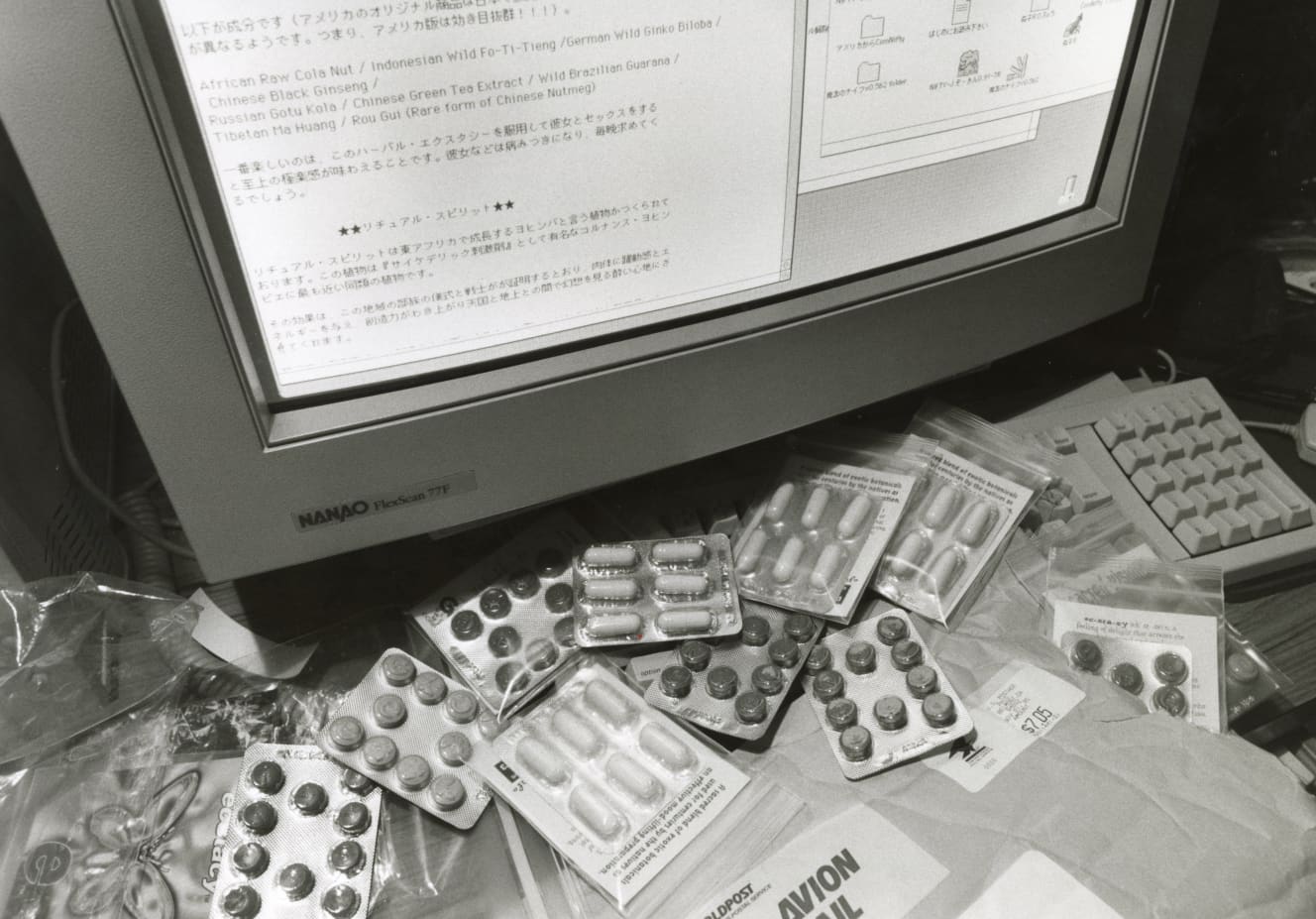
What did “FRIDAY” report 10, 20, or 30 years ago? In “Playback Friday,” we revisit topics that were hot at the time. In this issue, we will introduce the “List of Dangerous Drugs” that have penetrated “PC Communication” through the misuse of the Internet around the world,” which appeared 30 years ago in the December 8, 1995 issue of FRIDAY.
The year 1995 is also called the “first year of the Internet” in Japan, when PCs spread rapidly with the release of “Windows 95. At that time, however, personal computer communication services such as “NIFTY-Serve” were still more popular than the Internet.
PC communication” was a form of data communication between a PC and a host server connected by a communication line such as a telephone line, and “NIFTY-Serve” and “PC-VAN (now BIGLOBE)” were well-known. Unlike the regular Internet, it was a closed community connected through a specific server. PC-VAN was at its height in the 1980s and ’90s, and even after 1995, PC-VAN was cheaper to use, had richer content, and offered better community and information quality than the Internet. In this article, “dangerous drugs” were obtained from overseas via P-COM (the descriptions in parentheses are quoted from past articles, ages are those of the time).
I was able to buy the drugs after placing an order through P.C. Communication.
The “product” arrived within a week after the order was placed through Personal Computer Communications, as promised.
Around September 1995, a rumor circulated among PC communication enthusiasts that “Herbal Ecstasy for sale” was advertised on a commercial Internet bulletin board.
Herbal ecstasy” is a so-called “dangerous drug” that is mainly composed of ephedra, which was imported in the summer of 1995 for its “aphrodisiac effect” and became popular. However, there was a story that the ephedra had been removed from the drugs exported to Japan in order to violate the Pharmaceutical Affairs Law (now known as the Pharmaceutical Machine Law). Mr. K, 37, a paso maniac who bought it with half a doubt in his mind, said, “I sent an e-mail to him and he immediately replied, ‘I’m sorry.
“I sent them an e-mail and received a reply right away with a 40-page A4 catalog. When I looked at it, I found that the contents started with Herbal Ecstasy and included an adult laser disc and a lot of other dangerous stuff.
The catalog included Herbal Ecstasy, Ritual Spirit, which contains the famous aphrodisiac Yohimbe, and the herb-based Nexus.
The catalog also included a detailed explanation of the ingredients of the drugs and how to use them. It also explains the ingredients and how to use them, such as that you should drink plenty of water, and that they work better once you get used to them.
There are also various explanations about how to send the drugs by mail, such as how to check the mail. Even the price of the herbals is cheap, about 1,400 yen for a single dose of six tablets. It seems that it is not illegal to obtain it individually, so I ordered it right away.
‘Why don’t we do business over the Internet from now on?’
Then what arrived by airmail was the drugs (shown in the photo). The envelope said it was a sample of vitamins, but the pills, which were wrapped in several plastic bags and divided into small portions, looked very bad in terms of atmosphere. An office worker (28) who actually tried the pills had the following to say.
“Compared to the ones sold in Japan, they are like an adult and a child. From the smell to the effects, it’s 10 times better. It makes you want to have sex with it, or rather, it makes you want to do whatever it is you want to do.
Mr. K and his friends were impressed by the difference between the real thing and this place, but the story did not end there.
The American dealer, who appeared to be a Japanese resident of Los Angeles, sent them an e-mail saying that they could send them real ecstasy or LSD if they continued to do business with him. He also asked if we could do business over the Internet from now on because of the strict checks on paso-dori.
Mr. K thought this was a bad idea and has not been involved since then. However, a student (23) who is familiar with the Internet said that this is not an uncommon story in the Internet world.
“Japan is a backward country in terms of drugs and the Internet. Once you step out into the world through the Internet, you can actually buy drugs and Rossi (Brazilian-made military pistols). There are specialized dealers in South America, but I can find them in an hour.
PC communication and the Internet were making drugs more accessible to the Japanese.
The Internet 30 years ago was “almost unregulated.
PC communication was a members-only community, with a certain degree of checks and balances, and was said to be “safe and secure. In contrast, the Internet at that time was dominated by personal homepages and bulletin boards, which were loosely monitored and not yet regulated by providers or the police. In reality, the Internet was “almost unregulated,” and was used not only for underground information and pirated CD-ROMs, but also for child pornography, methamphetamine and other drugs, and weapons trafficking.
The spread of PC communication and the Internet in the ’90s is said to have triggered the wide spread of drug trafficking to the public, which until then had been conducted mostly by gangsters and their surrounding dealers. Subsequently, the Internet became more closely monitored and illegal activities were no longer possible. However, there is no end to the number of cases of people buying and selling on social networking sites using cloak-and-dagger methods. The “dark side” of the Internet, where drugs and criminal information were traded 30 years ago, still exists today in the form of the Dark Web.