Touch-Panel Controls Highlight Changes in the Future of Cars at Japan Mobility Show
Toyota of Japan and BYD of China are making their presence felt with their unique strategies, while Tesla of the U.S. is...


Japan’s pride and China’s new small EVs
“I believe this car represents Japan’s challenge to create the next 100 years.”
At the Japan Mobility Show 2025, held at Tokyo Big Sight from October 30 to November 9, Toyota Chairman Akio Toyoda (69) declared this boldly at the company’s booth. In his speech, he announced that Toyota’s top-end model, the Century, would be developed into a standalone brand like Lexus. The concept car “Coupe” (second photo) was unveiled for the first time. As the scarlet-colored body shed its veil, the crowd erupted in cheers.
This year’s Mobility Show featured 522 companies and organizations from around the world. The total number of visitors during the event exceeded one million. As an event that brings together the world’s top manufacturers, each company’s exhibits reflected its strategic intentions. Automotive critic Mitsuhiro Kunisawa interprets Toyota’s aim behind turning the Century into a brand.
“As the market continues to polarize, Toyota maintains a wide-range strategy covering all price segments. While they will continue valuing compact cars as before, they launched the Century brand to move into the upper price ranges. It’s a clear signal that they intend to challenge a segment even higher-end than Lexus.”
Toyota also unveiled new Lexus models, boldly emphasizing a luxury direction. Furthermore, the exhibits hinted at another objective. Automotive journalist Kumiko Kato, who reported from the venue, explains:
“Toyota rented out the entire first floor of the South Exhibition Hall—a space of 10,000 square meters—for an expansive showcase. Behind the decision to brand the Century lies the struggle EVs face in the Japanese market. Toyota sells EVs globally, but they likely believe it’s still too early for mass EV adoption in Japan.
Even so, domestic new-car sales have increased for three consecutive years. So Toyota seems intent on strengthening the lineup of popular models like the Century rather than focusing on EVs, in order to further expand the market.”

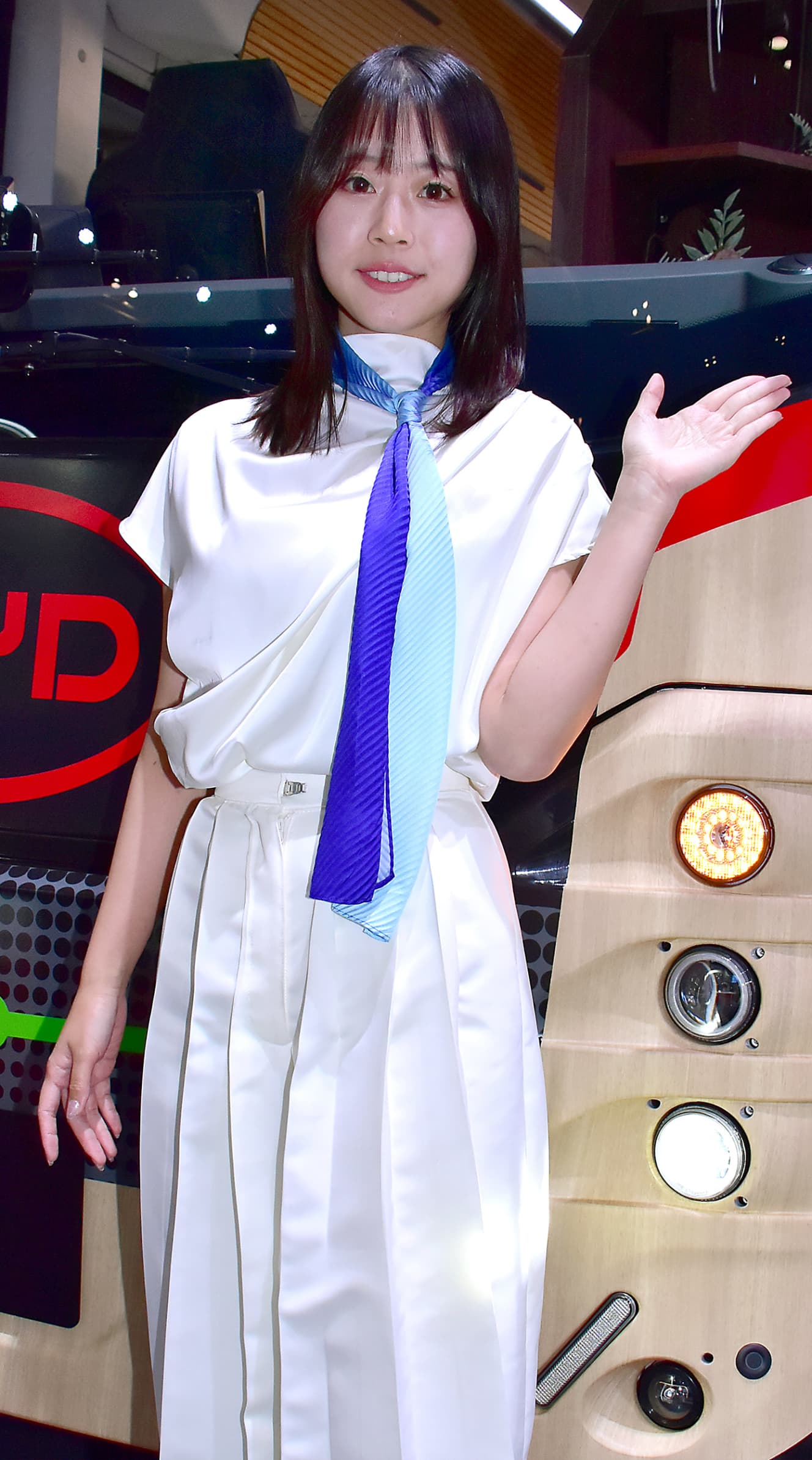

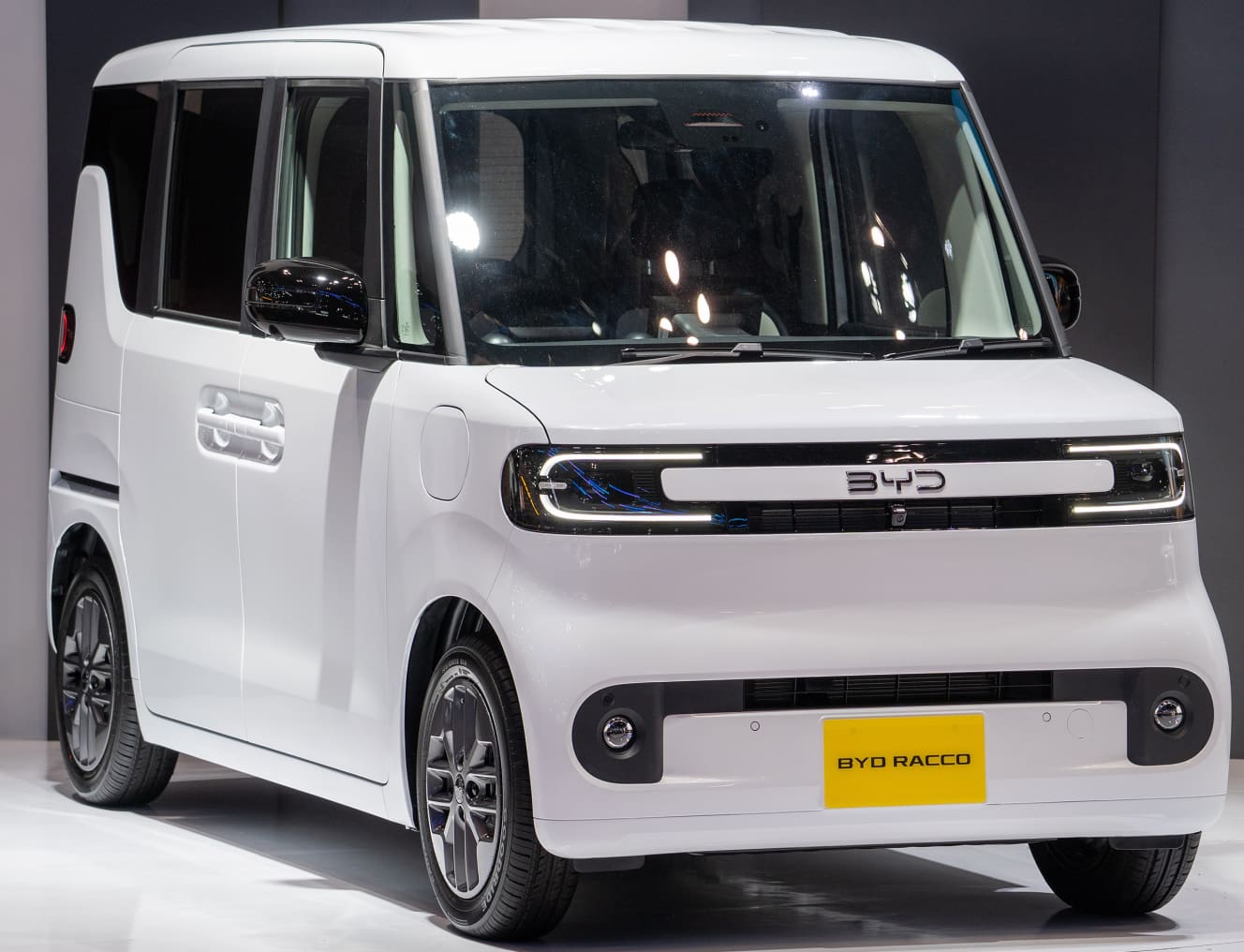
Taking a strategy almost the complete opposite of “Japan’s champion,” China’s BYD stood out. The most impactful exhibit at the venue was BYD’s new light EV, the “RACCO” (5th photo). Thousands of people rushed to attend the unveiling event.
“Its estimated cruising range on a single charge is about 180 km. It is said to support 100 kW fast charging, and the expected price will be in the mid–2 million yen range. In terms of both quality and affordability, it is a world-class model. What makes this possible is the use of a lithium iron phosphate battery and BYD’s independently developed ‘Blade Battery.’ It is highly safe because it is resistant to catching fire, and it can be manufactured far more cheaply than conventional batteries,” said Kato.
Aiming for Japan’s regional cities
The company losing market share to the rapidly rising BYD is America’s Tesla. In its main battlefield of BEVs (battery electric vehicles), Tesla finally lost the top spot this year. The area where Tesla is now trying to find a breakthrough is autonomous robotaxis.
“Overwhelmed by BYD’s momentum, Tesla did not exhibit at the Mobility Show. What they are focusing on instead is the development of a fully autonomous taxi named the Cybercab (photos 6 and 7). It has no steering wheel, and destinations are selected via a touchscreen. Test operations have already begun in Texas, and mass production is scheduled to start next year, with an estimated price of around 4.5 million yen—quite inexpensive,” said Kato.
Japan, China, and the United States—the leading countries driving the global auto industry—each envision their own new automotive strategies. In the not-too-distant future, autonomous Tesla robotaxis may handle transportation in Japan, while many wealthy individuals may own Century vehicles. Meanwhile, BYD’s light EV is set to launch in Japan next year.
“Kei cars are a uniquely Japanese class, so BYD is seriously aiming to capture the Japanese market. They will likely focus first on regional cities, where kei cars are widely used, as an entry point for gaining customers.
Over the past 30 years, the number of gas stations nationwide has been cut in half, but electricity is available everywhere. So the demand for light EVs in rural areas is guaranteed. A future where Chinese light EVs are zipping along country roads that future is already just around the corner,” said Kunisawa.
Japan’s—and the world’s—automotive industry is now truly entering a new era.


From the November 28/December 5, 2025 issue of “FRIDAY”
PHOTO: Takeshi Kinugawa (2nd to 4th photos) Hiroto Kato (5th to 7th photos)