“A Woman Lived There?” — Uncovering the Suspect’s Ties to the 29-Year-Old Victim in the Yokohama Murder Case


A woman with a bright red face on a stretcher
“I killed someone.”
The 74-year-old man reportedly called the police himself, saying he had killed the woman he lived with. However, many neighbors said in unison, “We didn’t even know a woman lived in that house.”
“On November 13, the Kanagawa Police Kanagawa Station arrested Hiroshi Tanabe (74), a restaurant owner in Kanagawa Ward, Yokohama, on suspicion of murder for strangling to death Aoi Shida (29), with whom he lived, at his residence that also served as his shop. Tanabe admitted to the charges and said, ‘I had been living with Shida for several years,’ and ‘She said she wanted to die.’
Around 7:15 a.m., Tanabe strangled Shida’s neck and called 110 about 30 minutes later. Shida was pronounced dead at the hospital she was transported to. Tanabe reportedly told police, ‘I was taking care of the daughter of an acquaintance.’”
A woman in her 70s who lives nearby described the morning of the 13th when the incident occurred:
“The sound of police cars kept getting closer and closer, and I thought they were coming to my house.”
“Around 8 a.m., I heard incredibly loud sirens. When I looked outside, there were about ten police cars and even an ambulance. The whole area was taped off, and I wondered what had happened. Then a young woman, placed on a stretcher, was taken away in an ambulance. Her face was bright red and looked bloodshot.”
She later learned through news reports that Tanabe had killed a woman in his home. Shocked, she said:
“I’ve never seen a woman there before.”
Tanabe, the suspect, was said to have a friendly personality
“Tanabe’s house has only one entrance facing the main street. If anyone goes in or out, you would more or less notice it, but in the past nearly ten years, I’ve never seen a woman entering or leaving his house.”
A man living nearby explained that the building, which served as both shop and residence and became the crime scene, had been occupied by Tanabe’s family since his grandfather’s generation.
“That house (the crime scene) has been lived in since the time of Hiroshi’s (Tanabe’s) grandfather. In the past, Hiroshi’s father ran a barbershop there. After that, Hiroshi’s older brother took over the barbershop, but both passed away, so Hiroshi—who had worked at the central wholesale market and trained at a restaurant—opened an izakaya. That was more than ten years ago. Hiroshi has a friendly nature; when he met acquaintances in front of the shop, he would always greet them with a ‘Hello.’ But for about a week, he hadn’t opened the shop.”
The restaurant seemed to have had a good reputation. A man living nearby said, “Taxis often stopped in front of the shop. Since there are no other restaurants around here, people would apparently take a taxi just to eat there.”
An elderly man in his 80s, who said he had visited the shop several times for neighborhood association meetings, also recalled Tanabe’s establishment:
“This was more than five years ago, but we used the restaurant a few times for meetings. He said he went to the market every day for supplies, so the fish was fresh and delicious. But since it was a small shop, maybe he didn’t buy much stock—the shop opened around 5 or 6 p.m., and sometimes the lights were already off before 9 p.m.”
Although some residents had occasional interactions with Tanabe, most said they “had no idea a young woman lived there.” Among them, a man who said, “Aoi Shida was a classmate of my daughter in junior high school,” agreed to be interviewed.
The victim’s mother may have been in a relationship with Tanabe
“When I saw the name ‘Aoi Shida’ in the newspaper, I was shocked. So that’s where Aoi-chan was. She was a classmate of my daughter in junior high school, and they were close friends. She often came to our house too. She was just an ordinary, cheerful, good girl. Her parents divorced, and she lived with her mother, but it seems her mother was dating Tanabe. I heard Aoi-chan’s mother had some kind of liver or other health problem, and that she died after drinking at the counter of Tanabe’s shop and passing away by morning.
It was right before Aoi-chan’s coming-of-age ceremony. Maybe because of that, my daughter wore a formal kimono to the ceremony, but Aoi-chan attended in regular clothes. Around that time, it seems we lost contact with her. I heard she had a grandmother somewhere. In the end, maybe she had no one to rely on, and Tanabe took care of her. I never imagined that she would die in the same place where her mother passed away it feels like some kind of fate.”
The person showed us a photo taken on the day of the coming-of-age ceremony—Aoi Shida holding hands with friends dressed in formal attire. She wore a red knit top under a black jacket, smiling with narrow, graceful eyes. According to Tanabe’s statement, about ten years after this day, Shida asked her late mother’s former partner—whom she had been living with—to let her die.
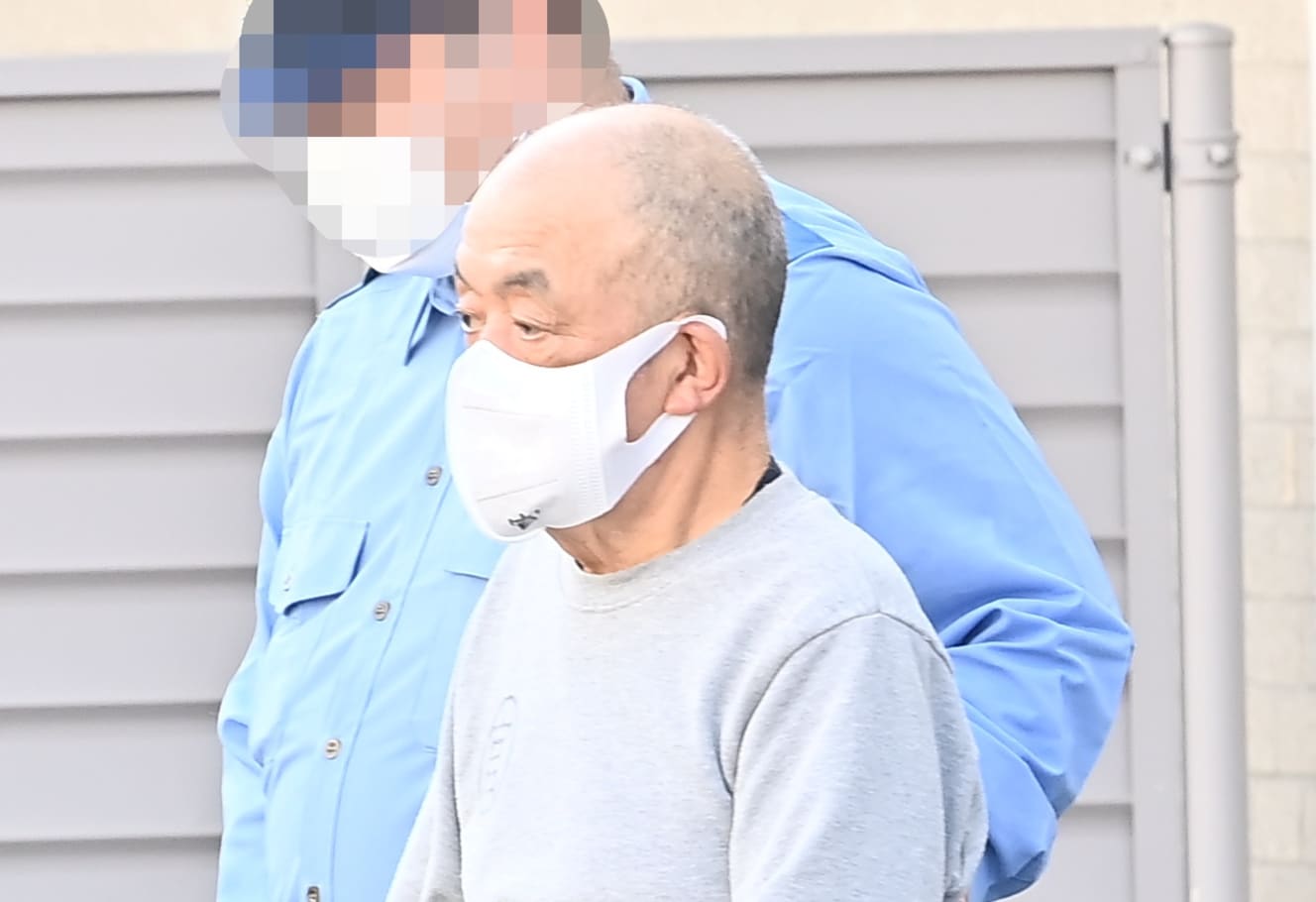
Around 10 a.m. on November 14, Tanabe was transferred from Kanagawa Police Station to the prosecutor’s office. When he appeared at the transport entrance, he boarded the transport vehicle without looking at the reporters.
The investigation has only just begun, and with no clues other than Tanabe’s testimony, it is uncertain whether the full truth will ever come to light.



Interview and text by: Nakahira Ryo PHOTO.: Shinji Hasuo, NAKAHIRA (6th photo)