Sano and Suzuki rise as Japan’s young core strengthens ahead of the 2026 World Cup


“After a convincing victory over Bolivia on November 18, the Moriyasu Japan squad has completed all of its matches for the year. With the North and Central American World Cup coming next year, can Japan finally achieve its long-awaited goal of reaching the quarterfinals or beyond? Writer Etsuko Motokawa, who has covered many of this year’s national team matches on site—including the historic win over Brazil in October—shares her views.”
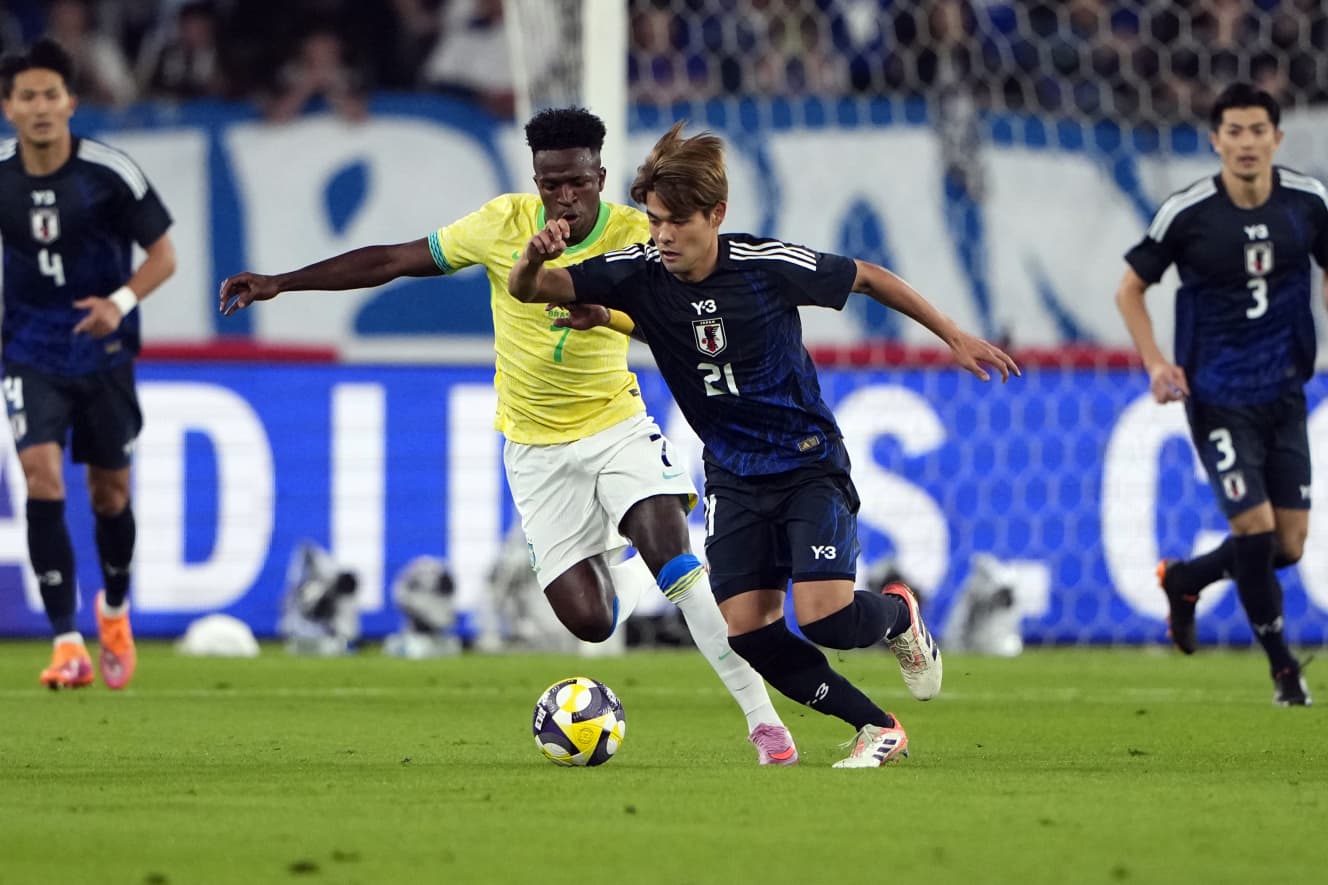
The rise of a new generation—a long-standing challenge
With back-to-back wins over Ghana and Bolivia in November, the Moriyasu Japan squad wrapped up its 2025 national-team schedule. This year’s results were 8 wins, 3 draws, and 2 losses (including the July E-1 Championship in Korea, played mainly with domestic-league players).
After Japan secured the world’s earliest qualification for the 2026 North and Central American World Cup by defeating Bahrain 2–0 on March 20—their first match of 2025—Head Coach Hajime Moriyasu (57) was finally free to focus on strengthening the squad’s depth. As a result, from June onward, players from the Paris Olympic generation, born in 2001 or later, began to break through steadily: Sano Kaishu (24, Mainz), Joel Chima Fujita (23, St. Pauli), Jun’nosuke Suzuki (22, Copenhagen), and Kodai Takai (21, Tottenham). In particular, Sano and Suzuki, who were central to the historic victory over Brazil in October, are rapidly becoming core members. This is an extremely promising development.
As you know, Moriyasu has led the national team since September 2018 and guided Japan through the 2022 Qatar World Cup. After defeating powerhouses Germany and Spain, he earned a contract extension and entered his second managerial term in March 2023. However, because key players from his first term—Wataru Endo (32, Liverpool), Junya Ito (32, Genk), Kaoru Mitoma (28, Brighton), and Ritsu Doan (27, Frankfurt)—carried over directly into the second term, some expressed concerns about an over-reliance on a fixed starting lineup.
In fact, looking at the final round of World Cup qualifying matches held between September 2024 and June 2025, the top scorers—Daichi Kamada (29, Crystal Palace), Takumi Minamino (30, Monaco), Hidemasa Morita (30, Sporting), and Takefusa Kubo (24, Real Sociedad)—were all members of the 2022 World Cup squad. In other words, the team that advanced through the final qualifiers consisted largely of players in their late 20s to early 30s. Aside from Kubo and goalkeeper Zion Suzuki (23, Parma), very few members were in their early 20s.
For that reason, the emergence of a younger generation—players in their early twenties or younger—had been strongly needed.
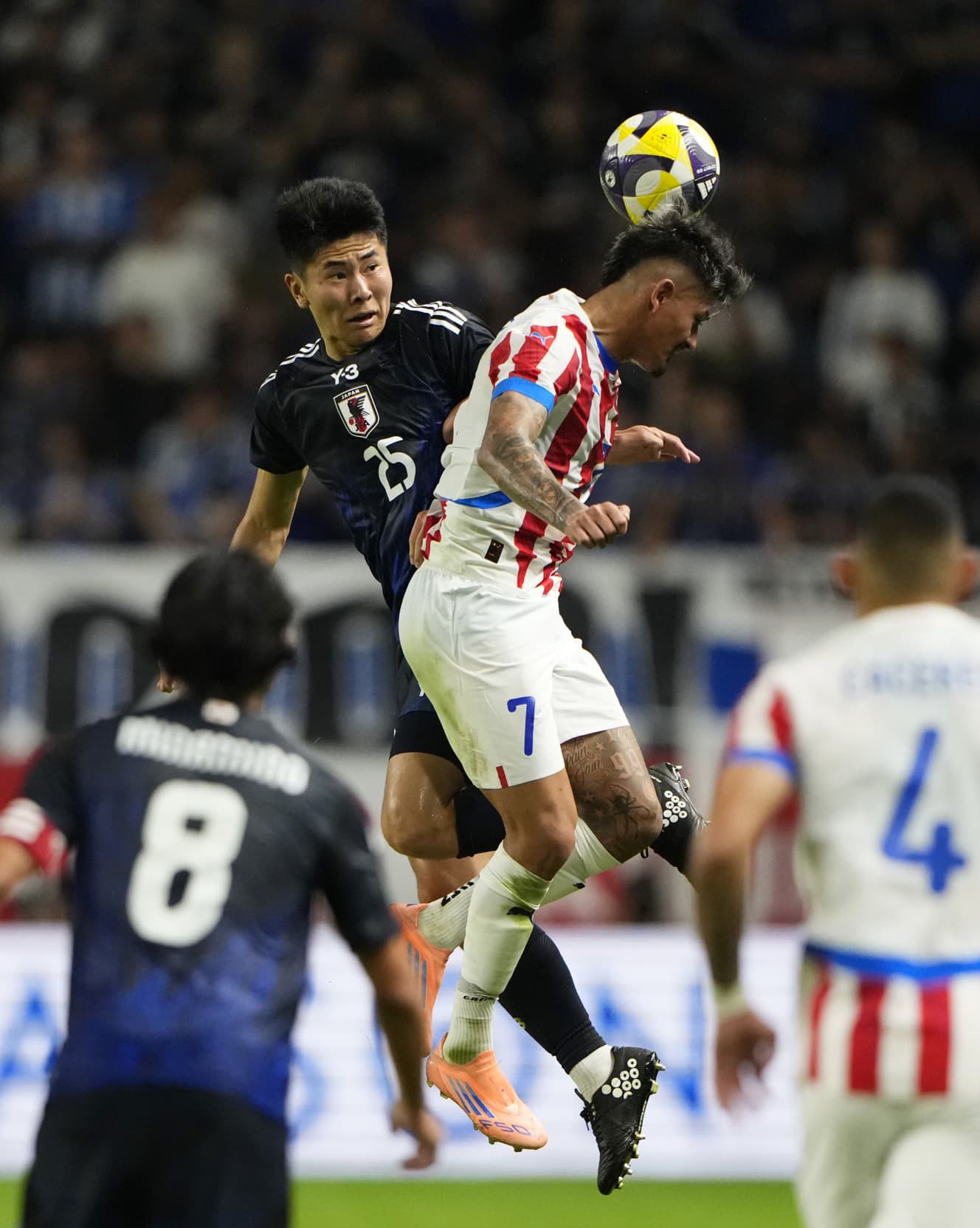
Even with Kagawa, Honda, and Nagatomo, Japan couldn’t win
A national team with little pressure from younger players inevitably stagnates. In fact, Japanese football experienced bitter lessons in both the 2006 Germany World Cup and the 2014 Brazil World Cup.
In the former, key players such as Tsuneyasu Miyamoto (48, now JFA President), Hidetoshi Nakata (48), Atsushi Yanagisawa (48, Kashima top-team coach), and Shinji Ono (46, J.League executive director)—who helped Japan reach the Round of 16 for the first time at the 2002 Korea–Japan World Cup—continued to carry the load four years later, resulting in the humiliation of leaving Germany without a single win.
In the latter, the same core stars who led Japan at the 2010 South Africa World Cup—Makoto Hasebe (41, national-team coach), Keisuke Honda (39), and Yuto Nagatomo (39, FC Tokyo)—remained unchanged. Then-manager Alberto Zaccheroni attempted to strengthen the squad by calling in younger players such as Yuya Osako (35, Kobe) and Hotaru Yamaguchi (35, Nagasaki), but it was too late. The team, once called the strongest in history, was defeated without earning a single win.
“It’s crucial that more and more new players emerge over the next year and intensify competition. That heightened sense of urgency will positively impact the existing members as well. To compete at the World Cup—the ultimate stage—with the best squad and the best environment, it’s vital that we make the most of this final year.”
These are the words of JFA President Miyamoto, who captained Japan at the Germany World Cup. Without fierce competition, a team cannot be revitalized, nor can it reach ambitious goals such as winning the World Cup. Moriyasu understands this well. That’s why he aggressively called up and used players around age 20 despite their limited national-team experience.
In the past year, the fact that many core players suffered injuries unexpectedly turned into a blessing in disguise. Especially in defense, where Takehiro Tomiyasu (27) has been unable to participate since June 2024, Hiroki Ito (26, Bayern), Koki Machida (28, Hoffenheim) were out long-term, and in October, Ko Itakura (28, Ajax) also had to withdraw due to injury.
Stepping into that void was Suzuki, who delivered a stunning performance against Brazil. Converted from defensive midfielder to defender in summer 2024—his third year at Shonan Bellmare—he earned a national-team call-up in less than a year. The 22-year-old rising star who secured a move to Europe this summer tightly marked Brazil’s young prodigy Estêvão (18, Chelsea), and even showcased sharp passing to initiate attacks, astonishing viewers with his composure and skill. In the November match against Ghana, he displayed even greater stability, to the point that many now say his World Cup spot is virtually guaranteed.
Revealed: the selection criteria
The player who made an impact equal to Suzuki’s was defensive midfielder Sano. With Morita out long-term and Wataru Endo withdrawing due to injury, Sano received his chance—and he made a powerful case for himself with his strength in one-on-one defending, ball-winning ability, and sharp passing that launched attacks. Some have even rated him highly enough to say he has overtaken Endo, who has had limited playing time at Liverpool.
Beyond these two, the November series also saw the emergence of 20-year-old, 191-cm striker Keisuke Goto (Sint-Truiden), who showcased exceptional potential. Nineteen-year-old Ryunosuke Sato (Okayama) is developing at an astonishing rate as well, and depending on how he performs in the first half of 2026, he may even have an outside chance of sneaking into the World Cup squad.
Meanwhile, although they have yet to secure regular spots on the national team, several players are strengthening their cases at club level: Yuito Suzuki (24, Freiburg), who is raising his profile in his first season in the German Bundesliga, and Koda Sano (22, NEC Nijmegen), younger brother of Kaishu Sano, now in his third season in the Dutch top flight. They too could earn World Cup call-ups. The more young talent emerges, the brighter the future of Japanese football becomes.
“As for how we will solidify the squad, I feel that the lineup might not be settled until right before the World Cup. I think you can understand that from the number of injured players we currently have. Since we have so many candidates capable of competing to be the best in the world, in the end I want to select the players who are in the best condition.”
Coach Moriyasu said this at the press conference after the Bolivia match, indicating his intention to evaluate the squad until the very last moment. Minamino, Kamada, Doan, and Kubo will almost certainly remain the core, but whether Tomiyasu and Morita return—and whether the younger generation continues to grow—will depend on their performances in the first half of 2026. It is no exaggeration to say that the final six months before the World Cup determine everything. Japan must monitor each player’s performance closely and build a squad and environment truly capable of winning.
PHOTO: Kyodo News