After His Arrest, NHK Party’s Takashi Tachibana Shifts From Defiance to Apparent Confession—But Is There a Hidden Strategy?


A second suspended sentence may also be possible
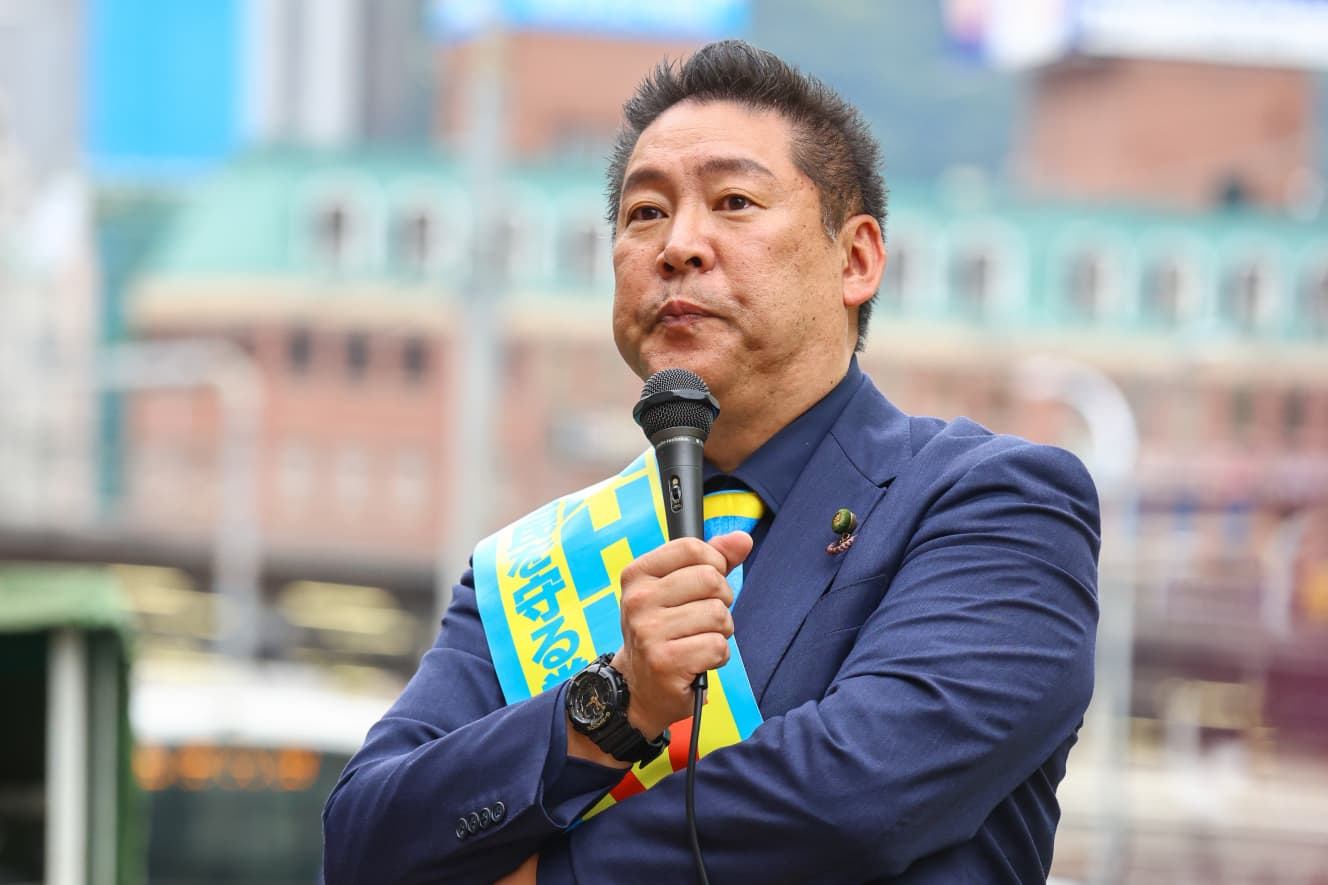
Takashi Tachibana (58), leader of the party “Protect the People from NHK,” has finally been arrested and taken into custody on suspicion of defaming the late former Hyōgo Prefectural Assembly member Hideaki Takeuchi.
He is already serving a suspended sentence, and if he is convicted again, it is widely expected that the sentence from his previous crime will be added, meaning he will not be released for quite some time.
“Tachibana himself had said on social media that he expected to be released quickly after a non-indictment decision. But that didn’t happen, and I’ve heard he’s taking it pretty hard. There’s no doubt he wants to get out as soon as possible.” (Reporter from an Osaka-based TV station)
His final line of defense was reasonable grounds for believing the statement true, but that seems to have collapsed. Instead of a non-indictment, a conviction is now highly likely.
If convicted this time, the previous suspended sentence of two years and six months will likely be added. The penalty for defamation is up to three years’ imprisonment or a fine of up to 500,000 yen. Since this would be a repeat offense of the same type, some say he could receive a three-year sentence. Combined, that would be five years and six months.
However, some legal professionals say that if a second suspended sentence is granted for the repeat offense, it might be possible for him to avoid prison time. The basis for this is a legal amendment passed in June this year. After the amendment, even a repeat offense during a suspended sentence carries a maximum of two years, and a second suspended sentence is now legally possible.
However, when we spoke with attorney Kyosuke Nishiwaki, former head of the TV Asahi legal affairs division, who has been following the case:
“There is a system allowing a second suspended sentence for repeat offenses committed during a suspension, but whether the court would grant that to Tachibana is another question entirely. I think the hurdle is extremely high.”
If that is deemed impossible, the remaining option would be to drag the case out until the previous suspended sentence expires, letting the earlier punishment lapse, and then aiming to receive a new suspended sentence for the current crime but that would require time.
Until the first-trial verdict, it usually takes 2 to 6 months
“If the case is contested at the district court, high court, and Supreme Court, the trial can become long, but when the expiration of a suspended sentence is approaching, proceedings are often accelerated. In this case as well, investigators and the court will likely try to speed things up so that it does not take more than one year and four months.” (the same attorney, Nishiwaki)
Amid this tug-of-war, Tachibana has taken an unexpected step: he has confessed.
According to the representative of the late Hyōgo Prefectural Assembly member Hideaki Takeuchi’s wife, on November 14, Tachibana’s attorney contacted them, saying:
“We will not contest the reasonable grounds for believing the statement true. We intend to confess. We would like to pursue a settlement.”
The attorney relayed this to Takeuchi’s widow, but she rejected the proposal.
So what happens when someone confesses? According to attorney Nishiwaki:
“When a defendant confesses, the facts are already established, so the trial usually consists of reading documentary evidence from both prosecution and defense, along with statements from character witnesses and questioning of the defendant. The proceedings often finish in a single hearing. It generally takes two to six months until the district court issues its verdict.”
In that case, the sentence could become final within one year and four months, and if an active prison term is imposed, Tachibana would be incarcerated for several years. Why, then, would he choose to confess?
“He may be aiming for a summary indictment, which by law can only impose a fine. If he receives a fine, even if it becomes final, his current suspended sentence may not be revoked. But he has prior convictions, and given the high public attention on this case, it is unlikely prosecutors would settle for a mere fine. In that sense, it may be exactly as NHK Party member Kenichiro Saito said at the press conference: ‘Knowing Tachibana, he may change tactics.’ For example, he could withdraw his confession during the trial and throw the case into confusion. That would drag the proceedings out, increasing the possibility that his suspended sentence expires before a final judgment.” (Nishiwaki)
It seems his desperate struggle will continue for some time.
Interview and text by: Hiroyuki Sasaki (entertainment journalist) PHOTO: Pasya/Afro