Why Japanese Criminals Flock to the Philippines: Embassy Insiders and Fraudsters Expose Alarming Realities


Bases for special fraud groups such as the Luffy robbery gang and JP Dragon.
Is the Philippines truly a paradise for fugitives—criminals who commit crimes in Japan and then flee overseas?
Kuni’o Aihara (62), who had been internationally wanted by the Tokyo Metropolitan Police for a 1995 robbery at a game café in Ōta Ward, Tokyo, was forcibly deported back to Japan from the Philippines on October 16.
He fled to the Philippines from Narita Airport on the day of the incident and continued his life on the run for 30 years, based mainly around Manila. According to reports, during police questioning he stated, “I went because I had a child in the Philippines with the woman I was planning to marry.”


Moreover, Aihara continued posting openly about his private life for five years from 2020 on a Facebook account believed to be his.
Most posts showed him participating in cycling competitions as a member of the cycling team of a long-established food company headquartered in Manila, some including photos with teammates. It appears he lived a carefree life immersed in his hobby while earning living expenses through work such as shiatsu massage.
Some fugitives spend huge amounts of money and live literally in orgies of luxury.
A 31-year-old former kakeko (phone scam caller) who belonged to a criminal group repeatedly committing special fraud under names like Luffy described his own lavish lifestyle:
“I was handling multiple cases, so at my peak I was earning about 37 million yen a week. I had a Filipino acquaintance purchase a condo for me for 7.8 million pesos (about 20 million yen), and I sometimes spent 500,000 pesos (about 1.3 million yen) in a single night at a Filipino pub. I often ate eel at high-end Japanese restaurants and never had money troubles. Now I regret what I did—I know how foolish it was.”
The man continued working as a kakeko for about eight months but left after internal conflict broke out within the fraud group and managed to quit the criminal world.
“There were executives whose lifestyle was even more extravagant, spending all day in casinos. One of them carried an attaché case filled with enormous quantities of chips converted from cash.”
The tribute paid to have their crimes overlooked was 2,600 yen
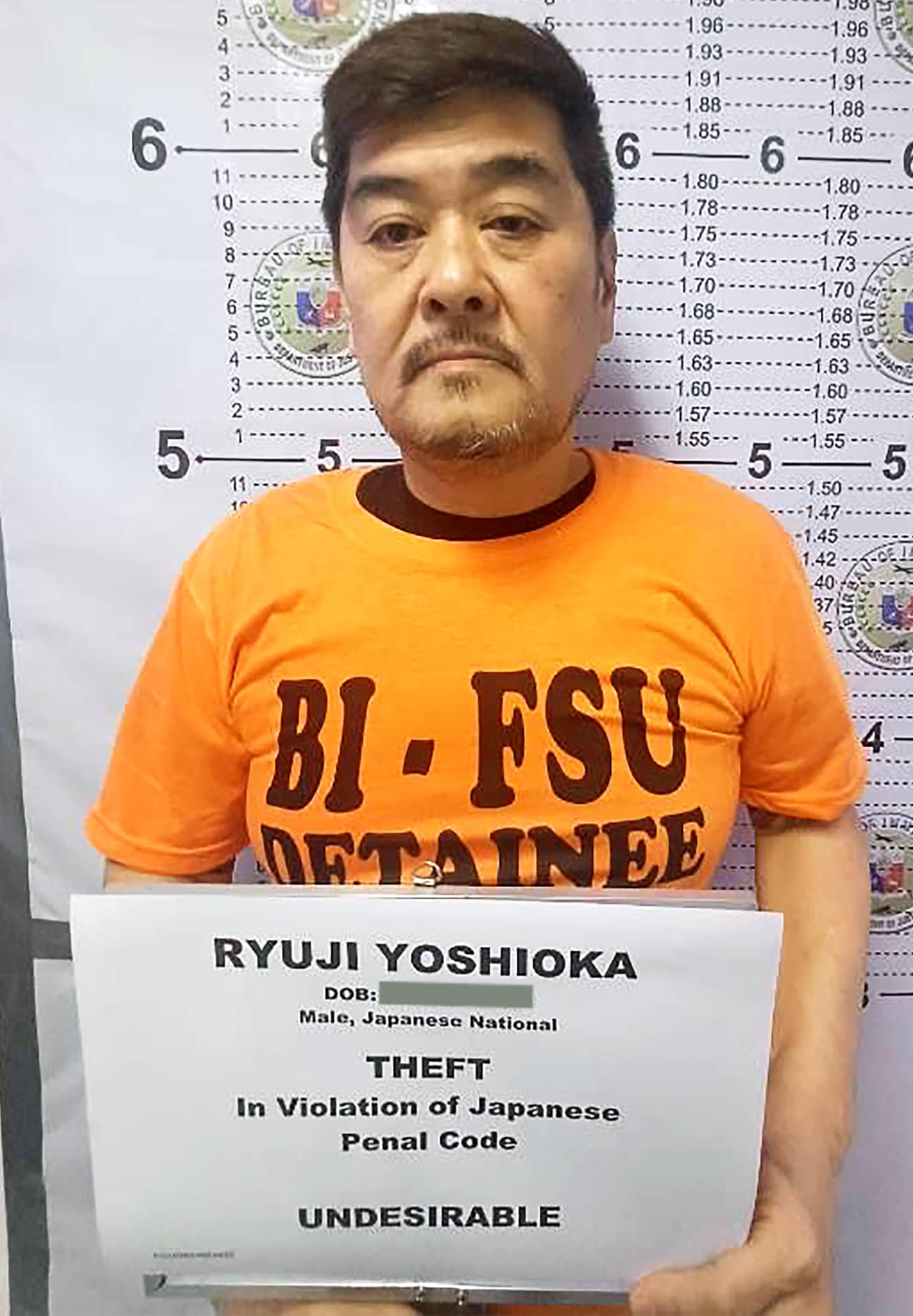
Members of JP Dragon, a local Japanese delinquent group connected to “Luffy,” have also been arrested one after another. Nearly 20 Japanese criminals have been apprehended in the Philippines just this year.
According to the Bureau of Immigration, 11 Japanese fugitives were arrested in 2024, and 8 in 2023. In 2019, when a special-fraud group was cracked down on in a large sweep, the number reached 39. For many years, Japan-born fugitives have been consistently arrested in the Philippines—showing the unique nature of the country.
Why do Japanese criminals gather in the Philippines? A former staff member of the Embassy of Japan in the Philippines reveals the corruption within local authorities, where everything can be resolved for a small amount of money.
“The Philippines is only about four hours by plane from Japan. English is widely spoken, many people know Japanese, and it’s a pro-Japan country. Even if someone overstays without renewing their visa, they usually just pay a fine. They are rarely detained proactively.”
According to the former staffer, a Japanese fugitive hiding in a rural area once paid 1,000 pesos (about 2,600 yen) each month as tribute money to Immigration officials in exchange for being left alone. But after missing two payments in a row, he was arrested shortly afterward.
Another fugitive said that immigration investigators offered to let him go for 100,000 pesos (about 260,000 yen). Such corruption and lax enforcement are major factors attracting Japanese criminals to the Philippines.
In January last year, four Japanese members of a Cambodia-based special fraud group fled to the Philippines in a coordinated escape. The one who facilitated it was a man in his 30s, half Japanese and half Filipino.
He supported them by finding places to live in the Philippines. Many fugitives rely on female acquaintances to enter the country, but there are also brokers who help them slip in.
However, even if they manage to enter the Philippines, they are internationally wanted by Japan, so they cannot renew visas and inevitably become illegal overstayers. They cannot work legally and need some source of income to live.
“It depends on the person, but in short, it all comes down to money. If they have accomplices from Japan bringing them cash, or can earn profits through crime in the Philippines, they can live quite comfortably. Without that, they fall into hardship, relying on an unofficial wife, her family, or handouts from locals.” (Former Embassy staffer)
Many fugitives live far from a carefree life, hiding in the shadows. One even continued working as a guard at a Filipino pub while wearing a wig. For better or worse, the Philippines continues to serve as a refuge for them.


From the November 14-21, 2025 issue of “FRIDAY”
Interview and text: Takehide Mizutani