One Year After Opening, Jūjō Station Tower Mall Still Nearly Empty—Local Residents Share Their Honest Impressions


 Rising in front of Jūjō Station is The Tower Jūjō. The first and second floors of the building adjacent to it make up J&MALL.
Is the rumor that it looks like a ruin true?
The large multi-purpose building The Tower Jūjō, constructed as part of the redevelopment project at the north exit of Jūjō Station (Kita Ward, Tokyo), was completed in September 2024. The complex consists of the condominium section THE TOWER JUJO and the commercial/public facility section J&MALL.
Although the project—officially the “Jūjō Station West Exit District Type-1 Urban Redevelopment Project”—was built using a large amount of taxpayer money, it has been rumored to look like a ruin. Even a full year after completion, many tenant spaces remain empty and foot traffic is low. We spoke with people on-site.
Stepping out of JR Saikyō Line’s Jūjō Station north exit, the building immediately dominates the view. The 39-story condominium tower vastly exceeds the height of surrounding buildings and clearly stands out from the atmosphere of the neighborhood. While its exterior has the high-end look common to modern tower apartments, that only emphasizes its unusual presence even more.
At the base of the tower lies the commercial zone J&MALL, while the adjacent building’s 3rd and 4th floors house J&L, a cultural facility including the Tokyo Metropolitan Tax Office, a lounge, a children’s space, multipurpose rooms, and a hall.
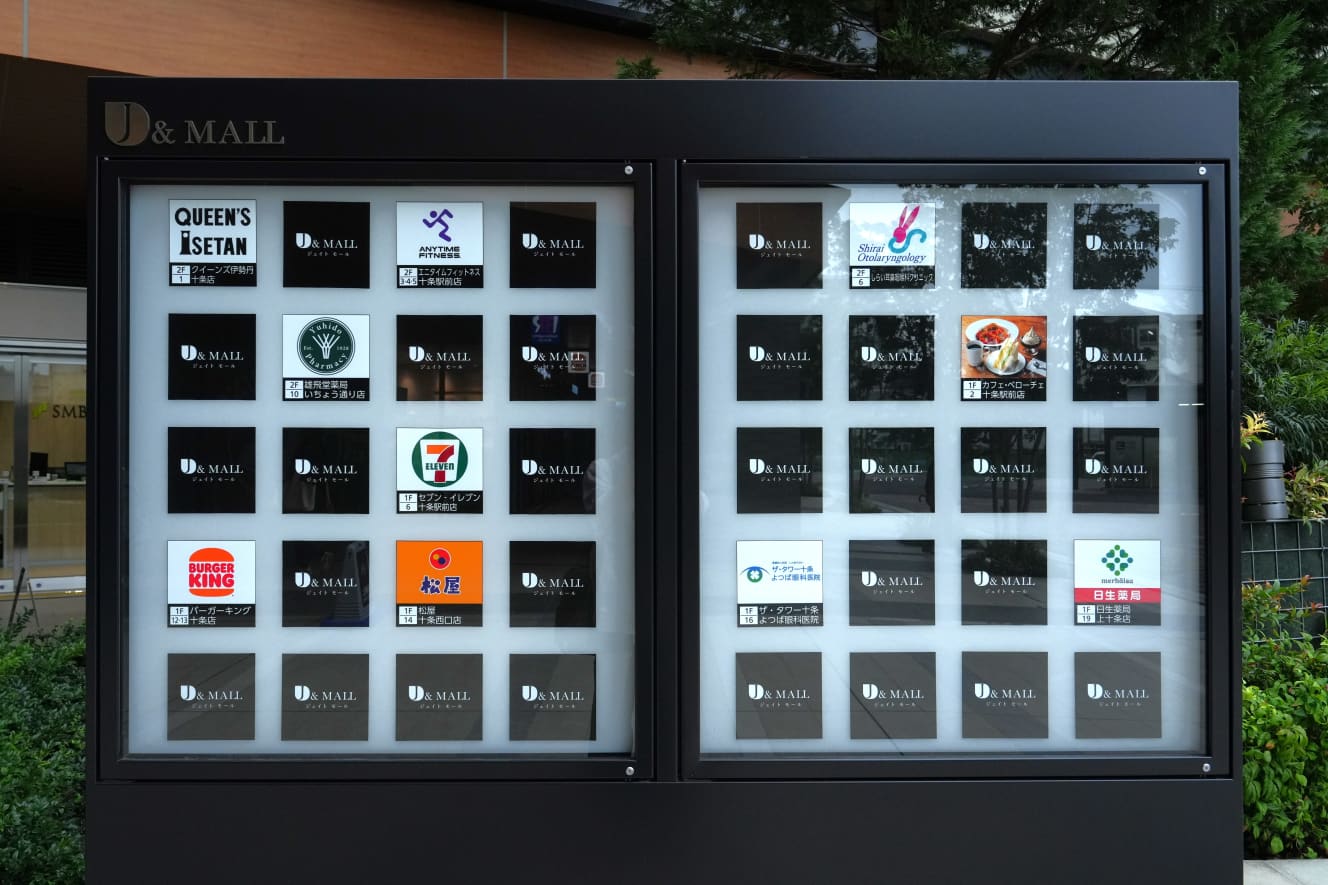
Looking at the tenant signboard in front of J&MALL, out of two grids each measuring 5 blocks vertically × 4 blocks horizontally, only about one-quarter of the spaces are filled—vacancies are striking. The tenants that have moved in are familiar major chains such as 7-Eleven, Matsuya, and Queen’s Isetan.
As a commercial area, it is in a rather desolate state, making it easy to see why some have called it a ruin. Even during the day, foot traffic is sparse. Is the lack of shops causing the lack of people—or is the lack of people preventing new shops from opening? The sight of a huge station-front facility with so few visitors evokes the image of a shuttered shopping district and leaves a sense of emptiness.
It has been well received by users with children
When we asked local residents near Jūjō Station whether they had used the building, many replied that they had visited a few times out of curiosity, but few seemed to use it regularly. Differences also emerged depending on age group.
Among people in their 30s and older, the most common response was that there’s nothing to buy. A man in his 40s said:
“Almost no tenants have moved in, and since the building is tall and vertical, it’s inconvenient for shopping. There aren’t products we actually want, so we only go to the convenience store. I still don’t even know what shops are in there, and normally we do our shopping in the local shopping street.”
On the other hand, younger people and families with children had a favorable impression.
“A small plaza-like area on the 4th floor lets my kids play while I shop at Queen’s Isetan, which is very helpful. Since there are also facilities for children, I’m grateful this opened near our home.” (Mother in her 40s)
“There’s a plaza on the 4th floor, and I meet with friends there to hang out and sometimes film TikToks. There aren’t many places in front of the station where people can gather, so we use this spot.” (Teenage girl)
Jūjō has one of Tokyo’s “Three Great Ginza” shopping streets—Jūjō Ginza Shopping Street, which stretches north from the station. Residents’ opinions seemed to divide between those who use the long-established local shopping street and those who use J&MALL (especially Queen’s Isetan). Long-time residents near the station tended to prefer the traditional shopping street.
Compared to the Jūjō Ginza Shopping Street
Even when we checked at a different time—between 5 and 6 p.m.—the shopping street had noticeably more foot traffic and was bustling with shoppers. A woman who said she regularly uses the shopping street pointed out that Queen’s Isetan has a luxury-oriented feel.
“Isetan has good products, sure, but they’re expensive. It’s fine if you want something a little fancy once in a while, but for everyday use it feels pricey. Besides, it’s more enjoyable to shop at the familiar stores in the shopping street where you can chat with the shopkeepers.”
A man lamented the lack of izakaya in J&MALL:
“There aren’t any casual izakaya you can just drop into. So when meeting a friend for a quick drink, we end up going to the shopping street. There’s just not much you can do in the mall, so I don’t go unless I have to.”
Local residents seem able to meet most of their daily needs in Jūjō Ginza Shopping Street. Perhaps the intended clientele for J&MALL isn’t the long-time residents but rather new residents moving in as a result of redevelopment.
The prevalence of well-known national chains in J&MALL is likely due to rent. J&MALL’s average rent is said to be about 30,000 yen per tsubo, while Jūjō Ginza Shopping Street varies by property but averages around 24,000 yen per tsubo. For small, beloved local shops, these higher rents are difficult, making opening a store challenging.
Walking through the area revealed a clear temperature gap between the newly built tower and the long-standing shopping street. Many redevelopment projects that rapidly build tower apartments claim disaster prevention or community revitalization as their purpose, yet they often face opposition.
Ignoring the characteristics of the area—for example, building a neat-looking commercial mall right next to a lively, traditional shopping street—may simply not work well.
 The tower section and the adjacent building’s 1st to 4th floors make up J&MALL, and the 3rd and 4th floors house J&L.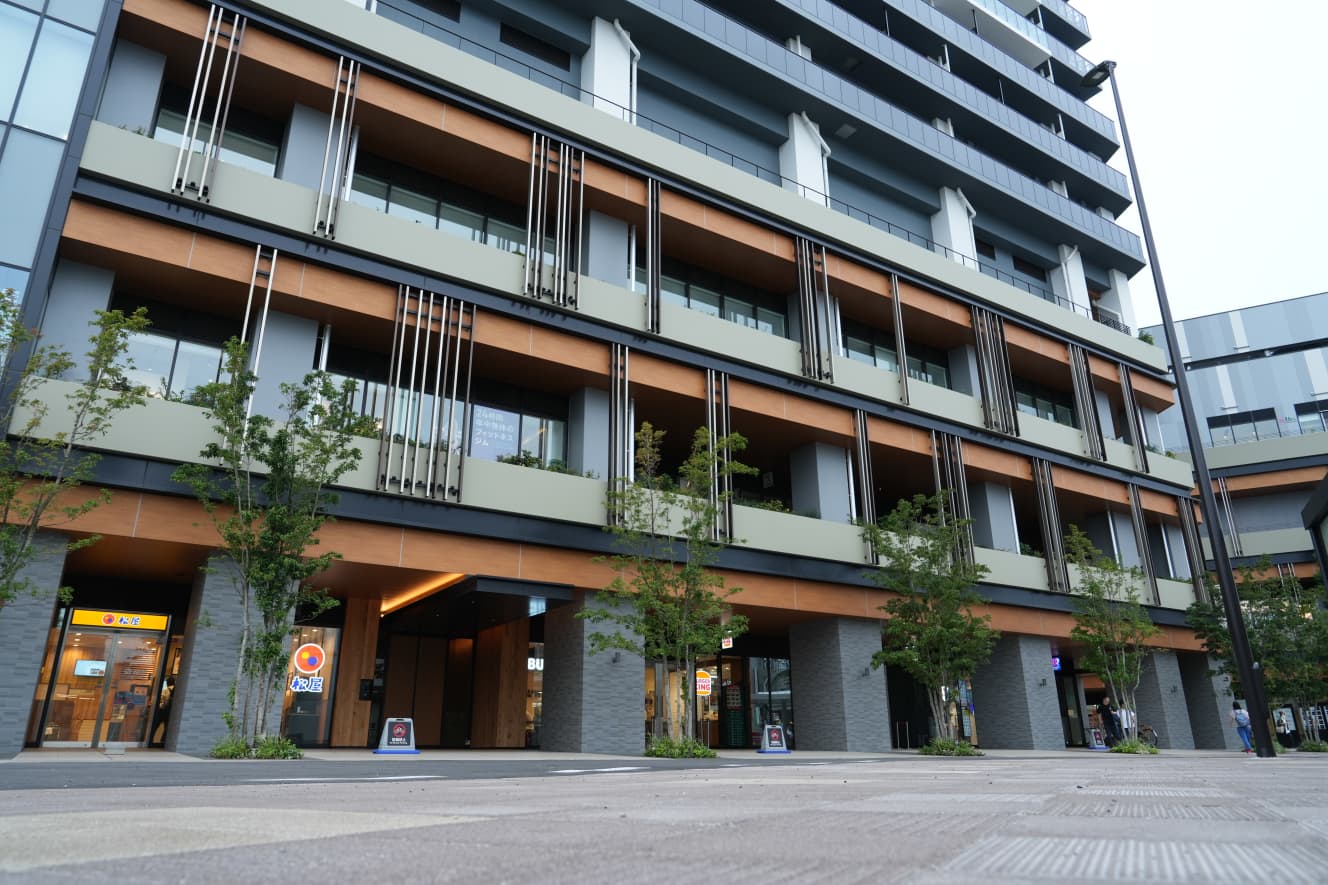


Interview, text, and photos: Blank Green