Kotoshōhō’s Father Says Keio High Contacted Them and Explains How He Raised His Formerly Skinny Son


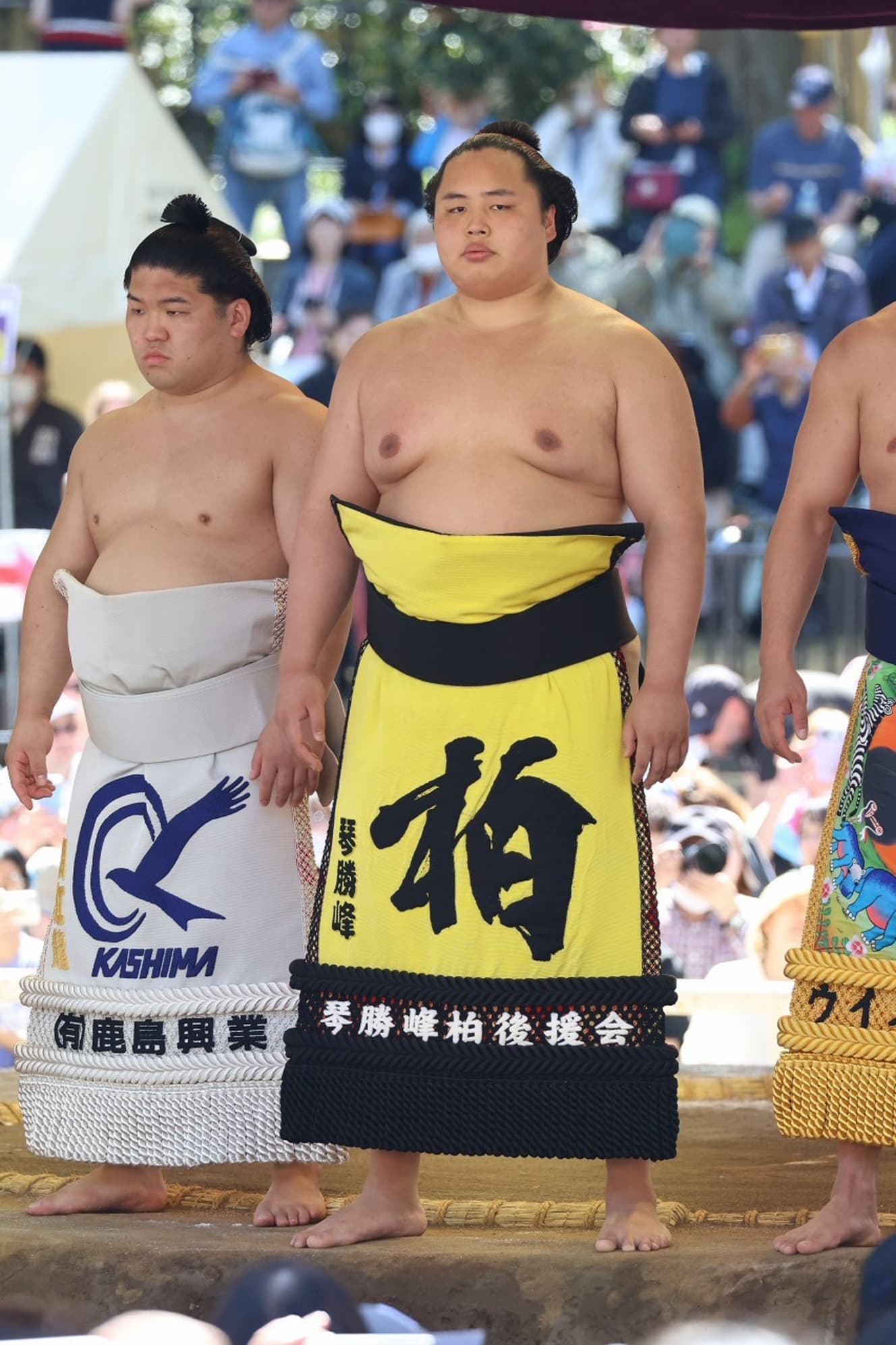
This July, at the Nagoya Basho—which also served as the grand opening event for IG Arena—the champion was the maegashira-ranked Kotoshōhō (then 25).
It was an extremely tangled and dramatic tournament. On the final day, Kotoshōhō faced the up-and-coming Anseikin. If Kotoshōhō won, he would smoothly secure his first championship with a 13–2 record. But if he lost, the result would go to a playoff.
In that decisive bout, the 191-cm, 172-kg Kotoshōhō remained calm, attacked steadily, and won by tsuki-otoshi (thrust down). Having risen to the makuuchi division at just 20 years old and long regarded as a major hope, he finally blossomed.
During the championship interview at the awards ceremony, he modestly said:
“My emotions haven’t fully caught up yet, but I’m happy.”
And in the backstage area where his victory was sealed, the person who stood out more than anyone was his father, Manabu Tebakari, who had traveled from Chiba to cheer him on.
“I was worried sick.”

With his muscular build and long beard, his appearance is just like “Master Roshi” from Dragon Ball. Even now at 60 years old, he still goes to the gym seven days a week, never missing his training—truly an active bodybuilder.
When reporters asked him to strike a Master Roshi pose, he switched to glasses with a different-colored frame and proudly showed off his bulging muscles.
“(His opponent on the final day) Anseikin comes in low, which makes him the most difficult type for Toshiki (Kotoshōhō’s real name) to face. I was watching from a box seat with my wife, and I was worried sick.”
In place of his modest older son—who remained reserved even after winning the championship—Manabu answered many of the reporters’ questions. That night, he attended the Sadogatake stable’s final-day celebration party and reveled in the joy of victory.
Manabu, who now runs the izakaya Daruma in Kashiwa, Chiba, had loved training his body since childhood. Hoping his eldest son Toshiki would also strengthen his body through sports, he came across an application for the Wanpaku Sumotournament held in Kashiwa at Toshiki’s kindergarten.
“Toshiki was already tall for his age, so we decided he would enter the tournament. But since he was still in his first year of kindergarten, he couldn’t win. The next year he entered again and became the runner-up. It seemed he was starting to find sumo a little fun.”
“You can’t talk like that — it’s not acceptable.”

When Toshiki became an elementary school student, he joined the local Kashiwa Junior Sumo Club and began training in earnest.
Among the club’s seniors was the son of a well-known sumo wrestler.
“When Fujinori spoke rudely to the sumo club coach, he scolded him, saying, ‘You can’t talk like that.’ As expected of someone raised in a sumo stable (his grandfather is Sadogatake-oyakata and his father is former sekiwake Kotonowaka), even though he was only in the lower grades of elementary school, I was impressed by how well he already understood hierarchy.”
While senior Kamatani already had a solid, imposing build, Toshiki was skinny and lanky. Manabu—who had experience in boxing and bodybuilding and was very particular about building the body—supported Toshiki with menus that provided good-quality protein without overburdening him.
“For fish, it was tuna. For meat, dishes with little fat. We often grilled meat at home, but once, when the family went to an all-you-can-eat yakiniku restaurant, Toshiki ate six servings of meat all by himself,” he said with a laugh.
Thanks to this thorough approach to developing his physique, Toshiki weighed 110 kg by the time he was in junior high.
“Most of the instructors at the dojo were elderly, so training with a junior-high student weighing over 100 kg became difficult. I have no sumo experience, but since I weighed over 100 kg myself at the time, I let the kids at the dojo practice pushing against my chest. I was exhausted, though—I’m not sure if I was actually helpful to them,” he laughed.
In his third year of junior high, Toshiki won the national junior high sumo championship (open-weight division). Attention quickly turned to the future of “Toshiki Tebakari from Kashiwa.”
“We received offers from Keio High School, Saitama Sakae High School, and others. Considering the training environment, we decided on Saitama Sakae. Through life in the sumo dormitory, Toshiki seems to have trained not only his body but also his heart.”
Nara Fumihiko, now coach of Keio University’s sumo club, recalls:
“Tebakari-kun had straight A’s in junior high. His academic scores in all nine subjects were strong, and we invited him because we hoped he would join Keio High and then Keio University to elevate the sumo club.”
Truly a student-athlete with excellence in both academics and sports. At Saitama Sakae, Toshiki became a regular in team competitions from his first year and excelled in major tournaments as a second- and third-year student.
“It was after the National Sports Festival in his senior year. Toshiki told me, ‘I want to go to university and continue doing sumo.’ I stayed quiet and decided to respect his wishes.”
A major turning point was approaching in Toshiki’s life.

Interview and text: Hazuki Takeda, nonfiction writer
Born in Yamagata City, Yamagata Prefecture. After graduating from university, she worked for a publishing company before taking her current position. She is currently reporting and writing mainly on sumo. Her books include "Yokozuna" and "Dorji: The True Face of Yokozuna Asashoryu" (both published by Kodansha), "Interview the Ozeki," "Tsuneishi Terao," and "Sumo: The Great Rikishi of Memories" (both published by Futabasha).
PHOTO: Masayoshi Katayama