Kotoshōhō’s Bodybuilder Father Shares the Truth Behind the Orchids—and His 50-Shiko Routine at the Altar


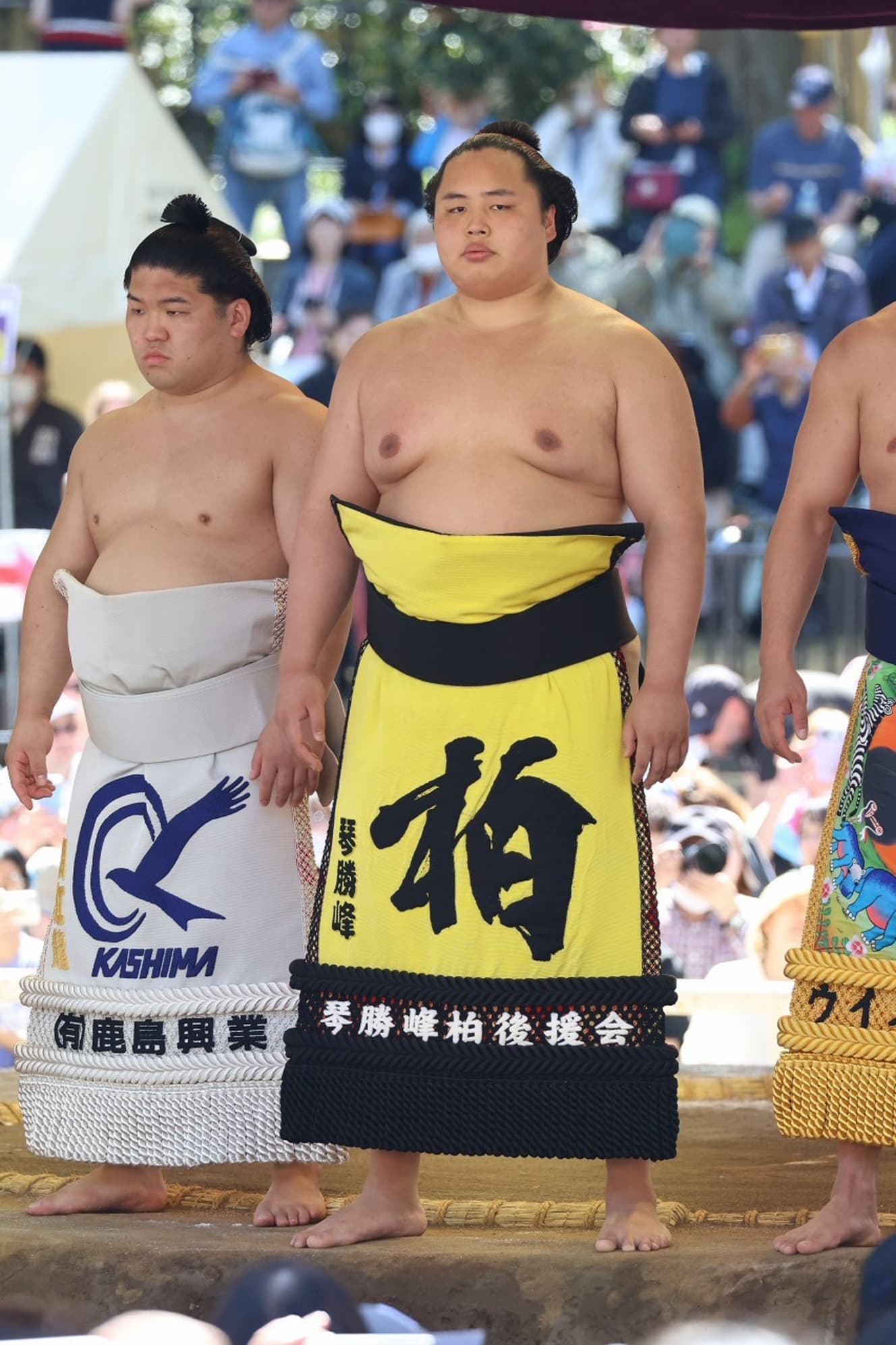
Toshiki Tebakari (26), now the sumo wrestler Kotoshōhō, once had the dream:
“After graduating high school, I want to go to university and continue doing sumo.”
Wanting to respect his son’s wishes as much as possible, his father Manabu (60) remembered what happened in the fall of Toshiki’s third year of high school.
One day, Sadogatake-oyakata (the former Sekiwake Kotonowaka), father of Masakatsu Kamaya (now ōzeki Kotosakura) — both seniors from Kashiwa Youth Sumo Club and Saitama Sakae High School sumo team — visited the Tebakari household. By then, Kamaya had already joined Sadogatake stable and was competing under the name “Kotokamaya.”
“‘Going to university might be good, too. But if you’re thinking of becoming a professional rikishi someday, wouldn’t it be better to join as early as possible?’ Those words from the oyakata seemed to resonate with Toshiki. I think he also felt reassured because he had known Kamaya and Sadogatake-oyakata since he was a child.”
Manabu recalls this as he looks back.
Shiko before dinner, and splits after the bath

Toshiki made his debut in the 2017 Kyushu tournament while still in high school, under the shikona Kototebakari.
“Since he lived in the dorms, he hardly ever came back home to Kashiwa (in Chiba Prefecture) during high school, but once he entered the stable, it felt like he had gone even farther away. When he was still living at home, we avoided giving him carbs at night so his blood sugar wouldn’t rise, in order to stimulate growth hormone. And I’d have him and his younger brother (Daiki — now jūryō wrestler Kotoeimine) do shiko before dinner, and then full splits after the bath… those memories came back to me.”
Even though their lives revolved around sumo, neither brother ever rebelled against Manabu.
“They would do 50 shiko strikes in front of the family altar, but I always explained why they had to do it. When you give people a clear reason, they accept it. And as they say, continuity is strength — doing it every day makes it no longer feel like a burden.
As for meals, consuming high-quality protein after exercise builds good muscle. Making use of that golden time is probably what formed the foundation of Toshiki’s physique today.”
Daiki (Kotoeimine) is now known for his beautifully extended shiko — surely the result of those post-bath splits he continued for years. After Daiki entered Saitama Sakae High School following junior high graduation, the house suddenly became very quiet.
“So, as a sort of replacement for the boys, I brought home a cat (laughs). It’s a male. He’s still doing well, and he’s become a perfect conversation partner for me.”
Manabu shows a gentle side as he says this.
After entering Sadogatake stable, Toshiki scored six consecutive wins in jonokuchi and jonidan, and within a year was promoted to makushita. Two years after joining, at the 2019 Kyushu tournament, he was promoted to jūryō. At that time, his shikona was changed from Kototebakari to Kotoshōhō — the character “勝” (victory) chosen in honor of his mother Katsu-e.
A talented Class of ’99

Kotoshōhō’s rapid ascent continued.
In his third jūryō tournament, the 2020 Spring Basho, he took the jūryō championship with a 12–3 record. The May Summer Basho was canceled due to COVID-19, but in the July Nagoya Basho, he appeared on the dohyō as a 20-year-old makuuchi rikishi.
His teammates from Saitama Sakae High School include Ōhō (now a sekiwake) — the grandson of Yokozuna Taihō and the third son of Sekiwake Takatōriki. Among those born in 1999, his same-year peers include the current yokozuna Hōshōryū — the nephew of Yokozuna Asashōryū. Coincidentally, they were promoted to jūryō at the same time. However, Kotoshōhō reached makuuchi one tournament earlier.
“The ‘Class of ’99’ also includes many other standouts — like Takarafuji II (now jūryō), who won the championship in his makuuchi debut, and Shirakuma (now jūryō), a senior by one year at Daisato’s high school and university and now in the same Nishonoseki stable. So each of them has strong competitive spirits.
As for his relationship with Hōshōryū? Since they went to different high schools (Hōshōryū is from Nippon Sports Science University Kashiwa High), I’d say they’re friendly in moderation (laughs). Oh, and when Toshiki won the Nagoya Basho, Ōhō’s mother (Mieko Nataya) sent a beautiful orchid to my restaurant (the izakaya Daruma I run in Kashiwa)! The Sakae High community has strong ties among parents as well.”
Although he struggled in the following Aki Basho due to a thigh injury, Kotoshōhō has shown strong form from the start of this Kyushu Basho. The London tour held in October was essentially for makuuchi rikishi and their attendants, but since Kusano (now maegashira Yoshinofuji) suddenly withdrew, the London ticket was passed to jūryō rikishi Kotoeimine.
“I think it was a great experience for Kotoeimine. The brothers get along well, but the younger one is always conscious of not wanting to lose to his older brother. His souvenir from London was a Mr. Bean toy (laughs).”
Manabu happily showed the toy.
“Well, a day spent spacing out is a day, and a day spent doing things properly is also a day. As for me, as long as my sons wrestle freely and avoid injury, that’s enough. Ah, but since Kotoshōhō still hasn’t reached sanyaku, I hope he aims for sanyaku next year and trains with hunger. If you work hard, the path will always open.”
Kotoshōhō’s favorite food is the namerō his father makes. When the winter tour ends and he returns to Tokyo in December, it would be wonderful for father and son to sit down and talk over namerō as his snack.

Interview and text: Hazuki Takeda, nonfiction writer
Born in Yamagata City, Yamagata Prefecture. After graduating from university, she worked for a publishing company before taking her current position. She is currently reporting and writing mainly about sumo. Her books include "Yokozuna" and "Dorji: The True Face of Yokozuna Asashoryu" (both published by Kodansha), "Interview the Ozeki," "Tsuneishi Terao," and "Sumo: The Great Rikishi of Memories" (both published by Futabasha).
PHOTO: Masayoshi Katayama