APEC Summit in South Korea Turns Chaotic — International Media Voice Frustration Over Lack of Access


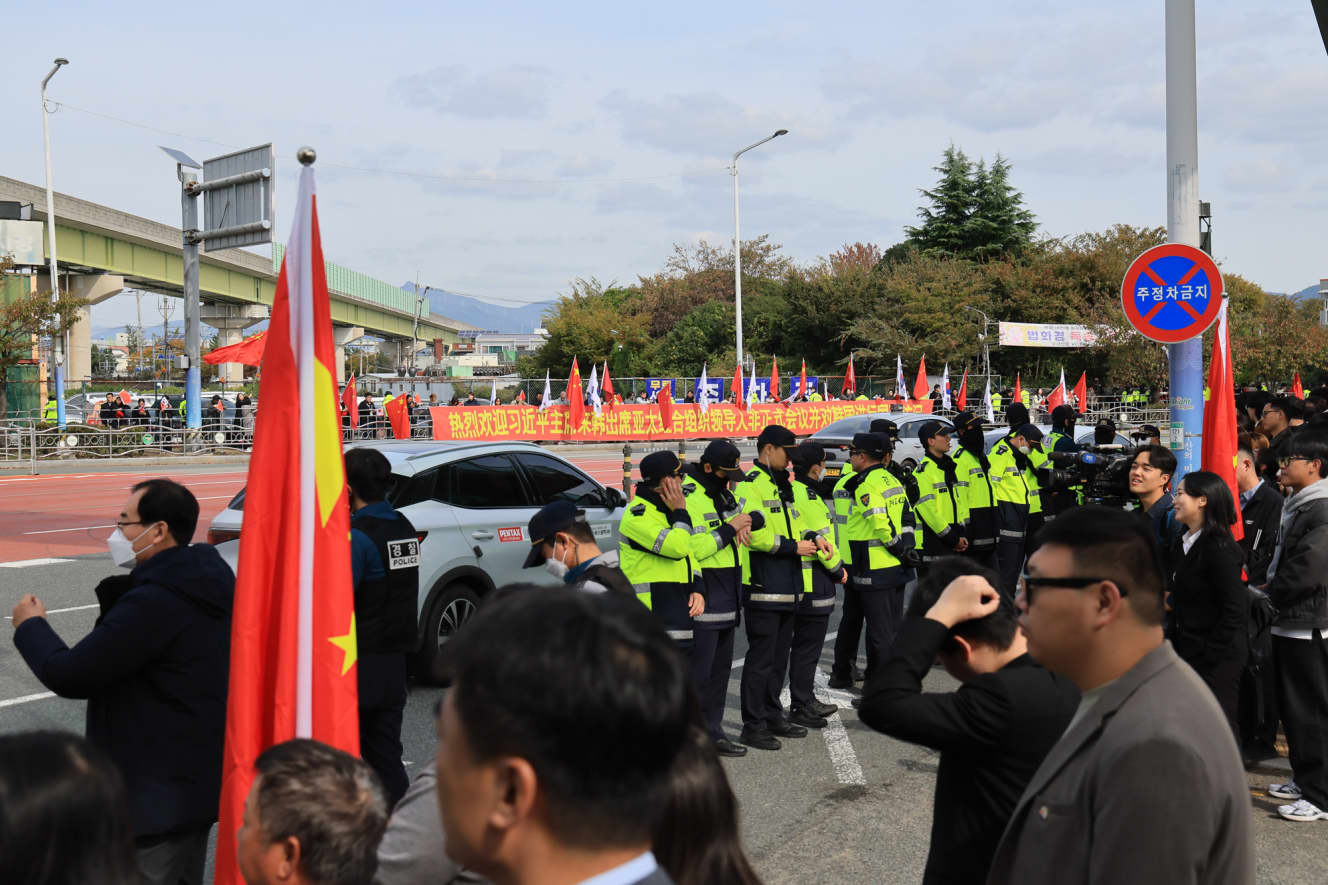
A strange atmosphere along the roadside as President Xi was welcomed
From October 31 to November 1, 2025, the APEC Summit was held in Gyeongju, South Korea. It was the first time in 20 years that South Korea hosted the summit, the previous time being in Busan in 2005.
Leaders such as presidents and prime ministers from 21 countries and regions attended. From Japan, Prime Minister Sanae Takaichi and Foreign Minister Toshimitsu Motegi were present.
From the United States, President Trump arrived in South Korea on the morning of October 29 after departing Tokyo, and held a summit meeting with the South Korean president. However, aside from attending the APEC banquet hosted that same evening by President Lee Jaemyung at the hotel where Trump was staying, he did not participate in other meetings. On October 30, after a summit meeting with President Xi Jinping at a facility located on a South Korean Air Force base adjacent to Gimhae International Airport, he departed for the United States around midday. Treasury Secretary Bessent attended the APEC summit as his representative.
Meanwhile, China’s President Xi Jinping traveled by motorcade to Gyeongju after his meeting with President Trump. The sidewalk in front of the base was packed with large numbers of Chinese nationals who had gathered to welcome him, to the point that it was difficult even to walk through. They waited for the motorcade while setting up banners on both sides of the road and waving large Chinese and South Korean flags.
South Korean police officers were carrying out security, but among them were individuals wearing identification badges belonging not to Korean police but to Chinese government personnel. Whenever anyone appeared who shouted anti-Xi or anti-China remarks, these individuals immediately rushed over to monitor the situation, creating tense moments.
The welcoming group was unusually well-coordinated, and after the motorcade passed, they quickly recorded footage of themselves cheering and welcoming Xi for the cameras, then disappeared almost instantly.
Groups like these are always mobilized whenever President Xi or other Chinese dignitaries visit foreign countries. Similar scenes were seen in Japan during past visits by Chinese officials. Because such displays are almost never seen during visits by leaders of other countries, the atmosphere in that particular area felt distinctly abnormal.
Although Gyeongju is about an hour and a half away from Busan—where the Air Force base is located—traffic restrictions were imposed for long periods whenever foreign leaders traveled to Gyeongju, causing locals to grow weary as they waited for the congestion to clear.
In central Gyeongju, anti-APEC demonstrations and pro-Trump rallies were also being held, and combined with security blockades for passing dignitaries, traffic was further restricted. This again caused congestion and frustration among Gyeongju residents.
On November 1, the final day, President Lee held the chair nation’s press conference at the media center. The conference was not held in a separate room but on the main stage in the hall where journalists worked. After finishing reading his prepared statement, President Lee enthusiastically answered as many questions from international reporters as possible in the limited time available.
In addition to discussing the achievements of APEC and South Korea’s diplomatic vision, he commented on Japan–Korea relations: “Prime Minister Takaichi is a very admirable politician. All concerns have been resolved. Next time, I would like to hold a summit in Prime Minister Takaichi’s home prefecture of Nara.”
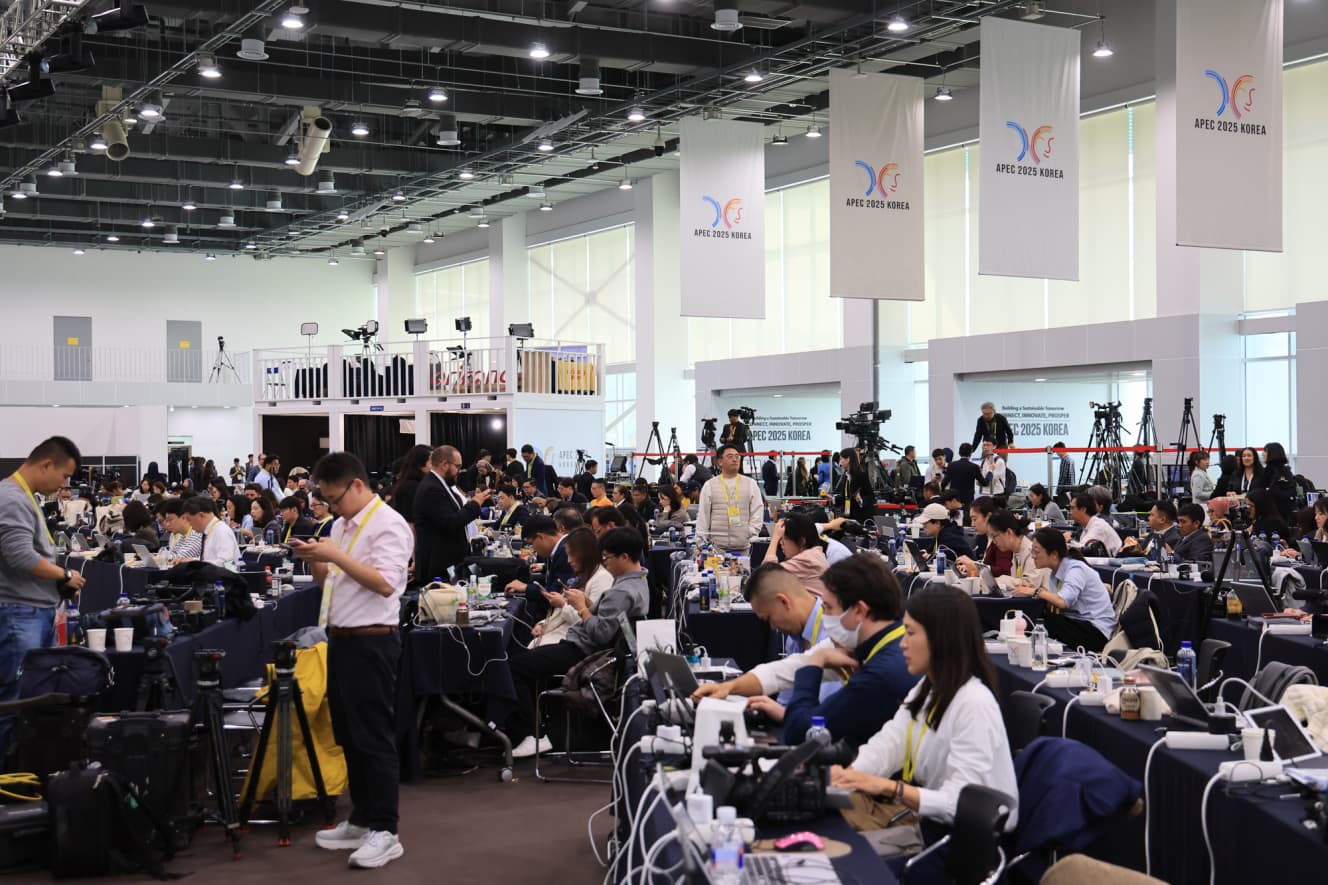
The media center was clearly lacking in capacity
A reporter from a Russian media outlet based in China shared his frustration:
“I want to cover various things, but there was absolutely no information. Aside from the South Korean president’s press conference, there was almost nothing we could report on, and we were in trouble.”
A freelance photographer from the Philippines also lamented:
“There were no arrangements for airport coverage or anything else to shoot. I desperately wanted even a little information, but when I asked the help desk, they said they didn’t know anything. I’m at a total loss. What is that desk even for?”
The media center was obviously too small for the number of journalists, and many were forced to work on the floor. The on-site restaurant was packed during mealtimes, with long lines forming. The number of restrooms was also insufficient, and some stalls became unusable. Compared to previous APEC or G7 summits held in Japan, the media center was overwhelmingly small in scale.
Next year’s APEC Summit in 2026 is scheduled to take place in November in Shenzhen, China.
Many foreign media outlets voiced concerns about how the event will be run, predicting that press freedom will be even more restricted than in South Korea. Speculation also circulated about whether Russia’s President Putin might attend because the summit will be hosted in China, and whether President Trump will participate as scheduled. Japan’s next turn to host APEC has been set for 2031—its first time since Yokohama in 2010, marking a 21-year gap.
On November 7, at a House of Representatives budget committee meeting, Prime Minister Takaichi stated that a Taiwan contingency could constitute a situation that threatens Japan’s survival. In response, on November 8, China’s Consul General in Osaka, Xue Jian, posted on X (formerly Twitter), saying to Prime Minister Takaichi, “I would cut off that filthy head of yours without a moment’s hesitation”—an utterly unacceptable remark from a diplomat representing a nation.
Also in South Korea, the Air Force’s special aerobatic team, the “Black Eagles,” had been scheduled to receive refueling support at Japan’s Air Self-Defense Force Naha Base—the first time ever—before heading to the Dubai Airshow in the UAE. However, the plan was canceled on October 28 after it was discovered that the unit had conducted training near Takeshima in Shimane Prefecture. This occurred just two days before Prime Minister Takaichi and President Lee held their first summit on October 30.
Although Prime Minister Takaichi held talks with both Korean and Chinese leaders at APEC, one wonders whether the cunning, two-faced diplomatic posture of both countries will ever change.


Interview, text, and photos: Takuma Arimura