Despite high approval ratings, there are “voices of protest” from within the LDP… Why the administration of Sanae Takaichi is expected to “stall from here on out.


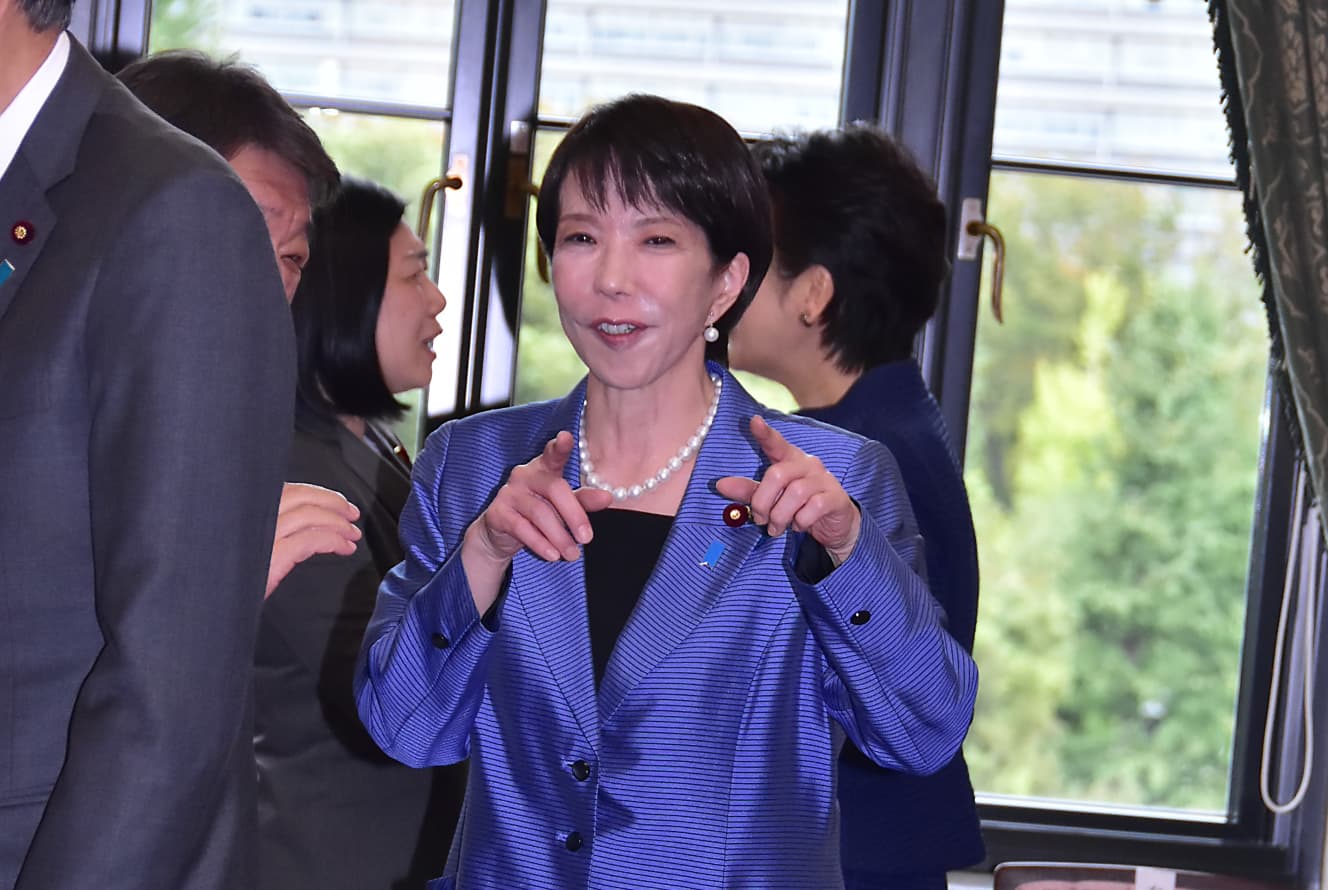
Tremendous hard work
The Prime Minister’s official residence at 2:30.
The Prime Minister’s official residence in Kasumigaseki was summoned at an unusual hour to prepare for the Budget Committee meeting of the House of Representatives, which was scheduled to start at 9:00 a.m. on November 7. Although the Kishida and Ishiba administrations had also held study sessions starting as early as 6:00 a.m., starting at 3:00 a.m. was unusual. Of course, there was no way to keep Prime Minister Sanae Takaichi (64) waiting, so the bureaucrats assembled 30 minutes early.
We will work and work and work.
Takaichi said on October 4 as she became the first female LDP president-elect. She jumped up and down next to President Trump (79), and she has been on a diplomatic schedule with a series of Japan-South Korea summits and Japan-China summits, recording a high approval rating of around 70% in polls conducted by various companies. With the first meeting of the Budget Committee coming up, was he firing on all cylinders? ……
The Budget Committee is a question-and-answer session, unlike the Representative Question Session. The opposition’s questions are notified in advance, but are limited to bullet points and brief notes, and are broadcast live on NHK, creating a tense atmosphere of heated debate and unscheduled discussion, which tends to turn into an argumentative battle.’ In February 2005, Prime Minister Shinzo Abe gave a ‘backhanded answer’ to an opposition lawmaker’s questioning, saying, ‘If I or my wife were involved, I would quit as prime minister or member of the Diet.
The party giving the answer wants to be prepared for any question and to avoid gaffes. Up to now, Mr. Takaichi has not left it up to the bureaucrats, but has checked his written answers in advance and revised the content of his answers himself.
When he was Minister of Internal Affairs and Communications and Minister of Economy and Security, he stayed in his Akasaka dormitory and checked all the answers prepared by the bureaucrats by himself. Compared to the prime minister, however, she was limited in her field of work. In addition, her husband, Taku Yamamoto, 73, has a cooking license and took care of Takaichi’s physical condition in terms of food, such as making vegetable juice from leftover breakfast salad tomatoes and serving it at night.
However, Mr. Yamamoto, on whom we rely, suffered a stroke and missed the luncheon and dinner meetings at the Asia-Pacific Economic Cooperation (APEC) meeting in October, citing ‘scheduling conflicts. Is he taking good care of his health?” asked Akiko Azumi, a political journalist.
In his policy speech, Mr. Takaichi stated that he would abolish the provisional tax rates on gasoline and diesel fuel and subsidize electricity and gas bills as a measure against high prices. He is expected to pass a bill related to the gasoline tax cut at the extraordinary Diet session, which will likely result in the passage of the bill on measures to prevent high prices.
The opposition party submitted the gasoline tax cut bill, and the LDP has approved it. If gasoline and diesel prices fall, the opposition parties will be the ones who will be able to say, ‘Our party’s policy has been realized. If the LDP, which is still the minority ruling party, wants to pass a bill, the LDP will work hard to adjust the bill, but the credit will belong to the opposition party.
The focus of attention in the extraordinary Diet session will be whether or not a 10% reduction in the number of lower house members can be achieved, but now that the LDP is the minority ruling party, it is unlikely that the bills it submits as government bills will be passed with the same gusto as under the Abe administration.
The coalition government agreement between the LDP and The Japan Innovation Party clearly states that it “aims to submit and pass a bill during the extraordinary Diet session of 2013 to reduce the number of members of the House of Representatives by 10%. For the Restoration Party, the reduction of the number of Diet members is a pillar of its policy, along with the “sub-capital” concept and social security reform.
Yoshifumi Yoshimura, 50, the leader of the Restoration Association, has repeatedly stated that “reducing the number of Diet members is the center pin of reform. Mr. Takaichi also assured the House of Representatives Budget Committee on March 7 that he would submit the proposal.
Will the LDP be able to overcome the “cost of working with the Restoration Association?
However, the tone within the LDP has slowed down. Shunichi Suzuki, 72, secretary general of the LDP, who is in charge of coordination, said, “There are various opinions on whether the reduction should be limited to proportional voting or whether the number of constituencies should also be reduced. It may be difficult to reach a concrete conclusion by the end of the session on December 17.
The council, which includes members from all parties, has been discussing the election system for some time. The plan was to reach a conclusion by early spring, but in order to get through the leadership nomination election, Prime Minister Takaichi has been pushing for a law revision during the extraordinary Diet session that ends on December 17, in cooperation with the Restoration Association.
There is no indication that the party will come together, but even if Prime Minister Takaichi were to unite the party on a top-down basis, a backlash from the opposition parties is inevitable in the Diet debate. Smaller parties such as the Sangyo and Komeito will never get on board,” said a member of the former Kishida faction of the House of Councilors.
Yoshimura and other senior members of the Restoration Association have made it clear that they will leave the coalition if the number of Diet members cannot be reduced, and the Takaichi administration is caught between a rock and a hard place. Perhaps in order to break out of this predicament, Fumitake Fujita, 44, co-chairman of the Restoration Association, indicated that “dissolving the House of Representatives is an option,” and Nagata-cho suddenly became abuzz with excitement and suspicious documents circulated.
At a November 10 meeting of the House of Representatives Budget Committee, when opposition party members questioned him about the dissolution of the House of Representatives on the issue of “reducing the number of Diet members,” Takaichi stated, “At the very least, it would be an option to dissolve the House of Representatives by reducing the number of Diet members.
He said, “I think it would be difficult to think of dissolving the House of Representatives on the issue of legislation to reduce the number of Diet members, at least.
While the Takaichi administration has maintained a high approval rating, the LDP’s party approval rating has been sluggish, hovering around 30% in opinion polls. The LDP cannot rely on the help of the New Komeito Party, with which it has cooperated in the election so far.
Even if they were able to do so, it would leave a firestorm within the LDP. Even if the bill is finally submitted after much bloodshed within the LDP, the opposition parties, with the exception of the National Democratic Party of Japan, will oppose it in the Diet debate that follows. Why must we go to such lengths for the sake of the Restoration Party’s policies?” (A young LDP member of the House of Representatives)
The LDP’s young Lower House members are now paying the price for borrowing the Restoration Party’s help in order to win the leadership nomination election after the New Kōmeitō Party announced that it would no longer be part of the coalition. Despite the high approval rating, the “thorny road” that the Takaichi administration must walk has only just begun.
Interview and text by: Daisuke Iwasaki PHOTO: Takeshi Kinugawa