Shibuya’s Old Pleasure Quarters—Hyakkendana and Maruyamachō


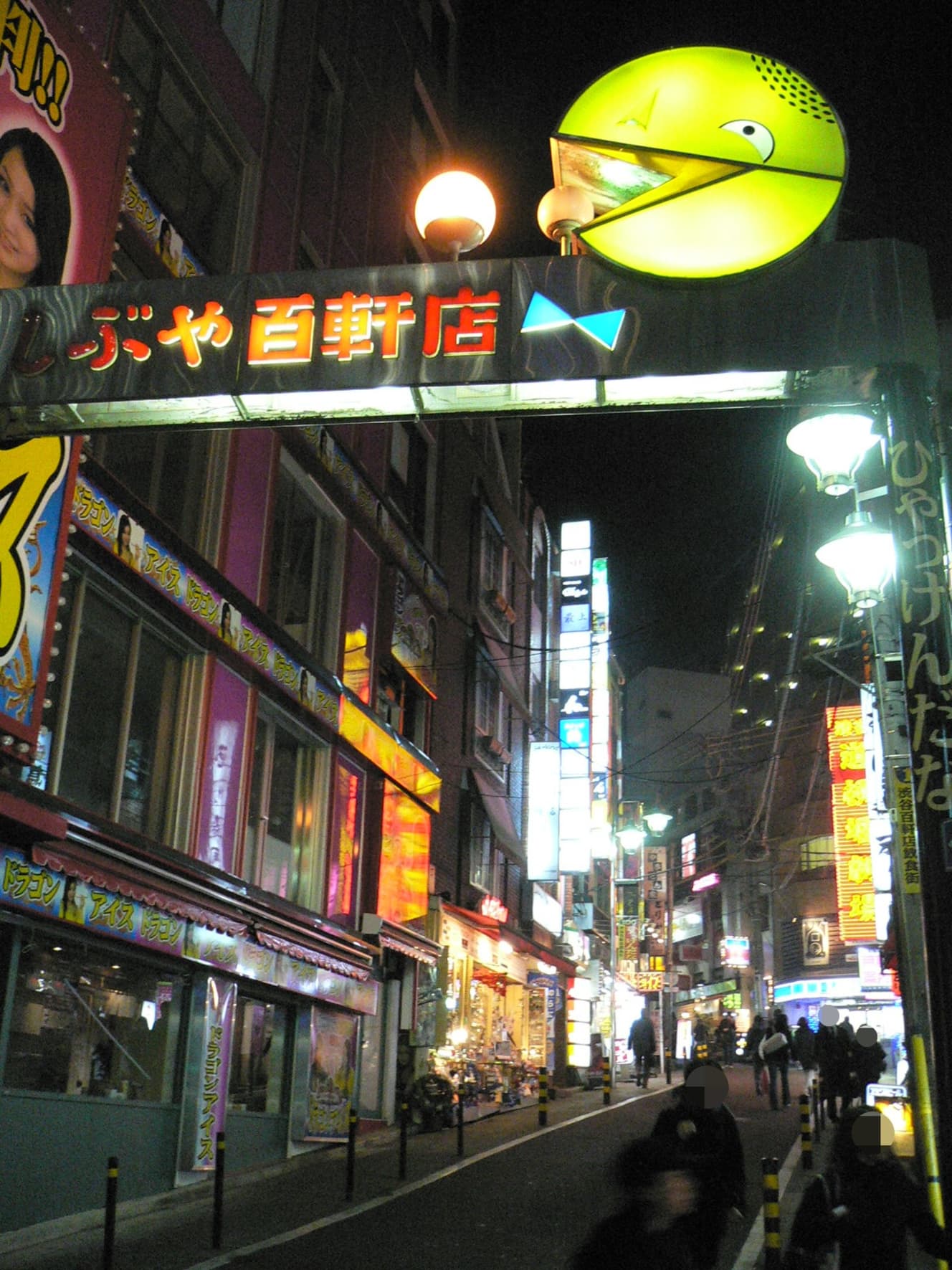
Long-established shops that still retain the atmosphere of the 1980s
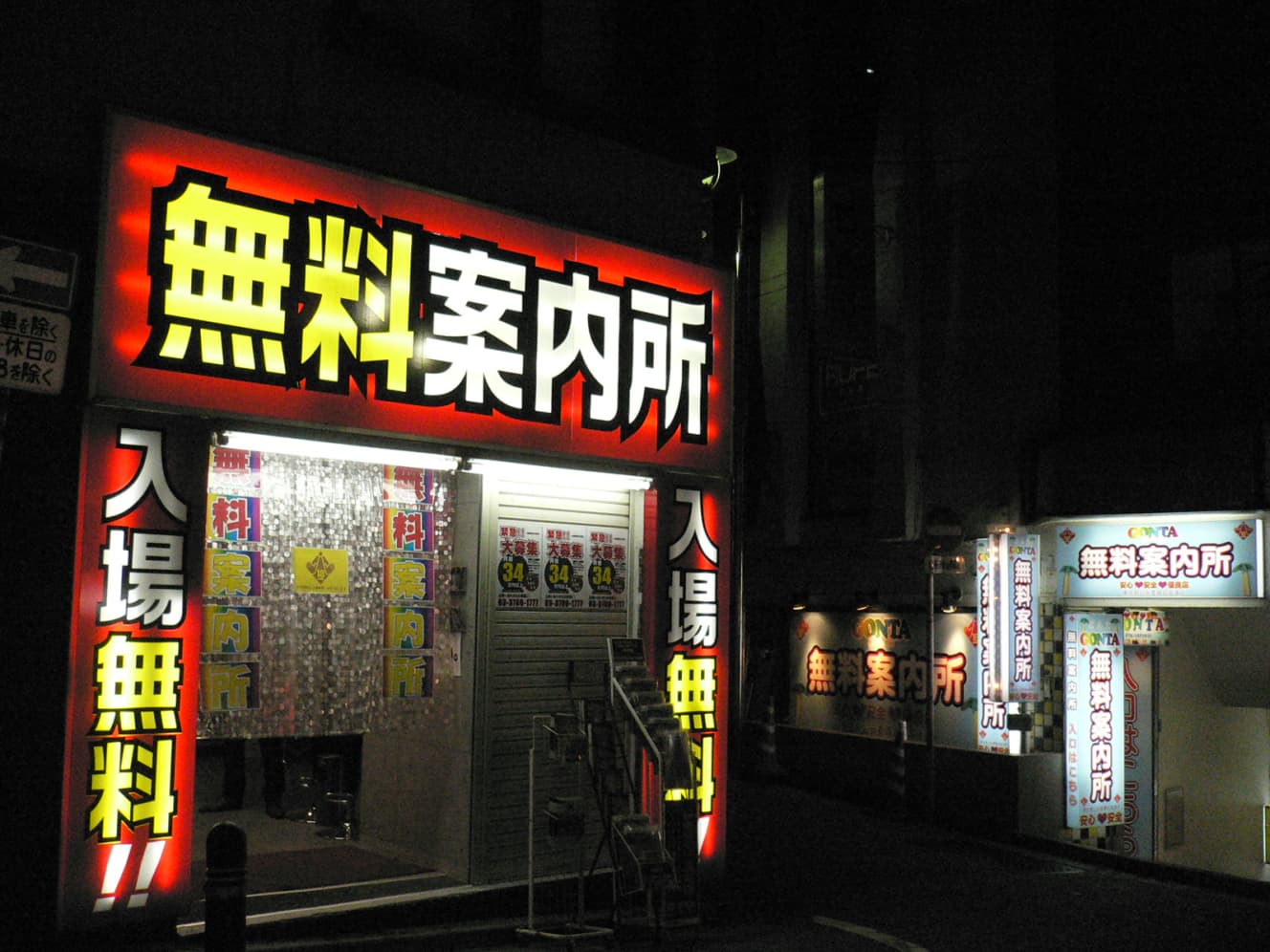
The drama “If This World Were a Stage, Where Would the Backstage Be?” (Fuji TV), nicknamed Moshigaku, currently airing every Wednesday night, is fascinating. Written by Kōki Mitani, it is a coming-of-age ensemble drama set in “1984 Tokyo/Shibuya.” The central setting of the story is a strip theater. The show also features free information booths, a meikyoku café(classical music café), and even rip-off bars, energetically recreating the nightlife district of Shibuya at the time.
The fictional town “Happun-zaka” in the drama is said to be modeled on Hyakkendana in Shibuya’s Dogenzaka 2-chome area.
Today, Hyakkendana still has long-established places that retain the atmosphere of the 1980s.
Meikyoku Kissa Lion, which opened in 1926 (Taisho 15) in Ebisu, moved to Hyakkendana at the end of 1926 (the first year of the Showa era). The building was completely destroyed in an air raid, but was rebuilt in 1950 with its original design and remains in business today.
Nearby are the famous Indian curry restaurant Murugi (founded in 1951) and the ramen shop Kiraku, founded in 1952 (some say 1953), which still draw lines of customers at lunchtime—each carrying on the flavors and history of the Showa era.
At the same time, the area is also a red-light district with storefront health establishments and strip theaters, surrounded by love hotels and soaplands.
In this article, we will look at how this area of Shibuya—still bustling with people—has changed since the Meiji era.

The Great Earthquake turns it into Shibuya’s Asakusa
Hyakkendana was developed in 1927 (Shōwa 2) as part of the reconstruction project following the Great Kantō Earthquake, under the direction of Seibu Group founder Kojirō Tsutsumi. Famous shops such as Shiseido, Seiyōken, and Yamano Music were invited from areas of Tokyo that had been reduced to ashes by the 1923 quake. A shopping district of 117 establishments—including theaters and cinemas—was created.
The origin of the name “Hyakkendana” (“Hundred-Shop Row”) is said to come from: the fact that hundreds of shops once lined the street, or because they aimed to create a town resembling a department store.
Hyakkendana thrived as a major entertainment district and was even referred to as “Shibuya’s Asakusa.” Street vendors filled nearby Dogenzaka, adding to the vibrancy.
Adjacent to Hyakkendana is Maruyamachō, now one of Tokyo’s major love hotel districts, but from the Meiji era through the postwar period, it prospered as a hanamachi (geisha district).
Maruyamachō became a hanamachi around 1887 (Meiji 20). It began when a public bathhouse called Kōbōyu stood near what is now Keio Inokashira Line’s Shinsen Station, and the attached ryokan Shinsenkan became popular. Officers from the Yoyogi military training grounds frequented the area, leading to rapid growth and the establishment of ryotei restaurants and machiai (teahouses where guests met geisha).
In 1913 (Taishō 2), the area was officially designated as a sangyōchi—a licensed district permitting restaurants, teahouses (machiai), and geisha houses. At its peak in 1921 (Taishō 10), the district boasted 402 geisha.
Because it was a hanamachi, Maruyamachō was also home to many mistress residences owned by wealthy patrons. In the early Shōwa era, it was common for beautiful geisha to be financially supported by affluent gentlemen as their lovers. Although they were provided homes, their long-term security was not guaranteed.
To make a living independently, many converted part of their house into a small inn, putting signs at their gates such as “For rest or business discussions”. They welcomed customers not only for overnight stays but for hourly use as well.
In this way, the inn business became a means for women in the vulnerable position of being a mistress to support themselves and gain financial stability.

The Postwar Shōwa-Era History of Shibuya’s Sex Industry
However, during the air raids of World War II, Hyakkendana burned to the ground, and most of Maruyamachō was also destroyed. On Dōgenzaka, street vendors spread out toward Shibuya Station, forming a black market. Crowds of people in search of daily necessities or suffering from hunger gathered there.
Amid such circumstances, just like in Ueno, Shinjuku, and Ikebukuro, groups of streetwalkers serving Japanese customers formed in Shibuya as well. In 1951, a 22-year-old woman—nicknamed “Five Million Yen” because she was said to have saved 5 million yen (roughly 400 million yen in today’s value) through her work as a streetwalker—was strangled to death by a customer. This incident sparked rumors such as “Shibuya is a great place to earn money” and “Shibuya is profitable,” causing the number of streetwalkers to increase rapidly. There were also many pimps. By 1956, 125 streetwalkers had formed a union to protect their territory from other illegal prostitution businesses and delinquent gangs.
Shibuya also had establishments that organized call girls who would be dispatched for prostitution via telephone. There were shops that recruited business girls (what we now call office workers) and high-class establishments as well. A high-end shop busted in 1962 was run by a married couple and was reputed for having many beautiful women. In 1980, a prostitution club masquerading as a telephone sex club was shut down; among its 20 women were current university students, employees of well-known companies, and former nurses, attracting considerable attention.
In October 1981, the first peep-show booth, Theater 4.5, opened near Shibuya Station’s south exit. Because customers watched women masturbate, it was also called an “onanī theater.” Peep-show booths soon spread nationwide to Shinjuku, Ueno, Sapporo, Osaka, Hiroshima, Fukuoka, and beyond.
The 1980s also saw the rise of hotetoru—an illegal out-call sex service. Pink flyers were plastered inside phone booths. In 1984, several shopping districts jointly began removing such flyers, even prepared for trouble with the people who posted them. The following year, a hotetoru service that accepted credit cards was busted, generating significant attention.
There were also Turkish baths (soaplands), pinsaro (pink salons), manheru (massage-plus-oral-service parlors), and telephone clubs. Some unusual businesses included reverse mantle shops where female workers shaved male customers’ body hair, and even a mistress-bank composed entirely of foreign women. There was reportedly even a travel agency specializing in Southeast Asian sex-tourism.

From the decline of the red-light district to the rise of the love hotel area
After WWII, while a black market formed in Dogenzaka, Maruyamachō managed to recover and maintain its status as a red-light district. Around 1955, the area saw its greatest postwar prosperity. However, by the time of the 1964 Tokyo Olympics, the traditional ozashiki entertainment began to wane, and the district slowly declined. As ryotei (traditional restaurants) and geisha decreased, love hotels gradually increased, and by the post–bubble era, they had grown dense across the entire small hill. The decline of the red-light district was caused in part by ryotei closing due to a lack of successors and the aging—and eventual loss—of long-time customers.
Immediately after the war, Maruyamachō had many ryokan inns as well. At that time, there was no distinction between love hotels and business hotels—the way the rooms were rented simply changed with customer demand. Inns used primarily for secret romantic meetings were called “tsurekomi ryokan” (bring-in inns). These inns had the familiar hot spring mark, which, when flipped upside down, resembled a jellyfish—earning them the nickname upside-down jellyfish.
Originally ordinary ryokan, they shifted into hourly-rental tsurekomi inns for a simple reason: it was profitable. Unlike traditional inns, they didn’t need to greet customers or serve meals, and guests stayed only briefly before leaving. No chef license or sanitation permit was required. For owners, it meant fewer hassles and easier operation.
In 1951, the cabaret Club Shibuya became popular because it allowed entry into a neighboring tsurekomi ryokan. At the time, there were as many as 70 such inns. Regular ryokan, overwhelmed by their proliferation, began referring to themselves as general ryokan.
The Japanese-style tsurekomi inns gradually declined alongside the red-light district, and during the redevelopment boom of the high-growth era of the 1960s–70s, Western-style love hotels moved in.
Singer Midori Satsuki opened a love hotel called Hotel Nippon in Maruyamachō in 1973. Her motivation came from entering a tsurekomi hotel in Sendagaya and feeling saddened by the dirty room and bedding, thinking, “If this is where people make memories, I should make a better one myself.” At a time when flashy exteriors—imperial palace style, luxury cruise ship style—were trending in the industry, Hotel Nippon instead featured a brick-walled, apartment-like design, making it popular among young women.
When the new adult entertainment regulation law was enacted in 1985, renovations and expansions became prohibited. As a result, many love hotels rushed to do last-minute changes such as retiling walls or updating signs. At its peak, Maruyamachō had around 150 love hotels. But by the late bubble era (1989), due to land buyouts and redevelopment, many closed. Subsequent tighter regulations reduced the count to about 70 today.
When the revised Adult Entertainment Law (New Fūeihō) came into effect in 1985, renovations and expansions became prohibited. As a result, many love hotels rushed to make last-minute changes—retiling walls, updating signs, and more.
At its peak, Maruyamachō had around 150 love hotels, but by the late bubble era (around 1989), many closed due to land buyouts and redevelopment. Further regulatory tightening afterward reduced the number to about 70 today.


Interview, text, and photographs: Akira Ikoma