Judo Star Satoshi Ishii Confesses to Life-Threatening Health Ordeal


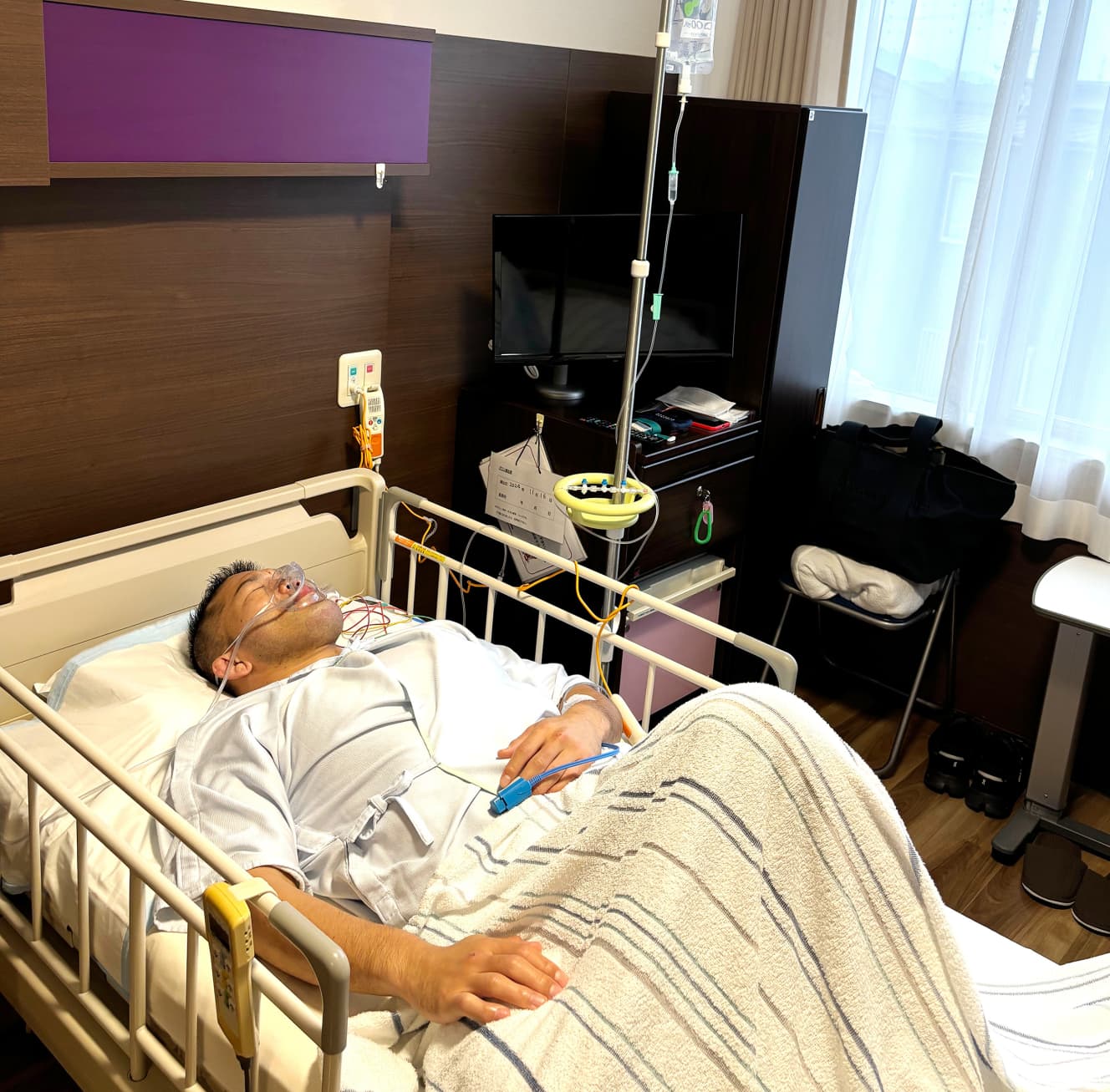
With unbearable pain, high fever, and nausea — I was prepared for death
The only parts he could move on his own were his eyes and fingers.
Satoshi Ishii (38), who had become bedridden with an oxygen mask attached and IV drips running, says that every day he was aware of death.
“I was delirious from a high fever, nausea, and severe pain. From morning until night, I was in complete despair.”
At 19 years and 4 months old, he became the youngest-ever champion of the 2006 All-Japan Judo Championships. In the over-100 kg class at the 2008 Beijing Olympics, he won the gold medal and then transitioned directly into professional MMA, fighting fierce battles with top fighters around the world. What pushed this tough man to the brink of being knocked out was—a medical mishap.
“It all started with a cervical disc herniation. I wanted to take care of it before my next fight.”
This was in July of last year. The doctor who had previously treated his herniation with laser therapy had retired, so he had to look for a replacement. That search led him to Dr. A in Nagoya, a renowned specialist who had written books on laser treatment and frequently appeared in the media.
“I underwent percutaneous laser disc decompression surgery on July 24, but when the anesthesia was injected beforehand, I had a bad feeling. When I returned to my family home in Osaka the next day, I developed intense nausea and a fever, and even walking became difficult. At a clinic run by an acquaintance, they told me, ‘This could be an infection. You need to consult the doctor who performed the surgery immediately,’ so I went back to Nagoya.”
When Ishii pressed Dr. A, asking, “Isn’t this an infection?”, the doctor refused to consider it, saying:
“After laser surgery, the treated area naturally becomes warm.”
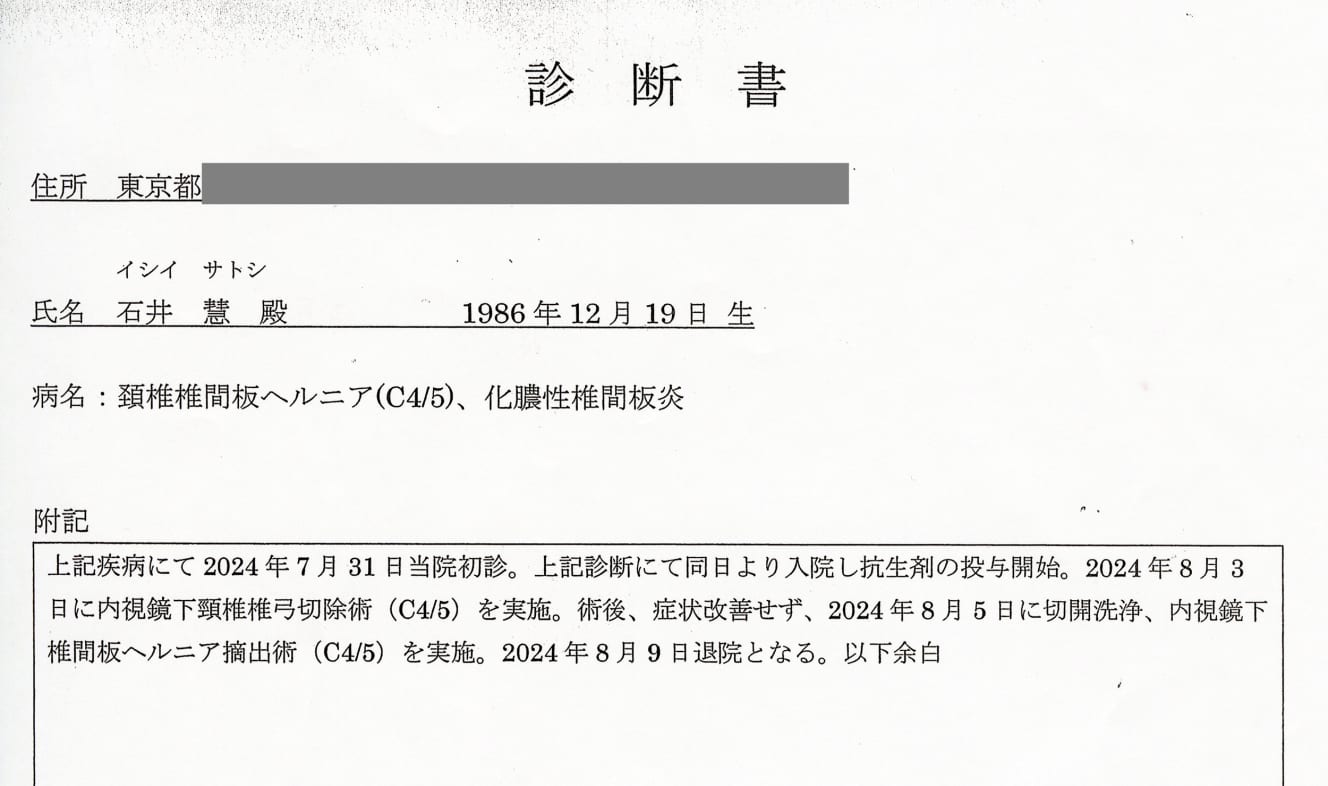
“I kept visiting Dr. A for several days, but my condition continued to worsen. My whole body hurt, I felt exhausted, and my fever rose even higher. I thought, ‘This is really bad,’ so while barely able to stand, I searched online for another reputable hospital and went to Aichi Sebone Hospital. I was diagnosed with pyogenic discitis and was admitted immediately—seven days after the laser procedure. They started antibiotics right away, and I underwent two additional surgeries to drain the pus.”
At one point he became completely bedridden, and even his athletic career was in jeopardy.
“I couldn’t even hold chopsticks properly,” he said, gazing off into the distance. Then, in a firmer tone:
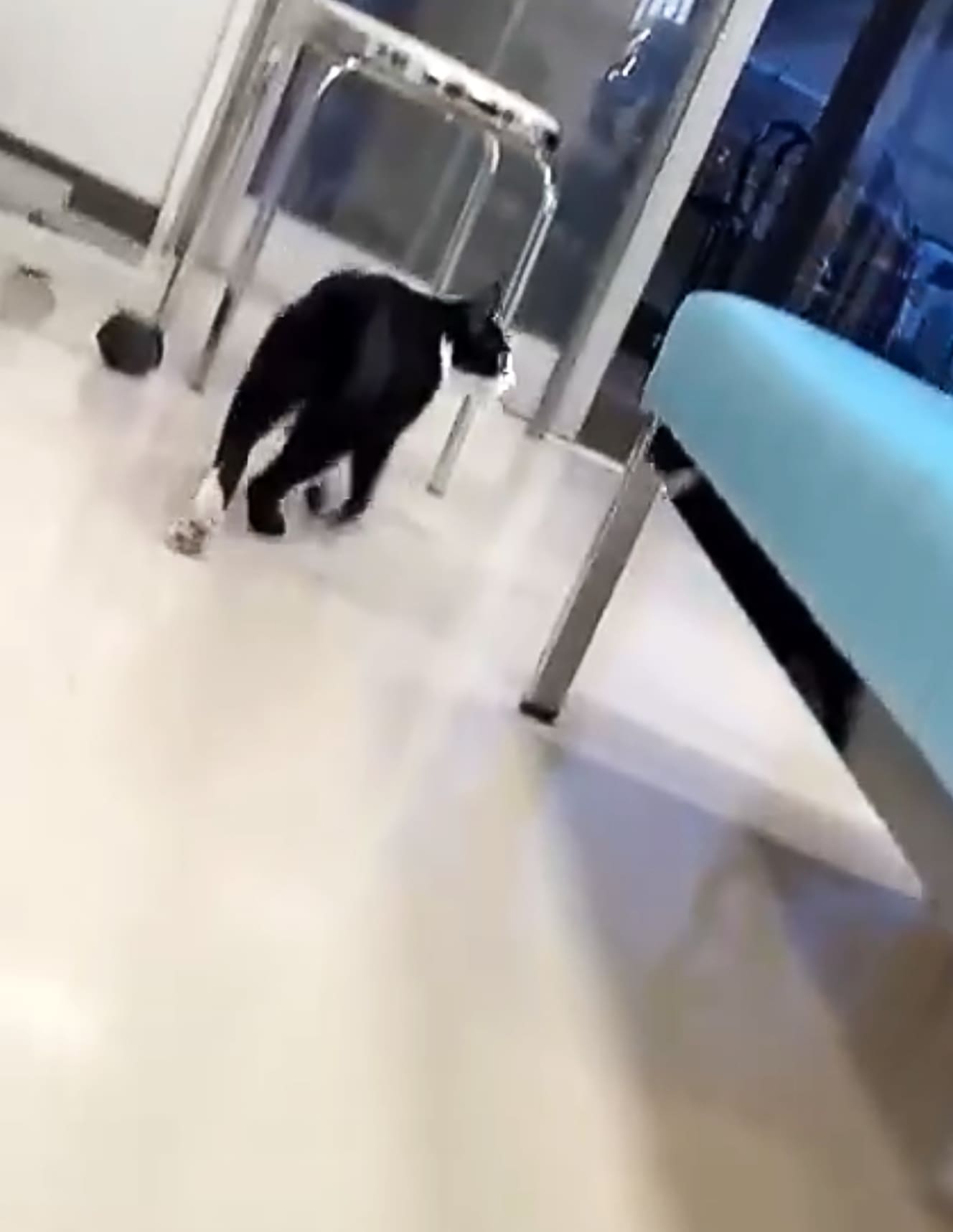
“What I can’t understand is that the MRI taken at Aichi Sebone Hospital clearly showed pus from the infection, yet Dr. A stubbornly denied infection. He must have taken MRI scans too. And I was shocked to see stray cats constantly wandering around the clinic. As far as I remember, during the surgery, Dr. A wasn’t even wearing gloves.”
Dr. A’s Position
In late August, after being discharged, Ishii met with Dr. A. When Ishii explained the series of events, Dr. A reportedly offered to refund the surgical fee and pay the treatment costs at Aichi Sebone Hospital.
Suspecting medical malpractice, Ishii moved to preserve evidence such as medical records. However, Dr. Kazutoshi Kameda, director of Sapporo Central Orthopedic Clinic—well known for treating neck, shoulder, and knee pain as well as sports injuries—says that diagnosing infections is difficult:
“Diagnosing infection requires evaluating fever, blood tests, MRI findings, and clinical symptoms together. One to two months after surgery, it is often difficult to distinguish postoperative inflammation from infection on MRI, which can lead to misdiagnosis or delayed judgment. In this case, the procedure was a laser surgery done through a needle with minimal incision. The preconceived notion of low risk of infection may have contributed to a delayed diagnosis, but based on the records, the medical actions taken were standard and not necessarily wrong. However, whether sufficient explanation was given beforehand about side effects and infection risks is questionable. And if stray cats were coming in and out of the clinic, that is clearly inappropriate from a hygiene standpoint.”
Dr. A denied all allegations.
“I saw no signs of infection-related inflammation on the MRI images. Yes, if the entrance (of the building) is open, a stray cat might wander in, but they would never enter the exam rooms or operating rooms. Ishii complained that I didn’t use gloves or disinfect during examinations or treatment, but that is impossible.”
He explained that the offer to refund the surgery and cover hospital costs was made because the treatment results and recovery he had expected were not being met.
When asked about Ishii’s career crisis as a fighter, Dr. A concluded:
“I heard he retired in March 2024. I know he may not be satisfied, but please take care of yourself.”
When these remarks were relayed to Ishii, there was a moment of silence—then he spoke sharply:
“That’s something a random media outlet wrote. If I were retired, I wouldn’t have undergone surgery. I had no trouble living my daily life. The fact that cats were coming and going inside the clinic is simply wrong. There was a cardboard box arranged as a bed at the entrance, and several cats were wandering around. It didn’t look like they were being kept out at all.
I still see Dr. A on TV. Every time I think, ‘Patients must learn about their own bodies, their symptoms, and their treatments. We can’t leave everything to the doctor.’ I went through hellish pain, but if my experience can help someone, that would at least give this meaning.”
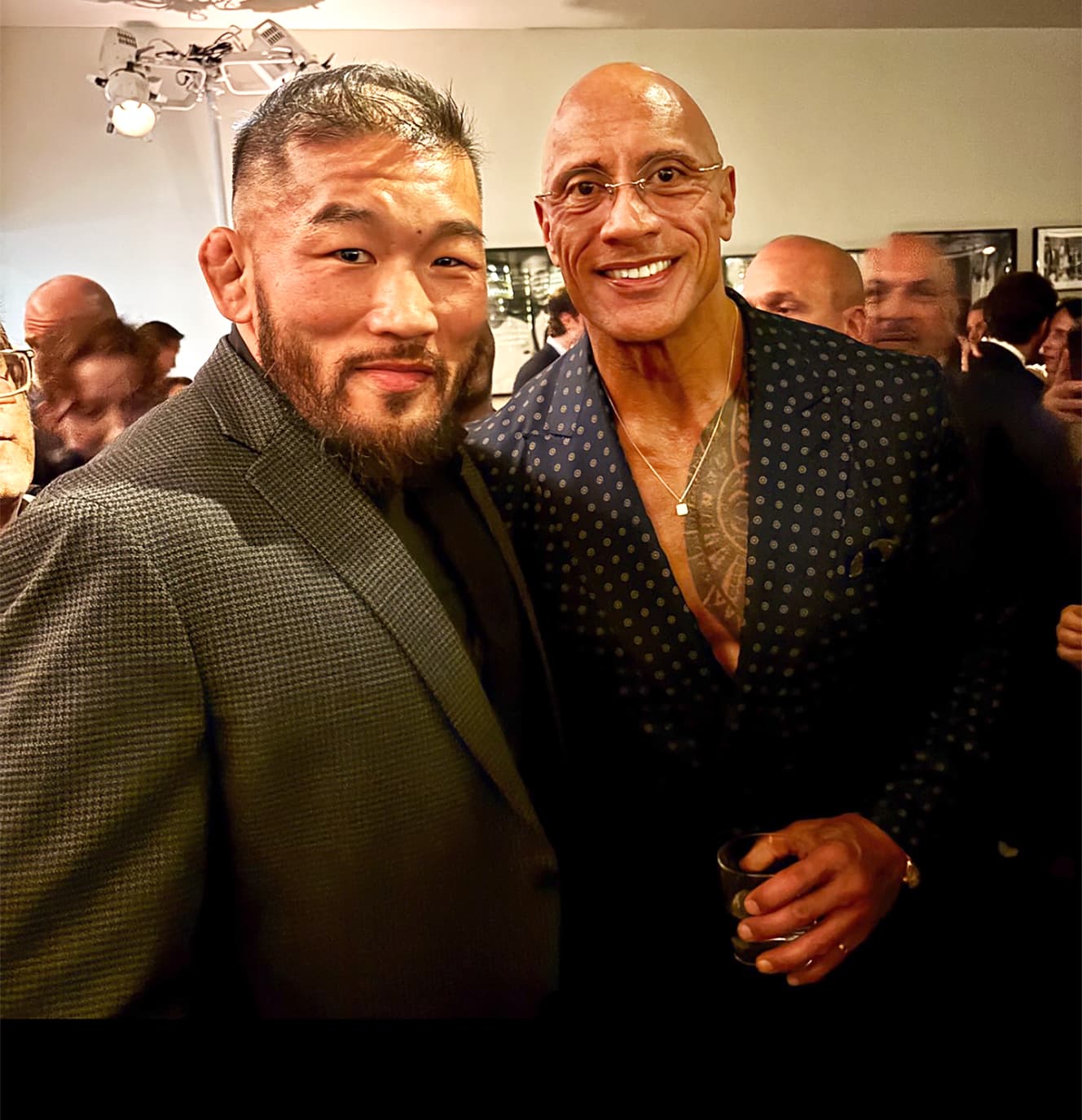
After overcoming the medical crisis, Ishii is now based in Texas, working toward a comeback with support from former UFC fighter Tim Kennedy (46), former heavyweight champion Bas Rutten (60), and other top-tier fighters.
From the November 14-21, 2025 issue of “FRIDAY”