Why NYC Taught Them to Stop People-Pleasing—and Stay True to Themselves


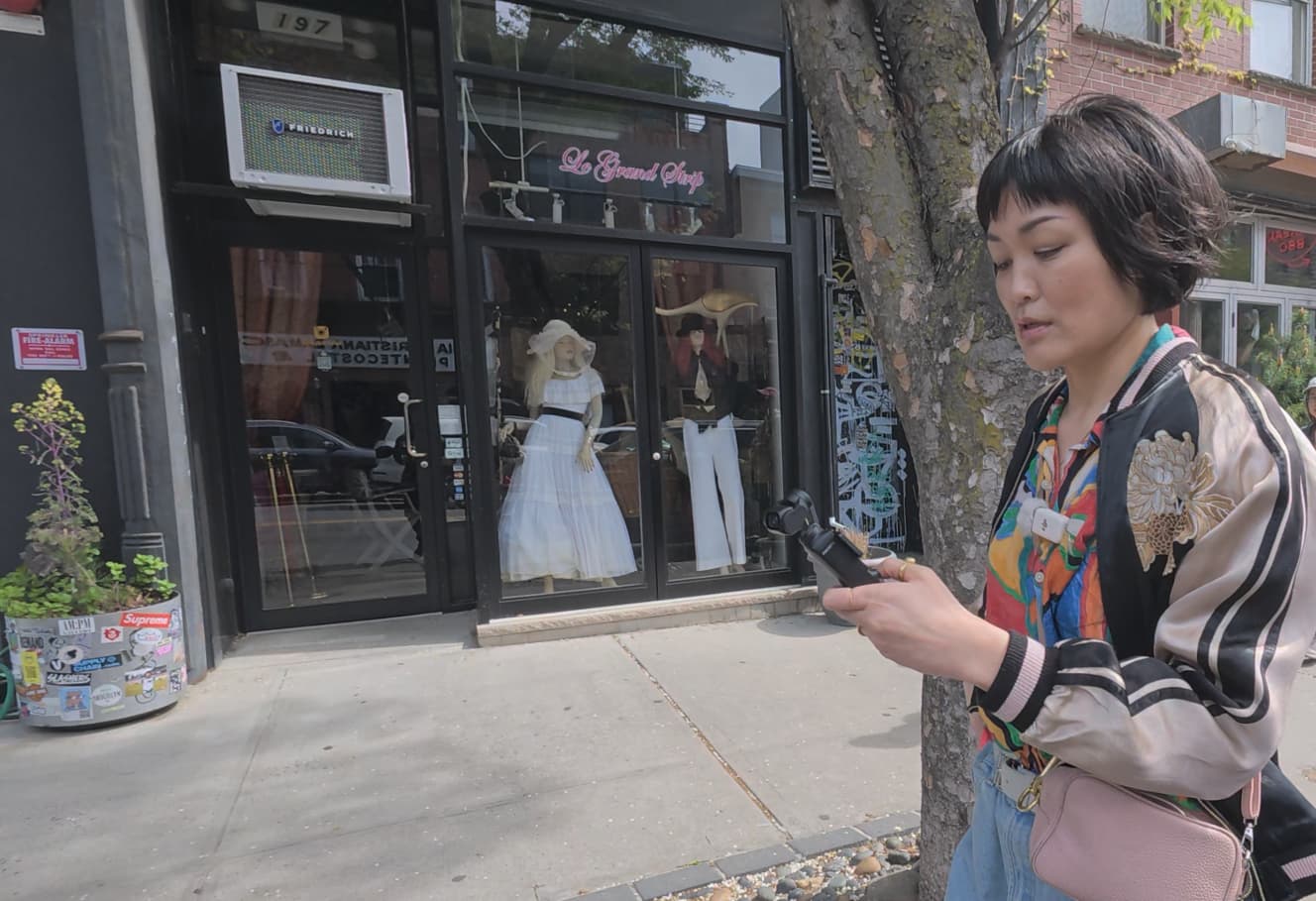
Saying NO to a world where serious people always lose out!
As Japan continues to accept more foreign workers, the diversification of society has become an unavoidable trend. However, many Japanese people feel confused when faced with different cultures and diverse values.
“Working seriously isn’t appreciated,”
“Politeness doesn’t get through,”
“I can’t say NO and end up being treated as convenient”
Hints for surviving in such a diverse society can be found in one book.
It is “New York and Fashion Taught Me How to Love Myself as I Am: How to Build Real Confidence” (KADOKAWA), written by acchi, who has lived in New York for 23 years and works as a technical designer for the streetwear brand Supreme.
Once shy and always adapting to those around her, acchi says she used to be unable to express her true self. But now, she lives authentically, knowing that “Saying NO doesn’t make people hate you” and “Nobody is perfect.”
The turning point came from the many culture shocks she experienced living in New York.
“A coworker who left work on time got a better evaluation than I did!”

After graduating from university, YouTuber acchi, who has lived in New York State for more than 20 years, experienced her first major shock when she jumped into the New York fashion industry about two decades ago:
The seriousness praised in Japan wasn’t valued at all.
“In Japan, people who are serious and nice tend to be trusted and viewed positively. In New York, this type is also liked, but if you’re only a serious and nice person, you can easily become a convenient pawn.”
Working in a multicultural environment made her realize that the common sense she took for granted in Japan didn’t apply there. Simply and steadily completing assigned tasks wasn’t enough for recognition—such workers remained stuck at the same level. Those who actively voiced their opinions and negotiated were the ones who rose quickly.
In fact, during her assistant days, acchi saw that a coworker who negotiated with their boss to ensure they could leave work on time received a better evaluation than she did, even though she diligently completed all her tasks.
“No matter the motive, that coworker was evaluated as someone who gets things done. That’s when I truly realized that effort ≠ evaluation. I felt frustrated then, but looking back, it was simply a difference in personality and approach.”
This led her to start observing herself more objectively—asking what type of person she really was.
“I think what’s important is finding a work style that matches your personality and abilities—whether you’re a steady worker or a management type. At the time, I thought remaining a steady worker might put me at a disadvantage, so I decided to imitate the people who spoke up more and showed leadership.”

She began communicating with those around her and, whenever possible, expressing her own thoughts. For someone who had always been shy and overly concerned with others’ opinions, this was not easy—but she continued trying through repeated trial and error.
“Not only working hard, but also having and voicing my own opinions gradually changed how people responded to me. Through those experiences, I feel like I was finally able to break free from being a ‘convenient person.’”
My husband’s girlfriend came to the BBQ too? Learning diversity of values in New York
In her private life as well, acchi was often surprised by the cultural differences between Japan and New York. One example was how compliments—common and harmless in Japan—didn’t translate the same way in New York.
“Americans are incredibly good at giving compliments. They’ll praise you for the smallest thing (laughs). But the points they choose to compliment are very different from Japan—physical features are basically off-limits.”
In Japan, comments such as small face or long legs are considered positive, but in New York, such remarks can be taken as offensive.
“In America, compliments usually focus on things that involve your effort, choices, or judgment. So features people can’t change—like having a small face or long legs—aren’t seen as praise. Some people might even be insecure about those things.
Japanese manners can also be misunderstood. Even when you are trying to avoid being rude, the other person may interpret it as you being uninterested or distant.”
She also learned about different values through her friends’ experiences.
At a friend’s BBQ, for example, she witnessed relationship styles and family structures she had never imagined—yet they were completely normal for the people there.
“My friend thought a married couple had come together to the BBQ—but the husband’s girlfriend and the wife’s boyfriend also joined. There were other stories too: like on Thanksgiving, divorced parents bringing their new partners and children, making a gathering of about 15 people. In Japan, the atmosphere might become awkward, but in New York everyone was cheerful and having a great time.”

Through these experiences, acchi learned not to reject differences in culture and values, but to first accept them with an open mind.
“At first, all I could do was be shocked by how different everything was from Japan. But manners and common sense vary depending on someone’s culture and background. What is normal for me might be strange for someone else. Realizing that made things much easier.”
However, she says this doesn’t mean you must accept everything unconditionally.
“Rather than denying someone’s values, be curious and think, ‘Oh, that’s another way of looking at things.’ And then decide: ‘Here’s what I believe.’ If you accept everything without question, you can lose yourself. So you acknowledge the other person while clearly defining your own stance. That’s the key to maintaining your own axis in a diverse society.”
After meeting more than 50 people through dating apps, I realized: “There is no such thing as a perfect human being.”
For acchi, the biggest realization came from meeting more than 50 people on dating apps. She was never good at socializing—at parties she would sit by the wall, avoiding conversations with strangers as much as possible.
“With a friend’s party, you can get by without talking to new people. But with a dating app, it’s one-on-one—you have to talk. It was an inescapable training ground for human relationships”
At first, it was nothing but painful. She didn’t know what to talkabout, and she constantly worried about what the other person thought of her. But as she met more people, she discovered something.
“Even people with amazing titles—CEOs, doctors—have the same kinds of worries. Issues at work, family problems. I always thought I was the only imperfect one, and that everyone else was flawless. But that wasn’t true.”
Once she began seeing herself and the other person simply as two human beings, a strange change occurred: She began to feel genuine curiosity about others.
“When I started thinking, ‘What kind of life has this person lived?’ or ‘What makes them happy?’ my self-consciousness disappeared. And when I realized you don’t have to be a good talker, my mind felt much lighter.”
Higher self-esteem and interest in others created a positive cycle. The more she became curious about others, the less she worried about how she was perceived. She could interact more naturally, which made others respond more positively—and that, in turn, boosted her confidence even further.

Reflecting on one of the changes she experienced, acchi says:
“After my self-esteem improved, I found myself enjoying conversations more than before. I became able to speak naturally even with people I met for the first time, and I feel that this experience has gradually had a positive influence on my friendships and interactions at work as well.”
The power of saying NO, something Japanese people struggle with but is deeply important
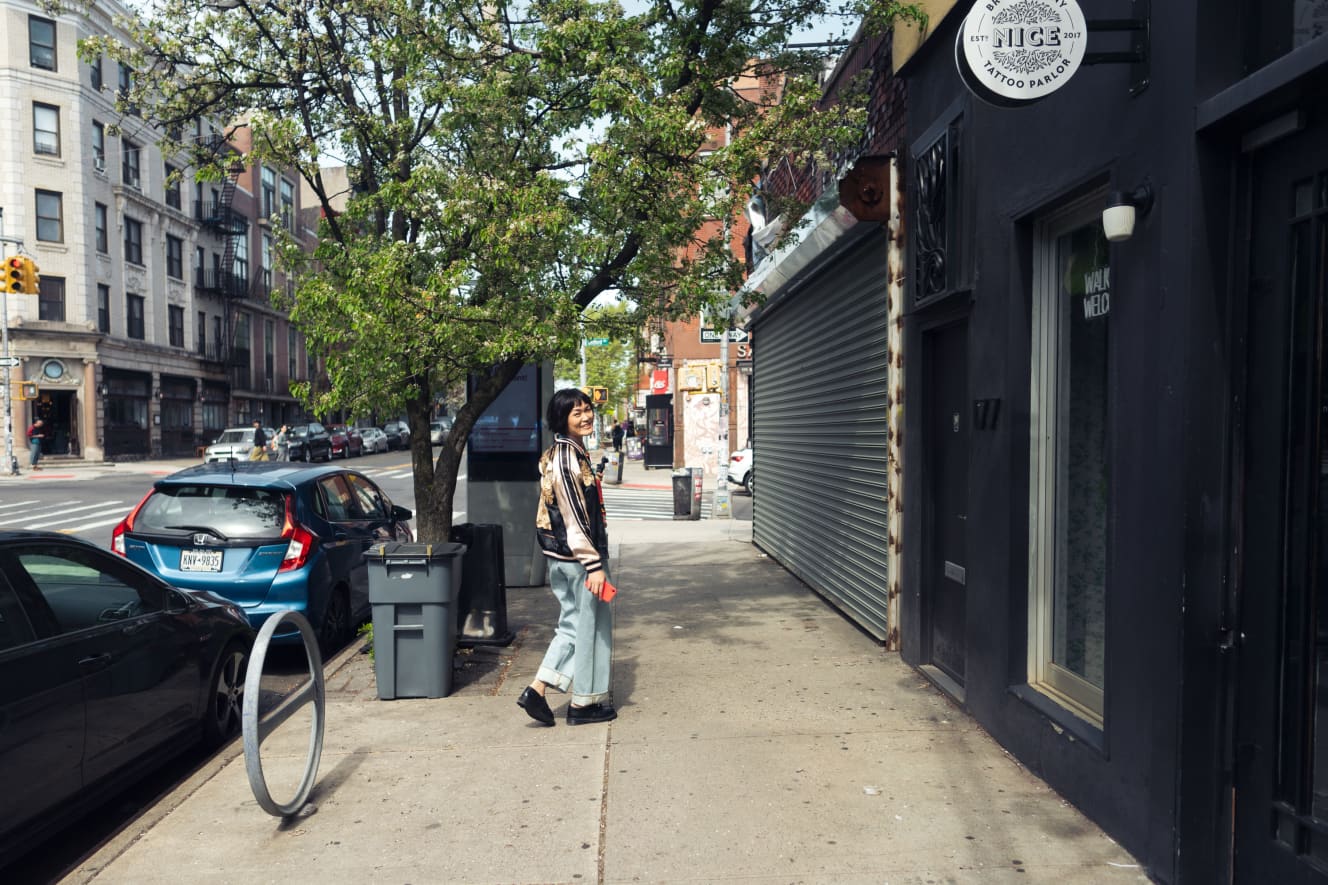
Having gone through many culture shocks, acchi says the most important skill for living in a diverse society is the ability to say “NO.”
“Japanese people often avoid saying ‘NO’ out of kindness, but that isn’t always true kindness. Sometimes the other person simply wants a clear answer. A vague ‘YES’ can cause confusion, whereas saying ‘NO’ clearly can actually build trust.”
She adds that being able to say “NO” also becomes a measure of trust in a relationship.
“If the relationship breaks just because you said ‘NO,’ then that’s all it was worth. Truly important relationships don’t crumble over differences in opinion. In fact, being honest with each other can make the relationship even stronger.”
Journaling to organize your thoughts and build your own inner compass
The Japanese virtue of not disturbing the harmony can become a limitation in a diverse society. To coexist with people who hold different values, sometimes you need to assert yourself.
However, many Japanese people are good at taking in information but poor at expressing it. A lot of people hesitate to state their own opinions.
That’s where journaling becomes useful — as a method for organizing your thoughts.
“You write down what you felt about what happened that day. At first, it’s fine to write something simple like ‘It was fun’ or ‘It was boring.’ The key is to then dig deeper: Why did I feel that way? What made me think that?”
You don’t need the perfect answer from the start. You can rewrite and refine your thoughts, gradually getting closer to what you truly believe.
“Even if the conclusion you reach differs from others, saying it aloud raises an important question. When someone sparks a conversation, discussion begins.”
In Japanese society, being corrected is often seen as embarrassing. But in a diverse society, the exchange of differing opinions is exactly what creates richness and growth.
It’s okay to be imperfect! Hints for living guided by your own inner compass

At the end of the interview, acchi emphasized that we must not forget to cherish the good aspects of Japan.
“Japan’s politeness and cleanliness are cultures we can truly be proud of. We should preserve those values, while letting go of the belief that ‘there is only one correct answer.’ I think diversity means genuinely practicing the idea that ‘Everyone is different and that’s okay.’”
What this once-shy Japanese woman learned in New York—a multicultural city—was not to seek perfection, but to accept imperfections in both herself and others. And to have her own opinions while approaching people with sincere curiosity.
Staying true to yourself while embracing diverse values—this experience offers valuable hints for living in a diverse society.
▼ acchi — Technical Designer at Supreme, YouTuber.
Inspired by the idea of living abroad since her university days, she graduated from a Japanese university and then studied fashion at a design school in Georgia before moving to New York. Since then, she has worked as a fashion designer and fashion technical designer. Since launching her YouTube channel in September 2024, she has been sharing various information about life in New York.
■ acchi’s YouTube channel “NEW YORK STYLE / Real Voices of New York” is here

Interview and text: Motoko Abekawa
Motoko Abekawa is a freelance writer mainly for the web. She is also involved in the production of books and corporate PR magazines. She does not specialize in any particular field, but covers a wide range of topics that intrigue her, including history, comedy, health, beauty, travel, gourmet food, and nursing care.