Despite the Expo’s Success, a Kyoto Professor Says Calling It an Economic Engine Is Wrong — Here’s Why


The Osaka–Kansai Expo showcased a level of diversity that far exceeded expectations.
One month has passed since the Expo closed. Before its opening, the Osaka–Kansai Expo faced much criticism—construction costs are too high, tickets aren’t selling, and so on. Yet when it ended, visitor numbers reached 25 million, far exceeding initial expectations, and many people have become what one might call “Myaku-Myaku–lost” (unable to get over the Expo).
“This Expo was held under the theme ‘Designing Future Society for Our Lives’, and it offered far more diverse exhibits than anyone expected. Although there were many critical opinions before the opening, once people actually saw it with their own eyes, I think they discovered many wonderful things.”
So says Professor Mayuko Sano of Kyoto University’s Graduate School of Education, who leads the Expo Studies Research Group. She herself visited the venue 29 times.
Under the theme “Designing Future Society for Our Lives,” each pavilion presented exhibits expressing its own country’s interpretation of life. For example, the Oman Pavilion was designed to resemble an irrigation canal.
“There were many other pavilions that focused on water. It made me realize that the act of channeling water is directly connected to sustaining life for them,” (Prof. Sano continues.)
In Chile’s pavilion, the interior roof was made from traditional tapestries woven by women of Indigenous communities, and various events were held beneath it.
“I felt that respecting and passing on Indigenous culture was being presented as an essential part of the cycle of life.”
In the Poland Pavilion, Chopin’s music was combined with contemporary art, and in Kuwait’s pavilion, the nation’s history was clearly divided into the periods before and after the discovery of oil.
“In Poland, I felt they viewed the enjoyment of art as a matter directly related to life, while in Kuwait, the message that life revolves around oil was conveyed very candidly. It was extremely fascinating.
Before the Expo opened, I felt both expectation and anxiety. But in the end, I think it became an Expo that showcased the rich diversity of issues surrounding life.”
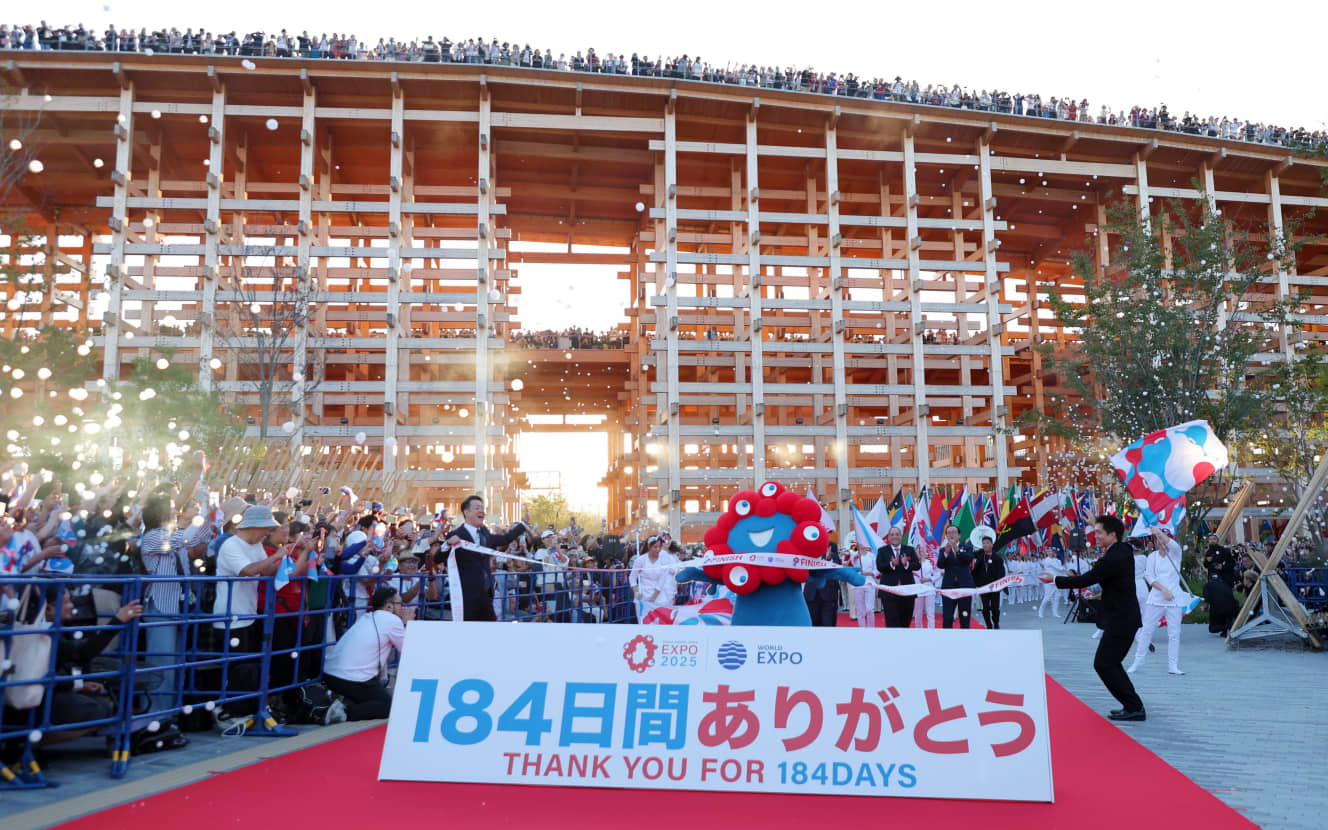
The Expo is not something that should be used as an economic trigger
However, before the Expo opened, the theme “Designing Future Society for Our Lives” was hardly emphasized. What we kept hearing instead was mainly about who had been chosen as ambassadors.
“That was extremely disappointing. Expos inherently have an academic character, and if you truly try to understand the exhibitions, some can be difficult, and not necessarily child-oriented. It is both a place for enjoyment and a place for learning. In that sense, it’s a very unique event.
Some people may have been satisfied just by meeting Myakumyaku, but if they had known the theme, they might have viewed the exhibitions differently. Perhaps the organizers thought that people would lose interest if they talked seriously in advance—but if that was the case, I think it shows they underestimated the public.”
Professor Sano says the organizers themselves may not have fully understood the significance and purpose of the Expo during the invitation and preparation stages.
“The Expo is a place where each country gives a serious self-introduction. It’s an official international event based on a legal framework, in which countries participate and exhibit for six months. During that time, foreign dignitaries visit Japan, and diplomatic activity takes place daily.
There are other large-scale events that may look similar at first glance—like international art exhibitions or the FIFA World Cup—but the Expo is a completely different type of event. The problem is that people were not made aware of this, and the Expo opened without that understanding. Having debates for and against the Expo is healthy, but it was disappointing that many criticisms arose simply because the significance of the Expo was not known.”
Japan began moving to host the Expo more than ten years ago. Professor Sano suggests that if the purpose and the international uniqueness of the Expo had been patiently explained from the beginning, the wave of criticizing for the sake of criticism might not have happened.
If people had been informed not only about economic aspects but also the meaning of the Expo, many more might have looked forward to it. Fortunately, attendance far exceeded expectations and it is said to have ended in surplus, but:
“Of course, it’s good that it ended in the black. However, Expos are not events held to achieve economic benefits. To host an Expo means to host the world—to welcome countries as a host nation for six months. Gaining that opportunity and leaving a mark on world history is what matters. Naturally, it’s better if the event is also economically successful, but even if it costs money, a country hosts an Expo because it needs that experience and wants to contribute to international society through it.
Trying to secure hosting rights only as an economic stimulus is, in my view, disrespectful to the history of Expos.”

“Working on the front lines of diversity, and carrying out this enormous event peacefully for six months— the people who have had that experience remaining in Japan is, I believe, a tremendous asset.” (Professor Sano)
Before the expo opened, there was an atmosphere in which even saying “I’m looking forward to the Expo” felt difficult. But once it began, many people enjoyed it.
“There were so many things that can only be seen at an Expo, all gathered in one place. Visitors could experience diversity, feel moved, and encounter things they never had before. I think that was truly wonderful.”
Just climbing the Grand Roof Ring and overlooking the national pavilions was a moving experience. Professor Sano says that even the simple fact that many people were able to feel the world made it meaningful to hold the Expo.
“I believe the people involved in the operation had an extremely difficult time every day. The subway stopped once, there were complaints about not being able to make reservations or enter pavilions, and they had to handle a wide variety of problems. Even so, while interacting daily with people from more than 150 nations already gathered there, they stood on the front lines of diversity and had to ensure that this massive event would continue peacefully for six months—people who have gone through such an experience and remain in Japan are, I believe, a tremendous asset.”
In 2027 the Expo will be held in Serbia, and in 2030 in Saudi Arabia.
“An Expo is an event that involves every actor in society—from the world’s leaders to subway operations. The experience of serving as host for such an event is something many countries will find valuable in the long term. From now on, Japan should apply its experience and take on the role of supporting the nations that will host upcoming Expos.”
▼ Mayuko Sano
Professor, Graduate School of Education, Kyoto University; head of the Expo Studies Research Group.
Graduate of the University of Tokyo, Faculty of Liberal Arts (International Relations). Completed MPhil in International Relations at the University of Cambridge. Doctor of Arts (University of Tokyo). After working at the Japan Foundation and UNESCO Headquarters, she taught at Shizuoka University of Art and Culture and the International Research Center for Japanese Studies before assuming her current post in 2018. Her specialties are diplomatic history, cultural exchange history, and cultural policy. Key works include Edo Through the Eyes of Alcock (2003), World Expositions and Human History (2015, editor), A Study of Diplomatic Protocol in the Late Tokugawa Period (2016), and Expo Studies—Understanding the World Through Expositions (2020, editor).
Interview and text: Izumi Nakagawa PHOTO: Afro