Investing in “the way you look” can change your lifetime income by 60 million yen! Anti-aging techniques of successful people


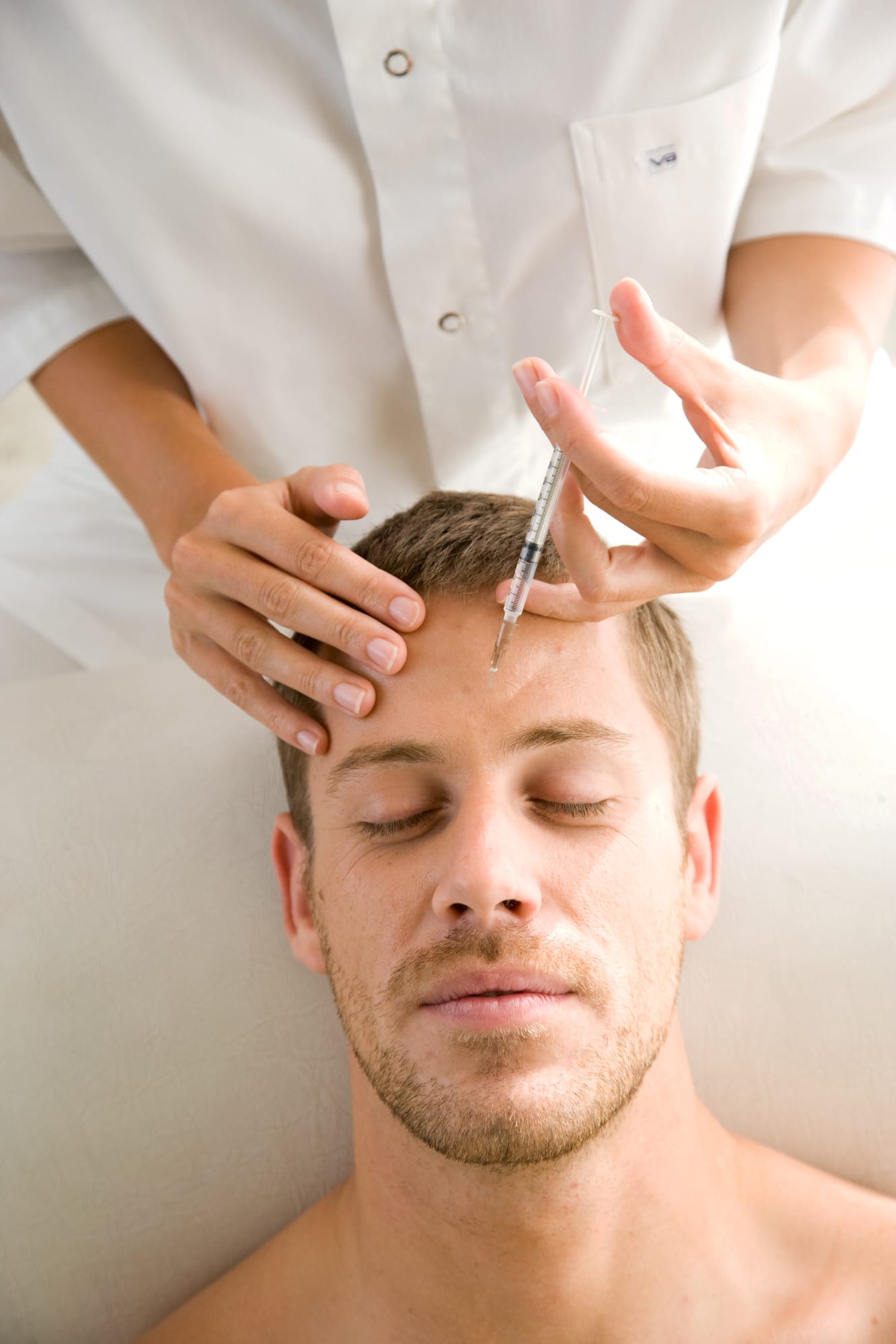
Successful people who are able to do their jobs invest heavily in looking young.
Many people have the desire to look younger than they are.
Anti-aging” is the term used to describe the process of controlling the aging process and maintaining youthfulness, and in recent years, beauty treatments for anti-aging have evolved remarkably. However, it is overwhelmingly women who invest time and money in anti-aging.
The steadily rising market for men’s cosmetics over the past decade suggests that the number of men with a strong sense of beauty is on the rise. Although they should be highly interested in beauty, it seems that anti-aging is still “someone else’s business.
In the case of men, many successful men who are able to work are interested in anti-aging and are willing to invest in looking younger. In Japan, however, I don’t think it is widely accepted yet.
The author and entrepreneur Toru Arai is the author of “Successful People’s ‘Wakavisible’ Strategies” (Kawade Shobo), which was released last month.
Mr. Arai, who has served on the board of directors of a medical corporation engaged in beauty treatments and has established several companies in China and Japan, published the anti-aging book because he wants more people to know that “looking young” enriches one’s life.
In Japan, however, many men are still reluctant to take part in anti-aging activities because they still hold the view that “a man is not what he looks like, but what he is inside” that was once prevalent in male society.
Many Japanese men tend to think that improving one’s appearance is a way to be popular or to be popular with the opposite sex. Many Japanese men tend to think that improving one’s appearance is a way to gain popularity and to be popular, which is a negative viewpoint.
If people knew that anti-aging is a weapon that can benefit them in every aspect of their lives, including their work and health, I think anti-aging would become more common as a necessary part of life.
55% of first impressions are based on “appearance
So what exactly does “looking young” do?
According to Melavian’s Law, which indicates the degree of impression people give in communication, visual information (appearance) accounts for 55%, auditory information (tone of voice) for 38%, and verbal information (content of words) for 7%.
In other words, appearance and tone of speech determine 93% of the impression a person gives to others.
According to a study conducted by the University of Texas in the U.S., people with good appearance impressions earn 10 to 20 times more in their lifetime than those without good appearance impressions. If we translate this into the lifetime annual income of Japanese people, a gap of 25 million to 60 million yen would be generated. If you can get promoted quickly and move up a stage, your lifetime annual income will change by that much.”
People tend to think that successful people can invest in improving their appearance because they have money, but Mr. Arai observes that “many successful people invest in improving their appearance even before they become successful.
Successful people know that improving their appearance is a presentation tool to maximize their value. Who would you choose as a business partner: someone with glowing skin, smart, and good posture at first impression, or someone with a pale complexion, sloppy figure, and poor posture? You would choose the former. I believe that I have become successful because I know this and have made efforts to improve my appearance.

Genetic factors account for 16%… “In other words, it depends on the person’s own efforts.
Modern cosmetic treatments range from relatively easy to try, such as supplements, laser therapy (*1), Botox injections (*2), and hyaluronic acid injections (*3), to cutting-edge treatments that regenerate tissue using the patient’s own cells (regenerative medicine). The cost ranges from several thousand yen to several million yen per session. Of course, there are also less expensive methods, such as lifestyle changes and daily exercises. In his book, “Successful People’s Strategies to Look Young,” Arai introduces a wide range of these techniques to help people look younger.
Arai says, “Genes determine the speed of aging.
It is said that genetics accounts for 16% of the aging process, and lifestyle habits account for the remaining 84%. In other words, it depends on the efforts of the individual. Even a conscious change in lifestyle habits can prevent aging. First of all, from this moment on, we should be highly conscious of looking young and healthy. And if your budget allows, why not try medical help?
So, if you have a limited budget to invest in cosmetic treatments, what should you choose?
If you are new to cosmetic medicine, I recommend laser treatment to remove blemishes,” says Arai.
Just by removing blemishes, I think you can look about five years younger. In fact, I also had a spot removed with the Pico laser (*4). There are some differences between clinics, but the pico laser costs about 30,000 yen for unlimited removal. It may not be cheap, but why don’t you think about it in terms of long-term cost-effectiveness?
For example, it takes time to hide a blemish using foundation and concealer. But once the blemish is gone, there is no need for cosmetics or the time spent on them. You will be able to devote 30 minutes every morning to work or other studies. If you consider an annual income of 5 million yen (2,500 yen per hour), if you can shorten your workday by 30 minutes, you can save about 37,500 yen per month. Wouldn’t it be worth doing the stain removal for tens of thousands of yen?”
He also advises that if you are going to seek medical help in the future, you should “find the best treatment for you, i.e., the one that suits your own specifications.
In the future, cosmetic medicine will be required to provide “custom-made treatment” according to each individual’s life situation, constitution, and concerns.
In recent years, it has become possible to analyze intestinal bacteria at the genetic level with the “intestinal DNA test,” which is now being used in the field of cosmetology. To rejuvenate the body, it is very important to regulate the intestinal environment. This test can predict the percentage of intestinal bacteria, intestinal age, obesity risk, etc., so it can tell what foods and supplements are necessary for beauty and health, and how to take them correctly, according to each individual. In other words, it is possible to provide intestinal care based on scientific evidence.
Genetic testing is also used in the treatment of thinning hair. Modern thinning hair treatment is shifting from a coping therapy using topical and oral medications to a fundamental treatment at the genetic level. In fact [a tailor-made, cutting-edge treatment that combines genetic testing and regenerative medicine] is producing positive results.”
Popular with the wealthy inbound….the era of eternal youth through cutting-edge regenerative medicine!
Let’s take a moment to discuss some of the most advanced treatments.
Stem cells,” which are expected to have the ability to regenerate and replenish lost cells and repair tissues and organs, are actually used to treat various diseases.
Regenerative medicine called “stem cell infusion therapy” is also attracting a great deal of attention in the beauty field.
In addition to thinning hair and hair loss, it is highly effective in treating blemishes, dullness, wrinkles, and other cosmetic problems, and has outstanding anti-aging effects. The level of Japanese stem cell infusion therapy is said to be particularly high, and many wealthy people from abroad have visited Japan to receive treatment.
Stem cell infusion therapy is also used to treat thinning hair. There are two types of stem cell infusion therapy (*5): one is an infusion of stem cell culture supernatant solution, and the other is an infusion of stem cells themselves. The former costs about 150,000-200,000 yen per infusion, while the latter is extremely expensive, at least 1.5-3 million yen per infusion. The latter is the one that wealthy people from overseas come to Japan to receive.
It is said to be safe, with little rejection or side effects, and the effects last for several years. It is attracting attention as a “treatment that extends healthy life. It is the ultimate anti-aging treatment in the sense that it rejuvenates the cells themselves rather than just the surface of the skin.
Eternal youth,” which until now had only been a fantasy, has become a reality. I believe that such an era has finally arrived.
*1_Laser is a beam of visible light (light with visible wavelengths) in which only one specific color of light is extracted and amplified. When applied to a blemish, it destroys the melanin pigment and removes it. There are various laser wavelengths depending on the device. They can be used for different types of spots.
2_Botox is a drug produced for medical use from a protein produced by botulinum bacteria, a type of bacteria, and injected into muscles to improve expression lines and gills.
3_Hyaluronic acid is an ingredient found in human skin and joints, and plays a role in retaining water and maintaining skin elasticity. Injecting hyaluronic acid into the skin improves wrinkles, sagging and hollows.
4_Pico laser is a laser with a short pulse width and is effective for relatively light spots. It also has a high cosmetic effect on the entire face and causes little skin damage.
5_The main difference between “stem cell therapy” and “stem cell culture supernatant infusion” is whether the infusion contains stem cells or not. Stem cell culture supernatant fluid used in IV infusion is the supernatant fluid from stem cell culture. It contains many proteins called cytokines, which are beneficial to the body and are effective in the treatment of thinning hair.
Toru Arai, President of ARAI Investment and Representative Director of Subsco D2C Research Institute, was born in 1981, and after receiving an MBA from the University of Wales, he started his own business while studying abroad in Beijing, China, and after returning to Japan, he launched and successfully led several companies in the real estate, beauty, and trading industries. As a leading figure in the subscriber D2C industry, supporting companies with annual sales of over 100 billion yen, he has monetized over 100 billion yen in total for his clients. In January 2012, he was listed on the Tokyo Stock Exchange. He has an extensive network with Asian conglomerates and is well versed in overseas expansion. He has also accumulated achievements in the technology field. He is currently involved in hospital and pharmacy management (Shinjuku Clinic, Shinjuku Gastroenterology Clinic, Omotesando General Medical Clinic, and Kuroto Pharmacy) as a director of a medical corporation. His books include “The Amazing Way to Sell ‘Subscription D2C’: The Strongest Business Model with a Profit Margin of 80% or More” and “The Teachings of Shin Huaqiao that Only the Japanese Don’t Know.


Interview and text by: Keiko Tsuji PHOTO: Afro (1st photo)