The impact of “doubling in the next 5 years”… Experts talk about the nightmare of bear damage “80,000 bears nationwide & learning the taste of humans”.


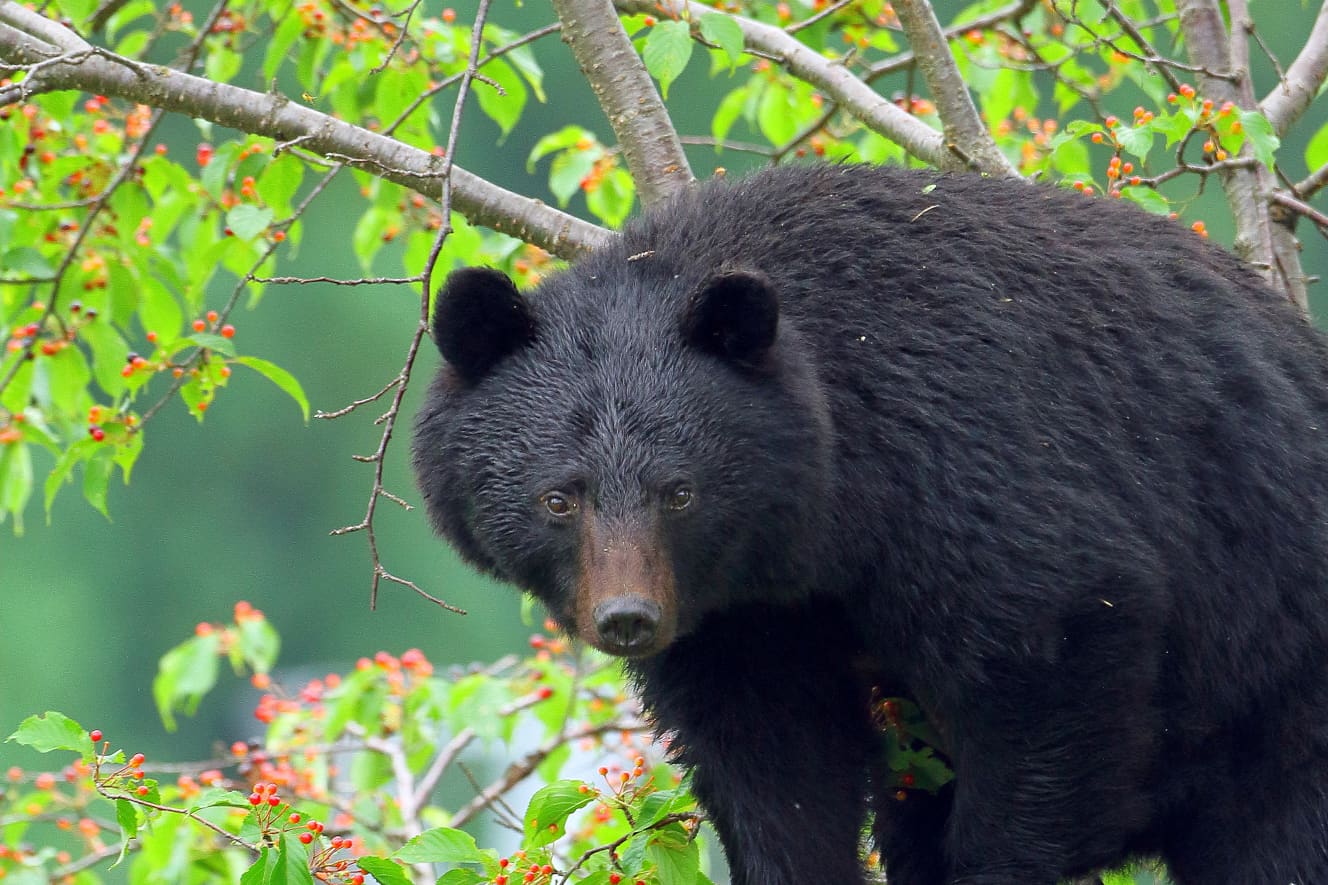
We have known for five years that there were 80,000 bears in Japan.
The damage caused by bears has not stopped.’ In 2011, there were 6 deaths by bears, and 3 in ’24, but this year, as of October 31, there were 12 people killed by bears, the highest number ever. According to the Ministry of the Environment, the number of bear sightings nationwide during the first half of this fiscal year (April-September) totaled 27,792, far exceeding the 15,832 sightings during the same period last year, and it has been decided that the Self-Defense Forces will go to Akita Prefecture to provide assistance.
We knew this was going to happen five years ago. We kept warning people that it was going to be a big problem. ……
We kept warning people that it would be a disaster,” said Mayumi Yokoyama, a professor at the University of Hyogo who studies the conservation and management of bears and other wild animals. In the Tohoku region, bears are said to appear in human settlements because of a heavy crop of beech nuts. However, Professor Yokoyama says, “The beeches are not the only ones that are coming out of the forests.
The beech crop is so bad that there is no food for the bears only in the fall. However, bears have been appearing in the area since April.
Indeed, according to a survey by the Ministry of the Environment, there were 775 cases in April, 2,461 cases in May, and 4,142 cases in June nationwide, which confirms that the lack of beech nuts is not the only reason for the bears’ appearances.
Bears eat mulberries, cherries, and all sorts of other things. If there is even a small crop of those things, they end up in human settlements.”
The Tohoku Regional Forest Office has been conducting a beech fruiting survey for 37 years since 1989. According to the survey, 70% of the years had either a bad crop or a very bad crop. Calculations show that there is a bad harvest once every five years, yet bears have not been seen as often as this.
In 2011, a large number of bears appeared in the area, but what is the reason for such a large number of bears?
The number of bears is increasing. According to the Ministry of the Environment’s ‛20 Survey of the Distribution and Population Status of Bears (Brown and Black Bears) , ‘ there are more than 4,000 bears living in Hokkaido, Akita, Fukushima, Nagano, and Gifu prefectures. Our research has shown that the number of bears increases by about 15% per year. If nothing is done to capture them, the number will double in five years.
The figure of more than 4,000 bears is only an estimate. In 2011, when bears appeared in large numbers, Akita Prefecture killed about 2,000 bears,
This year, it is said that the number of bears affected is greater than two years ago. This suggests that the number of bears has increased by more than 2,000. From that, we estimate that there may be as many as 10,000 animals in Akita Prefecture alone.”
Considering that more than 7,000 animals were captured nationwide in ’20 and more than 9,000 in ’23, but the number is still increasing,
“Looking at the survey by the Ministry of the Environment in ’20, there were probably 50,000 to 60,000 animals nationwide at that stage. Since we are capturing a reasonable number of animals, I don’t think the number has doubled, but it is possible that the number could be 80,000 five years from now. They are increasing at that rate.”
Bears have also learned to taste humans…
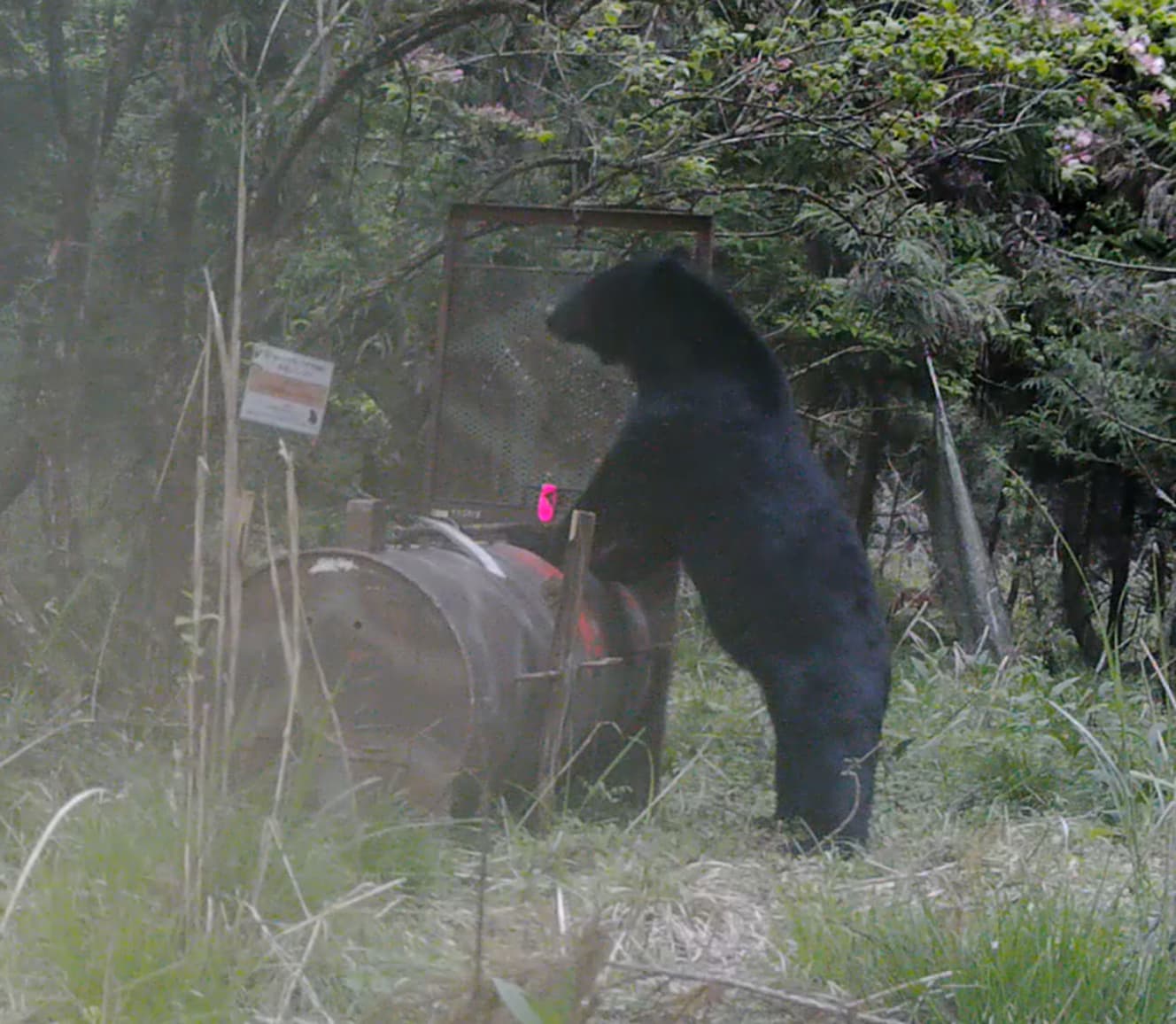
When we look at footage of bears that have come down to human settlements, we often see parents and their children.
When the density increases in the mountains, there is competition for feeding grounds, and naturally the males are stronger, so parents and offspring are pushed out and come to human villages. Once in the human village, fields and orchards spread out and delicious smells fill the air. Moreover, when humans see bears, they run away. It is said that bears have a very high learning ability, and it is possible that they have learned that they are not afraid of humans.
It is not only that bears are not afraid of humans; on October 11, a man was attacked and killed by a bear while gathering mushrooms in Miyagi Prefecture.
The bear also likes mushrooms, so for the bear, the attack was an intruder coming into his feeding ground. The remains turned into ‘meat’ for the bear. It has learned that ‘humans are food. The bears were also very interested in the bears’ food. Also, on October 16, there was an incident in Kitakami City, Iwate Prefecture, where a person cleaning an open-air bath was attacked, and I think the bear probably learned that ‘humans are prey’ and targeted and attacked him.”

In eastern Japan, the bear population is not known!
But why has the bear population increased so much?
Before the Pacific War, Japan was covered with bald mountains for fuelwood. At the same time, demand for fur was high, so wild animals were overhunted. Bears were even listed as an endangered species. Later, hunting regulations were tightened and wild animals recovered in numbers. After the war, gas and electricity became widespread and people stopped using mountain resources, so by around 1990, rich forests had recovered and the number of animals increased.”
However, the extinction crisis worsened in western Japan until the ’90s, with Kyushu going extinct and Shikoku having fewer than 20 animals.’ In 1999, the “Specified Birds and Animals Protection and Management Plan” system was initiated, and western Japan began to protect bears.
Bears that invaded villages were not killed, but instead were put to sleep under anesthesia once, their age, nutritional status, and reproductive condition were checked, and they were returned to the mountains with a microchip buried in them. In addition, they have introduced the “learned release” method, in which bears caught in traps for wild boars are sprayed with chili pepper to make them dislike humans and human settlements, and are then released. As a result of these efforts, the exact number of bears in western Japan has been determined.
As a result of the protection policy, the number of bears in western Japan, which was thought to be as few as 100, reached 600 in 2010. In 2012, the “learned release” of bears was stopped, and once one came to a village, it was killed, and in 2004, hunting was lifted. In ’16, the ban on hunting was lifted.
In ’17, we started ‘zoning capture,’ which means capturing bears that come within 200 meters of a village. The Ministry of the Environment issued a guideline that if 800 bears inhabited the area, they would not be in danger of extinction, so we try to limit the number of bears to 700-800. The Kinki region also experienced a mass outbreak of bears last year when acorns were a major crop, but we managed to deal with it.
On the other hand, in eastern Japan, there were bears in their own right, so we did not manage them in a special way. As a result, there is very little highly accurate data in eastern Japan. Even if there is a good harvest of acorns and other crops, if we leave bears unattended, which have learned that they can efficiently obtain food by going to their villages, they will appear in human settlements regardless of the season, says Professor Yokoyama.
What should be done?
First, scientific management. We need to assign a scientific administrative officer who will be in command of the bear population and control it to an appropriate level. Right now, we are asking hunters who have little knowledge about bears to capture them, which is very dangerous. We have received many voices of concern. It is also important to train and deploy professional trappers.”
It seems like it will take a long time.
For now, we need to take a precautionary approach and capture bears that are near human habitats in advance to greatly reduce their population.
If they come out to human settlements, that alone will get them killed. I feel sorry for them. ……
Of course I feel sorry for them. I have witnessed many killings, and I never get used to it. I feel sorry for them, but I do. It is hard work from a mental standpoint as well. We have to understand that the people in the field are doing that kind of work for us. However, if we don’t manage the population, I think it will be worse the next time there is a bad harvest.
If the population increases further, even if there is a good harvest of nuts in the mountains, there may not be enough food to feed them. In order to coexist with humans, it is necessary to control the population.
Mayumi Yokoyama Professor, Research Institute for Nature and Environmental Science, University of Hyogo. Also Director of the Research Department of the Hyogo Prefectural Forestry and Animal Research Center. Conducts research on the conservation and management of wild animals that are in serious conflict with people, such as Japanese deer, black bears, and wild boars. His main themes are the development of monitoring methods, monitoring of population numbers and nutritional status, and implementation of conservation management in cooperation with government agencies. In addition, he is also involved in tracking behavior using GPS collars, zoonotic diseases, and the conversion of Japanese deer to a food resource.
Interview and text by: Izumi Nakagawa PHOTO: Afro (1st photo)