Why a Kenzo Tange Architectural Icon May Be Demolished — and the Growing Doubts


A miraculous work where structure and design are perfectly fuse
Spend 850 million yen of taxpayer money to demolish it, or restore it with zero cost to the prefecture— that is the dilemma.
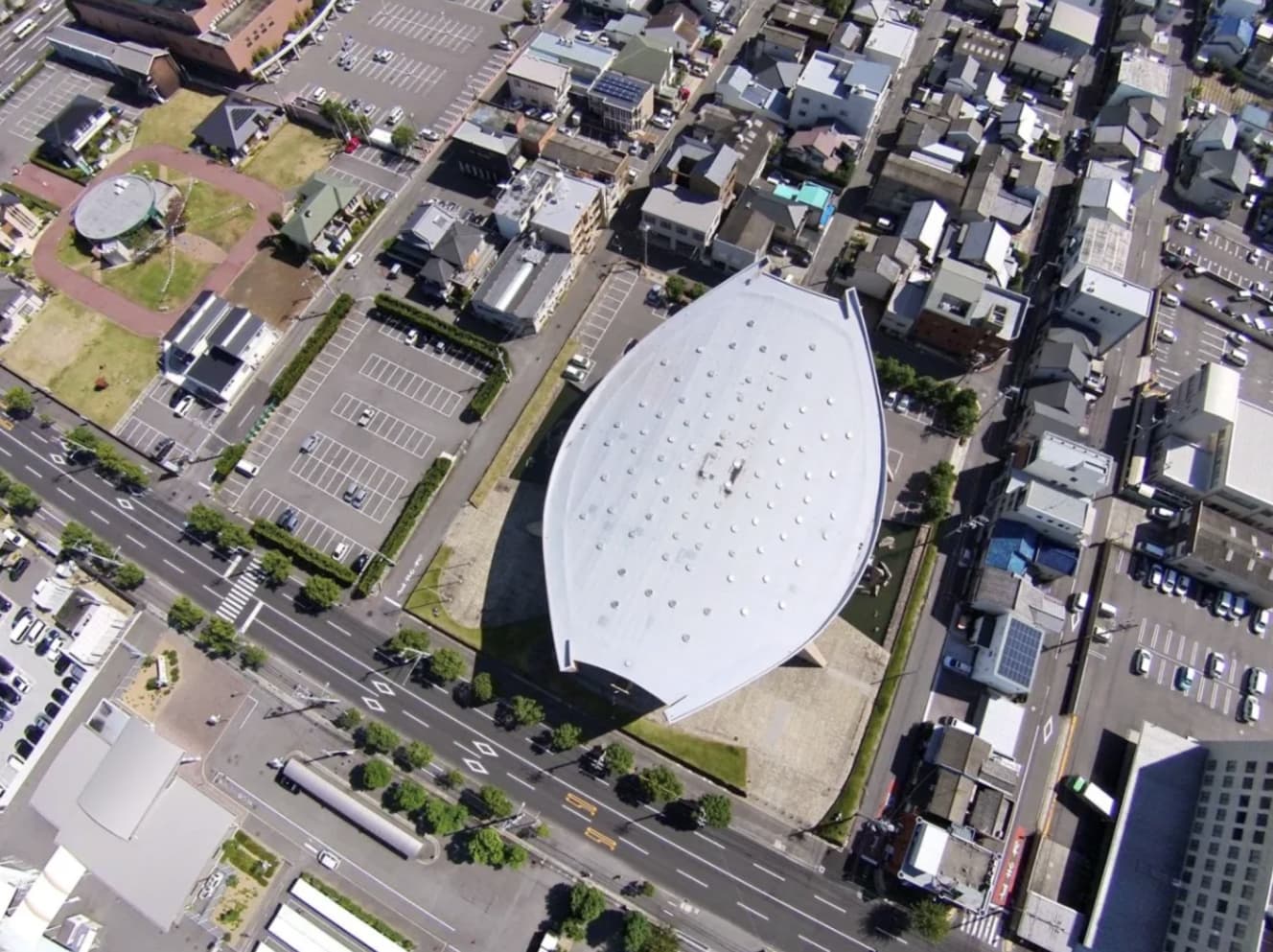
The former Kagawa Prefectural Gymnasium—renowned for its magnificent, elegant silhouette reminiscent of a ship floating on the Seto Inland Sea, and considered a masterpiece of world-famous architect Kenzo Tange (d. 2005)—is now facing the threat of demolition. Its value is highly regarded overseas as well, and experts say that there is no problem if seismic reinforcement is carried out. However, Kagawa Prefecture insists only that there is a risk of collapse, and has already selected a demolition contractor for approximately 850 million yen. Ignoring the voices of residents and specialists who hope for its restoration, the prefecture is pressing forward with demolition. What exactly is happening in Kagawa concerning this piece of international cultural heritage?
Keita Osada, head of the “Former Kagawa Prefectural Gymnasium Revitalization Committee,” explains the value of the building as follows:
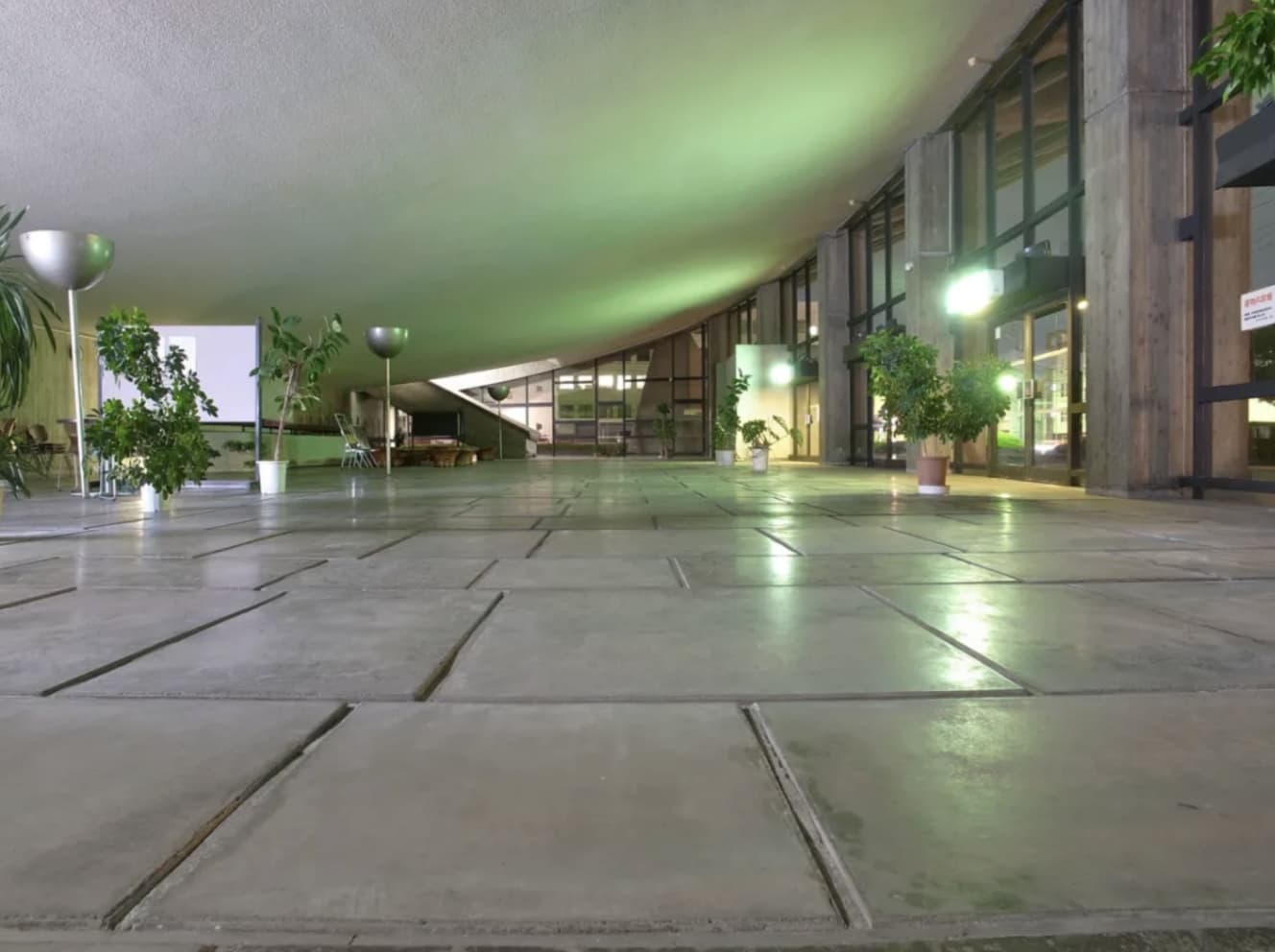
“This gymnasium is structurally nothing like an ordinary building. The entire roof is suspended by massive cables, the force of which is received by concrete edge beams shaped like the sides of a ship, and further supported by large, sturdy columns. These elements work together in perfect balance. And because the building was created by hand at a time when there were no computers or power tools, we must pass on that passion to future generations.”
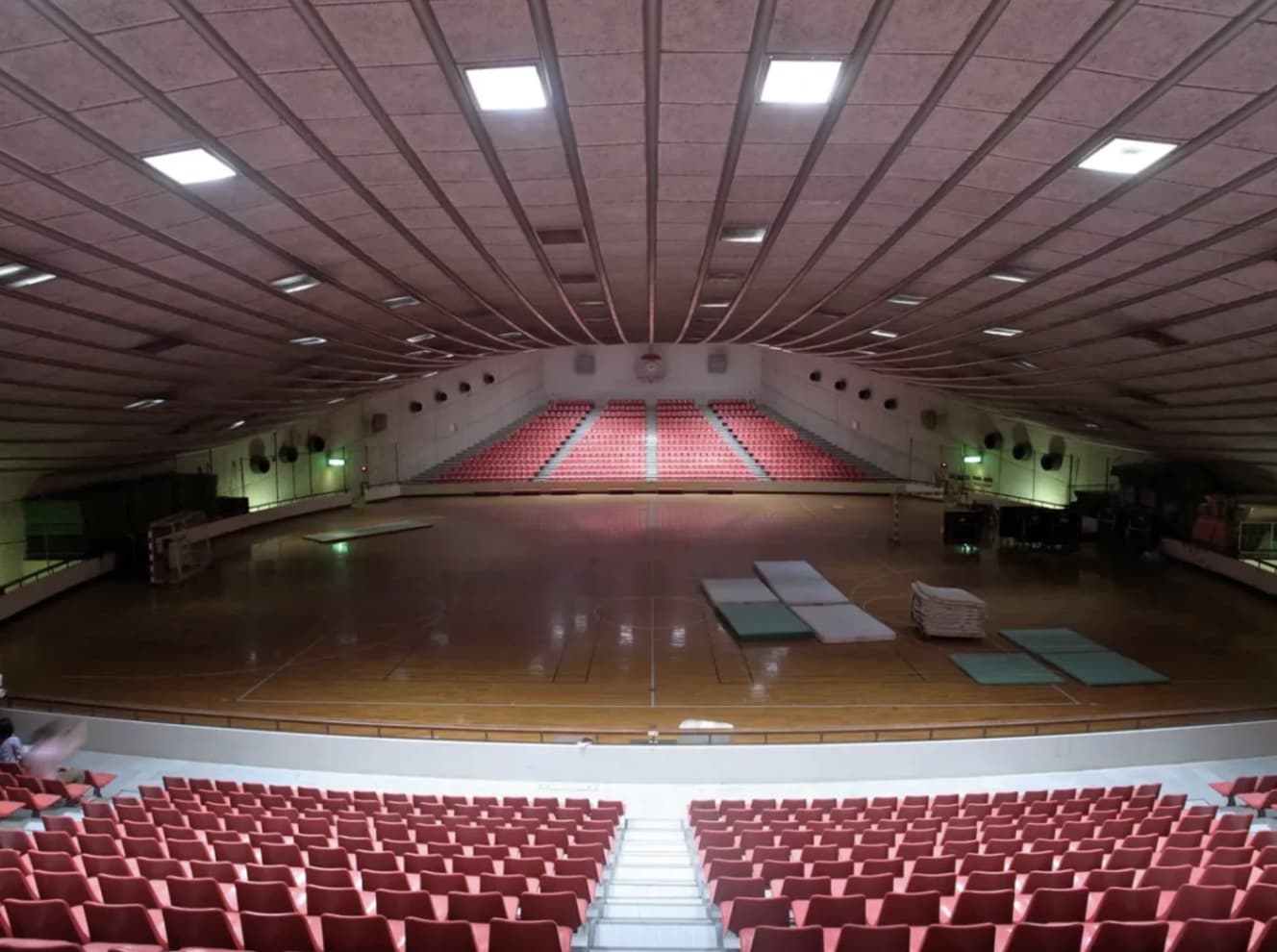
Completed in 1964—the year of the Tokyo Olympics—the gymnasium is one of the representative works of Kenzo Tange, a leading Japanese architect who won the Pritzker Prize, often described as the “Nobel Prize of architecture.” Its design—fusing the powerful presence of concrete with the light, graceful curves inspired by ships on the Seto Inland Sea—is celebrated as a masterpiece of modernist architecture. Its most notable feature is the suspended roof structure that creates a vast, unobstructed space above the arena without a single supporting pillar. This is the same technique used in Tange’s design for the National Yoyogi Gymnasium and stands as a monument to Japan’s technological prowess at the time.
Its value is also recognized internationally. In 2018, the World Monuments Fund in the United States listed it among the world cultural heritage sites at risk. Institutions such as the Museum of Modern Art (MoMA) in New York and Harvard University’s Graduate School of Design have also praised its artistic and historical significance, calling for its preservation. In short, it is an architectural heritage site acknowledged by the world.
The prefecture sticks to a single claim: lack of seismic safety
So why is a building of such high value facing the threat of demolition? The primary reason cited by Kagawa Prefecture is seismic performance.
Based on the results of a seismic assessment conducted in 2013, the prefecture argued that in a major earthquake, the building could collapse and block the adjacent emergency transportation route. On this basis, the demolition budget was approved in February 2024. Then, on October 7 of this year, the prefecture completed the selection of a demolition contractor at a cost of approximately 850 million yen.
However, experts and the citizens’ group “Former Kagawa Prefectural Gymnasium Revitalization Committee” strongly oppose the prefecture’s claim. At a press conference held by the committee on August 26 this year, Kimio Saitō—the former president of the Architectural Institute of Japan and a leading structural engineer—dismissed the prefecture’s argument of insufficient seismic resistance.
“At first glance, those massive side beams may look like they could collapse in an earthquake, but structurally, that won’t happen. The concern is the seismic resistance of the lower columns and walls that support the upper structure, but with some minor reinforcement, it can reach the safety level required of standard public buildings.”
In other words, the building’s seismic safety has been assured by one of the highest authorities in structural engineering.
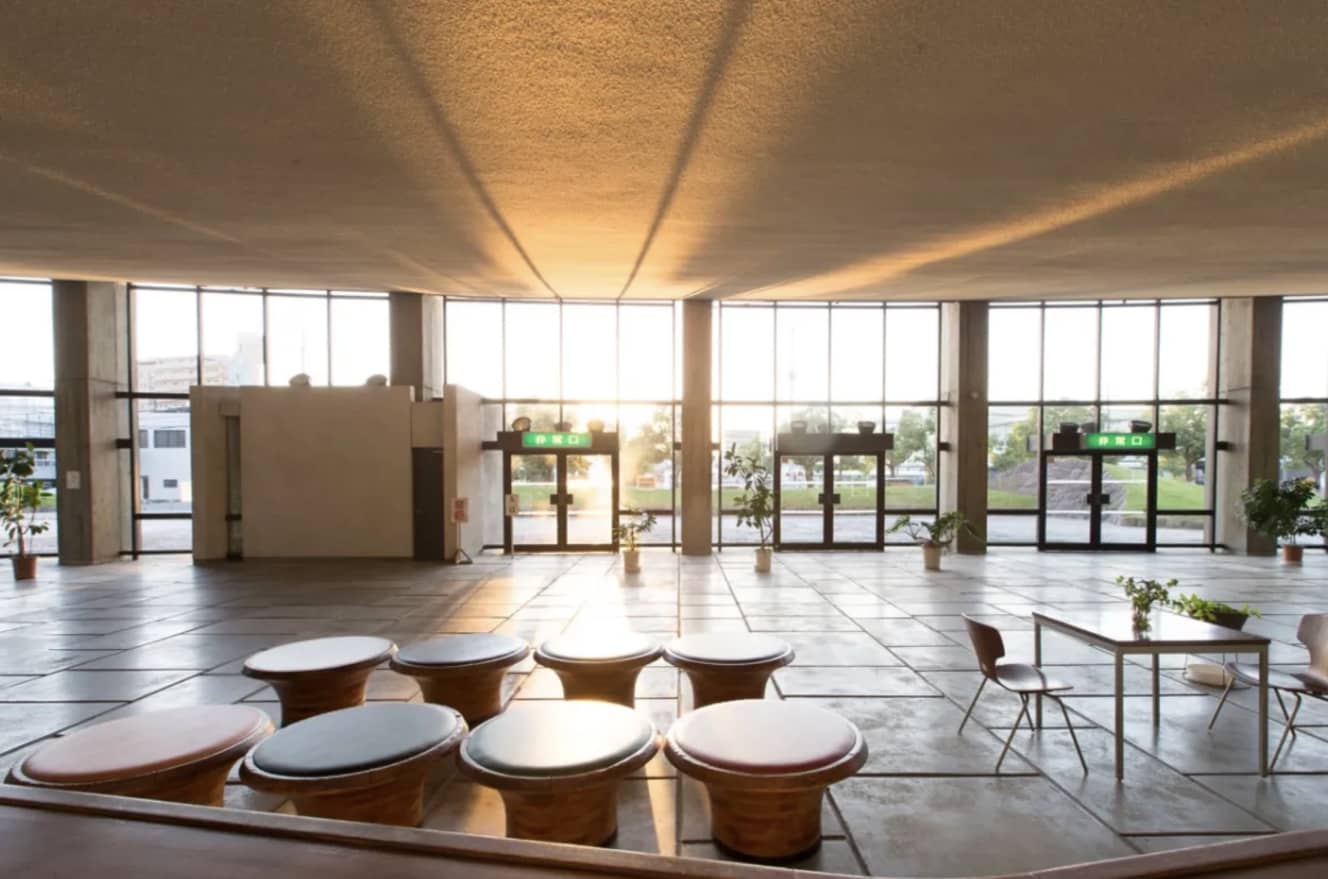
The revitalization committee, chaired by Osada, has stepped forward to protect this historic building. They have presented a concrete restoration plan that does not require any financial burden on the prefecture. The proposal envisions a private business acquiring the land and building for 300–400 million yen and investing a total of 2.7 billion yen—including about 500 million yen for seismic retrofitting—to convert the first and second floors into a hotel and use the characteristic large third-floor space as a book lounge or art space. Multiple companies, including hotel operators and investment funds, have already expressed willingness to participate.
Osada describes the advantages of their proposal:
“Our plan is for the private sector to purchase, reinforce, and reuse the building. In other words, we’re saying the prefecture doesn’t need to spend any money anymore. Should the prefecture spend huge amounts of taxpayer money to demolish it, or should it be restored with private capital and preserved as a cultural asset for the future? Shouldn’t we reconsider which option benefits the residents more?”
Compared with the prefecture’s plan to spend 850 million yen of taxpayer money on demolition, this proposal not only eliminates prefectural spending but also creates advantages such as property tax revenue and new employment.
The prefecture refuses even the zero-cost restoration proposal
However, Governor Toyoto Ikeda (64) refuses to listen even to this concrete proposal. At a press conference on September 8, when a reporter asked:
“You have long cited the lack of viable utilization plans as one reason for demolition, but now that a concrete restoration plan has been presented by the private sector, hasn’t the premise of your decision changed?”
the governor responded:
“I recognize the current Former Kagawa Prefectural Gymnasium as a building that poses danger during an earthquake. The members of the revitalization committee have expressed the view that the building poses no danger even in an earthquake. Given that they hold such a view, I believe it would be difficult to determine whether it is appropriate to transfer the property to them and entrust them with it.”
Even though a leading structural engineer has stated that there is no risk of collapse, the governor insists, “It’s dangerous, so we cannot hand it over to the revitalization committee.” Questions were also raised about the unusually high demolition cost.
“There are comments that compared with other facilities of similar scale—such as the former Chiba Prefectural Gymnasium—the demolition cost per tsubo is more than double. Why has it become so expensive? Do you believe the cost is not excessive?”
Governor Ikeda repeatedly answered:
“It is based on thorough review and calculations performed by the prefectural office.”
He never explained why the cost was so high.
“Danger,” thorough review—these vague phrases are all the governor continues to repeat. Kagawa Prefecture remains fixated on demolition—spending a huge amount of taxpayer money—while rejecting a rational proposal that would preserve a cultural asset at zero fiscal cost. Among those connected to prefectural administration, some are whispering, “Do they just want to give work to the demolition contractor?”
Including this suspicion of vested interests, we contacted the prefectural Board of Education. When asked whether the process was being pushed forward with demolition as a foregone conclusion, the representative simply answered:
“We are not forcing anything through. We are proceeding by following the procedures after considering various factors.”
A cultural asset left by a world-renowned architect, or an empty lot costing 850 million yen—
the future of the residents’ hopes to preserve their cultural heritage now hangs in the balance.