What’s the Best ’80s Idol Song? Let’s Decide!
The first part of this special autumnal event.


Everyone was captivated by their singing voices pouring out of TVs and radios—
Akio Nakamori × Yusuke Nakagawa × Suzy Suzuki engage in an in-depth discussion!
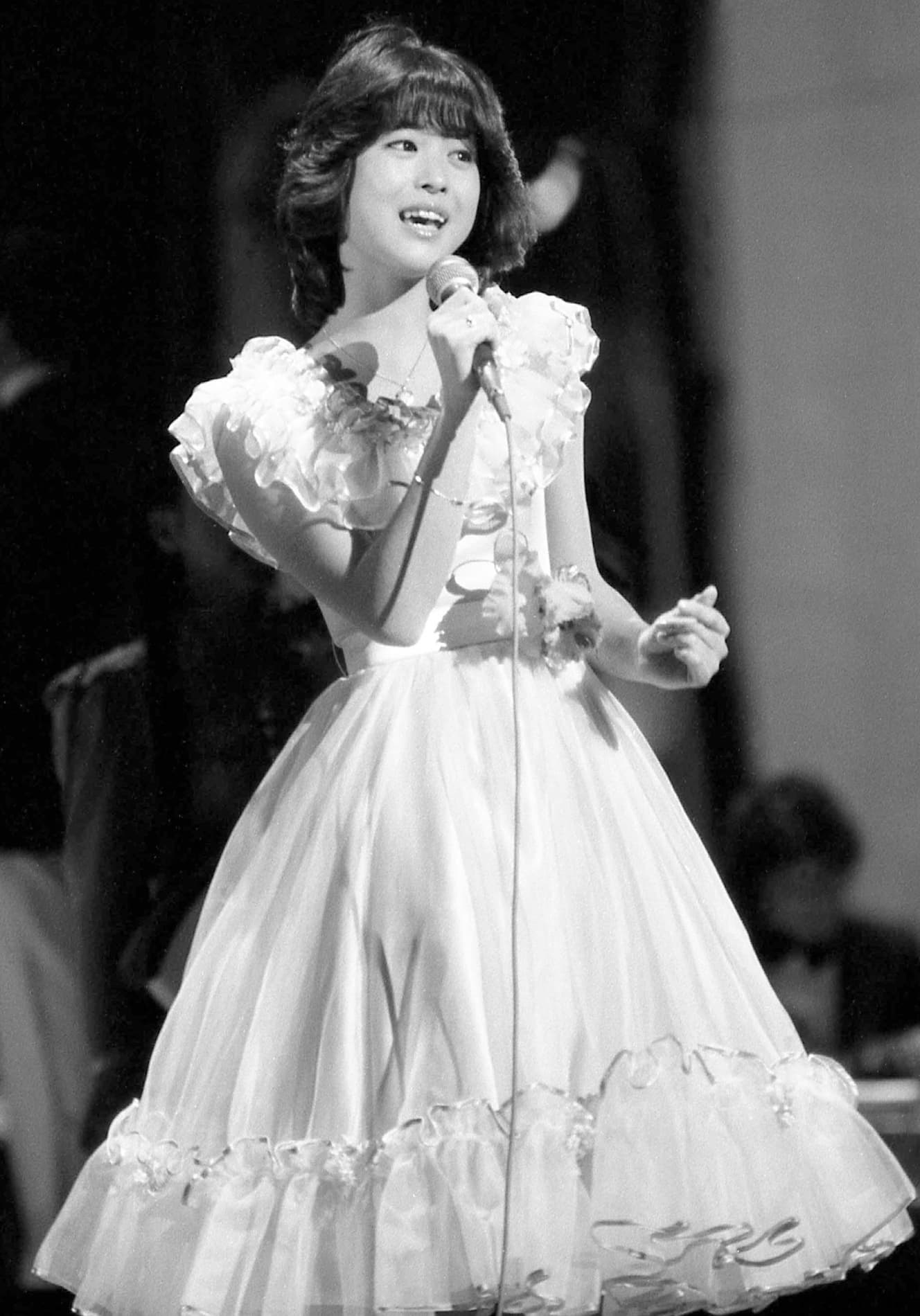
The 1980s began with the retirement of Momoe Yamaguchi (66), and alongside Seiko Matsuda (63), national stars appeared one after another like glittering constellations: Akina Nakamori (60), Kyoko Koizumi (59), Yū Hayami (59), Iyo Matsumoto (60)—the “Legendary Class of ’82”—as well as Onyanko Club, Yuki Saito (59), Yoko Minamino (58), Yui Asaka (55), Hiroko Yakushimaru (61) and many more.
It was truly the “Golden Age of Idols.”
Back then, an idol’s main work was singing on music programs and performing in concerts.
Record and CD sales, as well as fan enthusiasm, were on a completely different level compared to today.
The 1980s marked the peak of the idol-song era.
For this feature, FRIDAY invited idol critic Akio Nakamori, writer Yusuke Nakagawa, who is deeply knowledgeable about idol songs, and music critic Suzy Suzuki for a roundtable discussion on the theme of “The Strongest 1980s Idol Songs.” From the vast world of 80s idol music, they selected the ultimate masterpieces.
The early ’80s led by Seiko and Akina
Nakamori: “The 1980s were an important period in idol history. In 1978, Candies shockingly announced they wanted to return to being ordinary girls and disbanded. Momoe Yamaguchi retired in 1980. Just when it seemed like a winter era for idols had come, Seiko Matsuda appeared like a comet. After that, the ‘Class of ’82’—including Kyon-kyon and others—emerged, ushering in a golden age.”
Suzy: “The atmosphere of the ’80s changed drastically between the first and second halves. The early ’80s were vibrant, with new stars debuting one after another. But in 1985, when Seiko married and stepped away from the hit charts, the entire idol scene began to lose momentum.”
Nakamori: “And in 1986, there was also the tragic incident of Yukiko Okada, who was at the peak of her popularity, taking her own life.”
Nakagawa: “Considering all that, the early ’80s led by Seiko and Akina was a musically rich era. Many talented creators—like Takashi Matsumoto (76) and Yasushi Akimoto (67)—and a lot of money were concentrated on idol music.”
Nakamori: “Let’s talk about the songs. For Seiko, I’d recommend ‘Seifuku’ (Uniform). It was the B-side of the 1982 single ‘Akai Sweet Pea.’ It’s a famous graduation-themed song, highly praised by fans.”
Nakagawa: “Lyricist Matsumoto originally planned to switch the A-side and B-side during graduation season so the single could sell longer. But ‘Akai Sweet Pea’ sold too well, and they missed the timing.”
Suzy: “If that switch had happened, ‘Seifuku’ would probably be even more widely known as a graduation song. Nakagawa-san, which Seiko song do you like best?”
Nakagawa: “For an A-side single that represents classic idol pop, ‘Natsu no Tobira’ (The Summer Door). It’s bright and energetic, and it really fires up the audience at concerts.”
Suzy: “It was composed by Kazuo Zaitsu (77). The bursting, sparkling melody is wonderful. No wonder it became a concert staple. So, what about Akina?”
Akina’s talent blossomed with this song
Nakamori: “Seiko was the same, but Akina’s debut single ‘Slow Motion’ didn’t sell very well.
The one that finally charted high was her second single, ‘Shoujo A.’ Come to think of it, Momoe Yamaguchi’s debut single ‘Toshigoro’ also didn’t sell. Her second single ‘Aoi Kajitsu’became a hit after she switched to the daring ‘Blue Sex’ image with the line ‘I don’t care what you do to me.’ The flow from Akina’s ‘Slow Motion’ to ‘Shoujo A’ was almost like watching Momoe in the ’70s.”
Nakagawa: “As for pure musical achievement, I think ‘Kita Wing’ is her best. Akina came up with the title herself and personally chose both the lyricist and composer. With ‘Kita Wing,’ her artistic talent fully bloomed.”
Suzy: “If I were asked to pick the ultimate Akina song, I’d choose ‘SOLITUDE’ from 1985.
In the latter half of the ’80s, after Seiko stepped away, Akina shouldered the entire winter era of idols alone. ‘SOLITUDE’ expresses the emotional isolation of an urban woman — and to me, it reflects Akina’s own loneliness during that period.”
Nakamori: “The idol who followed in the footsteps of Seiko and Akina would be Kyon-kyon, Kyoko Koizumi. She has many great songs, like ‘The Stardust Memory’ (1984) and ‘Kogarashi ni Dakarete’ (1986).”
Suzy: “I agree. Personally, I’d choose ‘Yoake no MEW’ — a bittersweet love song comparing her lover to a cat. But in terms of idol-history significance, it has to be ‘Nantettatte Idol’ from 1985. By that time, idols were no longer figures loved by all 100 million Japanese people, like Seiko had been. A new kind of idol was needed — and Kyon-kyon appeared with her shocking undercut hairstyle, singing ‘Nantettatte Idol.’ She overturned the traditional idol image.”
Nakamori: “True. She has many excellent songs, but the symbolic one ends up being ‘Nantettatte Idol.’”
Nakagawa: “Yakushimaru Hiroko was just as popular as Kyoko Koizumi, but she leaned much more toward being an actress.”
Nakamori: “Her 1983 single ‘Detective Story’ sold over 800,000 copies, but it felt very much tied to the film itself. When she went to Osaka for a stage greeting, the crowd was so huge that riot police had to be dispatched. That’s how massive she was back then. But to me, Yakushimaru is not an idol — she is an actress.”
Nakamori (continued): “The same goes for Harada Tomoyo. Her signature song ‘The Girl Who Leapt Through Time’ was a huge hit, but again, it was a theme song for a movie she starred in.”
Nakagawa: “Then let’s place Yakushimaru’s ‘Detective Story’ and Harada’s ‘The Girl Who Leapt Through Time’ in a special category.”
If you’d like, I can also translate and align the 後編 (Part 2) with the Best 10 discussion.


Akio Nakamori: Born in 1960 in Mie Prefecture. Gained attention in the mid-1980s as part of the “New Breed (新人類)” generation and is known as the originator of the term otaku. Recent works include “The Power of Oshikatsu: A Life Devoted to Idols” (Shueisha Shinsho).
Yusuke Nakagawa: Born in 1960 in Tokyo. Author of numerous books on film, kabuki, classical music, and popular songs. His latest book is “Seiko Matsuda and Akina Nakamori: The Idol Revolution of the 1980s” (Asahi Shinsho).
Suzy Suzuki: Born in 1966 in Osaka Prefecture. Appears on BAYFM’s “9 no Onsui” on Mondays. Major works include “The 1980s Music Deconstruction Book” (Sairyusha) and “Koisuru Radio” (Bookman). His recent publication is “Otona no Blue Hearts” (Kosaido Publishing).
PHOTO: Sankei Shimbun (Matsuda, Nakamori, Koizumi, Yakushimaru)