Spielberg Starts Production on New UFO Movie as His 49-Year-Old Comments on Extraterrestrials Resurface


UFOs are the most mysterious and interesting subject matter
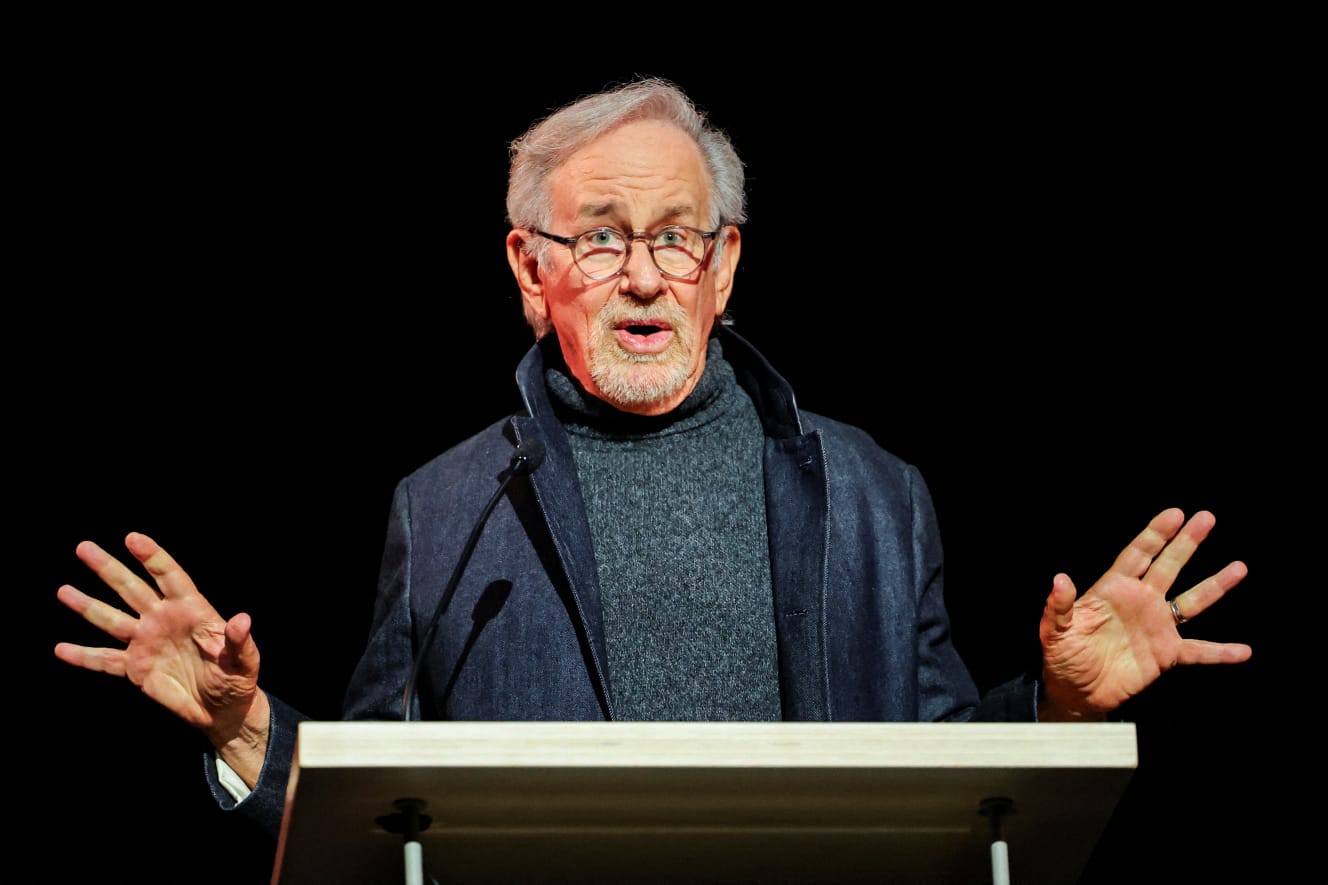
Director Steven Spielberg (78) is making headlines after it was revealed that he will be teaming up with legendary composer John Williams (93) to produce a new UFO-themed film.
The news was disclosed by Damian Woetzel, president of the Juilliard School in New York, during last month’s event held at the conservatory, “John Williams: A Composer’s Life—An Evening of Stories and Music.”
The film is described as an “adventure story about UFOs,” scheduled for release in 2026, but no title or further details have been announced yet, according to Variety.
Williams has composed music for Spielberg’s films beginning with Sugarland Express (1974), followed by Jaws (1975), Close Encounters of the Third Kind (1977), E.T. (1982), the Indiana Jones series, the Jurassic Park series, and Saving Private Ryan (1998), among many others. This new project will mark their 30th collaboration.
When it comes to Spielberg’s origins in UFO films, Close Encounters of the Third Kind is the definitive starting point.
Back in December 1977, when the film opened nationwide in the U.S., I attended a press conference held in Los Angeles. Columbia Pictures arranged the event for Japanese journalists ahead of the film’s Japanese release the following February.
French filmmaker François Truffaut, who plays a scientist in the film, also attended the conference.
The day before, I saw Close Encounters for the first time at the Cinerama Dome in Hollywood, which had become a popular tourist destination.
In the windswept deserts of the American Southwest, five U.S. military fighter planes that vanished over the Bermuda Triangle in 1945 are suddenly discovered—perfectly intact. Though the pilots are missing, the planes roar to life and take off into the sky when someone climbs aboard.
Air traffic controllers also witness two commercial airliners narrowly avoiding midair collisions with UFOs. In a house on the outskirts of Muncie, Indiana, a three-year-old boy sees a blinding light outside his window, his toys begin moving on their own, and he happily wanders outside. When his mother chases after him, the boy is gone and a UFO disappears into the clouds.
A massive blackout hits. Roy (Richard Dreyfuss), an electric lineman, investigates in his truck and encounters a UFO. From the opening, the film grips the audience with relentless suspense.
The depiction of various small UFOs buzzing around the highway—through both imagery and sound—is stunningly realistic. In the finale, a gigantic mothership appears, descends to the ground, and aliens meet with scientists. The scene was unlike anything that had ever appeared in film, and it was overwhelming.
At the time, The New York Times praised the film as:
“More ambitious than Jaws, deeper than Star Wars.”
President Carter was said to have watched it twice.
The film was a worldwide hit, grossing over $300 million (about ¥53 billion at the exchange rate of the time). In Japan, it earned ¥5.5 billion. Its $20 million production cost was considered extraordinary.
The press conference was held at a hotel in Los Angeles, and we were instructed to dress formally. All the Japanese journalists wore suits or jackets with ties. Yet Spielberg, then 31, strode in wearing jeans and a long-sleeve polo shirt—a casual look that made for an unexpected encounter, just like the film.
Regarding the film’s depiction of UFOs and extraterrestrials, Spielberg said:
“Since I’ve never had a third-kind close encounter myself, unfortunately I can’t say I believe in UFOs. But over the past few decades, there have been hundreds of thousands of reports about them. I think there’s something there. After ghosts, UFOs were the most mysterious and interesting subject to me.”
“I dreamed of them when I was asleep.”
The original English title of the film is Close Encounters of the Third Kind. According to the classification by American UFO researcher Dr. J. Allen Hynek, a first-kind encounter refers to the sighting of a UFO, a second-kind encounter involves discovering physical traces, and a third-kind encounter means contact with a UFO or extraterrestrials. Spielberg’s film was the one that brought a third-kind encounter between humans and extraterrestrials to the screen.
It was also groundbreaking in portraying extraterrestrials as friendly beings toward humanity.
He said something memorable:
“In past UFO reports, there were no accounts or information suggesting that they harmed humans. I don’t think highly intelligent beings capable of traveling tens of thousands of light-years would do any harm to humans.”
Regarding the small extraterrestrials with haniwa-like faces that appear in the film, he said:
“Sometimes I’m not sure how to answer when people ask me about those aliens. I think it’s fine for each viewer to imagine them in their own way.”
The film was said to have been influenced by Stanley Kubrick’s legendary sci-fi masterpiece 2001: A Space Odyssey(1968), but Spielberg explained:
“It was a wonderful film, but I wasn’t consciously influenced by it. It felt more like a documentary about space. If I had to name something that influenced me, it might be Disney films. The final scene may resemble Fantasia.”
In the climactic scene, the giant chandelier-like UFO mothership emerges from behind a mountain, descends onto the base, and extraterrestrials come out to meet the scientists. When I asked him:
“That UFO was incredibly original and impressive—how did you come up with it?”
he laughed and replied:
“It appeared to me while I was sleeping—in a dream.”
It left a vivid impression.
After the massive success of his previous film Jaws, for which he reportedly earned as much as 2.4 billion yen, Spielberg—the darling of Hollywood—threw himself into making his new UFO film. At that time, he felt like an energetic and cheerful young filmmaker overflowing with talent.
Now, that former movie prodigy Spielberg is taking on his first UFO film since Close Encounters—49 years later. Will this new film depict a future that lies beyond a third-kind close encounter? In any case, the world is eager to see what story he will tell.
Interview and text by Ryo Sakamoto (Tokyo Sports Newspaper): Ryo Sakamoto (Former head of Culture and Society Department, Tokyo Sports Newspaper) Photo: Reuters/Afro: Reuters/Afro