From Our Exclusive Archives: Minako Honda’s Private Reflections


What was FRIDAY reporting 10, 20, and 30 years ago? In Playback Friday, we look back at topics that were making headlines at the time. This time, we introduce “Memorial Graffiti — From Her Debut, Passionate Singing, and Love Affairs: The Short Life of Minako Honda — ‘The True Face She Showed Only to This Magazine,’” published in the November 25, 2005 issue, 20 years ago.
On November 6, 2005, singer Minako Honda passed away from acute myelogenous leukemia at the age of 38. FRIDAYpresents a memorial graffiti looking back at the magazine’s many photos of her taken since her debut (statements in 《 》 are quoted from past articles. Also, although Minako Honda changed her stage name to “Minako Honda.” in 2004, this article uses “Minako Honda” for consistency).
After a 10-month battle with illness
A wake was held on November 8, 2005, and the funeral the following day at the municipal funeral hall in Asaka City, Saitama Prefecture. A total of 6,400 fans and associates came to pay their respects. Everyone wept at her far-too-early passing, but the portrait of Minako displayed on the altar showed her with a bright smile, surrounded by baby’s breath, moth orchids, and the music of Nuovo Cinema Paradiso, which she herself had sung. Yet her fight against illness had been harrowing.
“Since January of this year, she had been undergoing treatment at a hospital in Tokyo. There were moments when she showed signs of recovery, but the situation was extremely harsh. Countless mouth ulcers appeared, and the only thing she could consume was ice. Her hair fell out, her muscles weakened, and she could barely walk. Even so, she remained strong, greeting visitors with a smile and saying, ‘I’m fine.’
She often sang loudly, and people in the hospital knew her as the place where you can hear Minako Honda’s a cappella. On November 3, she fell into a coma and never regained consciousness. At 4:38 a.m. on the 6th, with her family by her side, the songstress passed away peacefully, as if she were falling asleep.”
Minako first appeared in FRIDAY when she was 18. At that time, she was a rookie idol who had won many newcomer awards. Since then, the magazine continued to follow her, including scoops such as her romance with former Hikaru Genji member Kazumi Morohoshi. They captured her fresh, innocent look during early post-debut meetings, her determined rehabilitation efforts after injuries, and more.
Within all of that, there truly existed her real self—radiant, dazzling, and full of brilliance.
A big hit with her bare-midriff look and intense hip-shaking
Minako debuted in 1985 as an idol singer. Among a dazzling lineup of peers—Miho Nakayama, Yoko Minamino, Miyuki Imori, Onyanko Club, and others—she won numerous newcomer awards. In February 1986, the release of 1986-nen no Marilyn became a major hit thanks to her bold, non-idol-like bare-midriff outfit and choreography featuring intense hip-shaking.
A major turning point came with the musical Miss Saigon, in which she starred in 1992–1993. She took a full year off from work to prepare for the audition and was chosen as the heroine from about 15,000 candidates. Brushing aside comments such as “Can an idol really handle this?”, she successfully completed a year-and-a-half-long run. Her singing and acting were highly praised, and she went on to appear in numerous musicals, including Fiddler on the Roof and Les Misérables.
Her transition to musicals opened up a new horizon for her. Thanks to vocal training that allowed her to reach higher notes, she challenged a new style called neo-classic, in which Japanese lyrics were set to classical masterpieces. Her dream was to perform at Carnegie Hall in New York. But while working on her third album, Amazing Grace, in January 2005, she collapsed.
During her 10-month battle with illness, there were periods when she seemed to be recovering, including two temporary discharges from the hospital. The nearly five hours of voice recordings used in Fuji TV’s December 16, 2005 memorial program “The Songstress Who Became an Angel — Minako Honda: 38 Years of Dreams and Struggle” had originally been recorded for a documentary meant to mark her full comeback.
In those recordings were messages she made for lyricist Tokiko Iwatani—whom she adored as a mother and who was hospitalized in the same hospital at the time (Iwatani passed away in 2013). Minako conveyed her own condition and feelings, and sang an a cappella version of Amazing Grace. In addition, she recorded more than 30 other songs in her hospital room and delivered them to Iwatani.
She never gave up, continuing to sing for others until the very end.


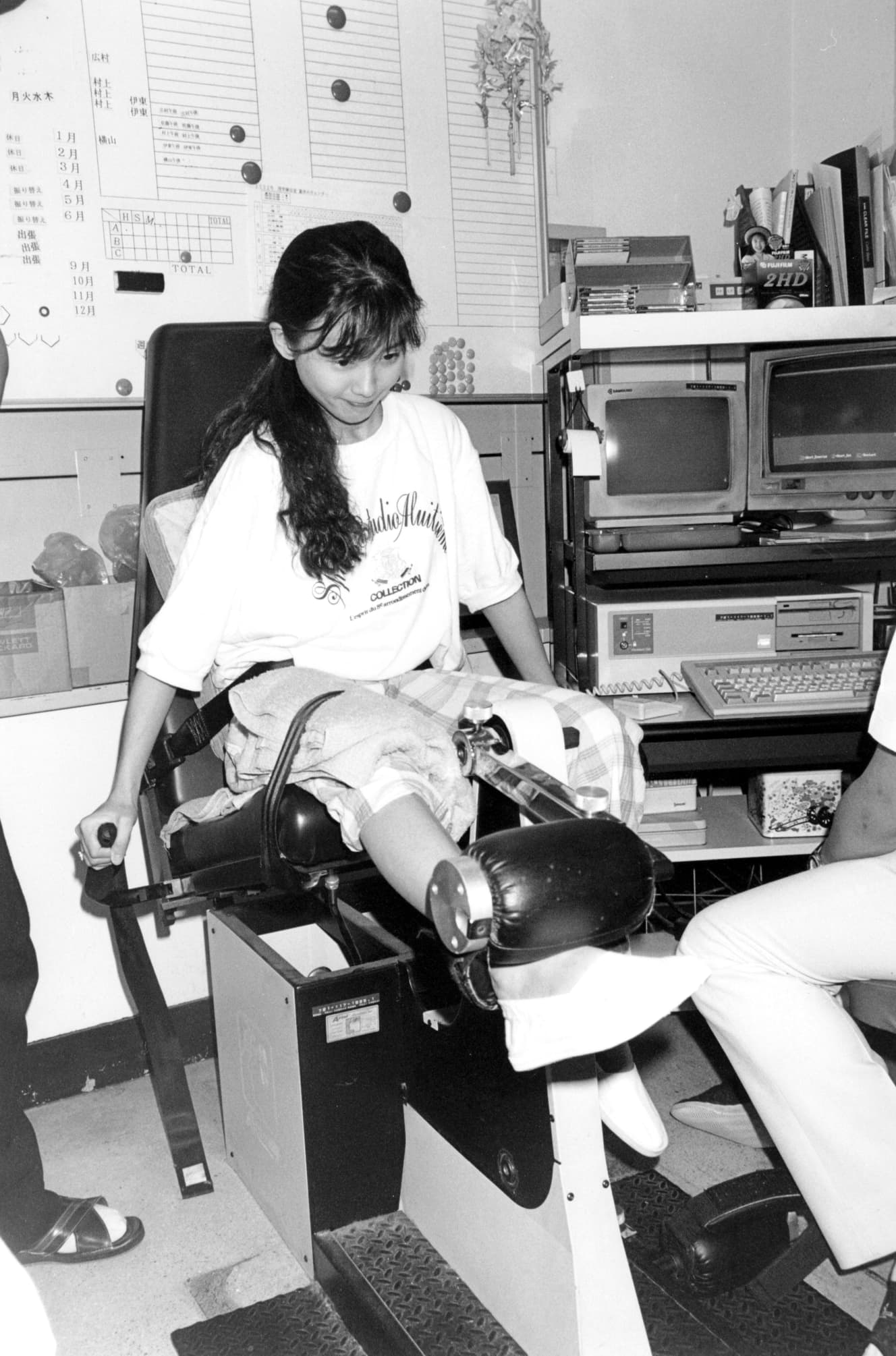

PHOTO: Takeshi Kinugawa, Toshihiro Nakagawa, Tomoyasu Kanazawa, Toshiaki Ichihara, Kenji Ikeda, Masatoshi Okauchi