When the Boom Stopped: The Harsh Reality the Outcall Industry Faced Amid Global Downturn and Fierce Rivalry


Now in its 27th year since its birth, delivery health has become the largest segment within Japan’s sex industry. This is Part 4 of a series in which sex-industry journalist Akira Ikoma explores its history. What were the dark clouds that began to loom over the delivery health industry—an industry that had experienced almost uninterrupted growth since its inception—starting in the late 2000s?
The worst recession in history faced by the sex industry
In September 2008, the Lehman Shock occurred in the United States. A financial crisis said to happen once in a century surfaced, plunging the world into a simultaneous global recession. Its effects reached Japan as well, and the economic downturn struck the sex industry head-on. With bankruptcies and layoffs happening one after another, people tightened their purse strings, and many stopped spending money on sex services.
Among the owners of sex-industry businesses whose customers vanished due to the recession, some lamented, “I’ve never seen sales drop this much. This is the worst recession ever.” Excessive competition to attract customers broke out, and prices collapsed. Most shops lowered their rates as they got caught up in the wave of price destruction. The most notable deflation occurred in delivery health, which had the largest number of shops.
In regional areas, the standard price for 60 minutes had been 16,000 yen, but shops began appearing that charged 8,000 yen, or even 6,000 yen—less than half of the original rate. Some shops offered handjob-only services for under 4,000 yen, and in some cases, the hotel fee was higher than the service price.
As Japan’s economy suffered through a deflationary spiral, ultra-cheap sex services became a huge trend, reflecting the social climate. Shops offering services for under 10,000 yen gained popularity. The most symbolic example was the rise of ultra-cheap delivery health shops charging 3,900 yen for 30 minutes. Sister shops appeared one after another across the country, rapidly expanding into a massive group.
While the sudden increase in bargain shops captured many customers, the excessive focus on low prices led to concerns: “If this continues, the industry will die,” “Sex workers will become working poor.” People also said, “Cheap shops are only worth what you pay for.” Some first-time customers had such low-quality experiences at ultra-cheap shops that they never used the industry again.
The biggest cause of deflation in the sex industry was not only the economic recession, but the rapid surge in delivery health shops and the massive influx of ordinary women—who had previously had nothing to do with the sex industry—entering the field.

A negative chain reaction that leaves everyone unable to earn
Since appearing in the late 1990s, the number of delivery health registrations had continued to increase—except briefly during the enforcement of the revised Adult Entertainment Law in 2006. Even in the 2010s, around 1,000 new shops opened every year. This stood in stark contrast to brick-and-mortar sex businesses, which faced strict zoning regulations and were extremely difficult to open. However, it was impossible to say, “The number of users is increasing along with the rising number of delivery health shops.” The market was clearly oversaturated, with supply far exceeding demand.
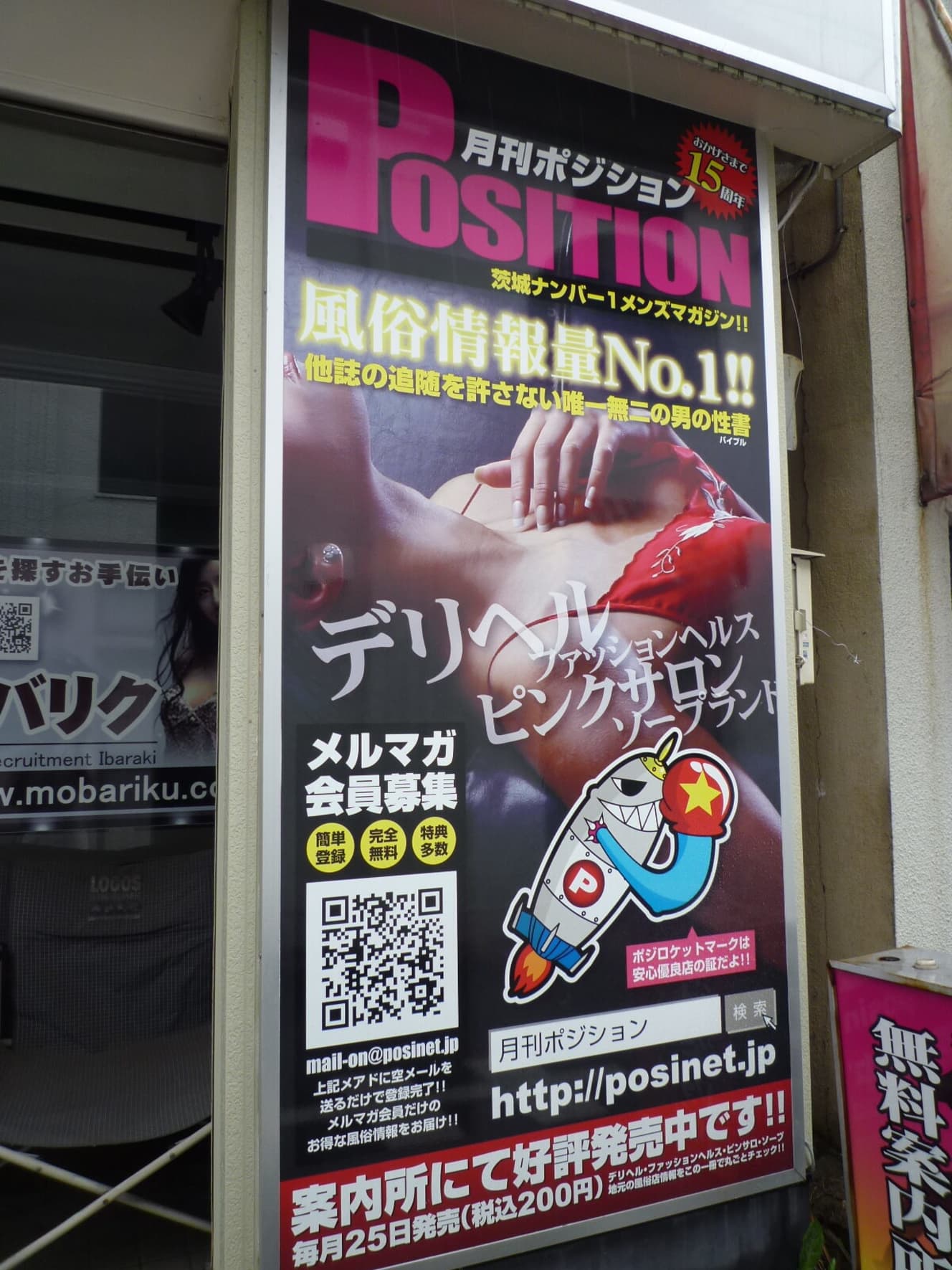
At the time, I was editor-in-chief of the nationwide sex-industry magazine Ore no Tabi, and I often heard writers say, “There are too many shops.” I remember a veteran writer living in a regional area strongly insisting, “The reason the sex industry is in a recession is because there are way too many delivery health shops.”
Despite the industry’s exhaustion, ordinary people—dreaming of striking it rich because sex work is profitable—continued to start delivery health businesses. Many launched without securing the proper capital and burned through their savings, giving up soon afterward. Some shops closed only a month after opening.
Delivery health shops run by complete amateurs with no industry experience generally tried to survive the recession simply by lowering their prices. They lacked systems to improve operational efficiency and had no idea how to maintain healthy operations through creative concepts that attract customers. As a result, cheap and bad shops came to occupy a significant share of the market.
One reason for this decline was the neglect of training for female cast members. Because delivery health involves sending women to customers’ homes or hotels, the service should have required even more training than store-based sex businesses. Yet many shops did not educate their women at all—some didn’t even provide basic training for beginners. Consequently, the quality of service provided by the women kept deteriorating, leading to a negative chain reaction in which more and more women became unable to earn enough.

The collapse of the myth that sex workers earn easy money
In this way, the number of delivery health workers who couldn’t get customers rapidly increased. Even when they came to work, the number of sessions was low, and it was not uncommon for them to go home without a single customer. Veteran cast members with many years of experience lamented, “It wasn’t like this a few years ago” The old perception from the 1980s–90s — that “sex workers earn easily, make huge incomes, and love spending and having fun” — had become a thing of the past.
Since they couldn’t get customers, naturally, their income dropped. It became common to hear of women making less than 200,000 yen per month, and more sex workers began applying for welfare assistance. However, government office staff were often unaware of these harsh realities and still held the outdated belief that “sex work makes good money.” At the reception desk, some women were met with verbal abuse and were turned away. As a result, some women hid the fact that they were sex workers when applying. Former shop owners and former operators of sex-industry websites were also increasingly applying for welfare.
Many sex workers who could no longer earn said they still believed that “working in the sex industry is better than receiving welfare.” Their thinking was: “Welfare strips you of your dignity as an adult. Working in the sex industry still lets you feel you’re supporting yourself.” However, even women with this mindset were being pushed to the breaking point and had no choice but to apply.
Delivery health workers who could no longer earn as before resorted to a last measure to increase their regular customers: reluctantly providing full-service sex. Some also began engaging in jikihiki — offering services directly to customers without going through the shop and receiving full payment — despite such acts being forbidden by the establishment. They had no other way to make money.
Even in ultra-cheap delivery health shops—where the prices had plummeted due to deflation—there were women who still almost never got customers. And in many cases, it wasn’t simply that “they showed up but couldn’t earn,” but that “they weren’t even allowed to work at the shop.” Supply and demand had become so unbalanced that the number of women wanting to become sex workers far exceeded available positions, and about half of those who applied for interviews were no longer being hired.

Married women and mature women who supported low-priced services
As the economy slumped and many shops began offering sexual services at unprecedentedly low prices, the ones who supported the delivery health industry were married women and mature women over 30, who could no longer compete on youth alone. The prolonged recession pushed many struggling married women and mature women into the sex industry.
The increase in delivery health businesses lowered the barrier for married women to work in the sex industry. Instead of working in flashy shops with neon signs, they could wait in an office inside a multi-tenant building and head to a love hotel only when a job came in. Because they could work in their own clothes without drawing attention, and because they received cash payments daily, many married women looking to earn living expenses entered the industry.
Married-woman delivery health services increased every year. In the early 2010s, about 90% of delivery health shops targeted young women. By the late 2010s, it was said that “more than 30% had become mature-woman themed,” making it a major genre.
The popularity of mature women even led to unusual phenomena that were previously unthinkable. Women in their late 20s began lying upward about their age—claiming to be in their 30s—or pretending to be married even if they were single. This was because those personas attracted more popularity and increased requests. Such things would have been unimaginable in the 1990s, when married-woman fuzoku had not yet become mainstream.
It was not only married women who entered the sex industry because of the recession. Increasing numbers of poverty-stricken office workers, part-timers, and students also appeared. Most notable among them were current female university students.
Due to three factors—“decline in household income leading to reduced parental support,” “rising university tuition,” and “the student loan system that requires repayment with interest after graduation”—university women under financial pressure increasingly turned to sex work.
Female students working in delivery health and efficiently earning income ended up enjoying richer student lives and brighter prospects than students who relied on loans or exhausted themselves with harsh part-time jobs.
Among the impoverished sex workers, female students from well-known universities, who offered added value and were easier for shops to hire, were not part of the losing group—but that did not necessarily mean they became winners. Most sex workers were simply no longer able to earn as they once had.
[In the latter half] the series covers the creative survival strategies adopted by delivery health operators in harsh conditions, and the role delivery health played during the Great East Japan Earthquake.
[References]
Nihon no Fūzoku-jō — Atsuhiko Nakamura, Shinchosha, 2014
Seifūzoku no Ibitsu na Genba — Shingo Sakatsume, Chikumashobo, 2016
Fūzoku to Iu Yamai — Shinya Yamamoto, Gentosha, 2016
“Karada o Uru Kanojo-tachi” no Jijō — Shingo Sakatsume, Chikumashobo, 2018
Joshi Daisei Fūzoku-jō — Atsuhiko Nakamura, Asahi Shimbun Publishing, 2015
Shokugyō toshite no Fūzoku-jō — Atsuhiko Nakamura & Mamoru Teshigahara, Takarajimasha, 2015
Numerous other books and online sources were also referenced.

Interview, text, and photographs: Akira Ikoma