Harsh Survival Rates Spur a Boom in Specialty Concept Outcall Shops — 27-Year Industry History, Part 4


What was happening in the delivery health industry during the 2010s amid prolonged recession and excessive competition? This is Part 4 of a series in which sex-industry journalist Akira Ikoma traces the 27-year history of delivery health from its birth to the present day.
In the latter half, we introduce the battles fought by operators struggling to survive.
In the first half, the series discussed issues such as the increasing poverty of sex workers caused by the global recession and other pressures that the delivery health industry faced.
Ninety percent of shops disappear within a year
Commercial how-to books on running sex-related businesses often describe delivery health services as something “anyone can start and make money from” or “a lucrative business that thrives especially during recessions.” But in reality, it had become an industry where “only those with strong management skills and capital can profit.”
Even shops that operated smoothly at the beginning soon faced challenges that amateurs struggled to handle: changes in the market environment such as “an increase in new competitors entering the same area” and “rising advertising costs,” as well as internal issues like “poaching of popular cast members” and “conflicts or resignations among staff.” Eventually, sales stagnated. In a desperate attempt to recover, owners resorted to tactics such as large price cuts or furikae—creating fake profiles and sending completely different cast members than advertised—focusing solely on squeezing out profit by any means necessary. As a result, the “win-win relationship,” where customers enjoy themselves and the shop earns revenue, collapsed.
As the recession dragged on, delivery health businesses began falling into financial crisis one after another. Each year, many newcomers entered the industry hoping for a big win, but about 90% disappeared within less than a year. Even among those that managed to survive, only a tiny fraction actually made money; most operated on extremely thin margins, barely staying afloat.
In Shinjuku Kabukicho in the mid-2010s, 10 to 20 new shops opened every month, yet most shut down quickly. After one year, the only shops that remained—even barely—were new stores backed by large groups or those with novel ideas that happened to catch on.
People began saying, “Delivery health is already a declining industry; the idea that amateurs can start one and make a profit is just a dream.” With the industry entering an era of profitless, destructive price competition, it had become “extremely difficult unless the owner had significant ability and enough capital to endure long periods of deficit.” Many tragic cases were reported of people who started a delivery health business, failed, and were left only with debt. Among those who failed, some reportedly fled by night, while others took their own lives.

A delivery health operator who came to me in tears saying, “No customers are coming.”
During this period, a man who had been put in charge of running a newly opened delivery health shop came to me in desperation. He said: “Customers aren’t placing orders and I’m in trouble. I have to pay waiting-time guarantees to the women on shift, so if no customers come, our capital keeps shrinking as time passes. If things continue like this, we’ll be in serious trouble. Please tell me what to do.”
There was a young woman waiting in the waiting room, but because the shop’s phone wasn’t ringing at all, her face was tense and she looked anxious. In the end, they decided to “find a way to appear higher in search site rankings,” but I don’t know what happened after that.
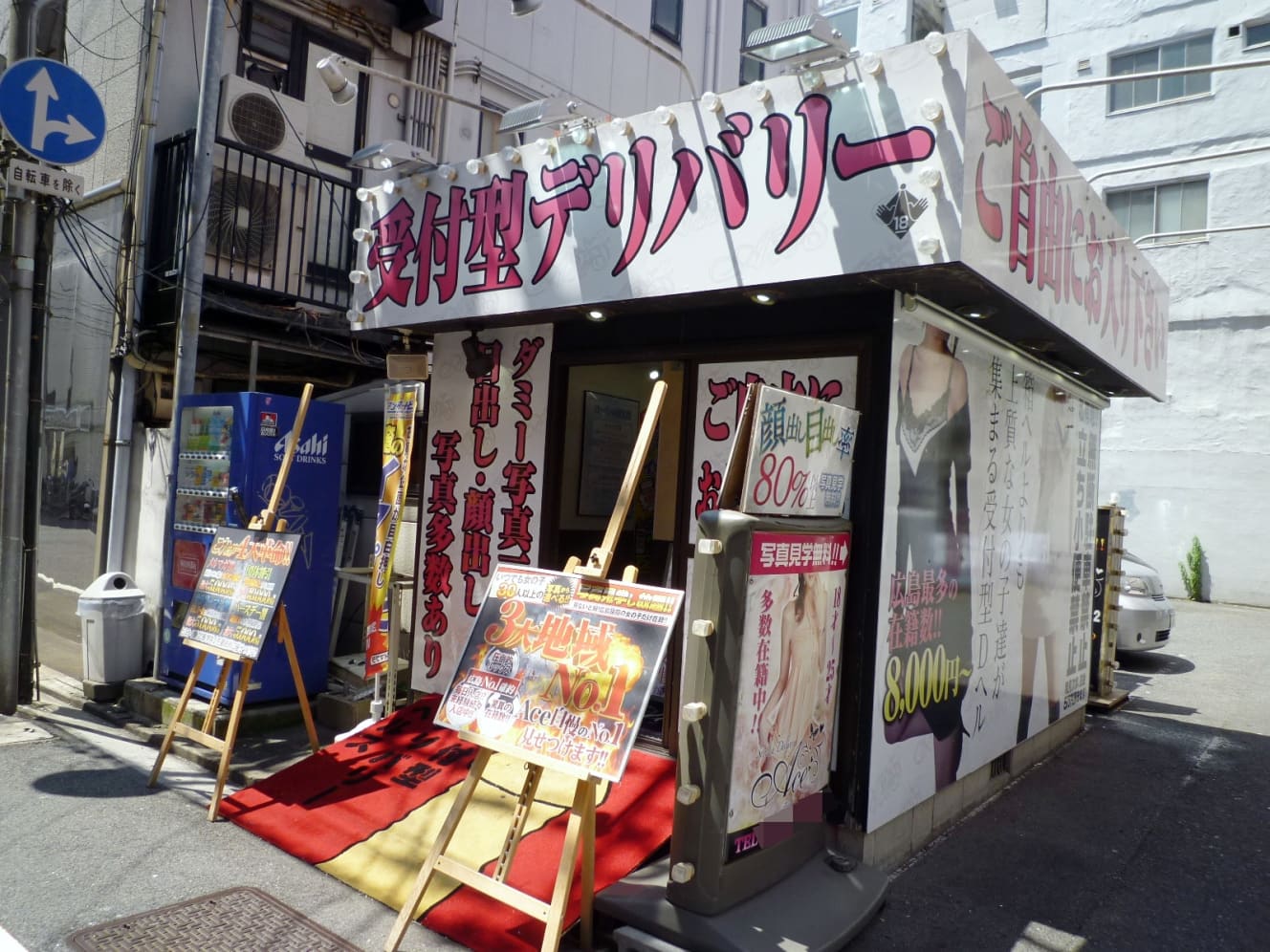
In 2019, the number of reported delivery health businesses reached 21,619, but it was said that “less than half of these are actually operating.”
To survive the crisis, delivery health owners racked their brains. In the saturated market, they tried to differentiate themselves to avoid being overlooked, and many shops began to highlight unique concepts.
Specialty shops advertised unusual themes such as “pure-hearted girl from the countryside,” “married woman with debt,” or “pregnant woman who produces breast milk.” Some shops incorporated VR (virtual reality) into their services, others offered health-oriented delivery health where a woman helps you do stretches that are hard to do alone by pressing her body close. There were also shops where customers exchanged messages via social media to enjoy the excitement of an online-dating-like experience, or shops where customers could “talk live on the phone with a woman.”
There were even shops featuring women wearing pro-wrestler-style masks, pushing individuality to the extreme.
Among these niche fuzoku services, the one that showcased the potential of delivery health to the world was “Dorafela”(short for drive fellatio). A sex worker rides in the customer’s car, sits in the passenger seat, and provides service while the customer drives. This slightly risky play became established as an optional service in the Tokai region.
In the meeting-style category, services such as “Date & Deli,” “Group Date Deli,” and “Karaoke Companion” became a reality. Owners were young in sensibility and filled with a desire to “add creative twists to the service and delight customers,” making the industry a treasure trove of imaginative fuzoku ideas.

Why shops run by women became popular
While small independent shops with little capital or managerial ability continued to go under one after another, large groups with sufficient financial resources were able to survive the recession. Delivery health businesses expanding through national chains and franchises were called mega-deli. These groups grew by repeatedly absorbing and merging with small local delivery health shops, creating what was described as a “big-capital winner-takes-all situation.” It was truly survival of the fittest. In this way, everything from bargain shops to high-end shops became organized into group structures.
Meanwhile, there were also emerging delivery health groups that were increasing their number of shops. One such business, which reached annual sales of 2 billion yen within four years of its founding, was called “a soaring fuzoku venture enterprise.” Its secret to success was “being the first to adopt 24-hour operation.” The president’s dedication during the early days—surviving on an average of three hours of sleep—seemed to have paid off.
Around this time, delivery health businesses owned by women were rapidly increasing. Surprisingly, ordinary housewives with no knowledge of the sex industry, or women who once worked as insurance agents, were getting their shops on track. Their success came from taking advantage of the reliability often associated with women—running the business steadily and seriously without resorting to gimmicks.
Reasons such as “women feel more comfortable working for a female owner” and “phone service is softer and more polite” also contributed to the popularity of female-run shops. One woman owner in a regional area who even built her own company building said that when she first started, she was criticized harshly with comments like “This isn’t a job for a woman” and “Your business will fold right away.” But she believed firmly that “If you run it with a woman’s sensibility, it will definitely succeed.”

Delivery health as a safety net
Delivery health, a shadowed part of the sex industry, is said to have played a major role in society during the Great East Japan Earthquake that struck in March 2011.
In the coastal disaster areas, most sex-related businesses were delivery health. Right after the earthquake, hotels were unusable, so women were called to customers’ homes or apartments. Many men confided their anguish to the sex workers—women they could interact with as someone separate from their everyday selves—saying things like, “If I don’t feel someone’s warmth, I can’t stay sane,” or “I don’t know what to do.”
Many expressed gratitude toward the delivery health workers who listened to their true feelings. In the harsh conditions after the disaster, delivery health functioned in part as a safety net for men who had lost their families.
At the same time, there were women who had no choice but to rely on the sex industry to rebuild their lives. In the disaster-stricken areas immediately after the earthquake, there were people—regardless of gender—who desperately needed delivery health.
In addition, right after the disaster, many sex-industry businesses from Tokyo advanced into Tohoku, aiming to tap into the money coming in from relief funds and compensation payments received by victims and those involved in reconstruction work. Some sex workers from Kanto and Kansai also traveled to Tohoku as migrant workers.
At a delivery health shop in Sendai that reopened 20 days after the earthquake, customers flooded in, and the phone rang nonstop from the moment they opened. When the Tohoku Shinkansen resumed service to Sendai, the number of business travelers surged—construction workers, volunteers supporting reconstruction, and other visitors from outside the prefecture. Sales rose steadily. One year after the disaster, Sendai saw a reconstruction boom, and sex-industry shops were so busy that they complained, “We don’t have enough women.” Delivery health had contributed to economic recovery in the disaster areas.
[References]
“Nihon no Fūzoku-jō” by Atsuhiko Nakamura, Shinchosha, 2014
“Seifūzoku no Ibitsu na Genba” by Shingo Sakatsume, Chikumashobo, 2016
“Fūzoku to Iu Yamai” by Shinya Yamamoto, Gentosha, 2016
“‘Karada o Uru Kanojo-tachi’ no Jijō” by Shingo Sakatsume, Chikumashobo, 2018
“Joshi Daisei Fūzoku-jō” by Atsuhiko Nakamura, Asahi Shimbun Publishing, 2015
“Shokugyō to Shite no Fūzoku-jō” by Atsuhiko Nakamura & Mamoru Teshigahara, Takarajimasha, 2015
Various other books and online sources were also referenced.

Interview, text, and photos: Akira Ikoma