Unregulated Foreign Solar Developers Tear Into Hokkaido Woodlands—Illegal Logging Surges


Contents of the survey on the acreage of forests and farmland purchased by foreign capital
The Ministry of Agriculture, Forestry and Fisheries (MAFF) finally released its survey results on September 16 regarding the acreage of forests and farmland purchased by foreign capital. Since 2021, the release has typically been from mid-July to early August, but this year it was nearly two months late. One wonders why.
Hideki Hirano, Director of the National Land Resource Institute, who has been conducting nationwide field surveys on the theme of foreign capital buying up national land since 2008, explains:
“The reason for the delayed release is that MAFF worked to improve the accuracy of the statistics. The issue of regulating foreign land purchases became one of the points of contention in the House of Councillors election, which also had an impact.
And it wasn’t just the release date that changed. The titles attached to the survey results changed drastically as well.”
Previous titles included “Survey Results on Forest Acquisition by Foreign Capital” and “On Farmland Acquisition by Foreign Corporations.” But this year’s titles were changed to: “The forests acquired by foreign corporations, etc., in 2024 accounted for 0.003% of all private forests nationwide” and farmland accounted for 0.004% of all farmland nationwide.
“The reason for putting percentages in the title was likely to emphasize that the forest and farmland purchased are minimal and not a big deal.
Certainly, in 2024, the area of forest acquired by foreign capital was 382 hectares, which is 0.003% of Japan’s total 14.31 million hectares of private forest. Likewise, foreign-acquired farmland totaled 175 hectares—0.004% of the nation’s 4.27 million hectares of farmland.
But the published figures for forest and farmland acquisition are one to two orders of magnitude smaller than the actual acreage acquired by foreign capital. MAFF counts only the purchases that were formally reported.”
Regardless of MAFF’s attempts to make the acreage acquired by foreign buyers appear small, the fact remains that foreign capital is purchasing Japan’s forests and farmland. The cumulative total of farmland acquired has more than tripled from 2017 to 2023, the period since MAFF began publishing these statistics.
“The reason for the increase is that, starting in spring 2024, MAFF began counting farmland purchases by foreign residents as acquisitions by foreign capital and added them to the statistics. In that sense, the capture of farmland transactions has improved.
The acreage of farmland acquisitions to be published next year will certainly increase.”
Meanwhile, when looking at the number of cases of forest acquired by foreign capital by prefecture, Hokkaido stands out with 36 of the 48 cases. Many of the purchasers are based in Hong Kong and Singapore, and the purpose of use is listed almost entirely as asset holding.
“In cases where the purpose of use is unclear or the buyer doesn’t want to state it, they simply write asset holding. Even when the real objective is resale, it is recorded as asset holding.
In Kutchan Town and Niseko Town, home to the Niseko resort area, most cases are listed that way.
Even if the registered buyer is in Hong Kong or Singapore, in reality these are almost all China-related entities. Chinese companies and wealthy individuals often create paper companies in tax havens such as Hong Kong or the Cayman Islands, then invest in Japanese special purpose companies (TMKs) via Singapore to reduce tax burdens.
By routing the dividends generated from the property through a Singaporean entity, they can reduce taxes — effectively receiving double exemptions. This method has been commonplace in Kutchan and Niseko for quite some time.
And it’s not just Hokkaido. Across Japan, land purchases for data centers and logistics centers are happening at a rapid pace, and China-linked capital coming through Singapore is involved there as well.”

I believe this is an issue of governance within the Hokkaidō Prefectural Government
In Kutchan Town, a Sapporo-based business operator with Chinese nationality illegally cleared approximately 3.9 hectares of forest land in Hokkaido without permission, and further constructed two buildings without obtaining the required approvals. The operator was ordered by the Hokkaido Government to halt construction for violating the Forest Act, City Planning Act, and other regulations.
“The case in Kutchan Town, in a word, is a governance problem within the Hokkaido Government.
According to information obtained from reliable sources, prefectural officials advised the operator on methods that would eliminate the need to file applications under the Forest Act or the City Planning Act.
Under the Forest Act, if the development area is 1 hectare or less (0.5 hectares in the case of solar power projects), applying for forest land development permission is not required. For example, if an unscrupulous operator wishes to develop 1.5 hectares of forest, they divide the area into 0.9 hectares and 0.6 hectares when submitting notifications, making it difficult to recognize that the plots are contiguous.
When legislators or organizational leaders request consideration for an operator, or when such suggestions are made, the only things most ordinary government employees can do without violating the law are: (1) teach them how to avoid having to apply for permission, and (2) reduce the time it takes to obtain approval.
For government employees, personnel evaluations are everything. Staff members inevitably provide just enough accommodations to avoid committing an offense. This has not changed since my days as a bureaucrat. The organizational chain—from bureau director to section chief, assistant manager, and unit chief—must function with proper oversight.”
For those acquiring forests and farmland, the loose governance of Hokkaido’s administration may make it an easy target.
“In the majority of municipalities where depopulation has led to staffing cuts, officials simply go along with whatever comes their way, and mayors and assembly members are not fulfilling their proper roles. In fact, the trend is even shifting toward making accommodations for operators.
That’s why Hokkaido may be easier to move into.
The Hokkaido Shimbun and NHK Hokkaido were once oversight bodies within the prefecture, but this has changed greatly in the past 20 years. Media outlets that should act as watchdogs have become influenced by sponsors and by Chinese interests.”
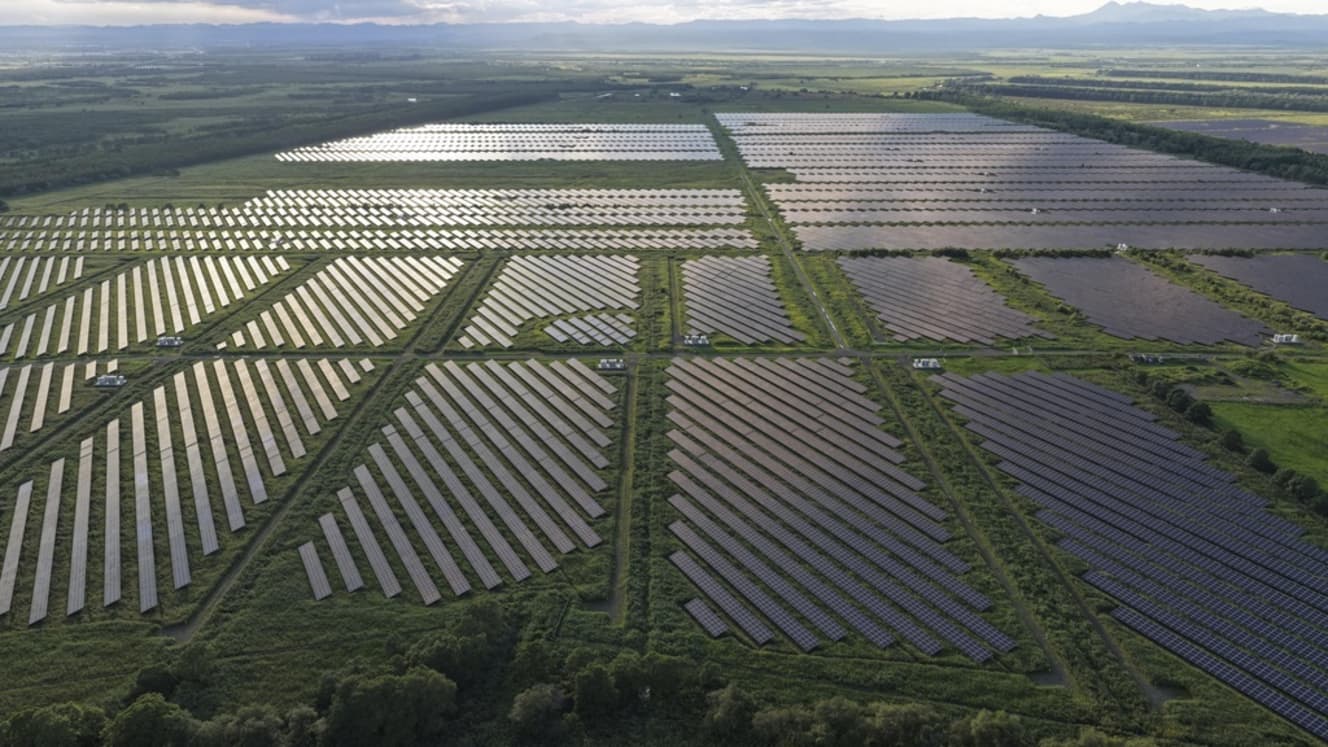
Hokkaido is also facing another issue involving a mega-solar project being promoted near the Kushiro Wetland by a company based in Osaka. The operator planned to install about 6,600 solar panels on roughly 4.2 hectares of private land. However, a violation of the Forest Act came to light, and the construction is currently suspended.
The planned installation site is an area inhabited by rare wildlife, including the red-crowned crane (a Special Natural Monument) and the white-tailed eagle (a Natural Monument). Earlier this year, Kushiro City established an ordinance regulating the construction of solar power plants with an output of 10 kilowatts or more, requiring that such facilities across the entire city obtain permission and that developers conduct surveys on the habitats of rare wildlife and prepare conservation plans. The ordinance will apply to projects starting construction in January next year or later.
“Kushiro City enacted an additional ordinance, but it only applies to mega-solar projects built in the future. It does not retroactively apply to past projects, so its impact is limited.
Besides, there will likely be far fewer companies starting mega-solar projects going forward. The feed-in tariff for solar power has dropped by more than 30 yen per kilowatt-hour since the renewable energy fixed-price purchase system began in 2012.
I won’t say the ordinance is useless, but it undeniably comes too late.”
In mid-October, it was also revealed that the land planned for the mega-solar project—originally owned by the Osaka operator and then transferred to a company in Aichi Prefecture—had been sold in March of this year to the Japanese subsidiary of a Singapore-based firm.
“The troublesome tasks of land assembly and local negotiations are handled by Japanese companies, and once the project reaches the stage where power generation can begin, a purchaser steps in. These purchasers are often limited liability companies or special purpose companies, making it hard to determine whether they are foreign-owned.
This method has been used for more than 10 years, with Shanghai Electric being a typical example. The Kushiro Wetland case was also transferred and is now under a different operator.”
Japan is a country that cannot regulate land use, “We must separate the concepts of use and ownership.”
Hirano points out that creating the Renewable Energy Act (the Act on Special Measures Concerning the Procurement of Renewable Electric Energy by Operators; enacted in 2012) was the fundamental mistake. What does he mean?
“Under the Democratic Party administration, when Naoto Kan was prime minister, the government rushed to create the Renewable Energy Act together with companies like SoftBank. In reality, they should have taken much more time to design the system properly.
How should the approval standards for solar power development be set?
How should the balance between preventing reckless development and protecting nature be addressed? Coordination and consensus-building with local residents are also necessary. What happens if foreign operators who come in from overseas become untraceable? What do we do with solar panels abandoned after they reach the end of their service life?
A detailed institutional design was required, but the law was pushed through without sufficient preparation for globalized business practices. That was the problem.”
Within the next five to ten years, a massive number of solar panels whose 20-year feed-in tariff period has ended will inevitably appear across the country. If they are left abandoned in forests or rice fields, the glass will break and harmful substances such as lead, selenium, and cadmium will leach out, contaminating farmland.
If that happens, the damage will be irreversible.
“Land is bought up, nuisance facilities are constructed for profit, and in the end even the industrial waste is abandoned. We have forced a truly difficult problem onto the next generation. It’s just like dealing with abandoned wrecked ships—the cleanup will be dumped on municipalities.”
Hirano stresses that issues involving land must separate use from ownership.
“To speak generally about land use: once land is purchased in Japan, regulating its use becomes extremely difficult. This applies regardless of whether the owner is a foreigner or a Japanese citizen.
In the Kutchan Town case, there has been a lot of uproar along the lines of, ‘Foreigners are building structures without permission—outrageous!’ Right-wing groups may feel good making martial-sounding arguments, but ownership has already changed hands, so it’s too late.
I call for regulation at the ownership stage. No matter how hard you try to regulate use, the same problems will recur once ownership changes. In practical terms, use-based regulation has no real effect.”
In Tsurui Village in the Kushiro region, known as a landing site for red-crowned cranes, officials were informed that the Osaka-based operator planned to build a solar power plant near a scenic area. The village decided to purchase about 7.5 hectares of private land.
“Because they can’t impose any use restrictions, Tsurui Village likely chose to purchase the land and own it themselves. This is exactly the measure that should be taken first—but expecting financially weak municipalities to do this is a problem.
Municipalities, prefectures, and the national government must identify areas where they do not want land to be privately owned and convert them to public ownership. If public ownership is impossible, then impose regulations. Once the land is purchased, it’s over.
Foreign buyers know very well how strong land ownership rights are in Japan. That’s why they will never let go of the land.”
What effect will strengthened regulations have?
Starting in April this year, the Ministry of Agriculture, Forestry and Fisheries (MAFF) strengthened regulations for foreigners acquiring farmland. Foreigners with a residency period of less than one year are, in principle, prohibited from acquiring farmland. What effect will this have?
“Farmland has always been handled somewhat differently because Article 3 of the Farmland Act already regulates sales.
In September 2023, the government made it mandatory for foreigners acquiring farmland to state their nationality. And from April 2025, foreigners with short-term residency will be prohibited from acquiring farmland. I believe this will have a certain degree of effect.”
On October 1, the Ministry of Land, Infrastructure, Transport and Tourism (MLIT) announced that when land above a certain size is transacted, the acquirer—Japanese or foreign—must report their nationality to the local government.
“There are two problems with this amendment. The first is that post-transaction reporting under Article 23 of the National Land Use Planning Act has long been poorly observed. So we cannot expect much impact from the revision. The second problem lies in how nationality is interpreted and defined. If an overseas corporation establishes a subsidiary in Japan, it is not considered foreign.
Moreover, the reporting requirement applies only to large-scale acquisitions. According to MLIT, such cases account for just 1% of all transactions. This means we will not be able to see the whole picture.”
Japan still lacks adequate governance mechanisms to deal with globalized land transactions.
“In prefectures and municipalities suffering from severe depopulation, the number of public employees will continue to fall. Governance will inevitably become even weaker.
Meanwhile, Japan’s land area does not change. And the ones increasingly holding ownership are foreigners.
Looking at property registries, many corporations change their registered addresses every few months or even every month, so there are limits to tracking their whereabouts.
If foreign owners continue to hold the land, registries may list an owner, but the actual owner will remain unknown.
In the end, such land will become areas difficult for the government to intervene in.
Like other countries, Japan needs to establish a system that allows for normal national land management.
The only solution is to reorganize and strengthen the current real estate information infrastructure so that each individual parcel of land can be properly managed—and allocate the necessary budget and manpower.”
▼ Hideki Hirano — Director of the National Land Resource Institute.
Graduate of Kyushu University. Former Director of Environmental Impact Assessment Division at the Ministry of the Environment and former Director of the Chubu Regional Forest Office at MAFF. Also served as Senior Fellow at the Tokyo Foundation and Specially Appointed Professor at Himeji University. Author of Silent National Land Acquisition (Kadokawa Shinsho), Japan Is Already Being Invaded (Shincho Shinsho), We Will Buy Japan (Shinchosha), among others.
Reporting and writing: Sayuri Saito PHOTO: Afro (1st photo), Kyodo News (2nd and 3rd photos)