Beauty, Control, and Scandal — Okubo Park Workers Speak Out on the GPS Prostitution Case


Choose: either work the streets or work in the sex industry
On October 15, the Tokyo Metropolitan Police Department’s Public Morals Division announced the arrest of Maoya Suzuki (39), the manager of a girls’ bar in Ikebukuro, and Aya Tano (21), an employee, on suspicion of violating Japan’s Anti-Prostitution Law (for managing prostitution). According to police investigations, from around May to July, the two allegedly made a female employee live inside the girls’ bar and forced her to engage in prostitution around Okubo Park in Shinjuku’s Kabukicho area. Suzuki denies the charges, while Tano has admitted to them.
“The victimized woman joined the bar in September last year, but Suzuki stopped paying her salary after six months, claiming she wasn’t bringing in customers. Then, in April this year, he pressured her, saying, ‘Choose: either work the streets or work in the sex industry.’ After the bar closed each night, he made her stand in Okubo Park to solicit clients. She was forced to carry a GPS tracker so her location could be monitored, record her conversations with customers, and report the hotel room number once she entered. Suzuki closely tracked her activities and reportedly took nearly all of her earnings.
Furthermore, Suzuki allegedly canceled her apartment lease without permission and made her live in a back room of the bar. The woman was under constant surveillance and suffered daily beatings, leaving more than 20 bruises on her body. Investigators believe she was forced to have sex with over 400 clients, earning around ¥6 million (about $40,000), most of which Suzuki took. The crime came to light after the woman herself was arrested in July for violating the Anti-Prostitution Law (for soliciting clients).
After the arrests were reported, attention turned to Tano, who became a topic of discussion online for being too beautiful,” said a national news reporter.
The incident took place at the girls’ bar E-Wave Morning, located in Tokyo’s Toshima Ward, Ikebukuro. The establishment operates as the morning and daytime division (5 a.m. to 8 p.m.) of E-Wave, which runs from 8 p.m. to 5 a.m., effectively making the business a 24-hour girls’ bar. Suzuki served as the manager of E-Wave Morning, while Tano was an employee. A man working at another nearby girls’ bar spoke to reporters about the store’s inner workings.
The bar operated out of a tenant space that had been subleased
“The person in charge of the store was actually from the night shift. I heard that this guy Suzuki was only renting the tenant space and the signage to run his own business. In other words, it was a sublease. When you think about how much rent you’re paying for the hours the bar isn’t open, it’s more efficient to rent out the space during the day, let someone else run it, and take a cut of the sales or rent. For the one renting, it’s a way to run a business with little initial cost — it was probably a mutually beneficial setup,” said one man familiar with the situation.
However, as the investigation progressed, it became clear that the daytime operation Suzuki managed was struggling financially. A man who scouts for customers around Ikebukuro 2-chome said:
“It wasn’t very popular. I never brought any customers there myself. Hardly anyone wants to go to a girls’ bar during the day, and even if they do, they go to places where they already have a favorite hostess. Honestly, this place wasn’t a popular one — I doubt they had many customers. It wasn’t even about the quality of the staff; the bar just lacked energy.”
Interviews with people in the neighborhood echoed the same sentiment: “There aren’t many people around during the day,” “I rarely saw anyone there,” “I didn’t even know the place was open in the daytime.”
Could it be that the decline in sales led Suzuki to force the victim into prostitution to make up for the losses? As Suzuki continues to deny the allegations, his motives remain unclear.
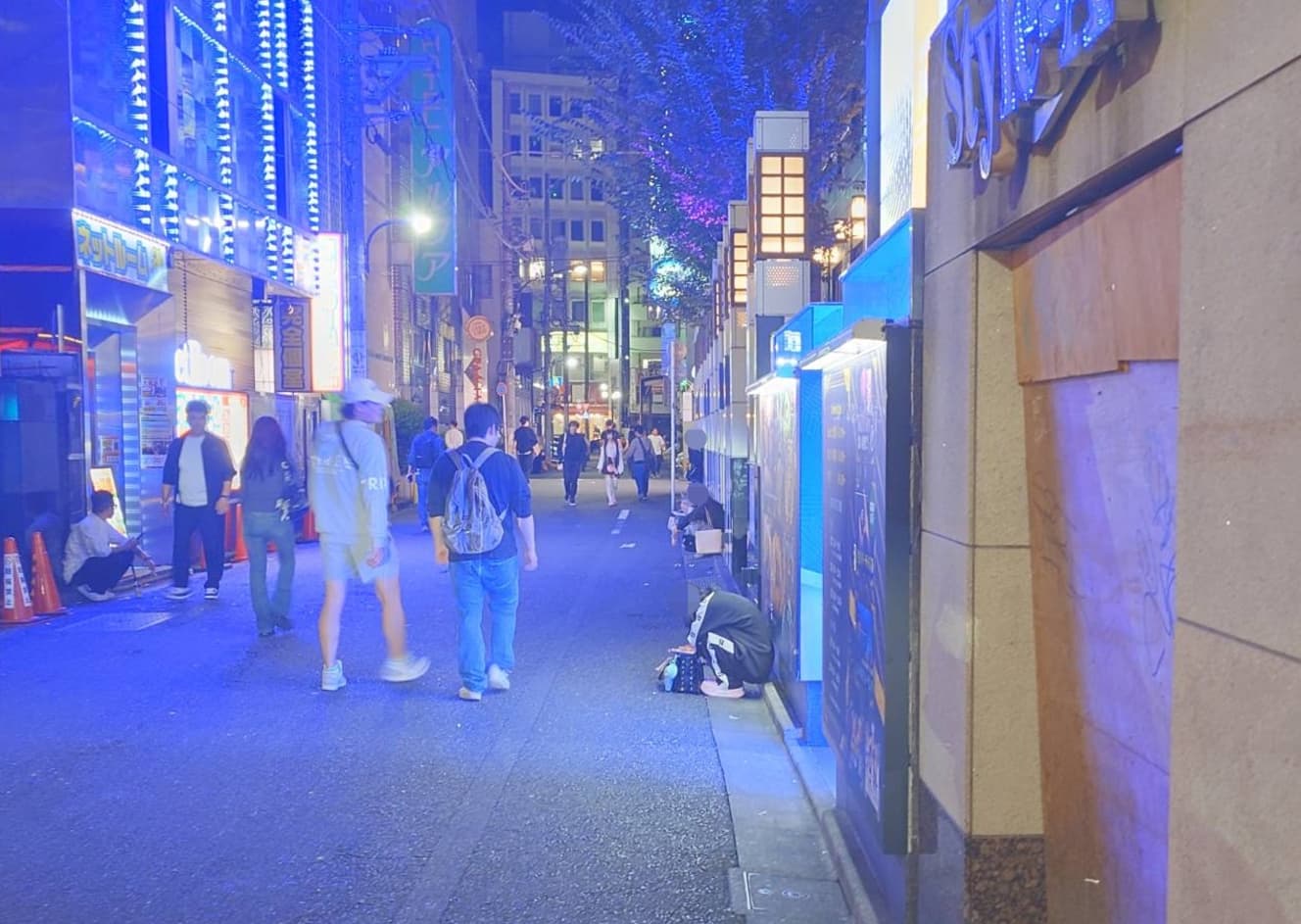
The victim, who had her residence taken away, was subjected to constant violence and forced prostitution under GPS surveillance. Inquiries around Okubo Park in Shinjuku, where the woman was allegedly made to solicit clients, yielded no specific information about her. However, investigations in the area revealed that women being coerced into prostitution under similar circumstances is not uncommon — shedding light on the grim reality of managed prostitution that persists around Okubo Park.
Managed Prostitution — A Street Worker from Okubo Park Speaks Out
A woman who has been working the streets around Okubo Park for about four years says, “There are definitely women who are told to come here by someone else.”
“Before the revised Adult Entertainment Business Act took effect this June, there were quite a few women being forced into something close to managed prostitution. Most of it was connected to hosts. Their tanto (the host they were devoted to) would tell them things like, ‘Pay off your bar tab by next week,’ or ‘If you don’t have money, sell your body before you come to the club,’ and they’d end up working the streets.”
In some cases, women were made to engage in prostitution while being monitored through location-tracking appsinstalled on their smartphones.
“Some hosts act in a domineering or intimidating way. When a timid woman becomes emotionally attached to that kind of host, she ends up doing whatever he says. The desire not to be disliked by him takes over, and she sells her body. It’s common, but it’s like a strange alternate reality that exists only between the host and the woman obsessed with him — almost like a twisted form of role play,” the woman explains.
Some of the women who turn to street work because of hosts even feel a sense of satisfaction helping to boost their favorite host’s sales, and appear to enjoy it despite the impossible demands. But not everyone feels that way.
“I’ve heard of girls who were forced to prostitute themselves to pay for their host’s plastic surgery, or to cover his gambling losses from underground slot parlors and casinos. Once a host starts extorting money beyond club-related sales, it never ends. It’s like being parasitized by an unsuccessful host. Some girls are told things like, ‘Go out there and make exactly 50,000 yen tonight,’ and they do it. Most end up emotionally broken and eventually work in the sex industry,” she adds.
The act of using violence and psychological manipulation to control women, leaving them incapable of rational judgment while extorting their earnings, is utterly inexcusable. Since the June revision of Japan’s entertainment business laws, regulations on hosts have been tightened, and according to the woman, such cases have decreased. Still, as the recent Ikebukuro girls’ bar case shows, there are always those who continue to exploit women — treating them like slaves and forcing them to sell their bodies for profit.
FRIDAY Digital continues to welcome tips and information from readers. Please submit information via the form below or through the publication’s official X (Twitter) account.
Information Form: https://friday.kodansha.co.jp/tips
Official X: https://x.com/FRIDAY_twit


Interview, text, and photos (except for suspect Tano): blank green