Roki Sasaki’s Form Unlocks the Key to Becoming the Team’s Guardian
In the post-season, he set his fastest time in the Majors at 163.2 km/h.


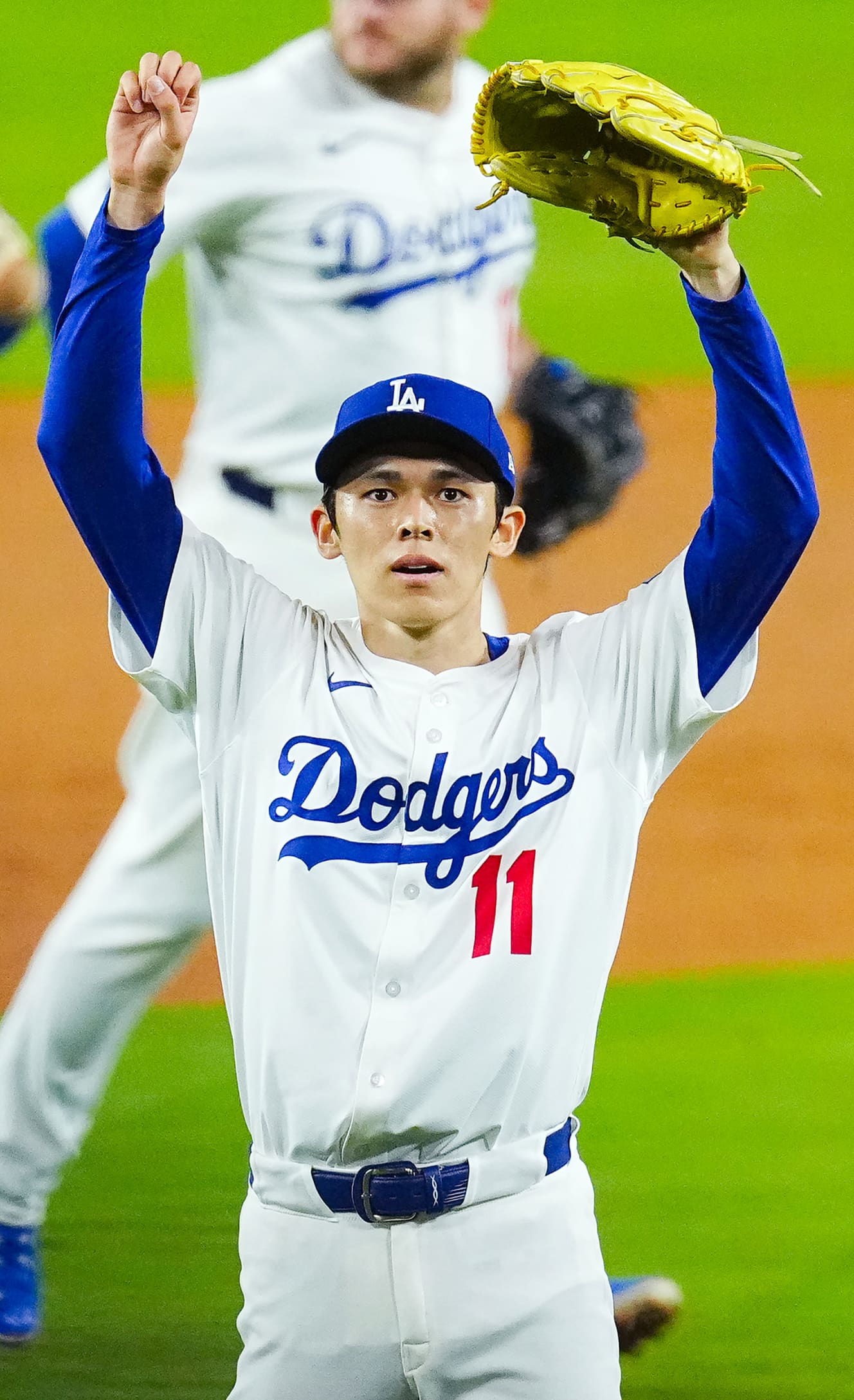
Both his pitch speed and control have improved dramatically
“I think it was good because I was ready to throw strikes,” said Rōki Sasaki (23) of the Dodgers confidently after earning his second consecutive save in the National League Division Series against the Phillies on October 7 (Japan time).
In the postseason, Sasaki has been performing like a completely different player compared to the regular season. Before going on the injured list in May due to a right shoulder injury, he appeared in eight games with an ERA of 4.72. His fastball averaged under 155 km/h, and his strike rate was only 58.6%. However, in the postseason, he has pitched three scoreless relief appearances. His fastball reached a career-high 163.2 km/h since moving to MLB, and his strike rate dramatically improved to over 78% (as of October 8).
What explains this awakening?
Professor Taku Kawamura, a motion analysis expert at the University of Tsukuba’s School of Health and Physical Education, points out:
“His body mechanics have improved remarkably. Pitchers need to move their bodies in the order of hips → shoulders → arms to effectively transfer lower-body power to the ball. In the postseason, Sasaki has been able to throw properly in this sequence.”
Let’s take a closer look at the specific changes while listening to Professor Kawamura’s explanation.


“What to focus on in the initial movement (①) is the height of the left leg. In the later form, it rises to face level. The recoil from lifting the left leg high allows Sasaki to drive his right foot into the ground, which is his unique pitching rhythm. In contrast, in the early-season form, the left leg is lower. When he first moved to MLB, his control was criticized, so it seems natural that his initial motion was more restrained.”

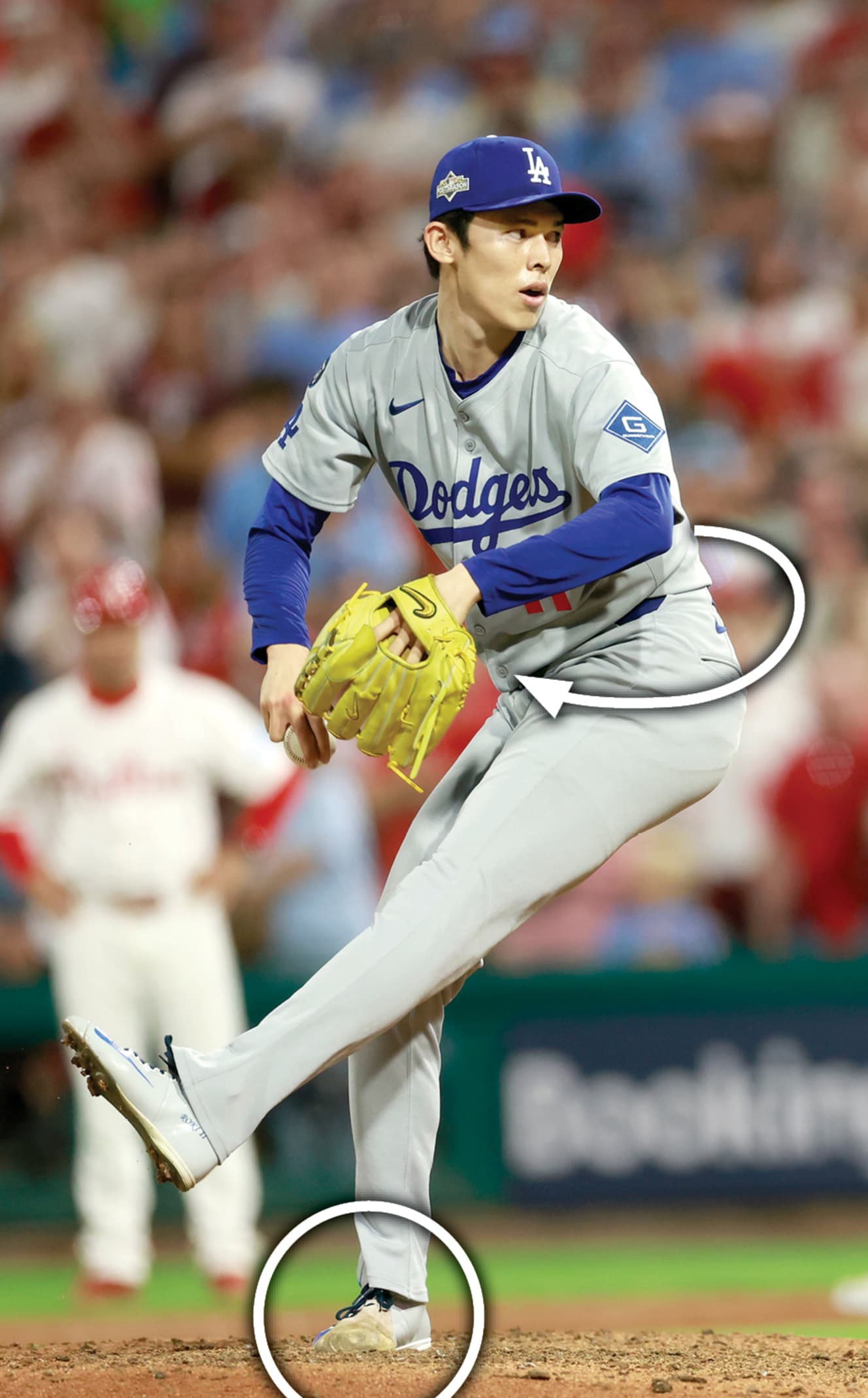
In ②, he twists his body in both cases, but the effect is very different.
“Look at the right foot. In the early-season form, the inside of the foot is slightly off the ground, making it unstable. Because of this, the power generated by hip rotation cannot be fully stored. The influence of the right foot is also clearly seen in ③. In the early-season form, he pushes firmly into the ground with his right knee, using that force toward the batter. In the later form, because the foot is unstable, he cannot push off the ground effectively.”


The key point in ④ is the chest number “11.”
“In the early-season form, the hips and shoulders move in proper sequence, so ‘11’ faces forward. In the later form, the hips and shoulders move simultaneously, causing the body to open too early and the ‘11’ to face toward the batter. Because the motion isn’t smooth, the power from the lower body is not efficiently transmitted to the upper body.”


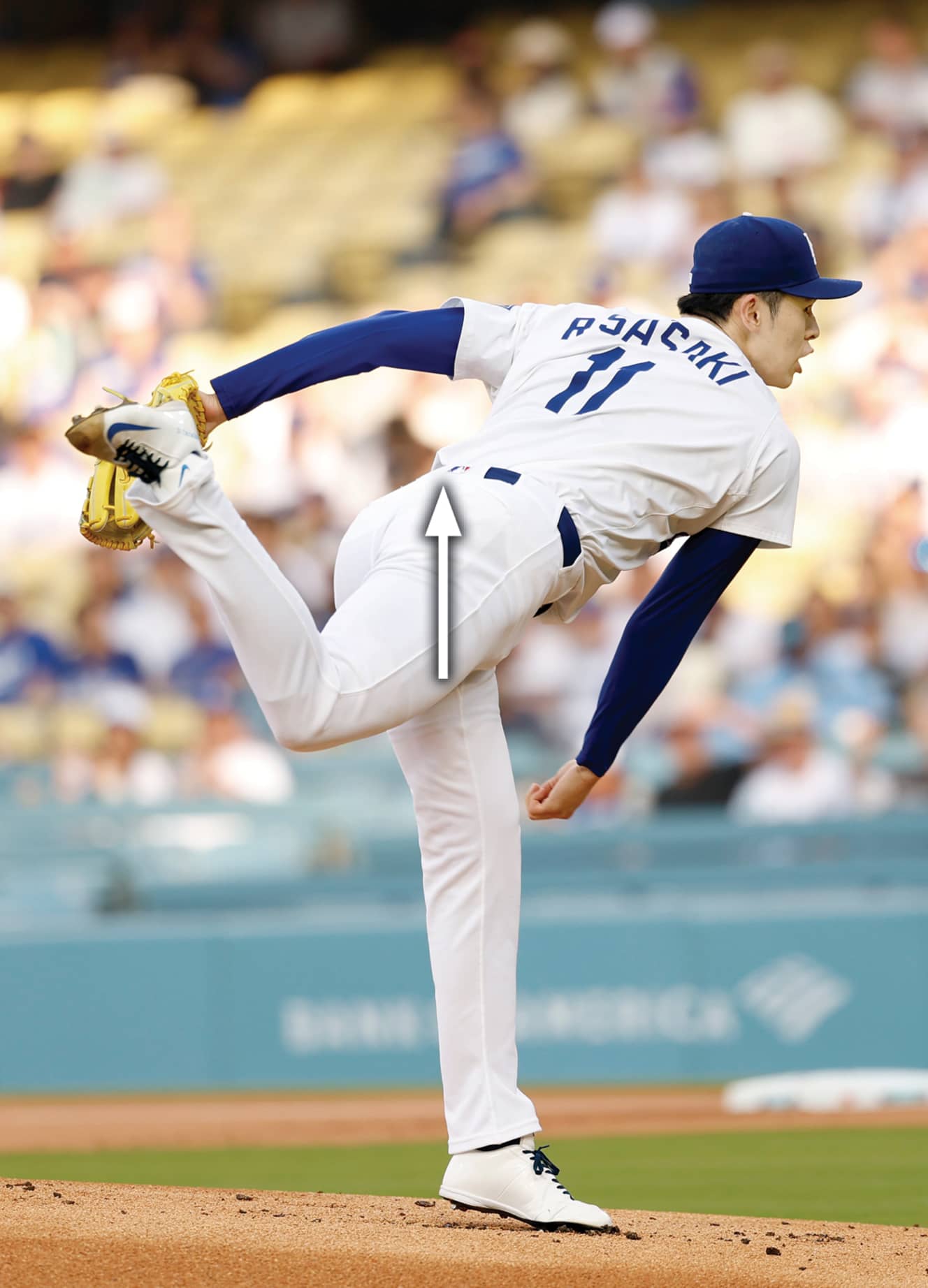

Sasaki’s growth is evident even from ⑤ to ⑥ in his finishing motion.
“In ⑤ of the postseason form, he firmly plants his left foot, and the recoil creates a sense of upward lift and dynamism in ⑥. In contrast, in the early-season form, the knee is bent and the push-off is weak, so there is little dynamism in ⑥. Sasaki’s current, powerful form is perfectly suited for pitching short innings, making him a reliable closer.”
With his strengthened form and awakened abilities, Sasaki’s impressive performances are likely to continue.
—From “FRIDAY”, October 24–31, 2025 combined issue
PHOTO: Creative 2/Afro (1st photo) Arifumi Taguchi