In Memoriam: Former Prime Minister Tomiichi Murayama, leader of the Socialist Party, will be remembered by the public as the “popular prime minister” for his “Ton-chan” and the “Murayama Danwa”.


The people must not be destroyed by the sound finances of the Ministry of Finance (now the Ministry of Finance)
Former Prime Minister Tomiichi Murayama, who formed a coalition government with the LDP and the former New Party Sakigake as chairman of the former Socialist Party, died of old age at a hospital in Oita City on October 17 at the age of 101.
After the war, Murayama joined the Socialist Party in his home prefecture of Oita and ran for the House of Representatives in 1972, winning his first election. He served in the party as a member of the House of Representatives Budget Committee and as chairman of the National Diet Committee, becoming chairman in 1993.
Even while chairman of the committee, he was known for his mild-mannered personality, and his long eyebrows and good-natured smile earned him the nickname “Ton-chan. As a politician, he was a man of integrity and always looked at things from the perspective of the common man, and when the coalition government of Morihiro Hosokawa came to power in 1994, he was adamantly opposed to the idea of a ‘national welfare tax,’ and had it withdrawn without opposition.
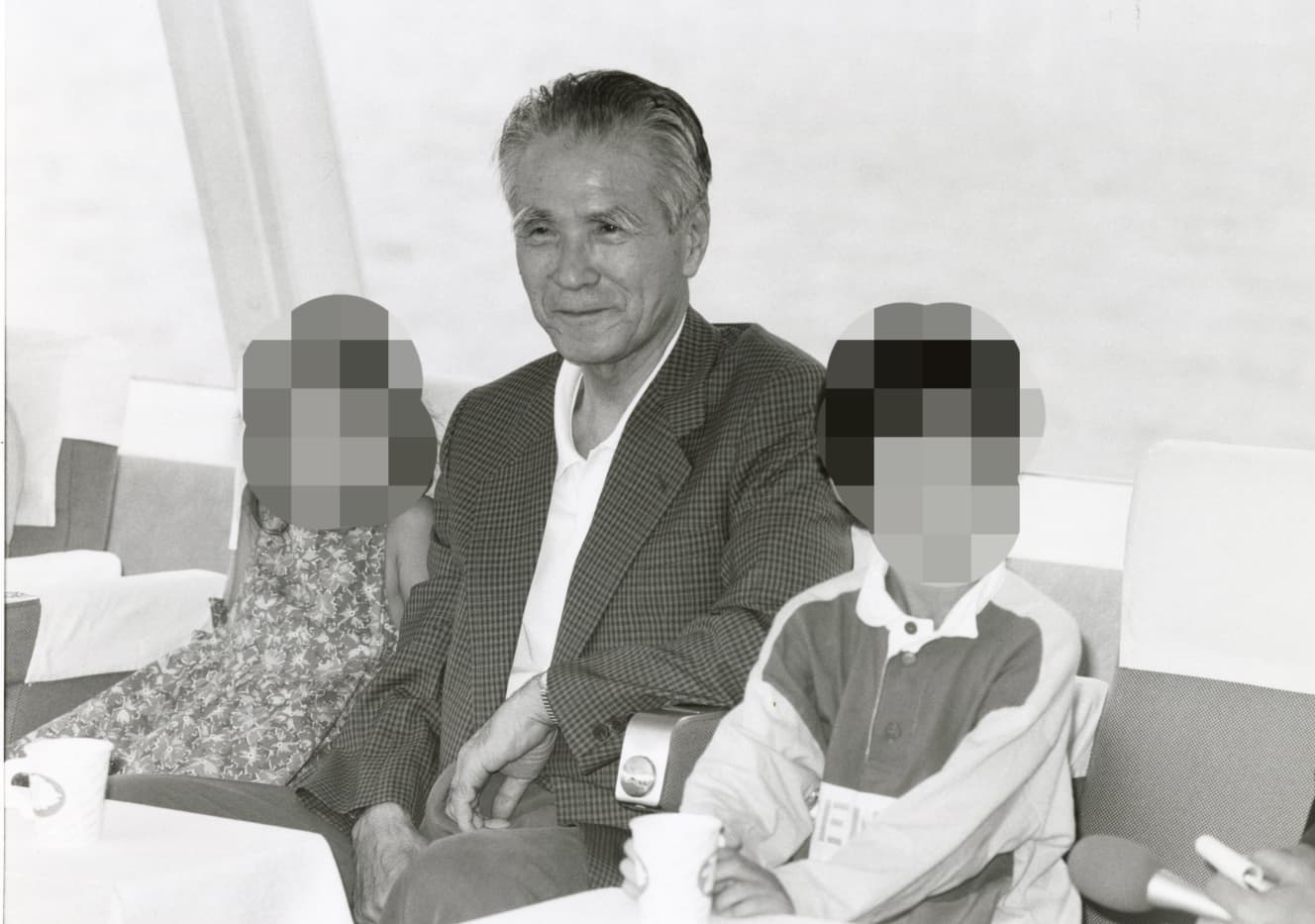
(A reporter from the political section of a national newspaper.) “FRIDAY” interviewed Murayama directly (February 25, 1994 issue) while he was on a Shinkansen train at the time. When asked about the reasons for his opposition, Murayama replied, “The method is wrong,
The method is wrong. How about a tax rate of 5% between 3% and 7%? No, no, absolutely not. The people must not be destroyed by the sound finances of the Finance Ministry (now the Ministry of Finance). It would be much better to honestly say, “We will raise the consumption tax,” rather than to talk about a tax for welfare purposes.
He also stressed that, thanks to such a stance, the government would not be able to raise the consumption tax. Thanks to this stance, the “welfare tax” had the effect of increasing the Socialist Party’s approval rating.
On June 29, 1994, Murayama became the 81st Prime Minister of Japan. The coalition government of the Liberal Democratic Party, the Socialist Party, and the New Party Sakigake was formed.
However, his new prime ministership forced him to change his policies, such as recognizing the Self-Defense Forces as constitutional, which the Socialist Party had adamantly refused to recognize, and accepting the Hinomaru (Japanese flag) and the Kimigayo (flag of the rising sun), among others.
Furthermore, Mr. Murayama’s so-called “Murayama Danwa” made a great impression not only on the Japanese people but also on the international community.
On August 15, 1995, the 50th anniversary of the end of the war, Murayama apologized in a speech at the prime minister’s office, saying, “We made a mistake in national policy and inflicted suffering on the nations of the world, especially in Asia. He demonstrated Japan’s responsibility for the war more strongly than ever before. All of Japan’s cabinets, up to that of Prime Minister Shigeru Ishiba, have stated that they will follow this statement in their understanding of history.
Only five months later, on January 5, 1996, he abruptly announced his resignation. He remained prime minister for only 561 days.
During his tenure as prime minister, Murayama was called the “people’s prime minister,” and he always maintained a simple and frugal lifestyle and had an image of poverty. FRIDAY” (September 2, 1994 issue) reported on Murayama’s summer vacation in Hakone during his tenure as prime minister. According to a source at the time, the ryokan where he was staying was not a special room, but an ordinary room, with ordinary guests on both sides of the room. When asked about his first summer vacation as prime minister, he replied, “I really wanted to relax in Oita,
I really wanted to relax in Oita. …… There are good hot springs there, such as Beppu and Yufuin.
He seemed a little disappointed. Although his tenure was short, Mr. Murayama left a lasting impression on the Japanese people. We pray that he may rest in peace.


PHOTO: Takashi Hotta and Sang Yun Lee (4th photo)