590,000 Mobile Batteries Recalled—But Some Still on the Market! How to Spot Dangerous Ones


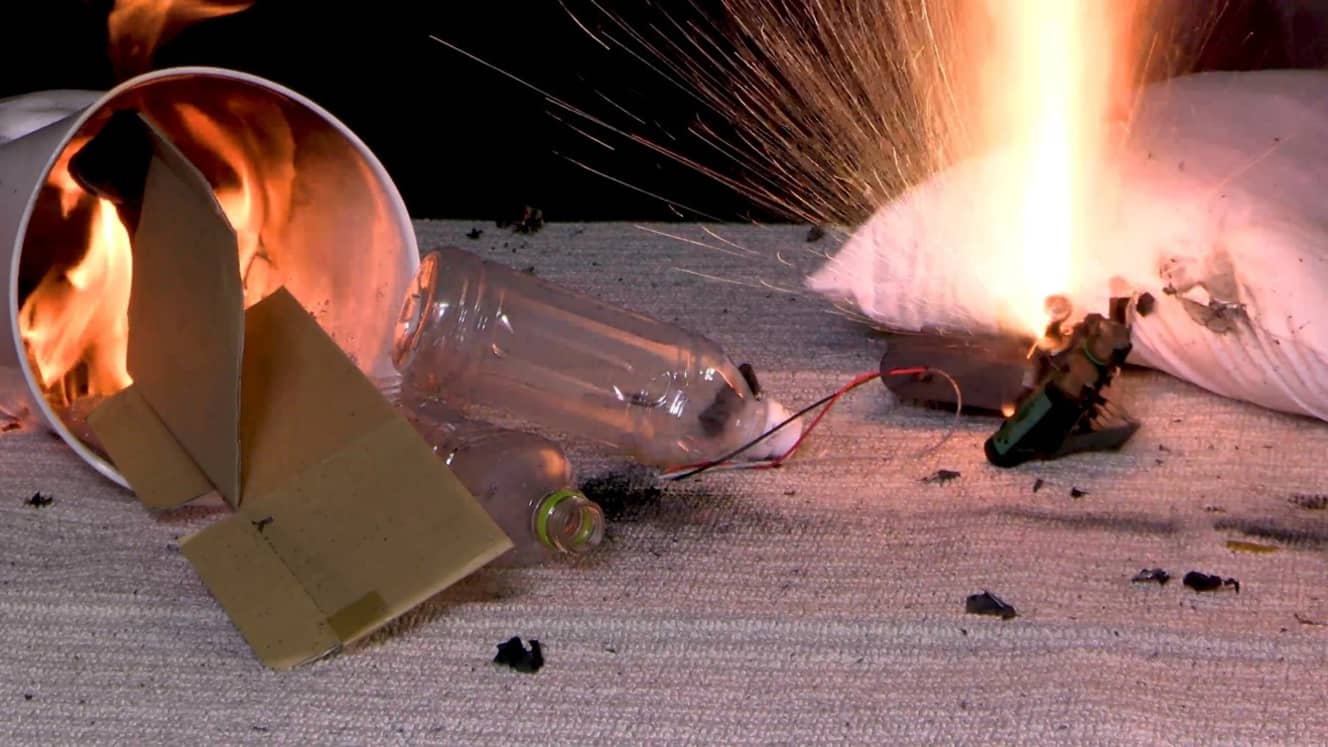 Reenactment footage of a battery ignition accident (showing a battery catching fire) (from NITE press release). Lithium-ion batteries are widely used in everyday portable devices such as power banks, smartphones, and handheld fans.
Fires, Ignitions on Planes Frequent Accidents Involving Lithium-Ion Batteries
Lithium-ion batteries, used in devices such as mobile power banks, have been increasingly catching fire. Incidents have occurred when passengers brought them onto trains and airplanes, causing burns, as well as indoors, leading to fires. In response to the rising number of lithium-ion battery ignition accidents, the Consumer Affairs Agency launched a website in early October to raise awareness.
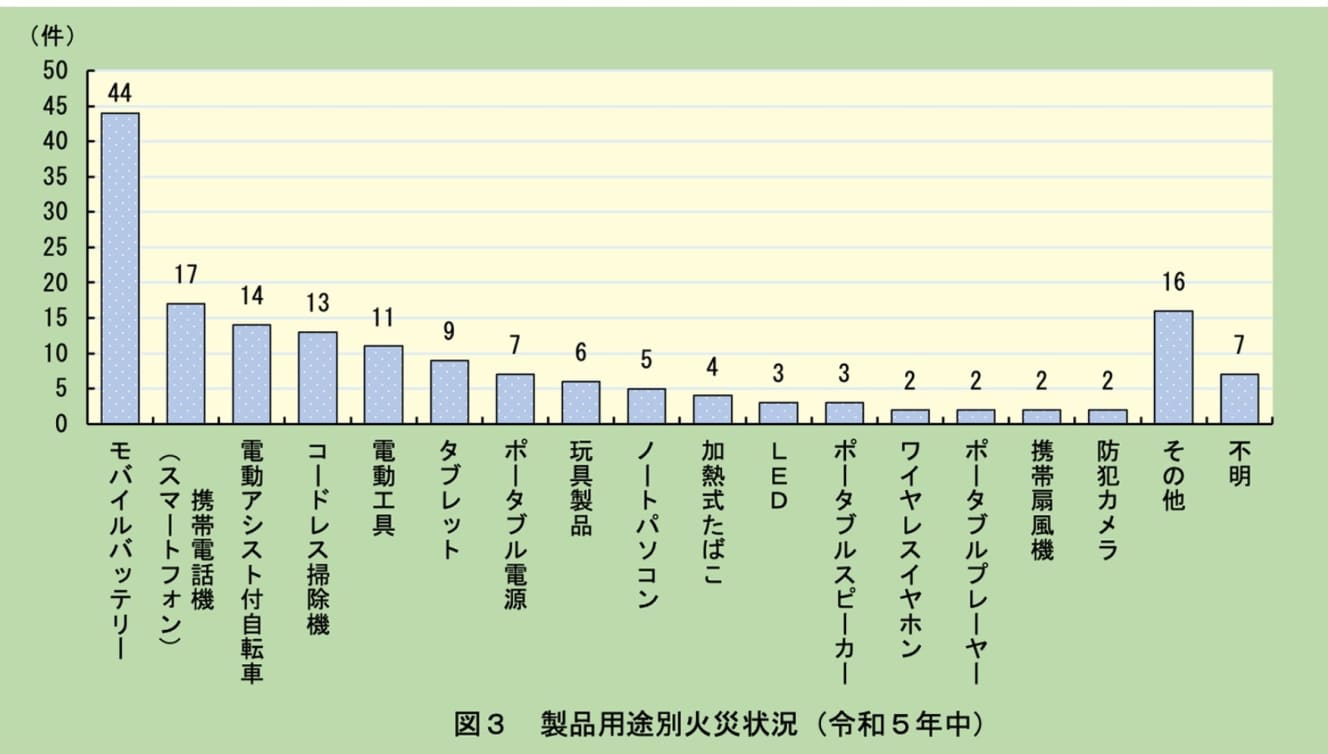
According to data compiled by the Tokyo Fire Department, of 167 lithium-ion battery-related fires in 2023, mobile power banks accounted for the largest number at 44 cases, followed by smartphones at 17, electric-assisted bicycles at 14, and cordless vacuum cleaners at 13, highlighting the prominence of accidents involving mobile power banks.
While lithium-ion batteries are convenient, they are delicate and highly flammable. Nanami Miyakawa, Director of the Product Safety Public Relations Division at the National Institute of Technology and Evaluation (NITE), explained: “They are lightweight, compact, and high-capacity, making them easy to use in portable rechargeable devices. However, their internal components are made of highly flammable materials.”
Why Do Lithium-Ion Batteries Suddenly Ignite? Mechanism and Risks
Lithium-ion batteries consist of a positive electrode, negative electrode, electrolyte, and separator. When used normally, lithium ions move between the positive and negative electrodes, generating electrical energy.
However, if the battery is damaged, overheated, or subjected to a short circuit, the following chain reaction—known as thermal runaway—can occur: Internal short circuit or damage – The separator between electrodes fails. Rapid heat generation – The battery temperature rises quickly. Electrolyte combustion – The flammable electrolyte ignites. Fire or explosion – The reaction spreads, causing visible flames, smoke, or an explosion.
Because the electrolyte is highly flammable and the reaction occurs extremely quickly, even small batteries like those in smartphones, mobile power banks, or portable fans can suddenly catch fire. Improper storage, physical shocks, overcharging, or using counterfeit/low-quality batteries significantly increases the risk.
In short, lithium-ion batteries are convenient and compact, but their chemical energy is volatile—making careful handling essential.
Purchase products from reputable manufacturers
Even if you avoid shocks and high temperatures, poor quality control or design flaws can still trigger thermal runaway. How can you avoid defective—or dangerous—products?
First, it is crucial to choose a reliable manufacturer when purchasing. NITE points out that many fire-related accidents occur with inexpensive non-genuine batteries. Cheap products carry risks such as safety protection devices not activating in abnormal situations, accidents occurring even under normal use, and lack of support or warranty from the manufacturer in case of an accident, according to Miyakawa.
“It’s important to confirm that you can properly contact the manufacturer listed on the product. Sometimes the contact is overseas and communication is difficult, so choosing a manufacturer with a domestic contact can help reduce risk,” Miyakawa explains.
Another often overlooked point is recall information for the devices in which the batteries are installed. Some fire accidents occurred because users continued to use products without noticing recall notices. According to NITE, there were more than 360 recalls for devices containing lithium-ion batteries between 2020 and 2024.
In the past three years alone, about 590,000 mobile batteries were subject to recall, and many users may not even be aware. Miyakawa warns: “Recall information does not always reach users. Make it a habit to regularly check whether your device is subject to a recall.”
Even with high-quality products, what should you do if the battery suffers a strong impact, such as being dropped?
“Stop using it and check for sudden heat, swelling, or deformation. Even if no abnormality is apparent immediately after the impact, the damage may cause a fire later, so continue to use it carefully within sight for a while.”
Pay attention to temperature ranges as well. Many lithium-ion battery products indicate recommended operating and charging temperatures—check these guidelines. If the product becomes too hot, immediately stop using it.
Regarding mobile battery lifespan, according to Yamada Denki and Elecom, it typically lasts for about 300–500 charge cycles depending on usage and storage conditions. This equates to 1–1.5 years if charged fully every day, or about four years if charged once every three days. Older batteries may have oxidized electrolytes that generate gas, posing a risk of fire or explosion. Keeping track of battery lifespan is essential.
Dangerous products: 7 tips for safe usage
Understand the characteristics and risks of lithium-ion batteries, and pay attention to the following points:
1. Choose products from manufacturers with reliable contact information.
2. Avoid extremely cheap products compared to similar items, as they may lack safety protection features.
3. Regularly check whether the product is subject to a recall.
4. Avoid strong impacts or pressure, such as dropping the battery or sitting with it in a pocket. If there are scratches, swelling, or deformation, stop using it. Even if nothing happens immediately, heat generation or fire may occur later, so monitor the product.
5. Watch for heat, swelling, leakage, or unusual odors. If charging takes longer than usual or the battery becomes hotter than before, stop using it. Aging can increase the risk of thermal runaway, so consult the manufacturer’s repair service if needed.
6. Use, store, and charge the battery within the recommended temperature range. Avoid leaving it in hot environments such as car interiors in sunlight, near heaters, or inside bags and fabrics where heat can accumulate.
7. Charge the battery in a place where you can monitor it. Avoid charging while sleeping or when away from home.
Disposal also requires caution. Fires at waste facilities have occurred due to improperly discarded lithium-ion batteries, causing huge losses. The Ministry of the Environment issued guidelines this spring for proper disposal. For example, Saitama City has 54 collection boxes for batteries and encourages users to insulate them with tape. Some electronics stores also offer collection services. When disposing of a battery, check local municipal regulations and follow proper disposal methods.
By understanding safe usage and disposal, you can use lithium-ion batteries safely and effectively in daily life.
Reporting and writing: Hideki Asai