The Most Savage Yakuza Films — Endorsed by Those Who’ve Seen the Real Thing


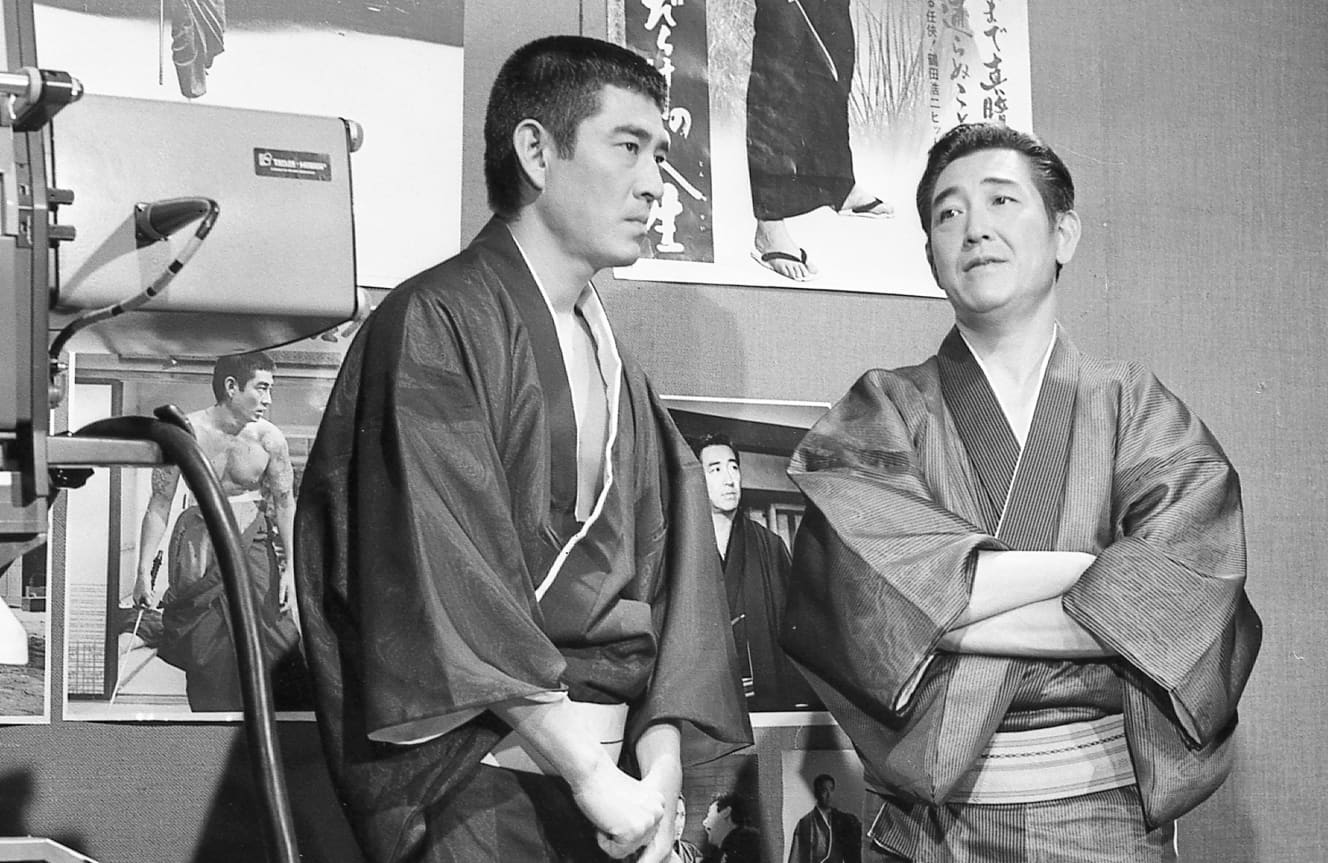
The indispensable Takakura Ken and Tsuruta Koji when talking about yakuza films
When it comes to discussing Japanese yakuza films, two stars who cannot be left out are Ken Takakura (who passed away at 83) and Koji Tsuruta (who passed away at 62).
The film The Chivalrous Man of Japan (Nihon Kyōkakuden), starring Takakura, is said to have perfected the formula for all later ninkyō (chivalry) films (according to screenwriter Ryo Fujiwara, an expert on yakuza cinema). Tsuruta, too, was beloved by audiences of all ages as a ninkyō film star alongside Takakura. Fujiwara named Takakura’s A Chivalrous Life(Kyōkotsu Ichidai) and Tsuruta’s Gambler Foreign Legion (Bakuto Gaijin Butai) as his top two choices.
“A Chivalrous Life brilliantly embodies the ‘a man with a strong sense of justice endures unreasonable hardship, and after long patience, resolves to die as he storms in and perishes’ aesthetic of noble ruin established by The Chivalrous Man of Japan. What’s amazing is the final fight scene.
To be honest, Takakura wasn’t very skilled at sword-fighting choreography. But precisely because of that, his earnest effort created a powerful sense of realism and intensity. To me, it’s the ultimate masterpiece that condenses everything about yakuza films.
As for the second-place film, Gambler Foreign Legion, it’s about yakuza who can no longer make a living in 1970s Japan and head to Okinawa—just before its reversion to Japan—to try their luck again. Rather than showing the traditional path of chivalry, the appeal lies in the reckless plot of seven men taking over Okinawa’s underworld. It’s packed with flashy gunfights and works perfectly well as entertainment.”
While many acclaimed films depict the lives and codes of honor of yakuza protagonists, there are also notable works exploring the relationship between the police and the yakuza. One such film is The Blood of Wolves (Korō no Chi).
The collusion between the police and the yakuza wasn’t limited to the movies!
“This film deals with the collusion between the police and yakuza in the 1980s, and from my experience at the time, it’s not an exaggeration—it could very well have happened. Anti-organized crime detectives (marubō keiji) had to gather information to prevent gang wars.
To do so, they got close to gang leaders, which inevitably led to cozy relationships. The scene where actor Koji Yakusho (69) plays a detective receiving money from a yakuza is very realistic—I’ve actually witnessed such moments myself. The appeal of the film lies not only in its action scenes and gripping story, but also in how enemies fall into a swamp of corruption and betrayal through repeated collusion.
Another masterpiece that depicts the relationship between police and yakuza is Cops vs. Thugs (Kenkei tai Soshiki Bōryoku). Bunta Sugawara (who passed away at 80) plays a marubō detective who teams up with a friendly yakuza group to crush a rival gang, going so far over the line that he’s ultimately transferred to a remote mountain police station. That’s actually quite close to reality.
In fact, there were senior officers who got transferred to rural areas because they took sides with certain yakuza or were caught using violence during interrogations. One particularly memorable scene shows the protagonist being asked by a hostess, ‘Why did you become a detective?’ and he answers, ‘Because I can shoot a gun.’ That’s unthinkable today, but back in the Shōwa era, that mindset definitely existed. It’s a film that vividly brings back the atmosphere of that time.” — Hiroyasu Akiyama, former chief inspector, Tokushima Prefectural Police, First Investigation Division
Yakuza films can sometimes serve as study materials for learning about Japan’s history. One prime example, according to film critic Suzuki, is One Chivalrous Man (Ninkyō Otoko Ippiki).
“This film vividly depicts the historical background of how the yakuza originated. During the Meiji era, as the government promoted national prosperity and military strength, it incorporated gamblers (bakuto) into public works projects as laborers, allowing them to develop into organized groups or clans. The film clearly shows that process. It also illustrates how yakuza were involved with red-light districts and moneylenders. It’s like a textbook on Japan’s modernization and its relationship with organized crime.”
Each of these works is a masterpiece full of energy and insight. For long autumn nights, why not enjoy the ‘30 films chosen by professionals’?


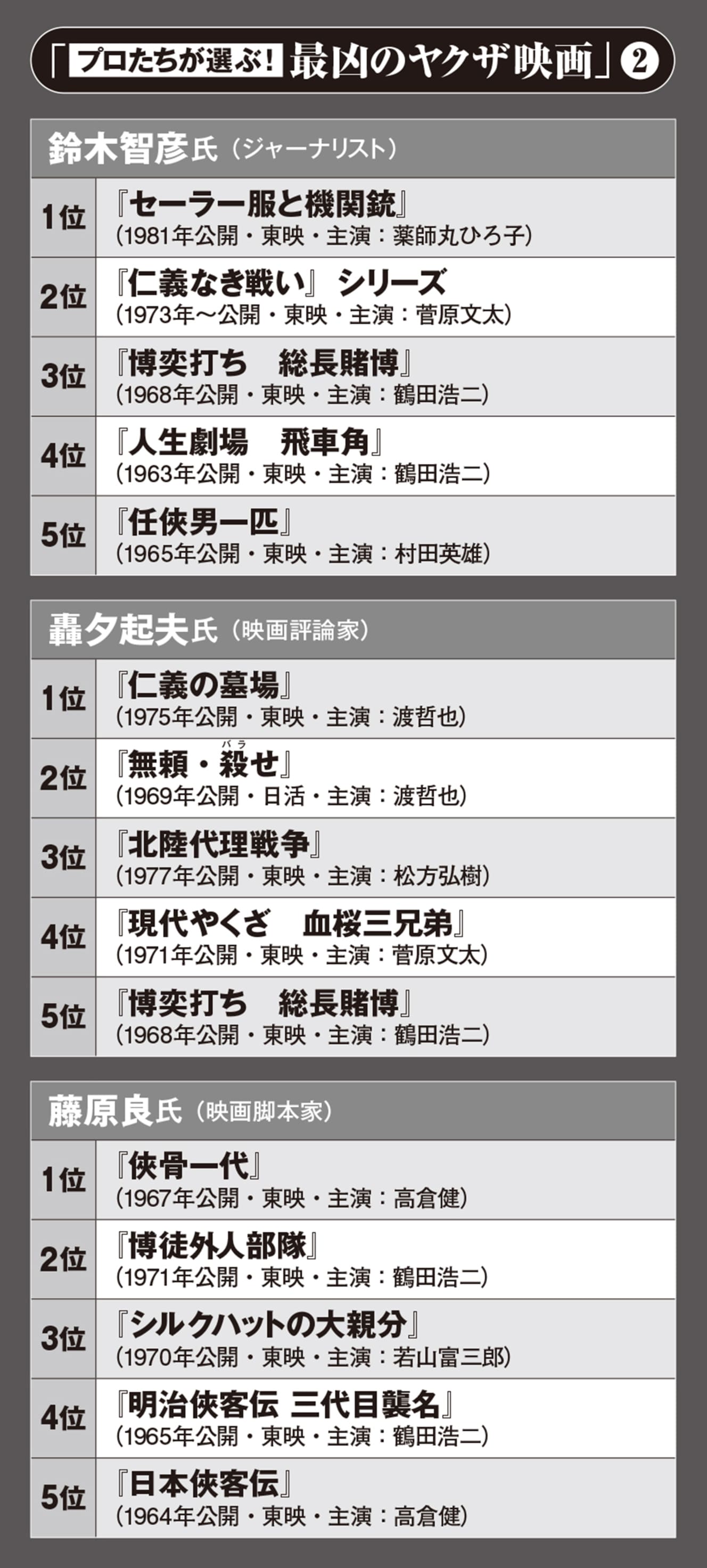
From the October 17, 2025 issue of “FRIDAY”