The Kabukicho Cleanup That Backfired: How Tokyo’s Purge Fueled a Delivery Health Explosion


While the number of on-site sex establishments has been declining year by year, delivery health services continue to grow. In this third installment (Part 2) of sex industry journalist Akira Ikoma’s series tracing the 27-year history of delivery health—now the dominant force in Japan’s sex industry—we explore how the cleanup operations carried out nationwide in the early 2000s spurred even further growth in the delivery health business.
All sex-related businesses in Kabukicho trembled in fear
When explaining the rapid growth of the deriheru (delivery health) industry, it’s impossible to ignore the “Kabukicho Clean-Up Operation.” Alongside the 1998 amendment to the Entertainment Business Law, this campaign marked a major turning point that shifted many sex-related businesses from storefront operations to outcall-based services.
Between 2003 and 2005, during the tenure of the late Tokyo governor Shintaro Ishihara, the Tokyo Metropolitan Government carried out an aggressive campaign to purify Kabukicho’s dark image. Its aim was to eliminate illegal sex shops, aggressive street touts, and organized crime elements that had long dominated the area.
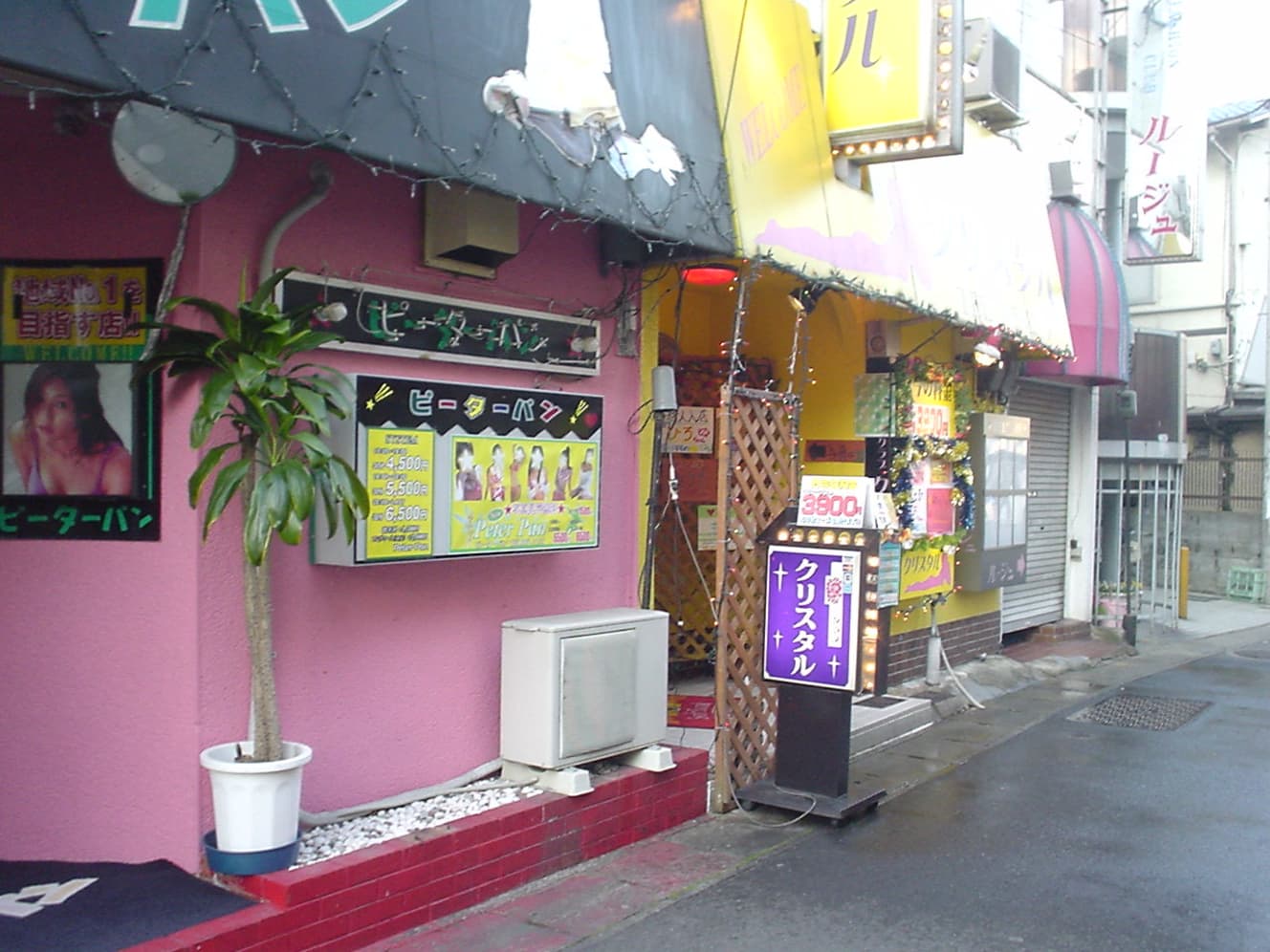
As a result of the clean-up, many imekura (image clubs) and other storefront sex establishments were raided and shut down. Most had been operating illegally without filing proper notifications to the Public Safety Commission. The crackdown forced many of Kabukicho’s once-thriving shops to close their doors.
The background to this campaign lay in the unprecedented boom of imekura and sensual massage parlors in the late 1990s. Even after the economic bubble burst and Japan fell into deep recession, illegal sex shops continued to flourish, largely ignored by authorities. In some entertainment districts like Kabukicho and Ikebukuro, it wasn’t uncommon for entire buildings to be filled exclusively with illegal parlors.
The police crackdowns of that era were intense. There were reports of officers shouting and smashing fixtures during raids, intimidating staff, and even forcing terrified female workers and naked customers to reenact sexual acts for photographic evidence. Terrified by the raids, some businesses voluntarily shut down to avoid being targeted next.
This extensive purification campaign didn’t stop at Kabukicho—it spread across Tokyo and beyond, reaching Ikebukuro, Shibuya, and other entertainment districts. Major red-light areas in the Kanto region, such as Yokohama’s Koganecho and Saitama’s Nishikawaguchi, declined one after another. The trend quickly expanded nationwide, leading to the disappearance of illegal storefronts in regional cities such as Sapporo, Ota (Gunma), and Amagasaki (Hyogo).
At the time, the author—then an editor for the sex industry magazine Ore no Tabi—traveled the country covering red-light districts. He recalls witnessing famous pleasure quarters vanish one after another. Not only large areas like Kabukicho and Nishikawaguchi, but also smaller ones such as Osaka’s Juso and Fukuoka’s Zasshonokuma, disappeared. “That chaotic, shadowy atmosphere was what made those nightlife areas so fascinating,” he lamented.

Targeting only the visible sex establishments thoroughly
The Kabukicho Clean-Up Operation prioritized cityscape aesthetics, following a policy of “not allowing vulgar or obscene signboards so the streets would not embarrass foreign tourists.” This approach was also influenced by Tokyo’s bid for the 2020 Olympics and efforts to promote tourism-driven economic growth. As a result of the clean-up, many sex establishments disappeared from the streets, and the lewd signage that had once dominated the area was removed, making the district appear cleaner at first glance.
In their place, delivery health services proliferated. In Tokyo, it had become practically impossible to obtain approval for new storefront sex establishments, but outcall services could legally operate with just a notification. Many businesses therefore shifted to the outcall model. Because these services had little visual impact on the streets, authorities were relatively tolerant, which contributed to their rapid growth.
Thus, the Kabukicho Clean-Up Operation inadvertently fueled a new delivery health boom. This is an example of the regulatory push-out effect, where stricter rules in one sector unintentionally stimulate growth in another. The fact that outcall businesses could easily avoid raids due to having no physical storefront made this model especially attractive to operators.
By the 2010s, the number of delivery health establishments had surged to over 17,000, surpassing the number of locations of some major convenience store chains and cementing delivery health as the largest segment in Japan’s sex industry.

The rise of the industry was also fueled by the spread of IT technologies
The explosive growth of delivery health in the 2000s was also driven by the widespread adoption of the Internet and mobile phones. The delivery health business model is highly compatible with IT, as both share the common feature of having no physical presence. The Internet becoming a standard part of everyday life proved to be a tailwind for the industry.
During the hotel health era, advertising for outcall services relied on three-line ads in evening or sports newspapers and pink flyers posted in phone booths.
However, today both of these channels have lost much of their effectiveness due to stricter regulations. Sex industry magazines, which were active in the early days of delivery health, gradually ceased publication as paper media declined with the rise of the Internet and as regulations on adult media tightened. Only a few remain, and their influence is nowhere near what it once was.
The Internet quickly replaced traditional media as the primary advertising platform. With a sufficient number of ads and a shop website, a delivery health business naturally appeared busy and attracted customers, generating steady turnover.
In addition to official shop websites, dedicated sections on sex-industry information portals and specialized delivery health portals became increasingly prominent. As competition intensified, differentiation strategies—such as using videos for promotion and maintaining photo diaries or blogs—became critical to sales. Sex workers themselves began promoting their own services, using social media to cultivate relationships with male customers reminiscent of idol and fan dynamics.
Once outcall services became mainstream and online promotion became the norm, information sites gained overwhelming influence. Since delivery health shops rely almost entirely on these portals for attracting customers, operators are often forced into the position of “competing on the information site platform.”
Today, in most regions, “if a shop cannot advertise on these information sites, it cannot operate at all.” Reluctance to spend on advertising results in low customer turnout, so many operators spend hundreds of thousands to several million yen per month on promotion. Conversely, shops that invest heavily in advertising attract more customers, allowing well-funded operators to dominate the market.

The Internet has made delivery health services increasingly invisible
By the late 2000s, the rapid spread of smartphones put Internet access in the hands of nearly everyone, ushering in an era of shared information.
With job postings for sex establishments moving from print to online, ordinary women could now apply with ease, significantly lowering the barriers to entering the industry. For male customers, comprehensive online information meant they no longer needed to purchase sex-industry magazines.
Not only did marketing shift online, but operational processes—such as booking, staff communication, and dispatch coordination—were also dramatically streamlined, accelerating the growth of delivery health services.
Today, delivery health operations rely heavily on information and communication technologies. Recruitment, advertising, and promotions are all conducted online, and photo diaries, X (formerly Twitter), and other social media platforms are used routinely. The digitalization of society has greatly enhanced convenience for workers, customers, and operators alike.
Conversely, traditional storefront sex establishments and older advertising media, such as posters and magazines, have declined. Since delivery health shops have no visible signs and do not publicly disclose office locations, they are virtually invisible in the real world. As delivery health became the mainstream of Japan’s sex industry, the sector itself became increasingly invisible.
References:
The Invisible Isolation of Sex Workers by Junichiro Kakuma, Kobunsha, 2017
Sex Work as a Profession by Atsuhiko Nakamura and Mamoru Teshigawara, Takarajimasha, 2015
The New Economics of the Sex Industry by Fumio Iwanaga, Kodansha, 2012
The Realities of Women Who Sell Their Bodies by Shingo Sakazume, Chikuma Shobo, 2018
Other numerous books and online sources were also referenced.

Interview, text, and photographs: Akira Ikoma