Hotel Health Out, Hand Service In! Inside Japan’s Wild 2005 Sex Shake-Up


Invisible sex industry businesses like delivery health (outcall escort services) — which have no physical storefronts — have now grown to over 21,000 nationwide, making them Japan’s largest sex-related industry. Born from the 1998 amendment to the Entertainment Business Control Law, delivery health services have spread rapidly since then. In this third installment of the series, sex industry journalist Akira Ikoma explains how this expansion took place over 27 years. By the early 2000s, delivery health businesses had finally become subject to regulation.
Reception offices now classified as on-site sex-related businesses
What greatly affected the delivery health industry was the 2005 amendment to the Entertainment Business Control Law. The new law took effect in May 2006, strengthening regulations on delivery health services. This change was made to address the rapid spread of such businesses and their evolving operating practices.
As mentioned in the previous article, one type of delivery health at the time was the “hotel health” (hoteheru), which set up reception offices in multi-tenant buildings to dispatch workers to hotels or rental spaces. With the amendment to the law, reception offices that were visited by an unspecified number of customers came to be regarded as stores, and thus became subject to the same regulations as on-site sex-related establishments. As a result, reception offices could no longer be set up in restricted zones near schools, hospitals, and similar facilities, making it impossible to open new hotel healthbusinesses in many areas.
However, vested rights were recognized, and operators who had already established reception offices were allowed to continue their business.
Regulations on advertising and publicity were also strengthened. Activities such as “distributing flyers to residences regardless of the region or residents’ age” and “displaying signs or posters in public spaces, including reception offices,” were prohibited, with penalties imposed on violators.
These regulations on delivery health businesses mainly targeted the visible aspects such as reception offices and advertising. This focus on public appearance was consistent with the “Kabukicho Cleanup Operation,” which took place before the amendment and involved a large-scale crackdown on illegal on-site sex establishments (to be discussed in detail in the next part).

Hotel health establishments that operated like stores in entertainment districts
The “hotel health” (hoteheru)—a sibling business to delivery health—is a type of sex service in which customers visit a simple reception office set up in a multi-tenant building, choose a woman there, pay the fee, and then she is dispatched to a nearby hotel or rental room for the session.
This business model originally started in Osaka and spread nationwide from the Kansai region in the early 2000s. “Hoteheru” is short for “hotel health” and is also known as a reception-type or semi-outcall-type service. Because the service uses love hotels, reception offices are typically located in areas where love hotels are concentrated.
The main style involves the customer and the woman going together from the reception office to the hotel. However, there are also variations where they meet in front of the hotel and go in together, or where the customer enters first and waits for her to arrive. Since they enter the hotel together, customers enjoy a sense of “going on a date” with the woman—one reason why the format remains popular today.
Another appeal is that customers can view “unblurred panel photos” of the women at the reception, attracting those who want to choose after seeing the women’s real faces rather than pixelated images.
Major differences from delivery health include: having a physical reception office; the woman walks to the hotel rather than being driven by car; services are limited to nearby hotels or rental rooms (not the customer’s home); and, in compliance with the Entertainment Business Control Law, operations must close by midnight.
A key strength of hoteheru is the presence of a reception office in the city. Having such a location dramatically boosts sales. In general, storefront businesses are said to make money easily, largely because of the steady customer base drawn by their entertainment-district locations.
However, as mentioned earlier, under current regulations, hoteheru reception offices are considered actual storefronts under the law and are thus subject to restrictions, including limited business hours. Because of this, many clever establishments operate under two systems—running as hoteheru during the day and evening, and switching to delivery health after midnight.
Strict zoning rules now make it difficult to open new reception offices. As a result, existing ones dominate the market, and the rights to operate such offices are traded at high prices.
In the early 2000s, another system called “deai deli” (meeting-type delivery) emerged, gaining popularity in the 2010s. In this model, customers meet the women at a designated spot—often near a train station—and go to a hotel together.
For customers, the advantage of the meeting-type system is that it avoids the discomfort of “entering a love hotel alone” or “visiting a hoteheru reception office that has no signboard except for an 18+ mark.”
They can enjoy the experience of entering a love hotel with a woman, like a couple, without ever stepping into the store. They only need to communicate with the male staff by phone, never meeting them in person, which makes the process more casual and discreet.
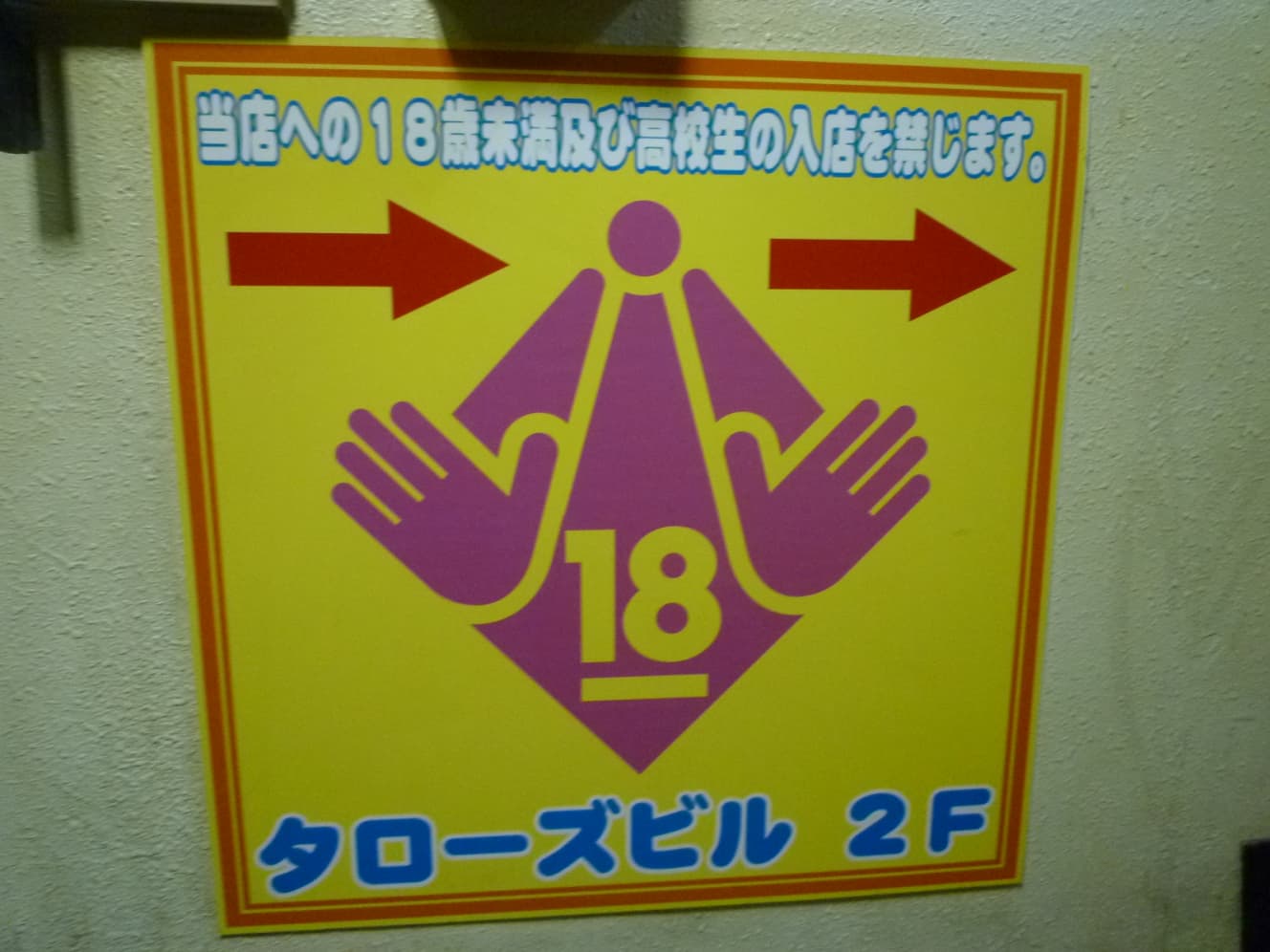 Signboard of a hotel health establishment in Shinjuku’s Kabukicho. Even today, a wide variety of hotel health businesses continue to operate in Kabukicho (2010).
A new genre emerges: outcall hand-service establishments
After the 2005 amendment to the Entertainment Business Control Law, a new type of business emerged in the delivery health industry: shops specializing in hand services (“onakura”). The basic concept was that female staff would assist male customers with masturbation, and many establishments offered a wide range of optional add-ons—such as kissing or panty glimpses—so customers could customize the experience to their liking.
Previously, such services were mainly provided at on-site establishments, but with the tightening of the law after the amendment, many businesses switched to delivery health or hotel health formats. As a result, the genre of outcall hand-service shops became established. Their main selling point was affordability, with short sessions lasting about 15 to 30 minutes and prices ranging from around 2,500 to 5,000 yen.
Store-based sex establishments offering hand services had existed long before. In the past, hand services could be found in venues like peep-show booths, lucky hole shops, and strip theaters. In the 1990s, video boxes — where female staff provided hand services to customers watching adult videos — became popular. Some Asian-operated massage parlors also incorporated hand services into their offerings.
Around 2008, the term herbivore men—referring to men who were passive and unaggressive in romance—became popular, and in 2009 it was selected as one of the Top Ten New Words and Buzzwords of the Year. The soft, less-intense approach of outcall hand-service shops resonated well with these gentle, reserved men who were put off by the more explicit services of seasoned sex workers.
As these short, low-cost outcall hand-service shops grew in popularity and number, more amateur women began entering the sex industry. Because the nature of the work was relatively light and less physically demanding, it served as an easy entry point for women new to the trade. Outcall hand-service establishments, which attracted many ordinary women into the business, became a defining symbol of Japan’s sex industry in the Heisei era.
 Pink flyer for an outcall sex service specializing in married women (Ota, Gunma Prefecture, 2002).
The late 2000s saw a boom in shops specializing in married and mature women
Around 2007, the number of shops specializing in married and mature women began to increase across the sex industry, and this trend also spread to delivery health services. Although such establishments had existed before, they had not yet gained mainstream popularity.
Up through the 1990s, there was a strong notion in the sex industry that “a sex worker loses value once she’s no longer young.” The so-called sex industry age existed—most women in their 30s or older would list themselves as being in their early 20s. When the author first began reporting on the industry in 1999, there were virtually no married woman specialty shops. Even if married women were working in such establishments, it was common practice to conceal that fact.
The emergence of these married and mature women’s shops was driven by the industry’s fierce competition for survival. Newer establishments needed to differentiate themselves by offering unique concepts, and one of those ideas was the married woman / mature woman shop.
The concept of “receiving sexual services from another man’s wife” proved more popular than expected. The boom in married woman shops introduced a new idea—that “women in their 30s and 40s” could also succeed in the sex industry. In the delivery health field, major groups began launching new branches focused on married and mature women or franchising such brands nationwide.
Another factor behind the rise of married-woman-themed sex services was the economic downturn. During the so-called employment ice age, many men, exhausted from daily life, began seeking comfort not from younger women but from calm, older ones. The healing and sense of security offered by women with rich life experience became a major draw.
For women, too, these shops provided welcome opportunities. The prolonged recession of the Heisei era drove many housewives and single mothers into the sex industry due to financial hardship. Among these, delivery health services specializing in married women were especially attractive because they offered flexible working conditions.
Compared with shops featuring younger women, married-woman delivery health services were generally more affordable. In addition, they often provided more passionate or intense play that younger workers might hesitate to offer. Their reputation for rich service at a reasonable price made them popular among customers.
In 2010, a book titled “Delivery Health Entrepreneurship: The Way to Become a Rich Married-Woman Businessman” (by Morinori Eguchi, published by Gentosha) was released, touting itself as the ultimate sacred business that even an ordinary salaryman can succeed in. The publication of such works reflected how married-woman delivery health had by then become widely recognized as a distinct new genre within Japan’s sex industry.
References:
The Invisible Isolation of Sex Workers by Junichiro Kakuma, Kobunsha, 2017
Sex Work as a Profession by Atsuhiko Nakamura and Mamoru Teshigawara, Takarajimasha, 2015
The New Economics of the Sex Industry by Fumio Iwanaga, Kodansha, 2012


Interview, text, and photographs: Akira Ikoma