From Budget Calls to High-Class Encounters: How Japan’s Deriheru Industry Began to Evolve


The outcall sex service industry (deriheru), which emerged in 1998, has evolved with the changing times. In the second part of this series, adult industry journalist Akira Ikoma continues to trace its history. Around the same time deriheruwas taking off in Tokyo, a new form of business called “hoteheru” (hotel health) was being born in Osaka.
An inseparable relationship with the love hotel industry
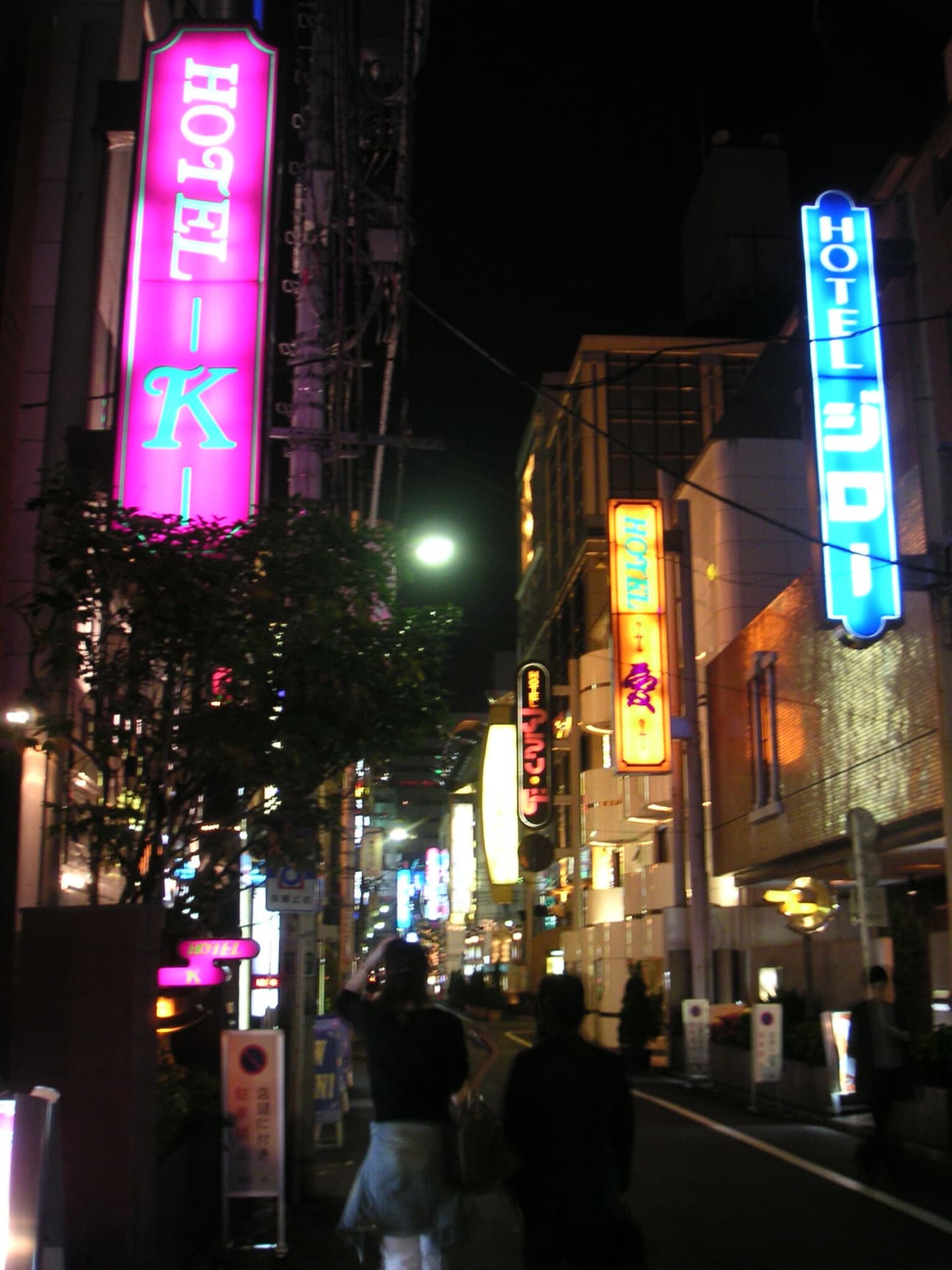
The love hotel industry was one of the biggest beneficiaries of the deriheru (outcall sex service) boom. Because deriheruoperates on a dispatch model, having suitable playrooms is essential. While some clients request visits to their homes, that mainly happens in large cities; in regional areas, hotels are almost always used instead.
For love hotels, the surge in deriheru businesses was a welcome development. Many hotels had empty rooms during the daytime, but deriheru clients filled those vacancies. The growing popularity of hoteheru (hotel health services), which evolved from deriheru, further boosted hotel use.
In the late 1990s, the love hotel industry was struggling through a recession, with many establishments nearly deserted. Older hotels with outdated interiors failed to attract young female customers and needed renovations to bring them in—but the required millions of yen in renovation costs were out of reach for many. As a result, these hotels fell into a vicious cycle of declining guests and worsening business.
However, the rise of deriheru brought new life even to these struggling hotels. The industry began actively cooperating with outcall services.
In an effort to secure customers, love hotels raced to form partnerships with deriheru operators, offering exclusive-use room contracts. Though they had to offer discounted rates compared to other hotels, the higher room turnover from short-term customers made up for it.
As a result, some deriheru and hoteheru businesses began offering “hotel fee included” plans. Hotel costs, which used to average around 5,000 yen, could now be kept to about 3,000 yen. Previously, combining hotel fees with service costs often made these options pricier than parlor-based sex services, but with better value for money, they became even more popular.

Having an in-house playroom qualifies the business as an unlicensed establishment
When deriheru services first emerged, some operators tried to streamline their businesses by providing their own playrooms—so that customers wouldn’t have to worry about securing a room themselves.
In Kabukichō, one such business rented out the floor below its reception office in a mixed-use building and opened a rental space under the guise of being operated by a separate company. These rental rooms were essentially identical to the playrooms used in traditional health parlors, with shared showers.
The author recalls visiting the site and finding it to be a clever idea. Although customers had to pay around 2,000 yen for room use, they could enjoy the same convenience as a regular health parlor. However, the operation was soon raided by police for being an unlicensed sex establishment.
The legality of this type of setup went to court, and in 2005 the Tokyo High Court found it guilty. Even if separate entities formally provided the service and the space, the court ruled that if they operated in practice as a single business, it would be treated as a brick-and-mortar sex establishment.
According to law enforcement interpretation, when a deriheru or hoteheru forms a business partnership with a rental room or love hotel to secure private rooms, it is considered equivalent to a business that provides its own private rooms. In other words, if a non-store-based sex service maintains its own playroom, it violates the Adult Entertainment Business Act.
Some major adult business groups even went as far as purchasing nearby love hotels and stationing women in each room, but this too was deemed unacceptable by police. Any scheme that broke the fundamental rule of dispatching women to clients ultimately ended in failure.

The birth of hoteheru and the rise of luxury deriheru services
When deriheru (delivery health) services first emerged, Osaka was in the midst of a boom in “manheru” — short for mansion health. These were sex-related businesses that operated out of apartment buildings: one unit served as the reception area, while several other rented rooms in the same building were used as playrooms. Areas like Daikokuchō, Shin-Osaka, and Nipponbashi were full of them — though all operated without official permits.
Because an entire apartment unit functioned as a private playroom, customers enjoyed the feeling of visiting a woman’s home, which made manheru immensely popular. The author recalls visiting such establishments in Daikokuchō and Jūsō for reporting — the atmosphere was buzzing. Kansai’s adult magazines were packed with manheru ads, and new shops were opening one after another. Business was booming.
However, incidents such as customers entering the wrong rooms led to mounting complaints from residents, sparking opposition movements. The ensuing wave of police crackdowns brought the manheru boom to an end. In its place, a new, legal form of operation appeared — the hoteheru (“hotel health”). Former manheru operators registered as deriherubusinesses and opened reception offices in areas like Nipponbashi, Tani 9-chōme, and Umeda. Thus began the hoteheruboom — a natural result of thousands of apartment-based manheru operations disappearing almost overnight.
Meanwhile in Tokyo, the country’s economic expansion and globalization created new, diverse urban demands. The strongest growth was in the high-end segment, where deriheru services began hiring elite female companions.
A more discerning clientele demanded refined hospitality, and with the rise of corporate entertainment needs and foreign visitors, member-only, reservation-based establishments emerged. These offered personalized services such as custom date plans and relaxation-oriented sessions tailored to each client.
Hiring standards for women grew more selective — some agencies began collaborating with the entertainment and modeling industries, offering women who embodied both sophistication and grace. The participation of former AV actresses further raised the overall quality and professionalism of the deriheru industry.

Why many amateur women were able to enter the industry
As the deriheru (outcall service) industry rapidly expanded, job openings grew dramatically, making it easier for ordinary women to work in the trade. Housewives, students, and office workers increasingly joined as part-timers, accelerating the trend of amateurization among sex workers.
Unlike storefront establishments, deriheru work involves travel time, allowing workers to rest between clients—a key advantage for beginners. They could nap while in transit and were often driven home afterward. Moreover, since full-service acts were typically not required, the physical and emotional strain was lighter. Many customers preferred girlfriend-style service, which was more relaxed and natural. No special skills like mat play or bathing play were needed, and because long sessions were common, women could take their time. Altogether, deriheru offered an environment well-suited for newcomers.
Among the many types of adult entertainment businesses, only deriheru and soaplands provided a wide range—from high-end to budget options—allowing workers to choose what suited them best. Because deriheru establishments far outnumbered soaplands, they also drew far more clients. Despite drawbacks such as travel time and late-night hours, the work was ideal for women seeking serious income.
The boom also created opportunities for male staff. The sex industry offered quick advancement and high earnings regardless of age, education, or prior experience. And because starting a deriheru required relatively little capital, it became a popular route for those seeking to start their own business.
From the late 1990s through the early 2000s, deriheru’s explosive growth helped steer the industry toward greater legitimacy and transparency. Before its legalization, adult entertainment in Japan still carried a black market image from the Shōwa era. Outcall services in particular had been illegal, forcing operators to hide their identities and evade taxes.
But after the 1998 amendment to the Adult Entertainment Business Law, deriheru became legal and evolved into a legitimate business. More operators began complying with laws and paying taxes. Many developed corporate structures, expanded into franchises, and formed large business groups. Today, major deriheru companies operate like regular corporations, observing labor standards and offering benefits such as full weekends off and social insurance.
Initially, deriheru spread explosively due to high profitability, but over time, it transformed the broader adult industry. What began as a rapid-growth phenomenon soon turned into an intensely competitive nationwide market.
References:
Nippon Hanzai Kyō Jidai – Ken Kitashiba (Fusosha, 2009)
Shin Fūzoku no Keizaigaku – Fumio Iwanaga (Kodansha, 2012)
Seifūzoku no Ibitsu na Genba – Shingo Sakazume (Chikuma Shobō, 2016)
Nihon no Fūzokujō – Atsuhiko Nakamura (Shinchōsha, 2014)
Shokugyō toshite no Fūzokujō – Atsuhiko Nakamura & Mamoru Teshigawara (Takarajimasha, 2015)
Fūzoku Eigyōhō Hanreishū [Revised Edition] – Hisashi Ōtsuka (Tachibana Shobō, 2016)
Other books and online sources were also consulted.

Interview, text, and photographs: Akira Ikoma