Shinjiro Koizumi’s New Trouble: Misleading Shine Muscat Story Spreads Online


Don’t Lose to the Phony Conservative Businessmen!
Cracks have already begun to show.
Shinjiro Koizumi (44), Minister of Agriculture, Forestry and Fisheries, who declared his candidacy for the Liberal Democratic Party (LDP) presidential election (voting and counting on October 4), is now losing momentum.
According to the September 25 issue of Shukan Bunshun, Koizumi’s campaign team sent an email to associates asking them to post favorable comments about him on Nico Nico Douga. The person who gave the order was Karen Makishima (48), former Minister for Digital Affairs and current head of Koizumi’s campaign PR team.
Comments such as:
“He’s definitely the next party president.”
“He’s matured after handling the tough, gritty work.”
were allegedly posted deliberately.
In response to the stealth marketing (astroturfing) allegations, Koizumi denied personal involvement at a press conference held on the 26th, but said:
“If I were stronger and more capable, this kind of thing wouldn’t have happened or caused concern. I feel deeply sorry.”
—thus effectively acknowledging the stealth marketing and apologizing.
Among the posts was one saying:
“Don’t lose to the phony conservative businessmen!”
Some have pointed out that this line was a jab at Sanae Takaichi (64), but Koizumi denied that, stating:
“I’ve been informed that there was no intent to criticize other candidates.”
However, while Koizumi has been promoting his “Nama-goe Project” (“Live Voices Project”) to hear directly from the public, the comment section on his X (formerly Twitter) account is closed, with replies restricted to selected users—sparking criticism of “inconsistency between words and actions.”
Combined with the stealth marketing issue, reactions online include:
“He spreads favorable comments and ignores inconvenient ones.”
“If he really prides himself on being a politician who listens to the people, maybe he should withdraw from the race.”
A Nagatachō (political insider) source commented:
“Because Koizumi was leading early in the presidential race, supporters of rival camps are now seizing this opportunity to attack him. In last year’s leadership race too, Koizumi lost his early advantage due to gaffes—now, a year later, the same thing seems to be happening again.”
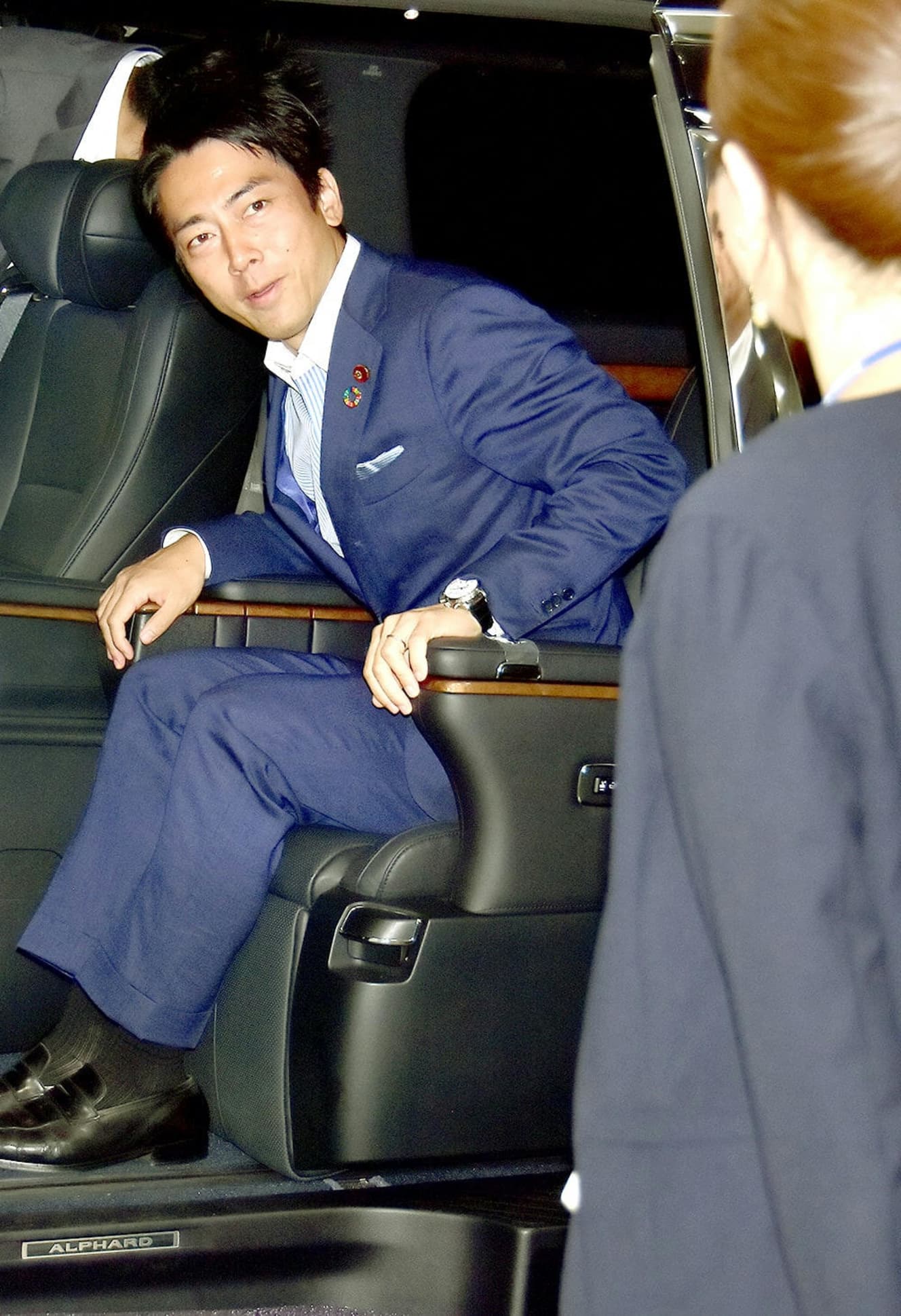
But can he really stick to his strategy and hold that lead all the way to the finish?
Although Koizumi is said to be leading the LDP presidential race, will these controversies have any impact?
In an interview with this outlet, political commentator Harumi Arima said:
“This stealth marketing scandal doesn’t constitute a legal violation, so it’s unlikely to cause fatal damage. At present, Koizumi is at the top of the leadership race, and there’s a strong chance he’ll hold onto that lead. That said, the public sentiment is clearly that stealth marketing and online slander are unacceptable. The fact that such behavior has surfaced in a party leadership election—despite the fact that politics should be setting an example through efforts like media literacy education—is damaging not only for Koizumi himself but also for the LDP as a whole.”
However, this is not the first time that stealth marketing comments have appeared from groups connected to a political camp.
Within political circles, there’s a cool-headed view that:
“This sort of thing has been done in every election, not just party leadership races.”
Still, for Koizumi, an even more troublesome issue than the stealth marketing comments is what’s being called the “Shine Muscat problem.”
The Ministry of Agriculture, Forestry and Fisheries (MAFF) is reportedly considering granting overseas cultivation licenses for Shine Muscat grapes. In response, Yamanashi Prefecture Governor Kotaro Nagasaki (57), whose prefecture is a major production area, strongly objected, saying:
“We absolutely cannot accept this.”
On September 25, Governor Nagasaki and the head of the JA Yamanashi Central Union handed a written request to Minister Koizumi, urging him to withdraw the overseas licensing plan.
The prefecture’s argument is that Japan’s export infrastructure for Shine Muscat grapes is not yet fully developed, and allowing overseas cultivation first could lower domestic prices and damage the brand’s value. Instead, they are calling for accelerated improvements to export conditions—such as plant quarantine procedures—so Japan can expand exports to growing markets like Vietnam.
In short, they are not opposed to overseas expansion itself, but rather to the order of priorities: first strengthen Japan’s export framework, then look abroad.
Koizumi responded to the request by saying:
“As long as we do not have the understanding and support of the producers, we will not move forward with overseas cultivation.”
However, information about the issue has already spread online under searches like “Koizumi Shine Muscat.”
Because much of the discussion is vague or oversimplified, many people have misunderstood the situation—believing that Japan is recklessly selling off its prized Shine Muscat cultivation technology to other countries.
“Some posts even claim that Koizumi is trying to sell the cultivation technology to foreign countries, especially China. In the past, there were indeed cases where Japan’s agricultural technologies—such as for premium strawberries or Wagyu beef—were illicitly taken abroad. Linking those past incidents to this case, some users are labeling Koizumi a traitor. ediIf this misunderstanding continues to spread unchecked, the Shine Muscat issue could end up inflicting more lasting damage than the stealth marketing scandal,” said a political reporter from a national newspaper.
The spread of unverified information on social media has become a major social issue—not only in leadership races.
Posts that stoke public anxiety or distort the facts have prompted calls for stricter penalties, but given the overwhelming volume of misinformation, enforcement efforts are like pouring water on a hot stone.
For now, individuals have no choice but to fact-check information on their own—making the need for swift and effective countermeasures ever more urgent.
PHOTO: Takeshi Kinugawa