Active as a geriatrician in New York, U.S.A! Dr. Yuji Yamada’s accusation “Japan, the mother country full of bogus medical care


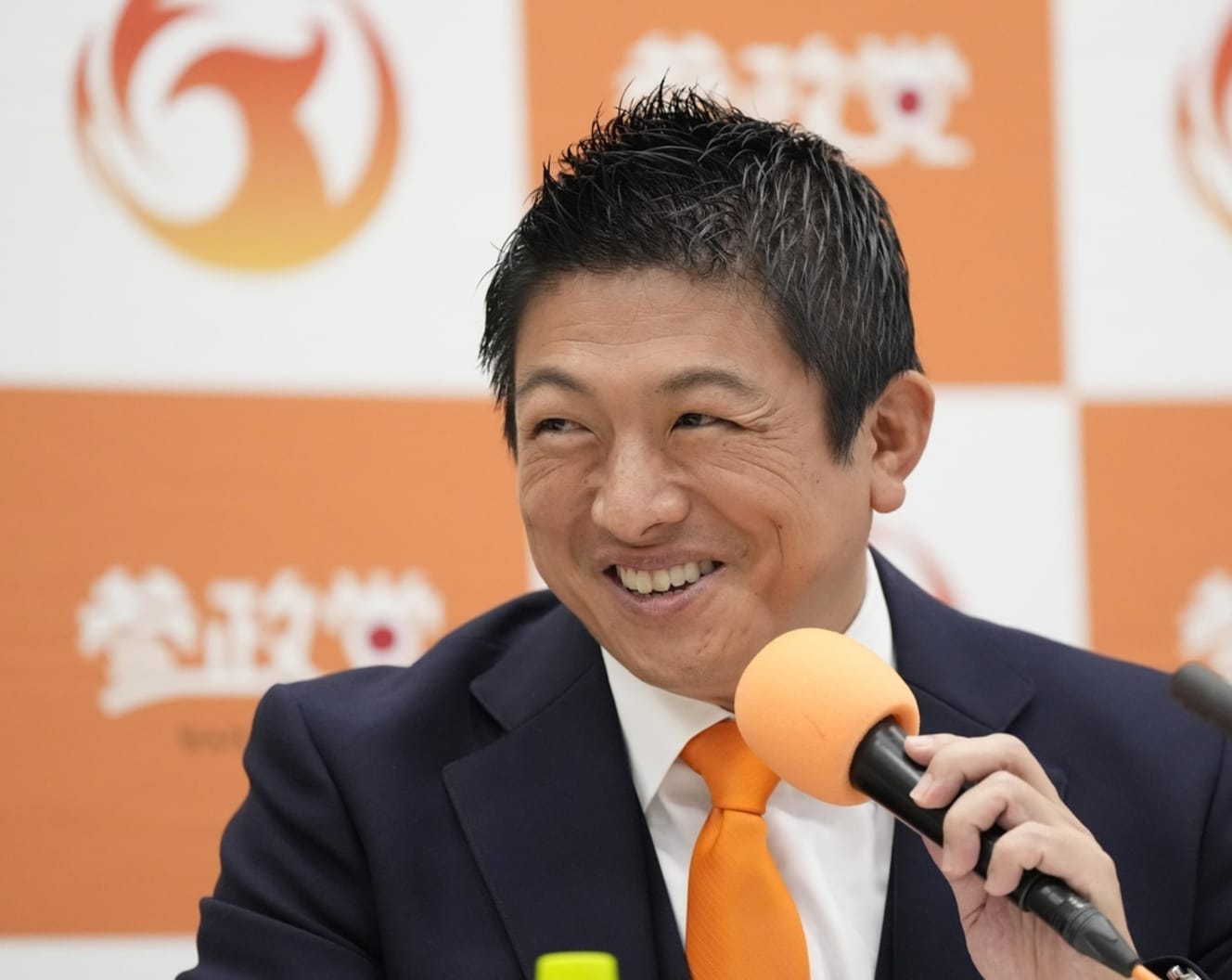
The moment when “ideology” is replaced by medicine
“I got dizzy researching free medical care in Japan: ……”
No wonder Dr. Yushi Yamada, a geriatrics specialist in New York, laments so. In recent years, “treatments without evidence” and “bogus medicine” have become widespread in the Japanese medical community. And they are expensive.
For example, there are many clinics that offer “molecular integrative nutritional medicine. Nutritional therapy, which involves tests that cost hundreds of thousands of yen and supplements that are provided, has little scientific basis.
The correct expression is, “Very strictly speaking, we don’t know if it works or not. In reality, however, they are advertised as if they work and sold at high prices. As a result, patients are forced to spend their precious money, time, and energy, and lose the opportunity to receive standard treatments that they would have otherwise received.
There are treatments that are known to be effective, but patients are kept away from them. As a physician, this is the most unforgivable reality.
Specific risks cannot be ignored.
For example, vitamin E is often used in the field of dementia, but it is known to increase the mortality rate when taken in excess. It is often disregarded as a mere vitamin, but it is not absolutely safe. It is dangerous to sell something that may or may not work by convincing people that it does.
The structure is that the side with knowledge pushes expensive treatments to patients who do not have knowledge. And this is being done by a person with a medical license. As a doctor myself, my heart aches.
Dr. Yamada laughed off the news that some members of a political party that made great strides in the Upper House election were advocating “homeopathy. The term “homeopathy” was coined by the German physician Hahnemann in the 18th century, who claimed to be able to cure all diseases by using sugar balls filled with a “certain type of water” called a remedy.
Homeopathy has no scientific basis at all, and its effectiveness has been denied by official institutions around the world. Yet it is advertised as a natural remedy and offered with impunity. This is unbelievable. This is nothing more than an ideological business in the name of medicine.
Why are some doctors jumping into pseudo-medicine? Dr. Yamada points to a “generation gap” in the education of doctors as the reason.
I am now in my early 40s. This generation has systematically learned evidence-based medicine (EBM) in medical school, but doctors in their 50s and older have gone into clinical practice without taking any EBM courses. Since this generation has practiced empirically, they have not developed much skill in mediating scientific evidence, unless they have learned it themselves. They have a background of being easily taken in by empirical medicine and ideological therapies.
I hear that a well-known doctor in Japan is charging 200,000 for free medical treatment with waves of unknown efficacy, but again, this is a generation that has not learned EBM.
Attention Economy,” a term coined to lure people in.
Why are people deceived by phony medicine? Dr. Yamada says that there is a psychology peculiar to the Japanese.
Many people tend to bring the “newer and more expensive is better” mentality to medical care, just as they do when selecting home appliances. In the world of cosmetic medicine, “exosome infusion” is being touted as an effective anti-aging treatment, but its safety and efficacy have yet to be established. Even so, people jump on the bandwagon when it is advertised as cutting-edge.
Just because a celebrity says, “I tried 00 and I feel better,” it resonates more than tens of thousands of cases of scientific data. In fact, “blood cleansing” once became a boom.
Blood cleansing is a free medical treatment in which blood is drawn, mixed with ozone, and returned to the body, which is advertised as a way to purify the blood, rejuvenate the body, and relieve fatigue. The scientific evidence is poor, and medical institutions around the world have denied the effectiveness of this treatment. In fact, the risks of infection, vascular disorders, and immune abnormalities caused by ozone in the body have been pointed out.
Because the unit price of free medical treatment is high and recovery is quick, huge sums of money can be spent on advertisements. This leads to a spiral of spreading the disease at once.
The same is true of some simple cancer tests. The reality is that some simple cancer tests are as accurate as fortune-telling, but they use celebrities as billboards and are even mixed in with tax returns from hometowns. It is truly a trap of the attention economy.
The attention economy refers to the concept that “people’s attention has economic value.
In today’s social networking sites and video websites, the amount of attention you can get is directly related to the number of clicks and views you get, which in turn leads directly to revenue. Phony medicine skillfully takes advantage of this mechanism. For example, anxiety-provoking information such as “medicines are poison” and “vaccines are dangerous” provoke fear and anger, which strongly attracts people’s attention. For the same reason, theories that have little scientific basis, such as “chronic fatigue is caused by too much sugar” or “adrenal glands are broken,” are easily heard by the public and spread on the Internet.
Attaching unfamiliar words like “adrenal glands” and “carbohydrates” to the common problem of fatigue makes it seem like a new medical science. Those who believe it may work hard, learn misinformation about sugar and adrenals, rack their brains, and in some cases, feel like they are getting rid of fatigue and spread the word on social networking sites that it has worked.
However, those who are not tired because of anemia will not get tired unless they treat their anemia. Thus. Although the appropriate remedy should be able to be derived only after identifying the cause that differs from individual to individual, there are actually a number of patients who have been led astray by those words and have come to me. As a doctor, I find this unforgivable.
The evil hand of phony medicine is extending to the field of oncology as well.
In some cases, immuno-cell therapy and stem cell therapy are being described as if they are revolutionary treatments. However, the basis of cancer treatment is the standard treatment. There is even a risk of shortening lives by leading people to therapies whose safety has not even been established.
Flashy and emotionally-charged information is more likely to be spread than scientifically correct and sober information. Important truths are buried and unimportant ones shine through. This structure drives patients to make wrong choices. When it comes to medical care, it is directly related to life, so I would like people to base their decisions on the opinions of public institutions and multiple doctors they can trust rather than on social networking sites.”

So what is needed to protect patients? Dr. Yamada answered immediately.
The best bulwark is a reliable family doctor. In Japan, this has not yet fully taken root, but if there is a doctor with whom there is a relationship of trust, it is difficult to be influenced by bogus medical care in the first place. In reality, however, two-minute or five-minute consultations are the norm, and there is no room for patients’ feelings. This is what gives the phony medical treatment a chance to take advantage of them.
Japanese outpatient clinics tend to be very short. Patients feel that they have come to consult with a doctor because they are anxious, but they are not listened to properly. It is understandable that patients would then turn to free medical care, where they can spend 30 or 60 minutes listening carefully to the patient’s concerns. This is not the fault of the individual doctor, but rather a problem with the system.
In the U.S., compensation is determined according to the length of the consultation.
In the U.S., compensation is based on the amount of time spent in the office. So, 30 minutes is the norm for an outpatient visit here, and it is not unusual for a first visit to take an hour. The greatest bulwark to prevent bogus medical care is to listen carefully to the patient’s concerns.
Dr. Yamada concluded with these strong words.
The short time that patients are treated in the clinic, which does not address their concerns head on, creates an opening for the phony doctors to take advantage of them. Medical care, which should be protecting the patients, is detouring them and putting their lives in danger because of its structural limitations. We cannot turn our eyes away from this reality. We cannot just criticize phony medical care; we must look at the problem of the structure of insurance medical care itself, or we will never solve the problem.

Yuji Yamada
Specialist in geriatrics. Engaged in clinical practice and research as a geriatrician in New York, USA. After graduating from Keio University School of Medicine, he studied internal medicine and geriatrics and has been active in a wide range of fields including geriatric care, dementia care, and end-of-life care, etc. He also focuses on disseminating accurate and easy-to-understand medical information through SNS and media, and is working to solve issues in the super-aging society from the perspective of connecting Japan and overseas. Author of “Dementia ni nareru hito nai hito” (“People who don’t get dementia”) and “Sukibe no senreiso: 5 M’s to realize ‘Genki till death'” (Kodansha Ltd.)
PHOTO: Kyodo News (1st photo)