Steady Applications at Waseda and Tokyo but One University Booms Among Chinese Students


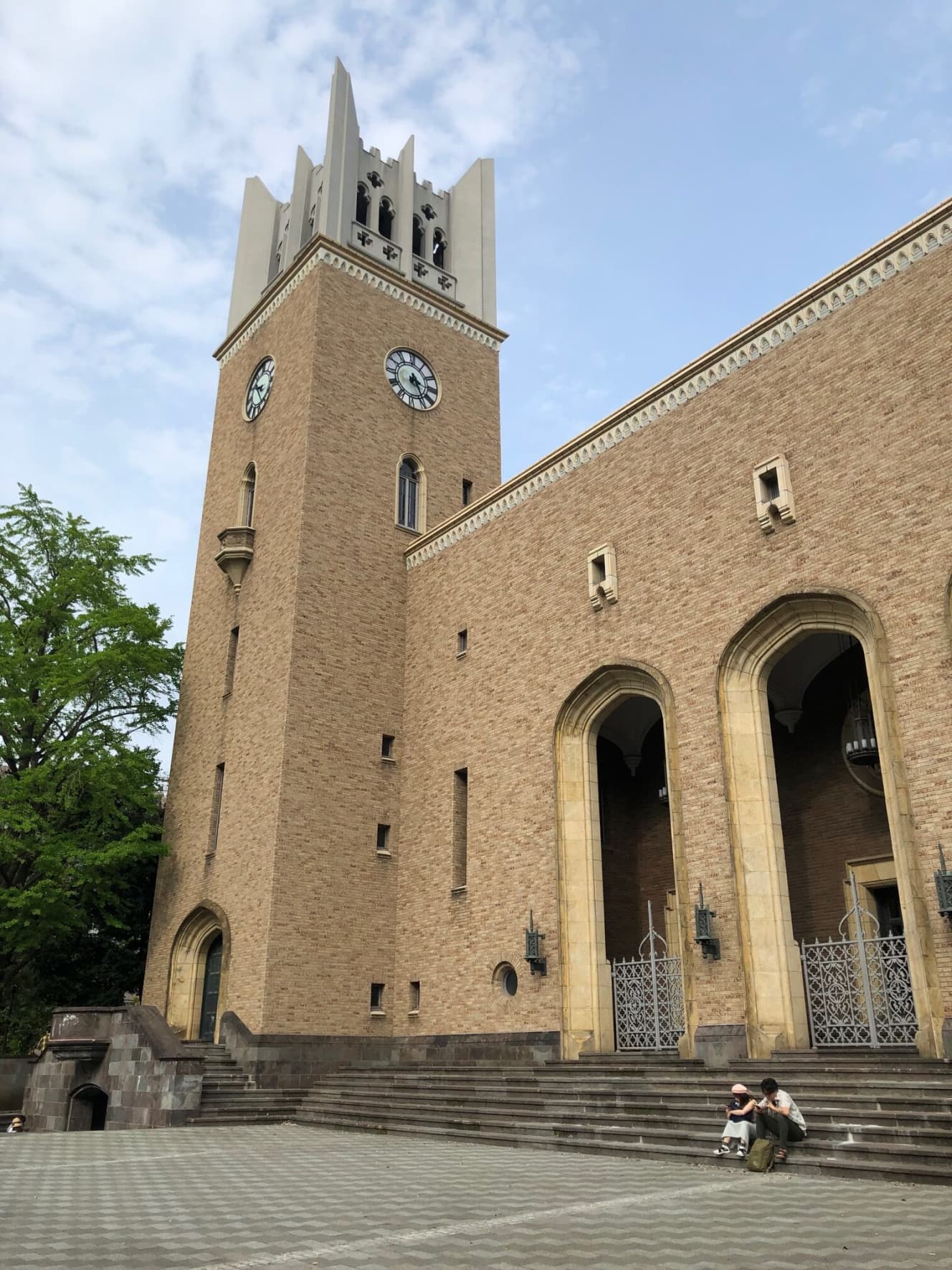
A prestigious pro-Chinese university
<International Student Guidance>
<Passing the University of Tokyo, Keio University, Hitotsubashi University>
Walking around JR Takadanobaba Station in Shinjuku, Tokyo, one can see many advertisements for preparatory schools catering to Chinese international students. These schools highlight personalized guidance and successful admissions to Japan’s prestigious universities. Why are there so many prep schools for Chinese students in Takadanobaba?
“It’s because Waseda University is nearby. Waseda is one of the most popular universities among Chinese international students. In fiscal 2024, Waseda accepted the most international students (5,562), followed by the University of Tokyo (4,793), Ritsumeikan University (3,258), and Kyoto University (2,791). In each of these universities, about half of the international students are Chinese.
The high number of applicants to Waseda is due to its reputation as a China-friendly elite university. Historically, founding members of the Chinese Communist Party like Li Dazhao and Chen Duxiu studied there, and in recent years, Chinese leaders such as Jiang Zemin have given lectures at Waseda when visiting Japan. Waseda has strong brand recognition in China, which also provides advantages for employment,” said a national newspaper social affairs reporter.
The number of Chinese international students has been increasing yearly since the COVID-19 pandemic. According to the Japan Student Services Organization, in fiscal 2024 there were approximately 123,000 Chinese students—a roughly 7% increase, or nearly 8,000 more than the previous year.
“Entrance exams for top universities in China are extremely tough. Admission is decided in a single nationwide exam held once a year, called the ‘Gaokao.’ There is no room for taking backup exams or repeating a year. Moreover, although not officially disclosed, there is a regional disparity in passing criteria. Universities allocate spots by region, granting more passes in urban areas than in rural regions.
Naturally, overseas universities become an option for Chinese students. However, Western universities are far away and involve high travel costs. Japan, in contrast, is relatively close, safe, and easy to study in, and due to the weak yen, tuition is comparatively affordable. These ‘three safety’ factors (‘San-an’) combined have steadily increased the popularity of Japanese universities,” the reporter added.
Cool Japan talent
The number of applicants to Waseda and the University of Tokyo remains high, but there is an unexpected university that is rapidly gaining popularity among Chinese international students. Chinese journalist Zhou Laiyou explains:
“It’s art universities such as Tama Art University and Musashino Art University. The reason for their popularity is Japanese animation. Chinese students grow up watching Japanese manga and anime, developing a strong admiration. They strongly wish to work in the anime industry after graduation, so they aim for art universities. Another appealing factor is that foreign workers in the anime field are considered ‘Cool Japan talent,’ making it easier for them to obtain permanent residency—a clear advantage.
This also benefits Japan. Anime is one of Japan’s cultural exports it can be proud of. However, nurturing creative talent is not easy, and there is an absolute shortage of personnel to sustain the anime industry. Japan wants to invite talented overseas individuals. If Chinese international students take art university exams with motivation and later work in anime, it is a win-win situation for both sides.”
Returning to the Takadanobaba scene introduced earlier: while prep school advertisements boast of admissions to famous universities like Waseda and Kyoto, others now feature phrases like art guidance and art university advancement alongside sparkling illustrations of young girls. The trend among Chinese international students is clearly shifting.