Water Shortage Dries Up Rice Paddies as Farmers Lament Severe Crop Losses


No sense of crisis at all
ChatGPT said:
Even as September begins, scorching hot days continue to be recorded across the country, with no sign of the abnormal heat subsiding. It is the nation’s rice farmers who are being driven into a corner by this abnormal weather.
According to the Japan Meteorological Agency, rainfall in July this year was only 13% of the average. This record-setting water shortage has had a serious impact on rice paddies just before harvest. Across the country, soil has dried and cracked, and rice plants have failed to grow properly.
As the harvest of new rice gets fully underway, what is the current state of rice — the staple that supports Japan’s food supply? FRIDAY DIGITAL visited Nanao in Ishikawa Prefecture, which is said to be one of the areas most severely affected by the water shortage, and spoke with Yoichi Hanazono (67), head of the Mukodamachi Community Farming Association, which manages many rice fields in the area.
“I think we’ll be able to harvest something, but I don’t know if it will grow enough to be shipped as a product. With this little water, the grains crack or stop growing as tiny fragments. In this situation, it’s obvious that ‘defective products’ will come out one after another. We’ll probably have no choice but to process them into rice crackers or rice flour,” he said.
If processed into rice flour, the selling price drops to less than half of what it would be as regular rice. The economic damage suffered by farmers is immeasurable.
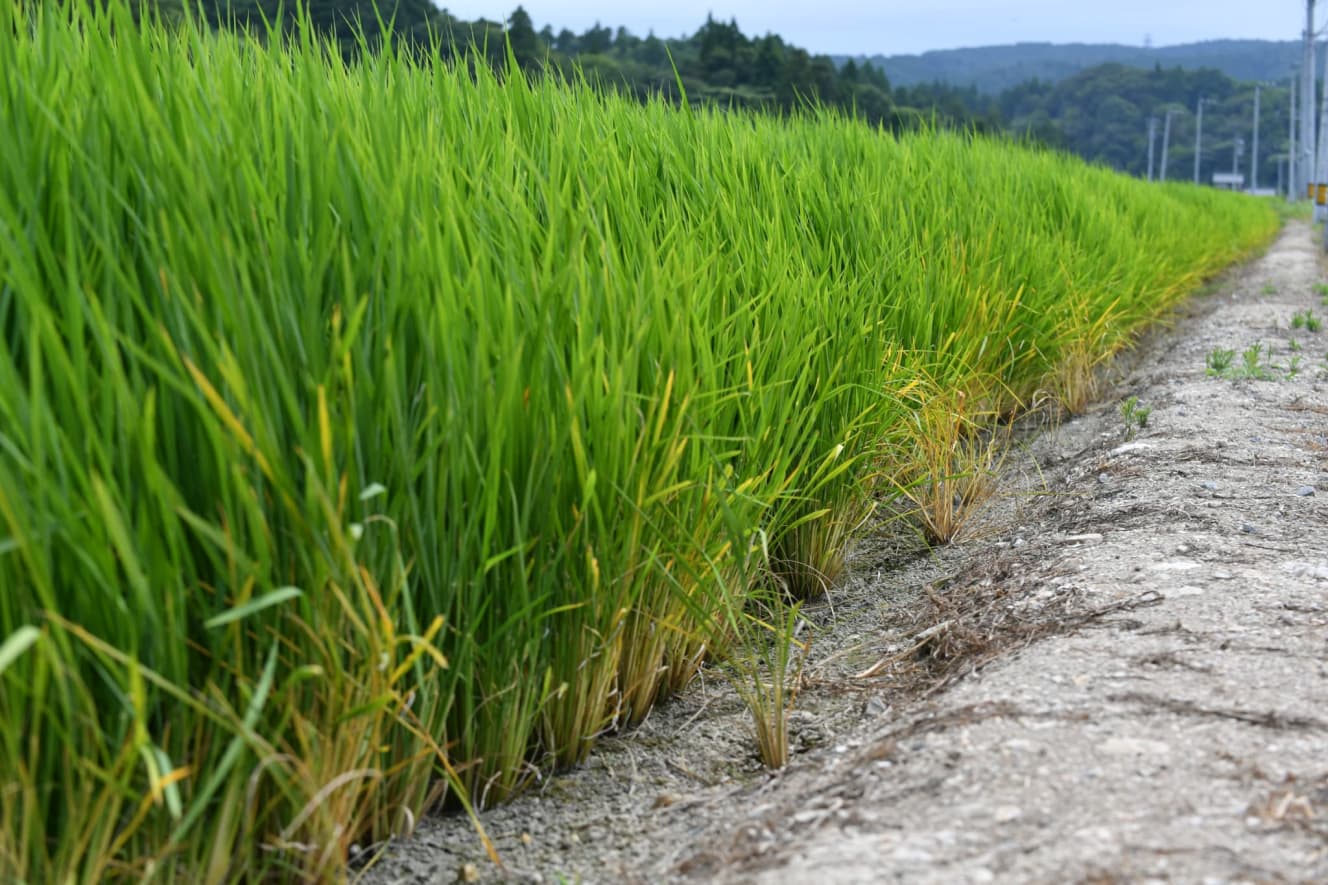
When stepping into the rice fields managed by Hanazono, the ground was dry and withered, and brownish discolored rice plants stood out. Some rice plants had rotted near the roots. Even to an untrained eye, it was clear how extremely difficult it would be to harvest rice. Hanazono continued describing the farmers’ situation:
“The total yield will drop to about two-thirds of last year, and there will be many ‘defective products’ that can’t be shipped as rice. We’ll have to rely on the prefecture’s agricultural mutual aid system. In Ishikawa Prefecture, farmers set their subscription ratio based on the previous year’s sales. For example, if someone had 10 million yen in annual income last year and joined at 80%, but this year actually only earned 6 million yen, the 2 million yen difference would be covered by the mutual aid payout.”
In August, Shinjiro Koizumi, the Minister of Agriculture, Forestry and Fisheries, visited farmers suffering from the drought and announced that water trucks will be sent as part of government support measures. However, Hanazono expressed anger, saying he felt no sense of urgency at all.
“On-site inspections are just for show. Neither the prefecture nor the city has put forth any concrete measures. Each village has several water sources, but most of them have dried up due to the continued extreme heat. It’s just difficult to grow crops when this kind of heat goes on.
And yet the government tells us to sell rice cheaply. I want to say, what are they talking about? For example, they could allow us to freely use fire hydrants to spray water where it’s lacking — we need bold measures like that. People who don’t actually grow rice can’t understand this suffering.”
How will the government respond to the farmers’ desperate cries from the field?


Interview, text, and photos: Junpei Kota