In some cases, Japanese contracts were violated… “China’s presence” revealed at the Tokyo International Conference on African Development (TICAD 9)


The Tokyo International Conference on African Development (TICAD 9) was held in Yokohama from August 20 to 22. The conference was first held in Tokyo in 1993, during the administration of Morihiro Hosokawa, and is now held every three years, alternating between Japan and Africa, with this being the ninth time the conference has been held.
In 1993, the collapse of the Berlin Wall and the dissolution of the Soviet Union marked the end of the Cold War and the advent of the liberal economy, but Western countries were reluctant to provide assistance to African countries. Japan raised its hand and became the first country to host TICAD, which has continued to this day.
The leaders coming to Japan from Africa also varied. Presidents and other heads of state from about 50 countries, including the dictatorships of Zimbabwe, Eritrea, and Eswatini, have visited Japan.
Although there seemed to be no particular problems with their visit to Japan this time, the past TICAD events were marked by political instability unique to Africa, such as a coup d’état in their home countries during a flight to Japan, which resulted in their turning back and the president himself being dismissed from office.
China’s Presence” at the Economic Exhibition
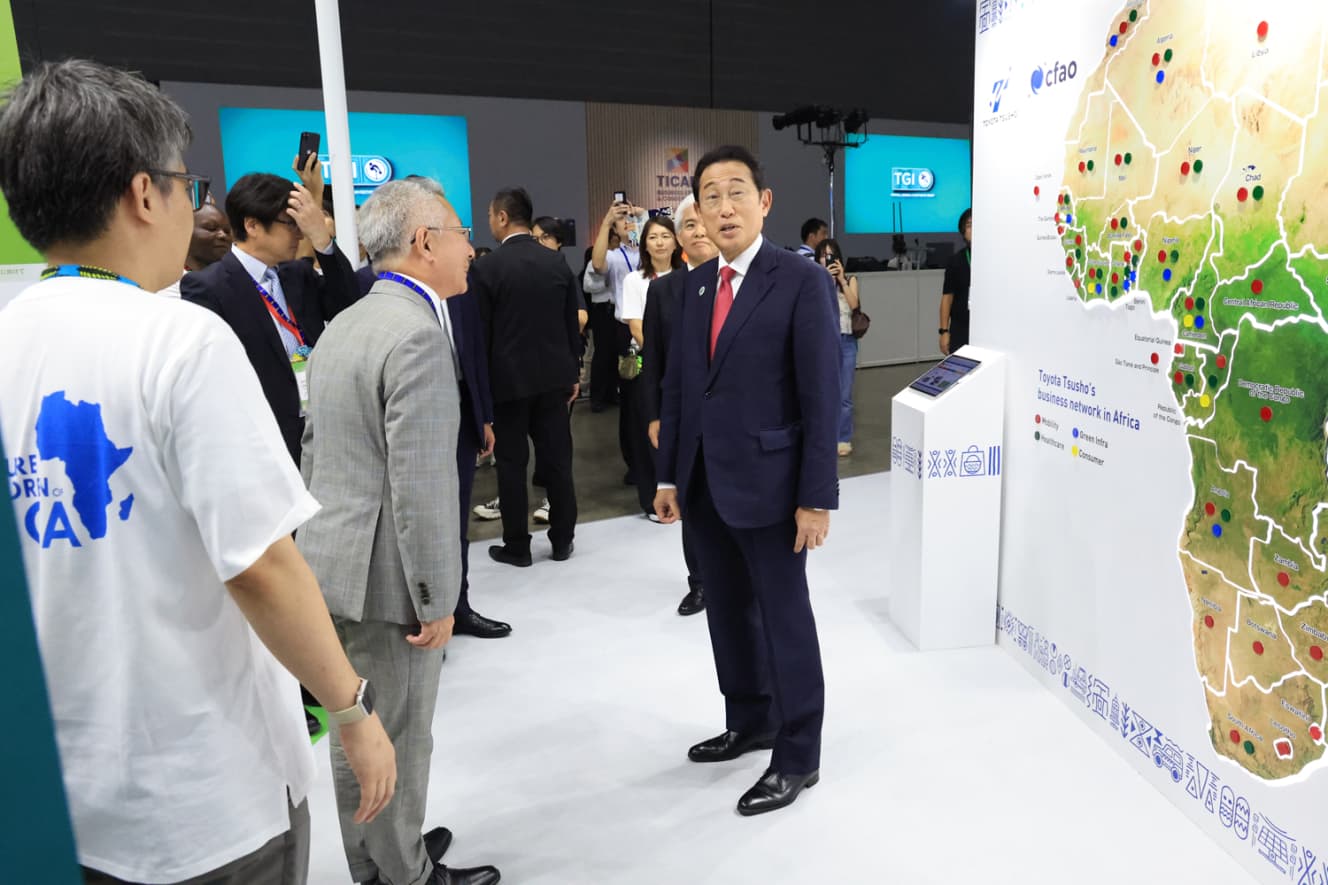
While the TICAD 9 meeting attended by Prime Minister Ishiba and other leaders was held at the InterContinental Yokohama, an economic exhibition event titled Japan Fair, organized by JETRO and other organizations, was held in the exhibition hall of Pacifico Yokohama, right next door.
More than 100 Japanese companies exhibited, and the fair was a lively gathering of a wide variety of domestic companies from the food, automotive, manufacturing, and infrastructure industries. On the African side, 41 countries also exhibited, introducing their traditional industries, and some sold confectionery, coffee, accessories, and other items.
One thing that Japanese exhibitors kept saying was that “China is rapidly increasing its presence, and there were many cases where contracts that had been made with us, Japan, were violated.
The Forum on China-Africa Cooperation (FOCAC), established in ’00 to mimic TICAD, exists and is held every three years, alternating between Africa and China. China is now rapidly penetrating African countries, and South Africa boasts the largest share of various transactions with China. In return for large Chinese investments and infrastructure development, various Chinese companies are expanding into Africa.
One exhibitor told us about the current situation.
He said , “China is of course aware that Japanese companies are expanding into African countries, and they try to bribe high-ranking officials in those countries to give Chinese companies an advantage, which puts us in a difficult situation even though we are serious.
On the other hand, “Chinese arrogance, poor infrastructure such as products and roads, etc., are all being built up at once without spending much time on them, and the local people are highly dissatisfied. They say that Japanese technology and people are just wonderful, and they teach us various know-how, and the Japanese are happy to leave the work to Africans. We have no choice but to continue to deal with them steadily,” he said.
Chinese-Style “Neocolonialism”
The end point of the “One Belt, One Road” initiative advocated by President Xi Jinping leads to Africa, but the rapid approach to Africa has also been called “neocolonialism” of the Chinese type. To cite just one example, China has been taking on high-interest debts to certain countries, and when they are unable to repay them, it monopolizes their resources or seizes key locations such as port areas, which has various effects.
This has also occurred outside of Africa, where Sri Lanka turned over the right to operate a port to China for 99 years because the port, which was built with Chinese investment, was in an inconvenient geographic location and could not repay the debt due to slow growth in vessel use.
Chinese companies are expanding in Africa in a variety of ways, but one of the most unexpected is that Chinese companies dealing with wireless equipment are also expanding in the region. The background is anti-piracy measures in Djibouti and elsewhere, and the People’s Liberation Army has been establishing a Djipchi security base since 2017. This is the People’s Liberation Army’s first overseas base, with about 2,000 personnel on duty.
In addition, an increasing number of countries, such as Tanzania and Mozambique, are conducting joint training with the People’s Liberation Army, and Western countries are becoming increasingly wary. In addition, there are stories that organizations ostensibly Chinese private security companies are providing military guidance to the armies of African countries, and a wide range of Chinese-made military equipment, from fighter jets to firearms to radios, is also prevalent.



Interview, text, and photos: Takuma Arimura