Fūei Law Reform (Part 1) — 2005 Amendment Deals Final Blow to Philippine Pubs


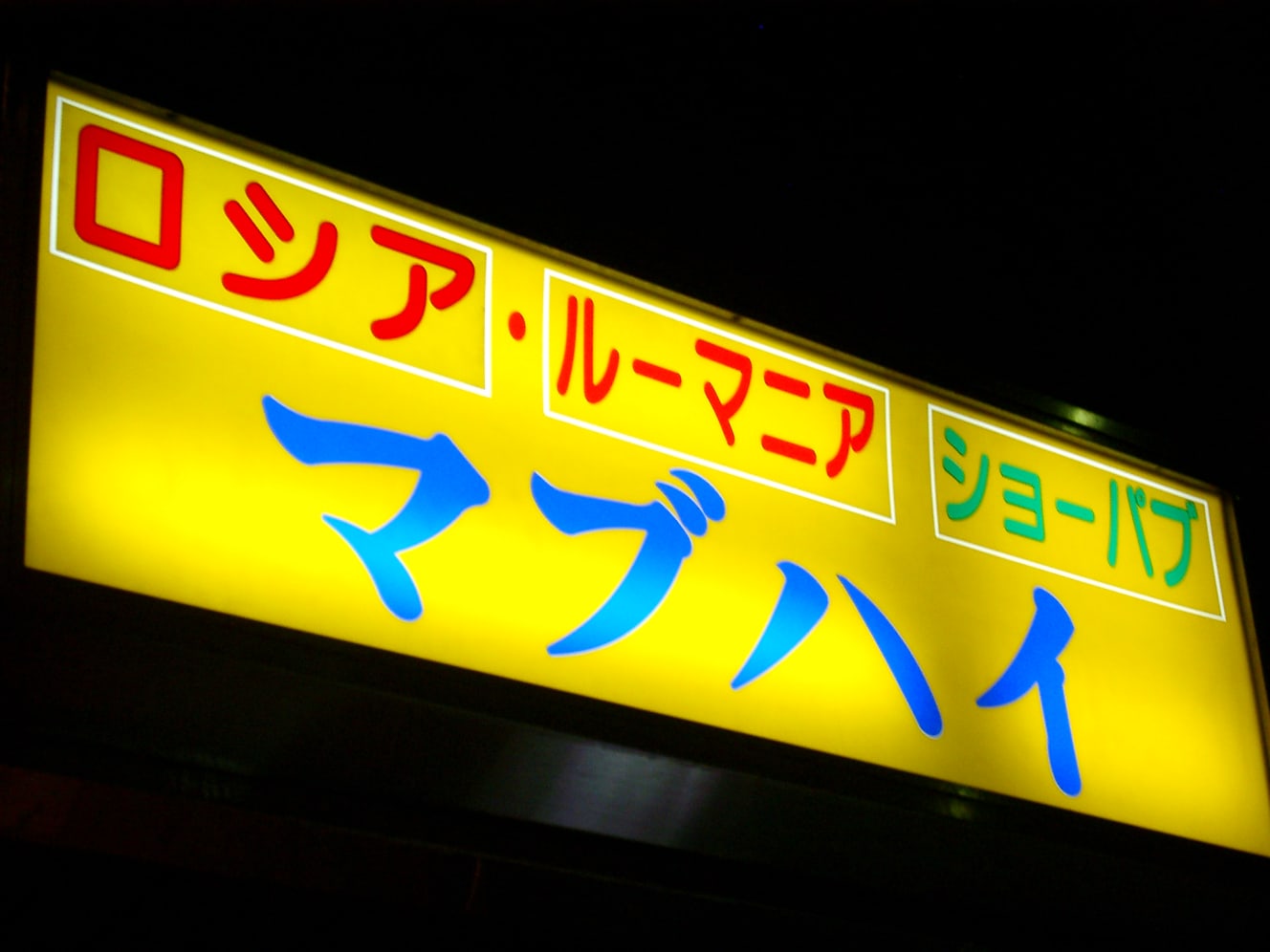
Since its enactment in 1948 as the “Entertainment Business Control Law,” the law has been revised 38 times up to this year. This series explores the impact each revision has had on society and the adult entertainment industry. The first part of the final installment focuses on the 2005 revision, which had a major effect on establishments employing foreign women.
Preventing the trafficking of foreign women
The 2005 revision of the law addressed the treatment of foreign women working in bars and adult entertainment establishments. In 1998, brokers who brought foreign women to work in such establishments were made the target of legal crackdowns. However, even after that, many women were forced to overstay their visas and became vulnerable to exploitation, creating a vicious cycle that persisted. The 2005 revision mandated that employers confirm the residence status and period of stay of foreign employees and keep copies of the documents used for verification along with the employee registry, thereby aiming to prevent illegal acts tantamount to human trafficking. The law was promulgated on November 7, 2005.
At that time, the trafficking of foreign women was a global issue. In 2004, the U.S. Department of State criticized Japan in its “Trafficking in Persons Report,” stating that entertainment visas were becoming a hotbed for international human trafficking. In response, Japan amended its Immigration Control Act in 2005, tightening the rules for issuing entertainment visas.
An entertainment visa is a residence status granted to foreigners engaged in performing arts, music, sports, or other entertainment activities. Stricter enforcement effectively prevented Filipino women from coming to Japan to work as hostesses, leading many Philippine-themed pubs to close. The revised law also regulated soliciting by these establishments, dealing a further blow to the industry.
During this period, Shinjuku underwent the “Kabukicho Purification Operation,” a campaign targeting illegal, storefront adult entertainment venues. Large-scale crackdowns followed in places like Yokohama’s Koganecho district and Nishikawaguchi in Saitama, spreading nationwide. The enforcement of the revised law on May 1, 2006, served as a culmination of these efforts. Police scrutiny of adult establishments increased, and stricter regulations contributed to the nationwide decline of storefront adult entertainment.
Regarding this purification campaign, a Tokyo-based delivery health (deriheru) operator told the author, “It’s no exaggeration to say that Japan’s sex industry completely changed around the mid-2000s.” For the industry, these reforms were indeed a monumental event.

New openings of Hoteheru became difficult
Delivery health (deriheru) services had previously included “waiting-type” operations, where customers could choose a woman at the shop before going to a hotel, and this was recognized as a legitimate business model. However, the 2005 revision prohibited this. In the early 2000s, many delivery health businesses operated reception offices in rooms of multi-tenant buildings in entertainment districts—a hybrid between storefront and outcall services. This is what is now referred to as “Hoteheru.”
Under the revised law, the reception offices of delivery health services were considered business premises, making them subject to regulations such as prohibited business zones, operating hours restrictions, prohibition of allowing minors as customers, and bans on solicitation. The police were given the authority to remove these reception offices from prohibited zones, treating them like storefront adult entertainment establishments.
As a result, opening new “Hoteheru” became difficult. Existing reception offices continued only as a form of vested rights. Additionally, with the prohibition of late-night operations for Hoteheru, a new business model emerged: establishments operating as delivery health services after midnight, known as “Hote-Deri” (a combination of Hoteheru and Deriheru).
As part of strengthening regulations on the sex industry, the Public Safety Commission decided that when a notification of business operations for a sex-related establishment is submitted, a confirmation of notification must be issued to the submitter. This was to address the problem that “related parties could not tell whether a notification had been submitted.” Here, related parties refer to the building’s landlord, real estate agents, advertising agencies, customers, job applicants, police officers, and others.
With this system, adult entertainment businesses had to keep the confirmation certificate at the office or business site and present it upon request by relevant parties to verify legitimacy.
Submission procedures were also tightened. Previously, no attachments were needed with notification forms, but under the new law, documents such as the operator’s resident certificate and floor plans of the business and reception offices, along with a surrounding area sketch, were required. Businesses continuing operations after the revision had to submit these documents to the Public Safety Commission by the end of July 2006; failure to do so meant being classified as unregistered after August. This explains the sharp drop in delivery health notifications from 25,727 in 2005 to 8,936 in 2006.
New restrictions also applied to advertising and promotion. Distribution of flyers to residences was prohibited regardless of region or resident age, with fines imposed. Advertising by unregistered adult service operators—including flyers, magazine and newspaper ads, and websites—was prohibited. Advertising agencies were required to check the operator’s registration using the confirmation certificate.
Furthermore, in addition to the previously prohibited act of soliciting customers, preparatory acts for soliciting customers also became subject to regulation. “Standing in front of or following a person on roads or other public places for the purpose of soliciting customers” was designated as a prohibited act.
If employees were caught soliciting, penalties could extend to the business owner or building owner. To avoid this, freelance solicitors known as pilers became more common instead of employees, and the use of free information centers to introduce businesses also increased. Since the Adult Entertainment Business Law did not directly regulate such centers or their guidance activities, this method initially expanded, although local ordinances later began to impose restrictions.

2010 Revision Regulating “Pseudo-Love Hotels” and “Dating Cafés”
In the latter half of the 2000s, there were issues with so-called “pseudo-love hotels” that were effectively operating as love hotels without proper registration. Some of these operated near prohibited areas such as schools or school routes, prompting nearby residents to call for regulation. To address this, the scope of what constitutes a love hotel was expanded in the subordinate legislation revised in 2010, which came into effect on January 1, 2011.
After the 1984 revision, many facilities had expanded dining areas and lobbies to avoid being classified as love hotels. However, it was considered inappropriate that simply meeting these requirements allowed them to be treated as general hotels. As a result, additional conditions regarding facilities and equipment were added:
“Rates for short stays displayed in visible locations,”
“Equipment that prevents outsiders from seeing people entering or exiting,”
“Curtains at the front desk that could obstruct interaction with customers,”
“Customers can enter private rooms without interacting with staff after entering the hotel,” and
“Dining and lobby floor areas below specified measurements.”
Meeting any of these conditions would result in the facility not being recognized as a general hotel.
In short, “if users are aware that their actions are morally questionable, the facility is not a regular hotel.” The law used these structural and equipment-based criteria to selectively regulate establishments.
Additionally, dating cafés, which had become hotspots for child prostitution, were also brought under regulation. While many online dating operators were forced to close following the 2003 “Dating Site Regulation Act,” physical storefront dating cafés slightly increased but were highly visible, making them quickly classified as storefront adult entertainment establishments.
These regulations on new storefront operations such as hotel delivery health services (hoteheru), pseudo-love hotels, and dating cafés encouraged industry consolidation and made new entries difficult. Existing businesses that survived through vested rights gained stability due to market concentration, but these rights were limited to a single generation, and such businesses were eventually forced to close.
References:
Nagai Yoshikazu, “Complete Edition: Regulation of Adult Entertainment Businesses,” Kawade Shobo Shinsha, 2015
Adult Entertainment Research Group, “Handbook on Proper Management of Adult Entertainment Businesses,” Tachibana Shobo, 2016
Nakamura Atsuhiko, “Adult Entertainment Workers as a Profession,” Takarajimasha, 2015
Nakamura Atsuhiko, “Japan’s Adult Entertainment Workers,” Shinchosha, 2014
Kakuma Junichiro, “The Invisible Isolation of Adult Entertainment Workers,” Kobunsha, 2017
Tsunoda Yukiko, “Sex and Law,” Iwanami Shoten, 2013
Shirano Shinya, “Where Did the Filipinas Go?” Joho Center Publishing, 2007
Other numerous books and online sources were also referenced.

Interview, text, and photos: Akira Ikoma