Two-Base Living to Escape the Heat! Easy-to-Access and Comfortable Tateyama in Chiba, and Cool, Affordable Kita-Karuizawa


“Paradise just an hour and a half from Tokyo.” The appeal of Chiba’s Tateyama lies in its mild climate and welcoming people
Japan’s summer heat has reached near-disaster levels. To escape the exhausting city summers—scorching asphalt and tropical nights—dual-base living is becoming a realistic option.
In November 2024, the government enacted the “Dual-Region Residence Promotion Act” (a law partially amending the Act on Infrastructure Development for Regional Revitalization), supporting a lifestyle in which urban residents maintain a second base in the countryside, aided by the rise of telework. Although the living environment is entirely different from Japan, in Spain, city dwellers from places like Madrid commonly own weekend homes in nearby regions, making dual-base living a well-established lifestyle.
Surveys show about 30% of people are interested in dual-region living, and approximately 45% of people in their 20s living in the Tokyo metropolitan area are interested in relocating to rural areas. As interest grows, the question arises: which locations are easily accessible from Tokyo and comfortable to stay in? This article highlights Tateyama in Chiba Prefecture and Kitakaruizawa in Gunma Prefecture, exploring their appeal and the realities of dual-base living.
Tateyama City is located at the tip of the Boso Peninsula.
Although it is often perceived as far away, it is about an hour and a half by car from central Tokyo via the Tokyo Bay Aqua-Line. Numerous direct highway buses run from Shinjuku, Tokyo Station, and Haneda, making access surprisingly convenient.
“There are no longer regular limited express trains, but bus services have increased, so convenience has actually improved. Many dual-base residents own small cars here, and a common route is to park at the free parking lot of the ‘Tomiura Biwa Club’ roadside station in Minamiboso City and take a highway bus to Tokyo from there,” says the president of Tateyama Real Estate, who is familiar with local matters.
Tateyama’s greatest attraction is its climate. With a maritime climate, summers are cool, and winters are warm. Even when central Tokyo experiences consecutive days over 35°C, such extreme heat is rare in Tateyama. The evening sea breeze is pleasant. Staff from Mitsumine Real Estate, who lived in Tokyo until last year, said:
“When I was in Tokyo, tropical nights were unbearable, but here they are almost nonexistent. Many residents on the second floor or above of apartments sleep with windows open without air conditioning.”
Moreover, the sunsets over the calm waters of Tateyama Bay, also known as Kagamigaura, are exceptional. They were even used in the opening sequence of “Friday Roadshow.” Under the right conditions, one can also witness the “Diamond Fuji,” where the sun sets behind the summit of Mount Fuji. Fresh seafood and mountain produce are abundant, offering luxuries not found in the city.
Attracted by these charms, many people began dual-base living during the COVID-19 pandemic, driving property prices 1.5 to 2 times higher than pre-pandemic levels.
“Tokyo-based agents have entered the market, raising prices. Ready-to-move-in properties near the station cost about 15–20 million yen, while seaside resort properties can cost 300,000–400,000 yen per tsubo for the land alone, making them quite expensive. Still, in the more mountainous areas away from the station, you can occasionally find used properties for around 8 million yen,” says the president of Tateyama Real Estate.
Property prices in Tateyama are not cheap, and making a decision involving millions of yen can be difficult. For such people, renting is also an option. Staff from Mitsumine Real Estate said:
“Many people first try living in Tateyama through rental properties. Once they are satisfied, they consider purchasing with permanent settlement in mind.”
By having a trial period before buying, one can better understand the local area and avoid mismatches or failures.
A man who quit his job at 59 and started Tateyama’s first winery
There is someone who has embraced a dual-base lifestyle in Tateyama and embarked on a new challenge. Gen Saito established “Matthew’s Wine,” the first winery in Tateyama. Having spent many years in the alcohol industry and developed a deep passion for wine during his time in Australia, he retired early at the age of 59 and pursued winemaking.
“My great-grandfather had built an old house in Tateyama. No one was living there, so I decided to use it as a base. Also, no one around here was growing grapes for wine, so I thought it would be interesting to be the first.”
He keeps a home in Suginami Ward, Tokyo, leaving his wife there while spending weekdays in Tateyama tending to the vineyard. With the highway, it takes only about an hour and a half to get there, making it a stress-free commuting distance, which supported his dual-base lifestyle.
“It doesn’t feel like I have to fully relocate; I can split the focus of my life between Tokyo and Tateyama. That’s what makes starting here so easy and appealing.”
While wine grapes are generally suited to cool and dry climates, recent advances in grape varieties and cultivation techniques mean that good grapes can now be grown in Tateyama. After five years of work, several thousand bottles of white wine are set to be shipped for the first time this October.
“Tateyama has delicious seafood, so I aimed to create a food-friendly white wine that pairs well with it. Also, many people here live a dual-base lifestyle like me, so it’s easy to form a community with other newcomers. Not feeling isolated is a huge mental benefit.”
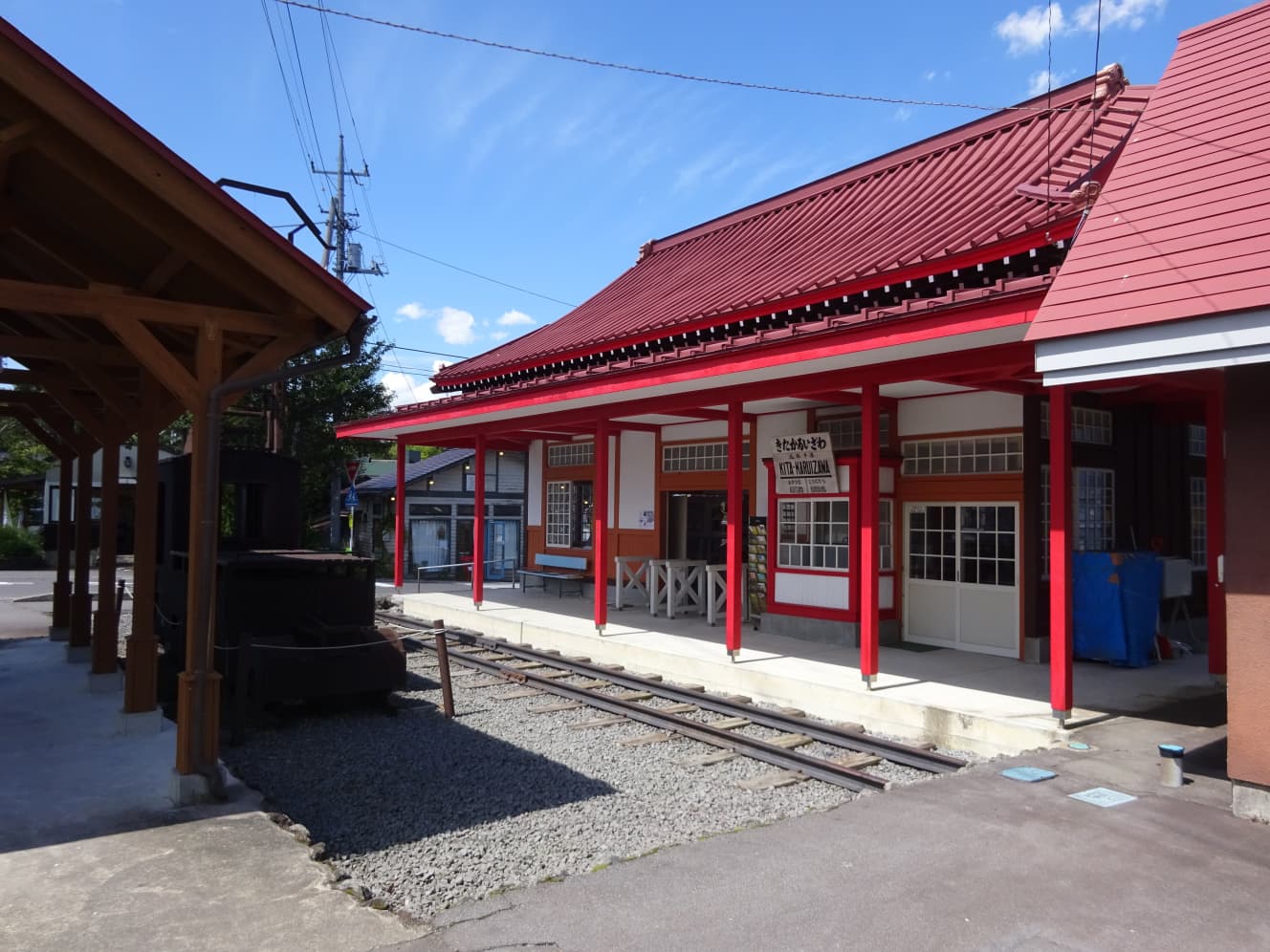
If prioritizing coolness above all, then Kitakaruizawa becomes the top candidate. Spanning the northern foothills of Mount Asama at altitudes of 900–1300 meters, this highland area is even cooler than the original Karuizawa.
“It’s about 3°C cooler than Karuizawa in some areas. The terrain isn’t surrounded by mountains, so the air flows well, keeping humidity low. In the shade, it’s almost never unbearably hot, even in midsummer,” says Tetsuji Shibata, president of Shibata Estate, who has been in real estate locally for over 30 years. Self-employed residents with dual bases in Kitakaruizawa also vouch for its coolness.
3°C Cooler than Karuizawa: The Real Story of the Hidden Summer Retreat, Kitakaruizawa
“Before buying property here, I’d heard it was cool, but it exceeded my expectations. Even in midsummer, nighttime temperatures often drop below 20°C, and it can be cold without a blanket. My house is surrounded by woods, so the indoor temperature exceeds 30°C only once or twice a year.”
Kitakaruizawa is located on the opposite side of Mount Asama from Karuizawa, and that location is its greatest appeal.
“This area sits midway between Karuizawa, one of Japan’s iconic villa regions, and Kusatsu, one of Japan’s most famous hot spring resorts. You can reach either in about 30 minutes by car. You get the high-end atmosphere of Karuizawa and the hot springs of Kusatsu—an ideal location,” says Tetsuji Shibata, president of Shibata Estate.
Despite this prime location, property prices are surprisingly affordable, starting around 5 million yen. But what about daily convenience?
“Of course, there aren’t luxury grocery stores or brand shops. However, there are sufficient restaurants, and delivery services like Co-op are well-established. Life here isn’t inconvenient. Essentially, the only thing missing is luxury indulgence,” Shibata adds.
Many are drawn to this environment that offers no luxury, but the freedom to live life your way. A recent example is a 30-something self-employed client represented by Shibata.
“This person had an office-home in the city and another residence near the sea in Kanagawa Prefecture. They decided to sell the Kanagawa property and start a dual-base life in Kitakaruizawa, saying they wanted to move from the seaside to a cool mountain area with a private, camp-like space. They purchased 1,000 tsubo of flat land and are currently building a house, including a training gym. Land is cheap here, so the total cost for the land and new home is about 60–70 million yen—an unimaginable scale for Tokyo,” says Shibata.
Another major appeal of Kitakaruizawa is its welcoming attitude toward newcomers. Originally a frontier area like Hokkaido, there is little of the outsider treatment from long-time residents.
“There are few obligations like neighborhood associations. People come here to escape city social pressures, so that’s a big plus. The relaxed rules for garbage disposal are also a huge benefit for part-time villa residents. You can live quietly without interference,” Shibata explains.
Residents seem to fully enjoy this freedom.
“Some retirees spend Golden Week through the autumn foliage season in Kitakaruizawa, then return to Tokyo in winter, living like migratory birds. During the season, even a karaoke bar tucked away in the fields sees a lot of business,” says a local self-employed resident.
For escaping the summer heat, a dual-base lifestyle is ideal. For easy access to Tokyo, a mild climate, and community connections, Tateyama is perfect. For extreme coolness and unrestrained freedom, Kitakaruizawa is the place. Consider which second base best suits your lifestyle.


Interview, text, and photos: Shinsuke Sakai