2001’s Legal Strike on Telephone Clubs and Two-Shot Dial Services


This is the third installment of journalist Akira Ikoma’s series “The History of Entertainment Business Law Revisions”, which explores why the law was amended in each era and what impact it had on later generations. In this latter half, he examines the 2001 revision that regulated telephone clubs and two-shot dial services.
Decline of Adult Sites Due to Regulation
With the 1998 revision, businesses selling pornographic videos via mail order or distributing pornographic content online were classified as an extension of adult shops and newly brought under regulation. Violators could be ordered to cease operations. To make the measure more effective, the law went beyond temporary suspensions that only inflicted short-term damage, imposing instead a prohibition that barred operators from continuing the same type of business or opening a new one. As a result, the number of paid adult sites decreased.
Among adult sites transmitting pornographic images, many displayed banner ads and provided content free of charge while earning advertising revenue. These were not subject to regulation under the Entertainment Business Law, but their numbers also declined after enforcement.
The regulations on non-storefront sex-related businesses and video distribution were introduced because the traditional method of enforcement—spatial segregation—was no longer sufficient. The 1984 revision of the Entertainment Business Law had replaced the walled-off red-light districts, in place since the Edo period, with legal spatial restrictions designed to preserve residential environments and protect spaces such as schools and hospitals. However, once operators no longer needed physical premises and began exchanging information via phone or the internet, that system could no longer keep up.

Spatial Restrictions Extended to Sex-Industry Advertising
Meanwhile, regulations on advertising by storefront sex-related businesses were strengthened. Sex-industry advertising had already been subject to certain restrictions, but as noted in the first part, flyers and handbills had become a problem when they began appearing not only downtown but also in residential neighborhoods. They were casually plastered inside ordinary public phone booths—used by minors as well—drawing widespread disapproval.
To address this, the concept of advertising-restricted zones was introduced. It was stipulated that “within 200 meters of schools, libraries, and similar facilities, businesses may not post signs or distribute flyers.” This approach was an extension of the earlier spatial regulation method. Furthermore, even outside restricted zones, distributing handbills to anyone under 18 was prohibited. As a result of these strengthened advertising regulations, the pink flyers and discarded signboards once commonly stuck to phone booths gradually disappeared—a trend accelerated by the spread of mobile phones.
Additionally, the National Public Safety Commission established an official emblem to indicate that persons under 18 were prohibited from entering. Businesses in the sex industry were required to display it. This is the origin of the familiar 18+ mark seen at the entrances of such establishments.

Tightening on the Sex Industry, but Deregulation of Entertainment Businesses
Another major point of the 1998 revision was that brokers who brought foreign women to Japan to work in sex-related establishments, as well as agencies dispatching such companions, were newly brought under regulation. If convicted for enabling illegal employment of foreigners, their criminal record became grounds for disqualification from obtaining an entertainment business license. In other words, a broker arranging foreign women could be arrested and then barred for a time from running hospitality businesses such as hostess clubs.
At the time, the presence of numerous “Japayuki-san” was drawing international criticism as a form of human trafficking. Although such practices had been prohibited by a 1949 UN treaty, Japan was not proactive about international agreements calling for joint enforcement with other countries. The prevailing view seemed to be that, since each nation had unique circumstances regarding sexuality, it was sufficient to deal with such issues through domestic law.
While restrictions on the sex industry grew stricter, regulations on businesses such as cabarets and nightclubs were eased. This shift reflected a waning perception that these establishments were hotbeds of social problems. Increasingly, only sex-for-sale businesses were stigmatized as problematic, leading to a clearer distinction between general entertainment businesses and sex-related special businesses.
Specifically, while subject to regional restrictions, operating hours were extended: instead of the previous midnight closing time, businesses were permitted to stay open until 1 a.m. By then, many people were living night-oriented lifestyles, and 24-hour operation was becoming common in retail and service sectors. Forcing only Entertainment Business Law–regulated shops to close early was considered unfair, and the revision responded to industry demands.
Dance schools that taught ballroom dancing were also removed from regulation. Since the 1980s, more middle-aged and elderly people had taken up ballroom dance through community centers and hobby groups. With the possibility of becoming an official Olympic event also growing, the argument that dance is a wholesome sport, not a dubious business gained traction.
The movement was further propelled by the 1996 release of the film Shall We Dance? a masterpiece by director Masayuki Suo. The movie drew middle-aged audiences to theaters, sparked a ballroom dance boom, attracted 2 million viewers, swept the year’s major Japanese film awards, and was released in 19 countries including the U.S. A Hollywood remake starring Richard Gere followed in 2004. The deregulation of dance schools was thus the fruit of both this popular boom and the sustained efforts of enthusiasts and related organizations.
However, the exemption applied only to dance schools with certified dance instructors, not to dance halls.
Dances like ballroom, which involve male-female pairs, were still considered to carry “the possibility of creating an excessively sensual atmosphere.” The authorities maintained their stance of not tolerating situations in which female employees in cabarets, clubs, or dance halls drank or danced with male patrons. Concerns that dancing in dance halls could lead to “improper male-female relationships” remained unchanged.
Moreover, the state-certified dance instructor system was limited to ballroom dance. Schools teaching salsa, Argentine tango, and other styles could not obtain certification and therefore remained subject to regulation. This revealed how the law lagged behind the growing diversity of dance forms. Such limitations later fueled calls for revising the “outdated Entertainment Business Law.”
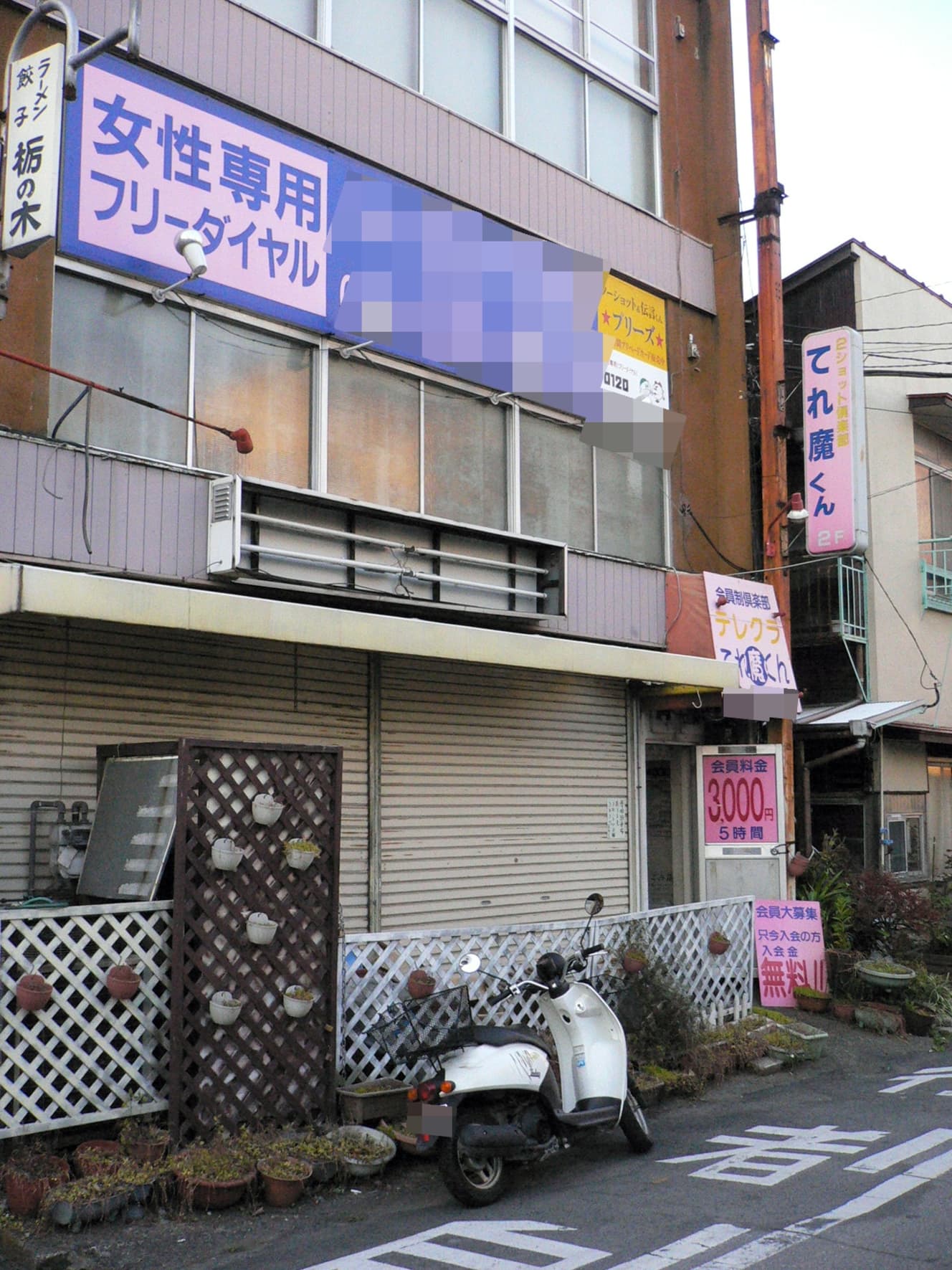
The 2001 Revision Targeted Telephone Clubs and Two-Shot Dial Services
Entering the 21st century, the Entertainment Business Law began to include within its scope businesses that provided opportunities for conversation to people seeking encounters. Because prefectural ordinances alone could not prevent frequent troubles between men and women, the 2001 revision imposed strict regulations on telephone clubs and two-shot dial services.
For storefront telephone clubs, a 200-meter no-business zone was established around protected facilities, just as with other sex-related businesses. Prefectures were also allowed to designate broader zones by ordinance. In Hyōgo Prefecture, for example, a strict ban on new openings was enforced across the entire prefecture.
The author recalls covering a drive-through telephone club in Akashi City, Hyōgo, in 1999, before the law was revised. The concept was to enjoy a bright and cheerful telephone club under the shining sun, combined with the unique idea of taking calls without leaving your car.
On weekends, crowds of men in their 20s would show up in their prized cars—many of them wagons or SUVs of the outdoorsy type, according to interviews at the time. Women, too, reportedly called because they wanted to ride in cool cars. In Fukuoka City, there was even a face-to-face telephone club that used one-way mirrors and TV monitors. Such unique establishments reflected how popular telephone clubs had become back then.
The 2001 revision regulated only businesses that used telephones. Online dating sites were a source of concern, but at that point they were not yet subject to the law.
Thus, by the early 21st century, the Entertainment Business Law had evolved dramatically from its original 1948 form, which only regulated a handful of eateries and amusement venues.
Among the expanding scope of regulation over time, the part concerning sexuality grew the most. Yet by incorporating new sexual services under its framework, the law also enabled the legal sex industry to expand. Regulation and protection, in that sense, were two sides of the same coin.
References
Teihon Fūzoku Eigyō Torishimari, Yoshikazu Nagai, Kawade Shobō Shinsha, 2015
Nippon Hanzai Kyō Jidai, Ken Kitashiba, Fusōsha, 2009
Fūzoku Shinkaron, Fumio Iwanaga, Heibonsha, 2009
Shōwa Heisei Nippon Seifūzoku-shi, Mitsuru Shirakawa, Tenbōsha, 2007
Nihon no Fūzoku-jō, Atsuhiko Nakamura, Shinchosha, 2014
(Along with numerous other books and online sources.)

Interview, text, and photographs: Akira Ikoma