Top 10 Adultery Movies You’d Want on a Passionate Night, According to Kon Arimura
A selection of Western and Japanese films depicting "forbidden love


Kon Arimura’s Top 10 Adultery Films
Adultery movies—while not exactly a formal genre, films centered on forbidden romance exist in abundance around the world. But why do people crave watching them?
“Adultery works really well with movies,” says film commentator Kon Arimura (49). Arimura himself once made headlines when a FRIDAY article revealed an attempted affair.
“Movies are entertainment that let you enjoy a two-hour ‘what if.’ What if you were a bank robber? A spy? Things you want to try but can’t in real life, you get to experience as the protagonist. The popularity of adultery films stems from the basic human desire to try having an affair—even if just vicariously (laughs).”
Arimura then selected his top 10 adultery films from around the world.
“In the end, the differences between Japanese and American adultery films became clear. Japanese infidelity tends to be more emotionally intense, whereas American films are much drier.”
Here’s the top 10. Taking the number one spot is the worldwide hit The Bridges of Madison County.
“The reason I deliberately put this at number one is that it portrays the choice to move on from marriage. Meryl Streep plays a mother living with her husband and grown children in a small rural town. There’s no nighttime excitement—she’s just living the monotonous life of an ordinary housewife. Then, when her family goes out to a nearby town, photographer Clint Eastwood casually appears, and the affair begins.”
Arimura notes that the final scene leaves a lasting impact on viewers:
“At the end, it’s pouring rain as the photographer’s truck drives away. The heroine’s car is behind it, and her husband is in the passenger seat beside her. If she pulls the door lever now, she could be with him. That scene is truly one of the great moments in film history. I thought it even speaks to themes for the coming super-aging society and the 100-year life era.”
Rie Miyazawa’s performance is on another level
Next up, in second place is Paper Moon (Kami no Tsuki), starring Rie Miyazawa.
“It’s inspired by a real-life case of a female bank employee embezzling a huge sum, but Miyazawa’s performance is incredible. She really captures how, when humans become desensitized to small things, even handling billions of yen stops evoking any emotion—and she conveys that fully in just two hours.
The story follows a married couple whose relationship has grown cold. Amidst this life, the woman starts touching customers’ deposits without being caught by the bank. Around the same time, she meets a younger college student and repeatedly meets him, but eventually runs short on money and begins forging checks. As she plunges deeper into the affair, Miyazawa’s character becomes increasingly beautiful. The masterful direction and exquisite acting were truly otherworldly. Also, as with many Japanese adultery films, it ends with self-destruction—a contrast to American films.”
In third place is a surprising entry: Carol, a film depicting a same-sex relationship.
“When I watched this film, I thought, ‘They got me.’ Finally, a lesbian story combined with adultery. Set in 1950s New York, a time when lesbians and gay people couldn’t even come out. Cate Blanchett plays a wealthy woman with a husband, embroiled in a custody battle over her daughter. When her husband asks, ‘Are you having an affair?’ he never expects the partner to be a woman. A wiretap is installed, and if their relationship is discovered, it would be disastrous. That’s where their escape begins. I recommend watching this slightly unconventional adultery film.”
In fourth place is Love’s Crime (Koi no Tsumi), directed by Sion Sono and based on the TEPCO OL murder case.
“What’s remarkable about Sono is that he didn’t just make it a reenactment drama. He took the idea of an ordinary office lady secretly working as a prostitute at night and expanded the story. A submissive wife gradually becomes a sexual slave. The full-nude scene of Miki Mizuno in the opening sex scene with her lover was also a hot topic.”
Fifth place went to A Love’s Exile (Ai no Rukeichi), based on Junichi Watanabe’s novel.
“This is quintessential Junichi Watanabe: a deeply melodramatic world. Shinobu Terajima undresses boldly. Etsushi Toyokawa was handsome. Kyoko Hasegawa plays a prosecutor, but her sexuality is unnecessarily emphasized, which left an impression (laughs). In Watanabe’s works, the overarching theme is that adultery ultimately ends in ‘death’ or a desire to end beautifully. The heroine says, ‘Kill me,’ as part of a role-playing act, but she ends up truly dying. That launches the courtroom drama. This defined one trend of Japan’s 1990s adultery film boom.”
Sixth place, Fatal Attraction, is extremely well-known.
“This is really the classic example. The woman who had the affair realizes she was just a fling and obsessively pursues the man. Scenes like visiting an amusement park with his child were chilling. She’s just a psychopath, but watching this movie was thrilling in its intensity.”
Seventh place is Lost Paradise (Shitsurakuen).
“When you think of ‘adultery’ movies, this comes to mind immediately. Beautiful, with Hitomi Kuroki. Looking back, it feels a bit classical, but it was fitting for that era.”




Aya Ueto’s bold performance captivates
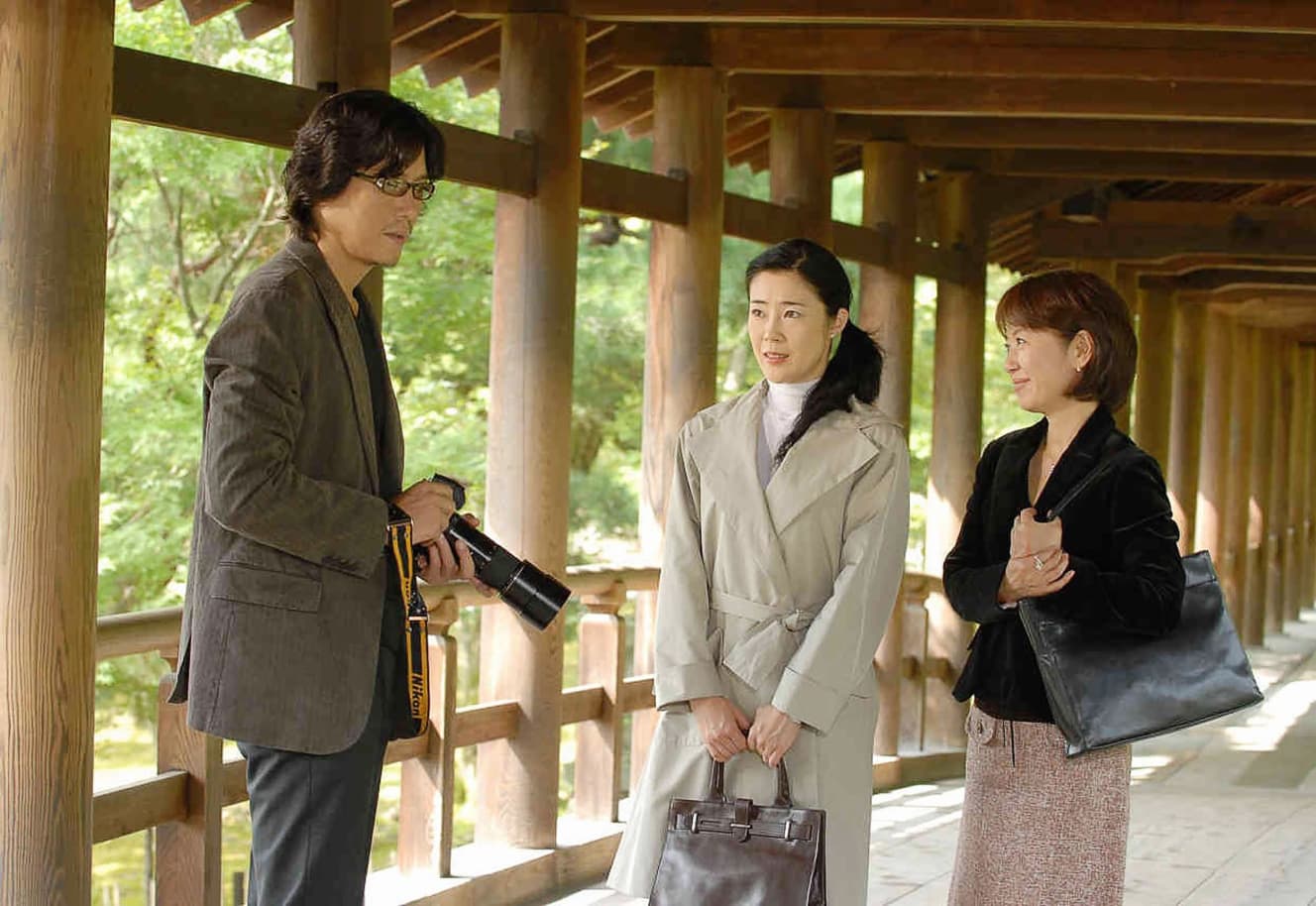
Eighth place goes to Aya Ueto’s Hirugao.
“Aya Ueto boldly cemented her position as an actress by playing a woman having an affair in this film. The story is set three years after the events of the popular TV drama, after her affair was discovered and a court ruled she couldn’t come within a certain distance of her lover. Ueto’s character, Sawa, is living alone in the countryside when her former lover Kitano (Takumi Saito) visits for a lecture. Though she knows she shouldn’t attend the lecture, she goes anyway. When their eyes meet, the theme song plays (laughs). The court order forbidding them to speak to each other actually adds a certain erotic tension. They ride the bus together, and since they can’t talk, they write on the fogged-up windows with their fingers. It’s full of playful moments, but overall, it’s an enjoyable film.”
Ninth place is Gone Girl.
“This one is more of a suspense film. It’s about a wife taking revenge on her husband. One day, she goes missing, leaving bloodstains in the kitchen, and the husband becomes a suspect. In reality, she’s still alive… Directed by David Fincher, the story is like a complex puzzle and can be hard to follow, but I love the unsettling, creepy tension it creates.”
Tenth place is Sayonara Itsuka, starring Miho Nakayama, who passed away at the end of last year.
“Miho Nakayama was stunning. The film depicts 25 years of love between a free-spirited woman and an elite businessman who leaves his fiancée behind for his assignment. The cinematography is gorgeous, beautifully capturing exotic, foreign settings, and conveys the emotional highs of the two characters.”
When asked about choosing these ten films, Arimura commented:
“When you look at movies from different eras, you can see how attitudes and trends regarding adultery have shifted every decade. Having once made mistakes myself, I watched these films with a personal sense of empathy. Ultimately, adultery itself is really bad, but people go to the cinema seeking to experience it vicariously. I believe adultery films are forever immortal.”
Adultery films range from thrilling romantic tension to messy, destructive affairs. Whatever your mood, there’s a film to enjoy this summer.


From the August 22/29, 2025 issue of “FRIDAY”