The Story Behind the Mascot Costumes — Hidehiko Ishizuka Talks Tokyo Friend Park
Honjamaca's Hidehiko Ishizuka's "Delicious Days" vol. 25


Hello everyone. During a rainy-day shoot, I wore a raincoat and ended up soaked with sweat from the humidity—so much so that I became wetter than I would have just from the rain. This is Hidehiko Ishizuka.
Now, this time I’d like to talk about Hiroshi Sekiguchi’s Tokyo Friend Park II (TBS network), which many of you have enjoyed watching.
Practicing air hockey intensely
When I was 31, the sketch show I appeared on with Honjamaka ended. I heard there was a new program and asked my manager about it, curious. He said, “It’s a theme park employee show.” I didn’t understand what he meant at first. Later, the TBS production staff explained it to me, and I finally got it.
The show’s concept was that the park manager was Hiroshi Sekiguchi, the assistant manager was Masayuki Watanabe, and the employees were Honjamaka, entertaining guests who came to the park.
Honjamaka’s role was to compete with guests in “Hyper Hockey,” a version of air hockey. By the way, neither Emi nor I had ever listed air hockey as a skill in our profiles (laughs).
Since it wouldn’t be fun unless we were somewhat good at it, we practiced air hockey several times with the staff before the show began. The table was larger and the puck heavier than the ones in regular arcades, so we practiced at a workshop that manufactured tables specifically for Hyper Hockey.
In my experience, most production staff tend to go easy on performers, but the staff at Friend Park hit the puck with such intensity it was infuriating. Looking back, it was because they genuinely wanted to make a good program. Interestingly, the staff who pushed us Honjamaka members to give our best later became high-ranking TBS executives.
In the early days, the costumes weren’t actually mascots
By the time we gained some confidence, Hiroshi Sekiguchi’s Tokyo Friend Park II began. Some of you might remember it. In the program’s initial stages, the outfits we wore for hockey weren’t mascot costumes. We wore uniforms similar to those used in cycling competitions, along with helmets and goggles—for the performers’ safety.
Since we appeared regularly, we naturally got stronger with each episode. On the other hand, the guests were experiencing the large-size hockey setup for the first time. That’s when the mascot costumes were introduced, combining visual flair with a handicap for the guests.
Some were tough to move in, some had two people connected by strings, and some were extremely heavy. I really felt the challenges faced by those performing in mascot suits.
Perhaps because of that experience, whenever I go out as a reporter and meet local mascots, I always check in with them, asking things like, “Aren’t you hot?” or “Are you okay?” and try to keep the interaction as brief as possible.
For those who watched the show closely, you may recall that sometimes hockey matches ended in a straight win. The truth is, the mascot costumes were so heavy that I wanted to finish quickly, so I decided the match as fast as possible—it’s a survival instinct.
I learned a great deal from Tokyo Friend Park: Sekiguchi’s hosting skills that bring out the best from any type of guest, Watanabe’s conversational skills that turn a 50-point answer into 100, and the staff’s tireless efforts to improve the show. I hope one day a program like Tokyo Friend Park, reaching over 20% ratings again, will be born.
From the August 22/29, 2025, issue of “FRIDAY”
Text and illustrations by: Hidehiko Ishizuka
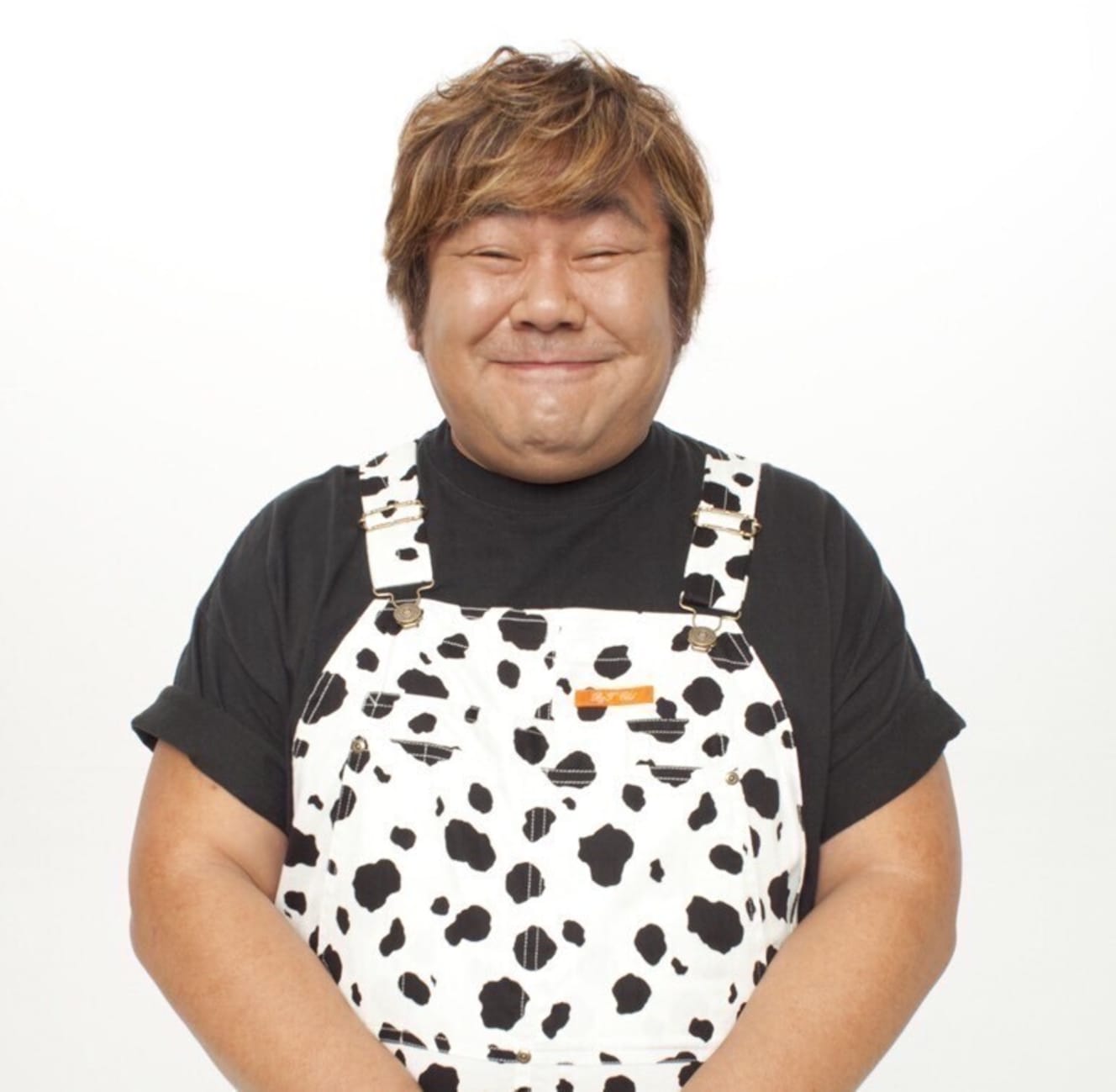
Born in Kanagawa Prefecture in 1962. He was a member of "Honjamaka," a comedy duo with Toshiaki Megumi, and was a member of "Ganso! Debuya" (TV TOKYO), as well as an actor and
voice actor.
He is also active as a voice actor. Currently, he appears as the Friday MC of "Yoji Goji Days" (TV TOKYO), and also focuses on YouTube and Instagram.