From Wiped-Out Cafés to Booming Fashion Health — The Impact of the 1984 Entertainment Law Reform
The "Revised" History of the Entertainment Establishments Control Law (Part 2)


The major 1984 amendment clearly defined sex-related businesses for the first time, having a significant impact on the industry’s structure that continues to this day. What specifically changed after the revision? This is the second part of the series on the history of the law’s amendments.
Establishment of prohibited business zones for all sex-related industries
The 1984 revision of the Entertainment Business Control Law established prohibited business zones for all sex-related businesses. Under the new rules, no adult entertainment establishments could operate within 200 meters of schools, libraries, or child welfare facilities. Previously, this regulation applied only to bathhouses with private rooms (Turkish baths at the time), but the amendment extended it to all types of sex-related businesses.
As a result, opening new storefront sex establishments became nearly impossible. However, existing businesses retained their grandfathered rights. This led to a rush of operators submitting notifications before the law took effect, resulting in a 38% increase in the number of stores within 1984 alone, just ahead of the new law’s enforcement. The current storefront “health” establishments (massage/escort services) still reflect these grandfathered rights.
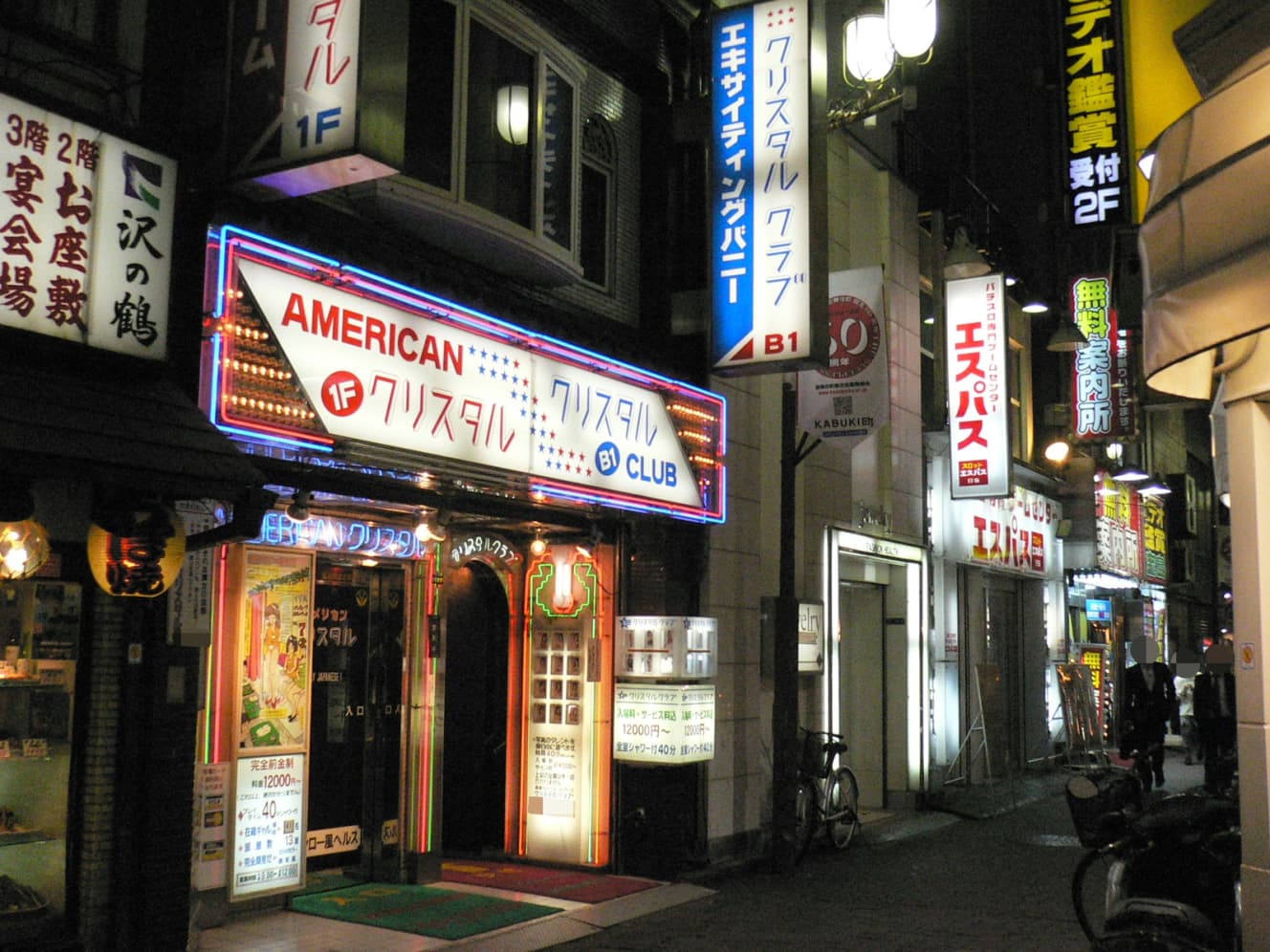
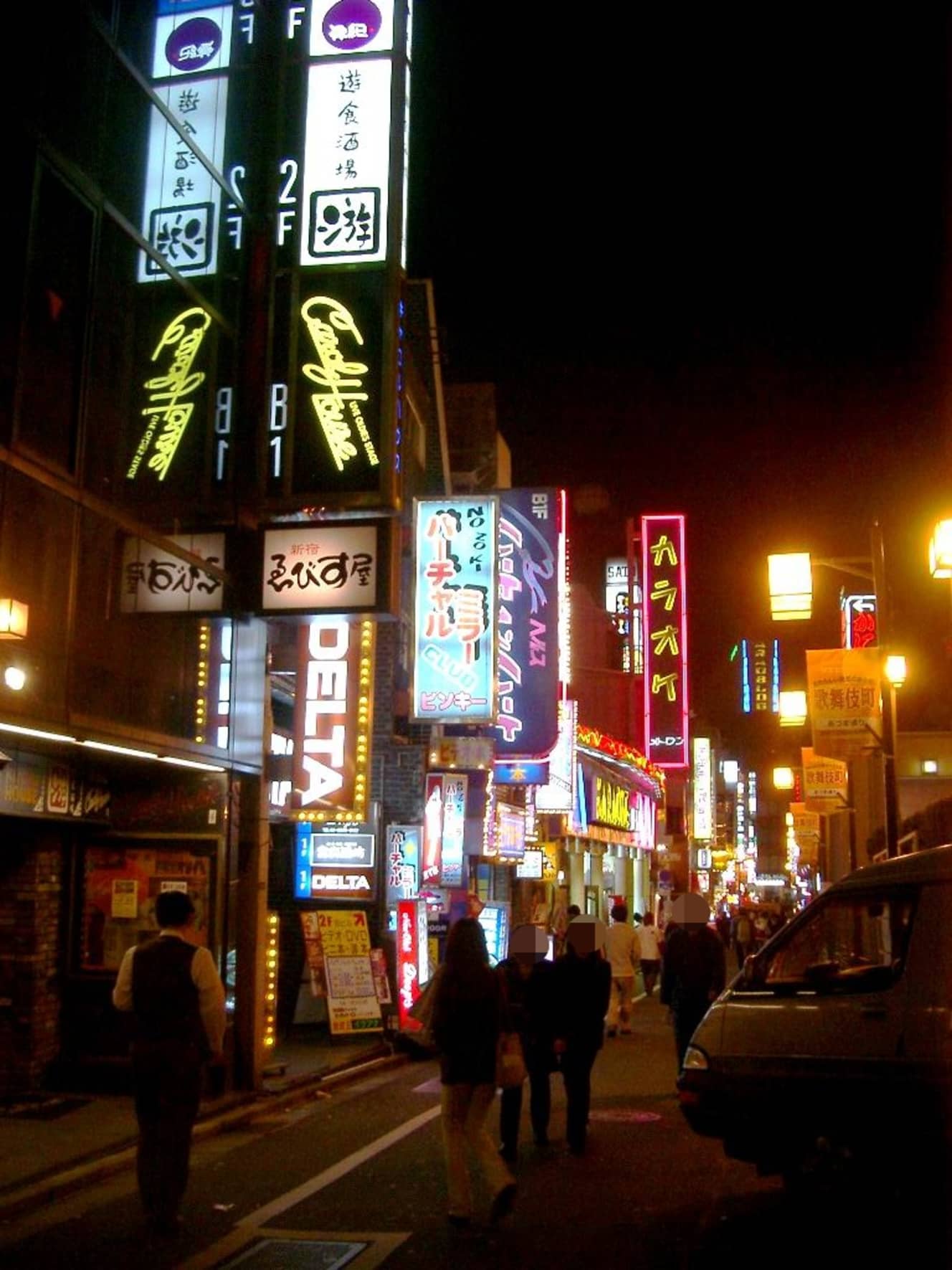
For existing health establishments, the prohibition on new competitors was actually advantageous, as it reduced direct competition. Popular stores in Kabukicho at the time were always fully booked, often with lines of customers.
The popularity of storefront health establishments remains strong today. Factors include the reassurance of a permanent location, recognition by regular customers, and a comfortable atmosphere. Unlike newly opened delivery health services that quickly disappear, long-established stores benefit from their enduring reputation and a loyal customer base that continues to support them.
Rebuilding or complete renovation of stores is prohibited
In Kabukicho, the Shinjuku Ward, struggling to somehow curb the opening of new sex-related businesses, implemented a cunning measure. To regulate the expansion of such establishments, in January 1985, just before the enforcement of the new Adult Entertainment Business Law, they opened a branch library inside the Shinjuku Ward Office. The presence of this branch limited new store openings in Kabukicho 1-chome. Currently, under the Tokyo Metropolitan Ordinance for the Exclusion of Organized Crime Groups enacted in October 2011, the establishment of new organized crime offices within a 200-meter radius of libraries and similar facilities is also prohibited.
Meanwhile, in Kyoto’s Kiyamachi area, new stores opened in the gaps left by closed nearby elementary schools, leading to an increase in sex-related businesses. The city responded by developing urban parks, but once a store was opened, vested rights were recognized, so it was impossible to eliminate these businesses. Today, more than ten store-type health establishments continue operating. A similar situation occurred in Nakasu, Fukuoka, causing issues there as well.
Such spatial regulations were also applied to non-sex-related businesses like cabarets, dance halls, and game centers. A restricted area was designated within 100 meters of residential areas and specific facilities such as schools, and permits were generally not granted in these zones. Prefectures could additionally impose regulations or exceptions based on local circumstances.
Furthermore, this major revision imposed strict regulations on construction work for store-type sex establishments, including interior and exterior renovations. As a result, sex-related buildings could no longer be newly built or significantly expanded, and existing structures had to be used through remodeling.
Rebuilding or complete renovation would result in the loss of vested rights. If a major renewal caused the business to lose continuity with its previous operations, it would be considered a new illegal establishment.
The vested rights system itself is merely an exceptional favor granted by the state, allowing continued operation in areas where business is generally prohibited.
Any construction work, whether on the exterior or interior of the building, that aims to extend the life of the establishment is considered beyond the scope of vested rights and is not permitted. Some argue that this is equivalent to saying, “Let it naturally decay and disappear.”
However, many call for the allowance of rebuilding due to the safety risks posed by deteriorating structures. This issue becomes significant whenever there is a fire in a soapland or when a strip theater closes.
The reason the revision of the Adult Entertainment Business Law on this point has not even been raised is likely because the administration is reluctant to deal with inherently questionable sex-related businesses. Consequently, store-type sex establishments continue to decline.
Additionally, business operations are restricted until midnight, and the entry of customers under 18, the employment of employees under 18, and the provision of alcohol or tobacco to those under 20 are prohibited. These measures were organized from pre-existing prohibitions and clearly defined in the law.
Non-intercourse services: the rise of health establishments
When the revised Adult Entertainment Business Law (New Fūeihō) came into effect in February 1985, a wave of crackdowns began. The police, who had been struggling with how to deal with new types of sex-related businesses, found it much easier to act under the new law.
Pantyless shabu-shabu, pantyless okonomiyaki, pantyless izakaya, and similar establishments, where services had diversified and become excessively extreme, were newly brought under regulation. Because the New Fūeihō introduced a ban on combined operations, these businesses that mixed dining with sex-related services disappeared entirely. Some pantyless cafés with private rooms converted into full-fledged fashion health establishments by installing simple showers, while others placed one-way mirrors on the women’s waiting room walls so customers could choose, turning into health clubs.
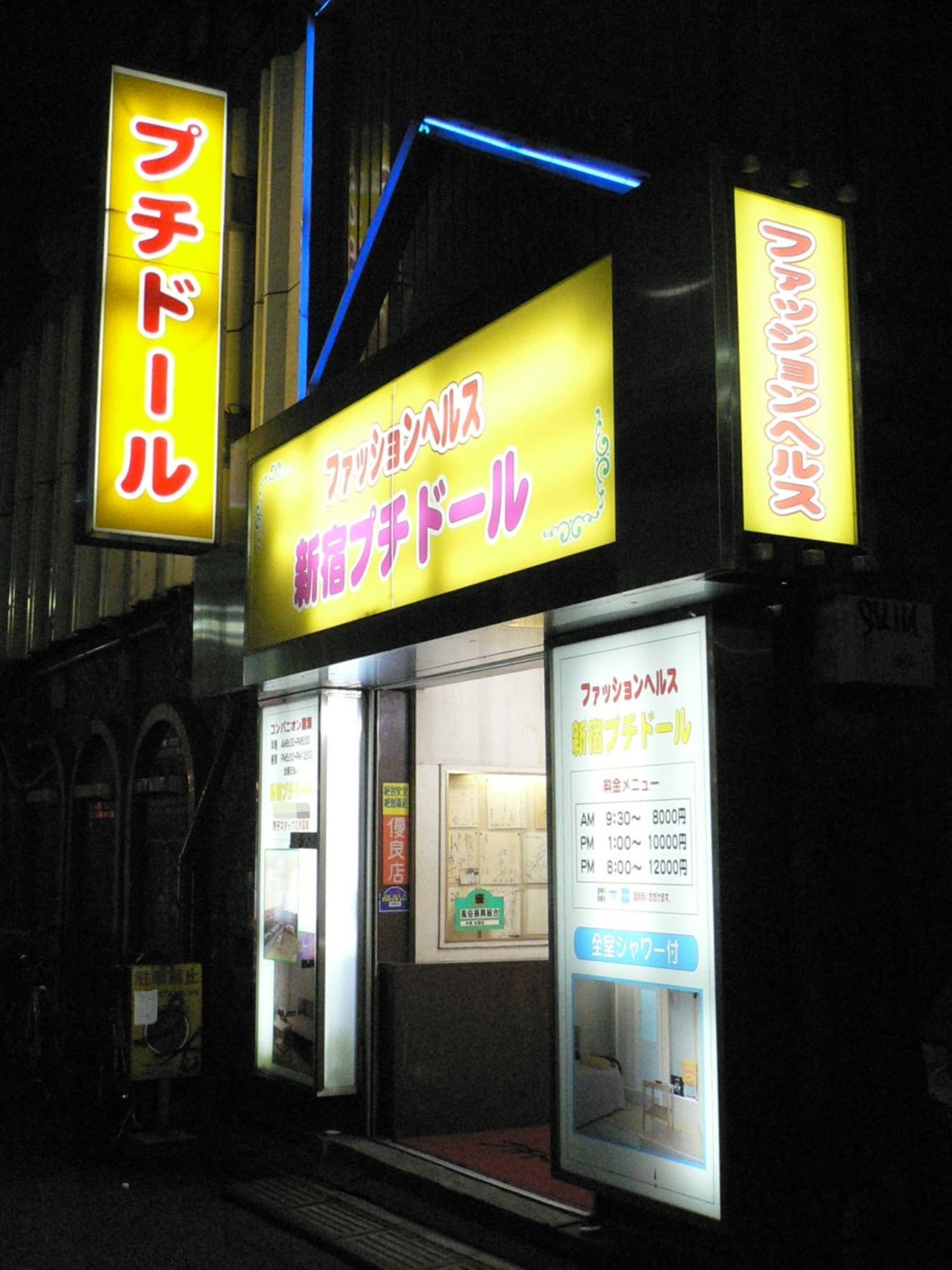
It wasn’t just pantyless cafés. From August 1984, when the New Fūeihō was promulgated, until its enforcement in February 1985, many new-style sex establishments shifted to the more profitable fashion health format. Defined under the law along with erotic massage parlors and image clubs as services involving physical contact with the customer according to sexual curiosity, fashion health appeared to have been officially recognized. Operators therefore focused solely on it, and the number of such shops in Tokyo more than doubled.
Through this, non-intercourse-based, ejaculation-oriented sex services became firmly established. Storefront health parlors took root in the sex industry and entered their heyday. Though they were given various names such as private room health and fashion massage, the term fashion health was even written into the text of the New Fūeihō, making it a title of distinguished standing.
Soaplands survived the enforcement of the New Fūeihō, but the impact was significant. In Tokyo’s Yoshiwara district, for example, the number of daily customers was reportedly cut in half after the law took effect.
What put the brakes on customer traffic was the regulation that business must close by midnight. Losing the lucrative late-night hours caused revenues at Kabukichō’s soaplands, private-room massage parlors, and pink salons to fall by half. Ordinary clubs and snack bars were affected in the same way, and even the surrounding restaurants faced serious difficulties. Street touting for sex businesses also became subject to crackdowns and disappeared overnight. Within a year of the law’s enforcement, more than 100 establishments in Tokyo alone had gone out of business—a severe blow to the industry.
However, if nothing else, sex establishments are resourceful. “If the law bans us from operating between midnight and sunrise, then we’ll open from sunrise,” some reasoned, and businesses targeting salarymen before work began offering “early morning service.” Prices were steeply discounted—half price in the early morning, though the allotted time was also cut in half. Meanwhile, many other shops outwardly complied with the close by midnight rule but quietly continued operating deep into the night.
The Birth of Media-Type Sex Businesses such as Teleclubs
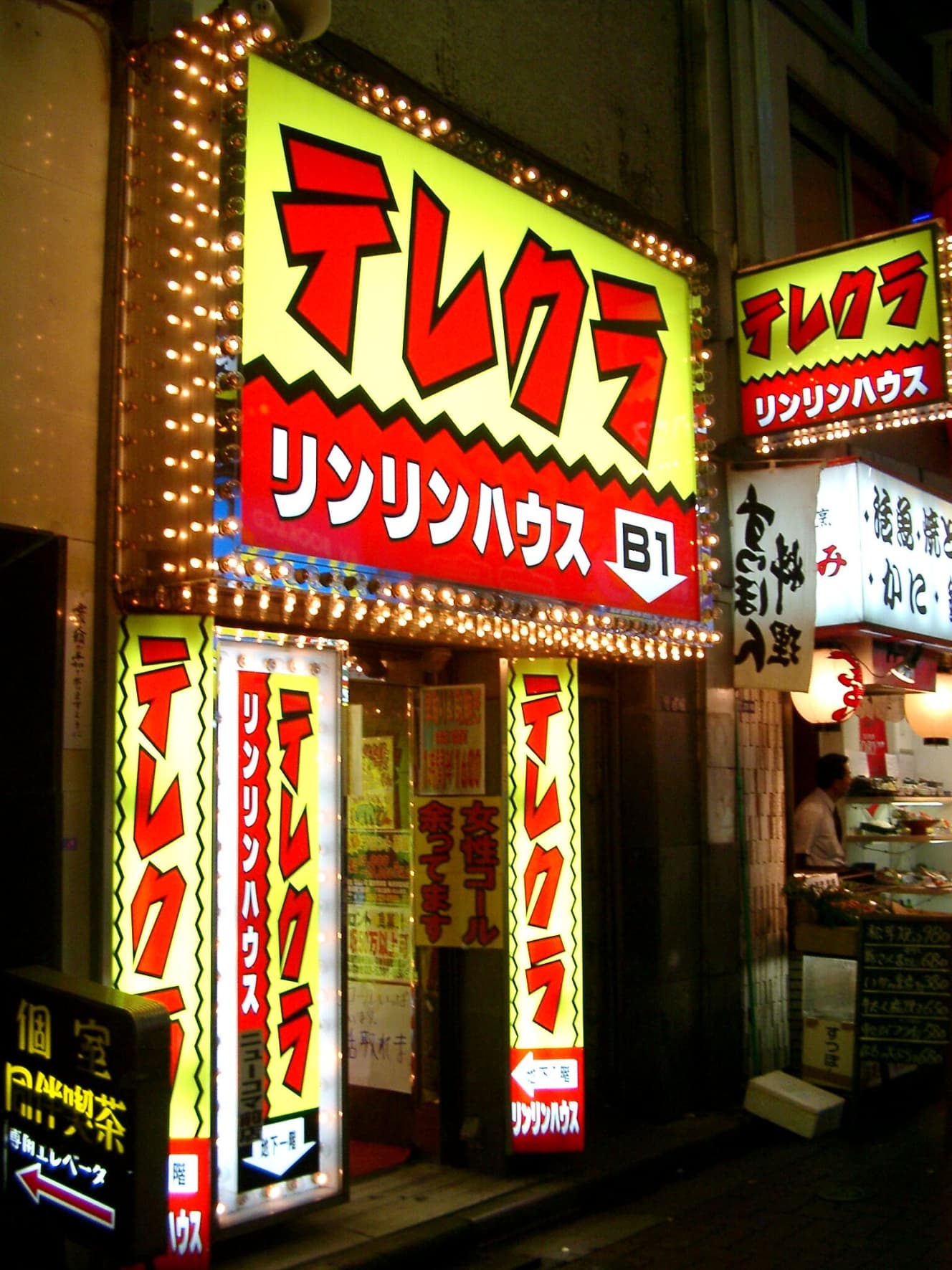
Operating outside the framework of the Entertainment Business Control Law, a completely new type of business emerged: the telephone club (commonly called telekura). These establishments arranged conversations with women over the phone. Other services soon followed, such as Dial Q2—a type of telephone-based information service in which the phone company collected both the call charge and an additional information fee on behalf of the provider—and two-shot dial, a two-way call service using public or international phone lines where men paid but women could join for free. These telephone-based platforms offered men and women opportunities to meet, creating a new media-driven form of sex-related business that boomed as a novel system of commercialized encounters.
As long as these shops operated from physical premises, spatial regulations could still be applied. However, once non-storefront services—such as message-dial matchmaking—became popular, and pagers and mobile phones spread, monitoring became increasingly difficult. The sex industry eagerly embraced these new, convenient media and adapted their business models accordingly. To cope with these developments, the Entertainment Business Control Law underwent further amendments in the years that followed.
References
Teihon Fūzoku Eigyō Torishimari (Definitive Guide to Regulation of Entertainment Businesses), Yoshikazu Nagai, Kawade Shobō Shinsha, 2015
Sengo Seifūzoku Taikei (Postwar Sex Industry Compendium), Keiichi Hirooka, Asahi Shuppansha, 2000
Shōwa Heisei Nippon Seifūzoku-shi (History of Japanese Sex Industry: Shōwa & Heisei Eras), Mitsuru Shirakawa, Tōbōsha, 2007
Fūzoku to Iyai (The Illness of the Sex Industry), Shinya Yamamoto, Gentōsha, 2016
Fūzoku Shinka-ron (Theory of Sex Industry Evolution), Fumio Iwanaga, Heibonsha, 2009
Seifūzoku-shi Nenpyō: Shōwa [Sengo] Hen (Chronology of Sex Industry: Postwar Shōwa Edition), Kōshi Shimokawa (ed.), Kawade Shobō Shinsha, 2007
“Karada o Uru Kanojo-tachi” no Jijō (The Circumstances of “Women Who Sell Their Bodies”), Shingo Sakazume, Chikuma Shobō, 2018
Seifūzoku no Ibutsu na Genba (The Distorted Reality of the Sex Industry), Shingo Sakazume, Chikuma Shobō, 2016
In addition, numerous other books and online sources were consulted.
Interview, text, and photos: Akira Ikoma