1984 Overhaul of Japan’s Entertainment Law — Targeting New Adult Entertainment from No-Panties Cafés to Lucky Holes
History of the Amendment of the Entertainment Establishments Control Law


In a series reflecting on the history of amendments to Japan’s Entertainment Business Control Law (Fūeigō), sex industry journalist Akira Ikoma reviews the law’s 38 revisions since its establishment in 1948. The second installment focuses on the major 1984 revision, which had a lasting impact on the regulation of the sex industry. It was at this time that the so-called “Fū-E Law” became widely known to the public.
Purpose: Cracking Down on the Escalation and Expansion of New Fuzoku
A major turning point for the postwar sex industry came with the 1984 overhaul of the Entertainment Business Control Law.
The revision was so fundamental that the law was renamed the “Act on Regulation and Proper Management of Adult Entertainment Businesses,” and its shorthand changed from the old “Fūeigō” to “Shin-Fūeigō” or “Fūtekihō.” The old law was subdivided to allow for more detailed enforcement, aiming to regulate the previously unchecked sex industry and protect and nurture youth.
The revision was driven by the rapid growth of sex-related businesses during the economic boom. By the early 1980s, new types of sex-related services had expanded dramatically, reaching their peak.
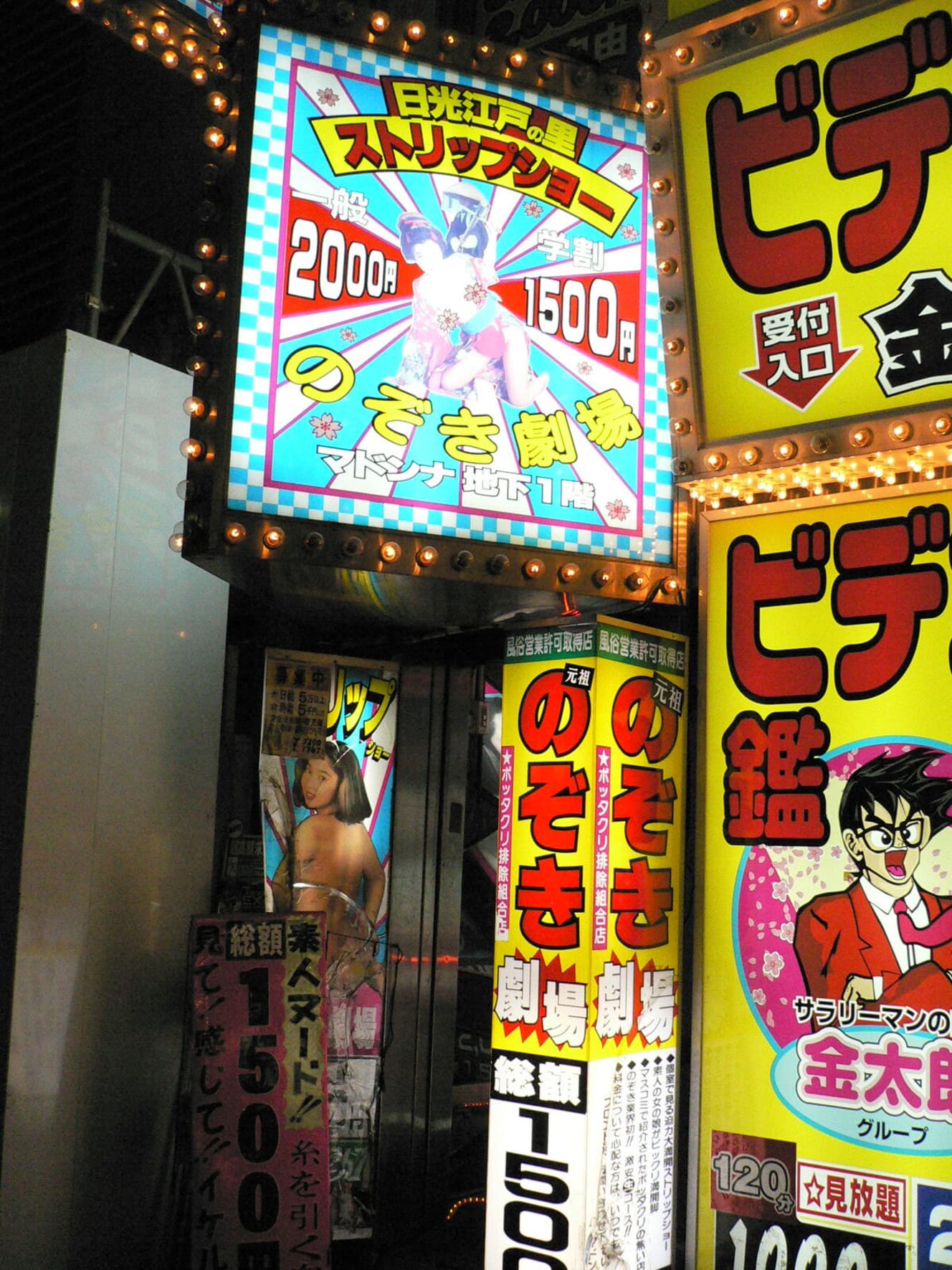
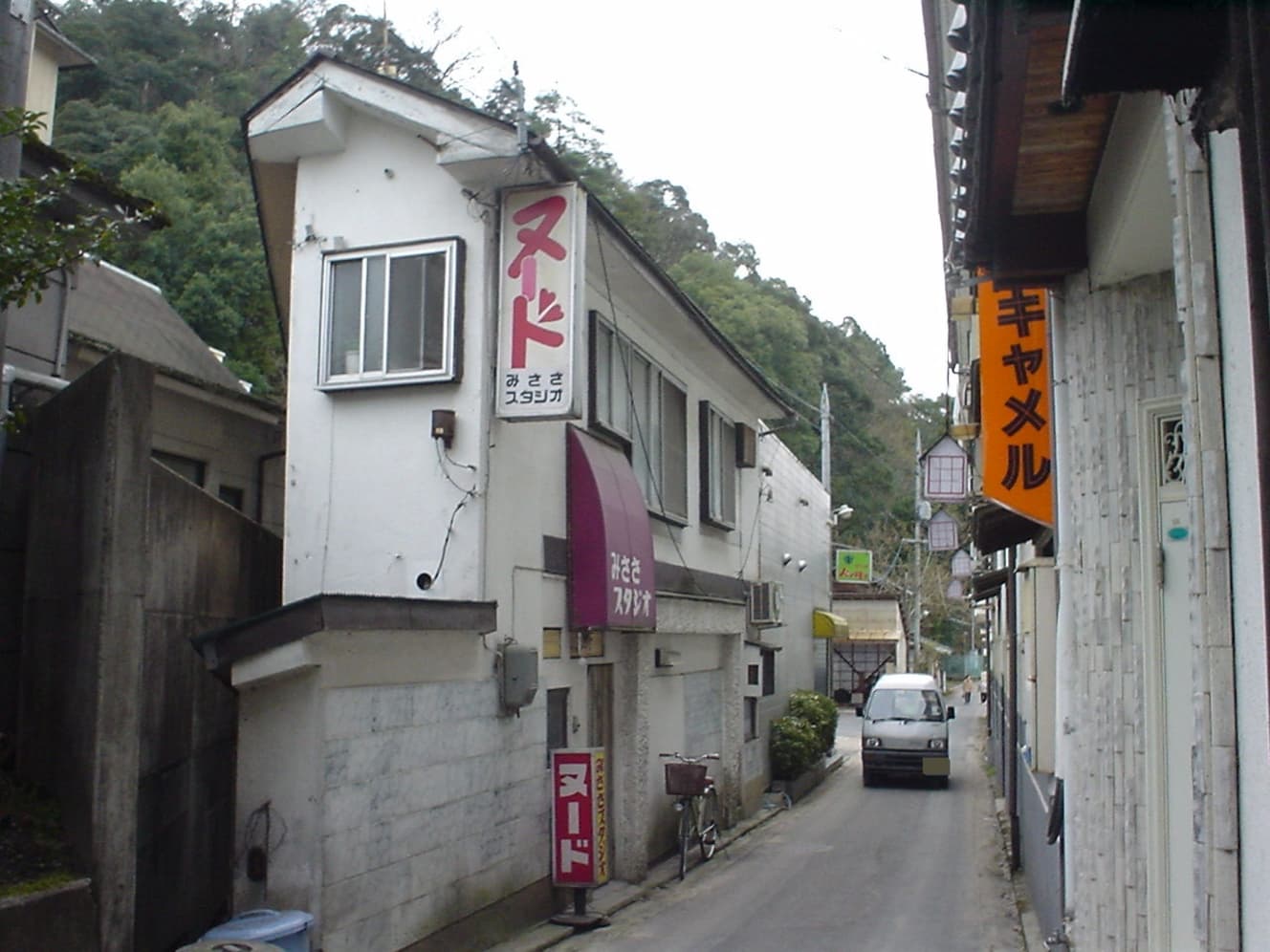
These businesses were mainly referred to as “New Fuzoku.” Examples included no-panties cafes, peep rooms, private massage rooms, and fashion health services. There were also private nude services where women posed or were photographed, sometimes providing health services, as well as lucky holes, where male customers inserted their genitals through holes in thin plywood walls while women provided manual services on the other side.
In addition to these low-cost non-penetrative services, other introduction-type fuzoku businesses also emerged, such as Mantle, Hoteltor, date cafes (where customers could select and go out with women), and mistress banks for arranging encounters.
Sex Industry Town Kabukicho
The rise of these new, more extreme forms of sexual entertainment made the existing Entertainment Business Control Law insufficient to regulate them, prompting the major revision.
At the time, Shinjuku’s Kabukicho, a major hub of the sex industry, was widely covered in the media as a sex industry town and gained a notorious reputation. The number of women working in Kabukicho’s sex-related businesses reached between 3,000 and 5,000, and those providing services without actual sexual intercourse—such as peep rooms—could earn an average monthly income of around one million yen.
Concerned about this situation, local residents began advocating for stricter regulations on the sex industry. Similar movements also emerged across Japan.
In the early 1980s, juvenile delinquency was at a postwar high, and it became necessary to prevent minors from being exposed to crime or being drawn into delinquent behavior in entertainment districts.
The unchecked growth of industries openly selling sexual services was seen not only as harming the local environment but also as a major factor contributing to youth delinquency. This led to a push for stronger regulatory measures.
The 1984 revision added a clause specifying the purpose of the law: “To maintain good morals and a clean entertainment environment, and to prevent acts that hinder the healthy development of youth.” The purification of the entertainment environment to ensure the sound upbringing of minors became an even higher priority.
This focus continues to have a significant impact on entertainment districts today. It is well known that the first establishments to be raided are those employing minors, including adult entertainment venues, girls’ bars, and concept cafes.

Sexual entertainment is considered harmful, so it is not officially recognized
A major change in the 1984 revision was the clear distinction between businesses such as cabarets and dance halls, and sexual entertainment services like soaplands and health services. Cabarets, nightclubs, and mahjong parlors were categorized as businesses that “provide citizens with social and recreational opportunities and healthy entertainment,” and thus required official permits.
In contrast, establishments like private bathhouses with sexual services (soaplands) or strip theaters—essentially businesses that sell sex—were deemed “unsuitable for official recognition as legitimate businesses due to the nature of their operations.” These businesses were only required to submit notifications (registration), not obtain permits.
The notification system gives the public the impression that sexual entertainment is somewhat recognized, but in reality, it reflects the stance that “sexual entertainment is inherently questionable and harmful, so it will not be officially endorsed.”
Here, the problem with the Entertainment Business Act becomes apparent. The Act lacks the perspective of “protecting the rights of people working on site.” All it contains are prohibitions meant to push activities to the shadows, and even though the word proper regulation is included in its name, there are no standards for actually ensuring proper operations. It only says, “You can’t do this, you can’t do that,” without providing guidance on “what should be done, or how things should be done,” which is the issue.
Sexual entertainment businesses are treated purely as subjects of regulation and monitoring; they are neither protected nor encouraged. The law assumes that “sexual entertainment businesses go against the moral standards shared by most citizens and should not receive public recognition through official permits.” In other words, “these businesses are unhealthy and immoral, so they are not allowed,” and “because of their bad public image, they are not permitted.”
For these reasons, in September 2020, during the COVID-19 pandemic, an Osaka delivery health (deriheru) operator sued the government claiming that excluding sexual entertainment businesses from relief payments constituted occupational discrimination and a violation of the Constitution. However, the court ruled against them, stating that “it is not appropriate to use public funds to support sexual entertainment businesses.”
Regarding the Supreme Court decision in June 2025, the plaintiff’s lead attorney criticized the court for “ignoring the importance of COVID relief funds.” Similarly, the editorial board of the Shinano Mainichi Shimbun in Nagano argued that “there is no reason to exclude sexual entertainment operators legally operating under the Entertainment Business Control Law.” From the first trial onward, objections were raised that this represented “overt discrimination against the sex industry,” highlighting the long-standing and persistent occupational bias against sexual entertainment.
Game centers, adult shops, and love hotels became subjects of regulation
Let’s return to the 1984 revision of the Entertainment Business Act. At that time, rapidly growing game centers were labeled as breeding grounds for delinquency and, along with peep rooms and adult shops, newly became subject to regulation. In addition to existing motels, similar motels (lodgings or hotels not legally classified as motels but mainly intended for guests accompanied by a partner), love hotels, and rental rooms were also included under regulation. This was because the existing regulations for motels were insufficient to supervise small-scale rental rooms and love hotels.
To clearly distinguish love hotels and similar motels from regular inns and city hotels, a standard was set: if a facility had a dining hall and lobby of sufficient size for its capacity, it would be considered a city hotel. However, many love hotel operators installed dining halls and lobbies to avoid being classified under the Entertainment Business Act, claiming, “We are not a love hotel or motel.” By operating as lodging facilities under the Hotel Business Act, they could avoid being treated as love hotels and escape inspections.
Furthermore, to enable authorities to keep up with the constantly evolving sex industry, a provision was added stating that “if a new form related to sex services emerges, it can be regulated by government ordinance.”
Initially, this applied only to private-room massage services. Other services such as mantoru, hoteru, and dating clubs were not included because they were primarily intended for prostitution and were not considered normal businesses to be regulated under the law.
Additionally, strip theaters were prohibited from using exaggerated advertisements or standing signboards. Around this time, residents of Kabukicho referred to the Entertainment Business Act as the “Fū-E Law,” and some magazines criticized the revision as a “deterioration” or “foolish act.”
In the latter part of this series, it explains how these regulations changed the sex industry and details the regulations that ultimately shaped the future of store-based sex businesses.
〔References〕
Teihon Fūzoku Eigyō Torishimari (Definitive Edition: Regulation of Entertainment Businesses), Yoshikazu Nagai, Kawade Shobo Shinsha, 2015
Sengo Seifūzoku Taikei (Postwar Sex Industry Compendium), Keiichi Hirooka, Asahi Shuppansha, 2000
Shōwa Heisei Nippon Seifūzoku-shi (Sex Industry History of Japan: Shōwa and Heisei Eras), Mitsuru Shirakawa, Tōbōsha, 2007
Fūzoku to Iyai (The Disease Called Entertainment Industry), Shinya Yamamoto, Gento-sha, 2016
Fūzoku Shinka-ron (Theory of the Evolution of the Sex Industry), Fumio Iwanaga, Heibonsha, 2009
Seifūzoku-shi Nenpyō: Shōwa [Sengo] Hen (Chronology of the Sex Industry: Shōwa [Postwar] Edition), Kōshi Shimokawa (ed.), Kawade Shobo Shinsha, 2007
“Karada o Uru Kanojo-tachi” no Jijō (The Situation of Women Who Sell Their Bodies), Shingo Sakazume, Chikuma Shobo, 2018
Seifūzoku no Ibitsu na Genba (The Distorted Reality of the Sex Industry), Shingo Sakazume, Chikuma Shobo, 2016
Additionally, numerous other books and online sources were consulted.


Interview, text, and photographs: Akira Ikoma