Landfill Cats Face Hunger and Parasites—Documenting Their Protection Efforts


There are many cats at the garbage disposal site
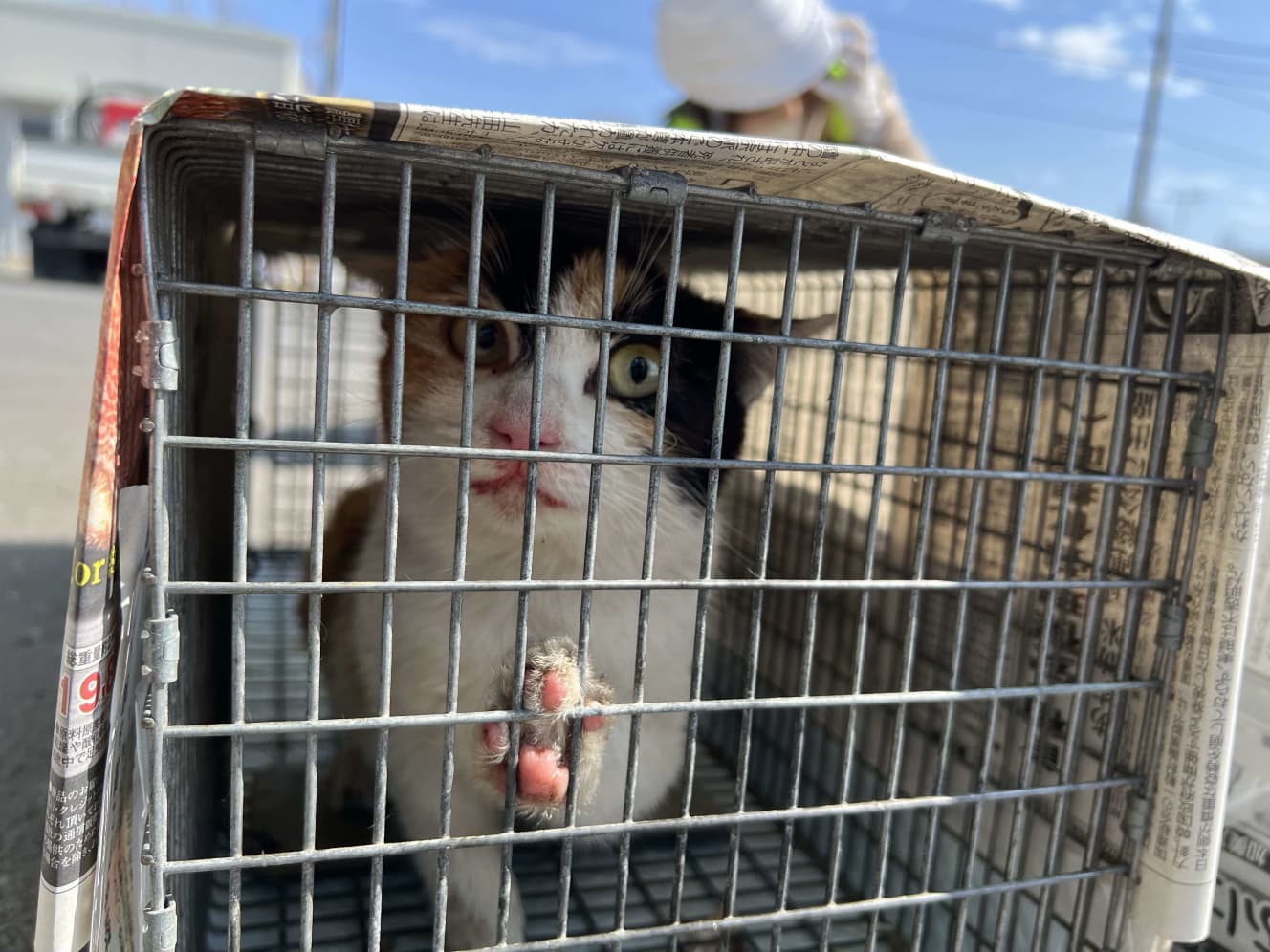
“In the first rescue activity, before we even set up the traps with food, cats who couldn’t wait for the bait had already gathered around. Most of the rescued females were pregnant, and due to inbreeding, their fur colors were usually similar—orange tabby, orange-and-white, or calico. Every cat was thin, clearly malnourished. The poor sanitary conditions meant some carried infections or even rare parasites that surprised veterinarians,” said Naomi Furukawa of the general incorporated association Tokyo Bonds Between Humans and Animals Welfare Association.
In Tokyo, there are landfill sites that handle household waste from the 23 wards as well as industrial waste from small and medium businesses in the city. Covering 199 hectares—about 42 Tokyo Domes—the site receives incineration ash and other waste, serving as a crucial facility supporting residents’ daily lives.
Many cats had been left behind at the disposal site, living in extremely poor conditions due to the site’s unique nature.
Furukawa and others were asked for cooperation by an NPO in Kōtō Ward that had learned about the cats, and, together with other volunteer groups, began rescuing cats at the facility from March this year. With the cooperation of Tokyo’s Waste Landfill Management Office, the reporters were allowed to observe the actual rescue activities on-site.
Cat rescue cannot be done while the facility is operational. This time, permission was granted for only two hours on a Sunday when trucks were not entering or leaving. The activity area was also very limited. Since the facility is not intended for outsiders, the management office likely had safety considerations in mind, but for the rescuers, these restrictions felt quite significant.
On the day of the rescue, six people, including Furukawa and volunteers from other groups, headed to the permitted area. It resembled a simple office next to a vast construction site rather than a garbage disposal facility.
The area was near the entrance, at the edge of a piled-up landfill. Around it, a bamboo grove had grown wild, rustling in the wind. The area next to the office and the bamboo grove was the only zone where rescue activities were allowed.

So far, 33 cats have been rescued
With practiced hands, the volunteer staff placed food inside the cat traps. The traps are cages made of thin steel, measuring 30 cm × 30 cm × 70 cm, and the entrance closes when the weight of a cat entering for the food triggers it. Inside, the food includes shredded canned tuna, cat food, and even Famichiki (a type of fried chicken). “We choose strong-smelling items to lure the cats,” said Furukawa.
Five to six traps were set up in the bamboo grove and next to the office. The bamboo grove is dense, barely allowing one person to enter, but its leaves provide shade and concealment for the cats. The traps are equipped with sensors and cameras to notify the staff when a cat enters. After setting them, all that remains is to wait at a distance to avoid alarming the cats.
While waiting for cats to enter the traps, Furukawa shared her experiences from previous rescues.
“Since March, we’ve conducted 13 rescue operations, all in this area. We’ve already rescued 33 cats here. We know there are still cats remaining, but they are likely very cautious. I’ve also heard there are other cats elsewhere. If we could set the traps in the morning and collect them in the evening, the chances of success would probably be higher”
The two-hour limit remains a strict constraint. Although the management office generously allowed an additional 30 minutes after cats were spotted, no rescues were made that day.

Furukawa’s organization has its own shelter. Cats that are rescued first receive treatment at an animal hospital before arriving there. Cats are vulnerable to infectious diseases, so the shelter takes extreme care with hygiene—slippers are changed for each room, cages are kept clean, and cat walks line the walls. When visited, it was just after feeding time, so the cats were freely moving around inside. The air-conditioned space was comfortable even for humans. In the shelter, Furukawa shared more about the cats’ situation.
“Winter brings cold sea winds, and summer has little shade, making it an extremely harsh environment. Some staff had created shaded areas or provided food and water, but the cats likely had to eat snakes, frogs, and worms. They also carried far more parasites than cats rescued elsewhere: tapeworms, hookworms, Spirometra erinaceieuropaei, and threadworms.
Spirometra is contracted from eating frogs, and threadworms from eating worms—so their diet reveals a lot. Some carried rare parasites that even veterinarians found astonishing. Normally, rescued cats are quarantined for two weeks for infections and deworming, but those rescued from the disposal site require a longer, three-week quarantine.”
The cats were constantly exposed to starvation at the disposal site. Even after rescue, some exhibited coprophagia (eating feces). One cat would not only eat its own excrement but also wait for the right moment to eat the feces of other cats in the foster home. The extreme hunger had left a deep mark on their bodies.

Repeated breeding and culling occurred within a limited area
“Almost all of the rescued females were pregnant. Moreover, they were young and small. However, there were hardly any kittens among those rescued, likely because the weak individuals could not survive the harsh environment and either perished or became food for other cats in the intense struggle for survival. The fact that many cats had similar coat colors is probably the result of repeated breeding and culling within a limited area.
The cats in another area guided by the management office formed a group with different coat colors. It seems that breeding was repeated in each distinct area.”
This suggests that harsh conditions existed in various parts of the vast disposal site. It’s likely that this had continued for multiple generations.
“According to veterinarians, the oldest cat among those rescued is estimated to be six to seven years old. We do not know exactly when this situation began at the disposal site, but at the very least, for six to seven years, breeding continued in this deteriorated environment, with cats dying repeatedly.”
Surprisingly, even the staff cannot pinpoint when these conditions began.
One small consolation is that the cats rescued from the disposal site are now living safely and healthily. Because they had little contact with humans and were not bullied, they have adapted easily to people; once they arrive at the shelter, they behave like any other cat. Of the 33 cats rescued, 12 had already been adopted as of July 27, living happily. “Among those rescued, some kittens entered the traps together as siblings. They were adopted while still at the hospital,” Furukawa shared, a truly heartwarming story.
Furukawa emphasizes,
“Under the Animal Welfare Act, abuse is not only physical violence toward animals; neglecting weakened animals while knowing their condition also counts as abuse.”
Currently, the disposal site management office is showing cooperation. Access to several areas where rescue activities were previously impossible has now been approved, allowing for further rescues—a major step forward.
 The traps: the left unit has a sensor, the right has a camera, both alerting when a cat enters.
 To lure the cats, even Famichiki (a fried chicken snack) is used as bait.
 A black cat, always near the disposal site gate, was familiar with the staff and friendly toward them.
 At the shelter, besides cats rescued from the garbage disposal site, cats affected by last year’s earthquake and flooding in Noto are also being cared for.
 Miro-chan: Cats rescued from the disposal site are given names related to flowers, musicians, or painters, allowing them to be distinguished from other cats.
 Surveying areas where rescue activities were previously impossible revealed cats still present, appearing emaciated and reflecting the harshness of their living conditions.
 In previously inaccessible areas, bowls for food and water were placed under storage materials.
PHOTO: Takero Shigeto (2nd to 9th photos)