The Bittersweet Everyday Life of Monta, the Grand Prix-Winning Cat


Half cat, half carved wooden bear!? Montā, with his irresistibly quirky appearance, even won the grand prize in the overall category of the Oshi Neko Grand Prix. Despite his ultra-laid-back nature—every movement at one-third the speed of other cats—he was a tough cat who had battled various illnesses since kittenhood.
Montā passed away on June 11, 2024, at the age of four years and ten months. Just over a year later, on the first anniversary of his passing this June, a heartwarming book about Montā and his owner’s daily life, Montā no Ita Nichijō (published by Tatsumi Publishing), was released.
“Has it already been a year? It went by so fast. This past year was very sad, but sometimes thinking of Montā brings warm feelings… I also feel some relief knowing he no longer suffers. At the same time, there’s regret thinking about what I could have done differently. Each day was filled with these mixed emotions,” said Montā’s owner.
Can I truly take care of him?
Montā was a rare dwarf cat (microfelinism), officially diagnosed with congenital hypothyroidism, a condition in which the body cannot produce hormones that stimulate growth and regulate metabolism.
His owner first met Montā at a rescue cat adoption event. Small and noticeably less energetic than other cats, it was clear he had health issues. Taking him in required serious resolve, yet the owner couldn’t forget Montā’s unique face, nicknamed “Gizmo-chan,” and decided to adopt him.
“He looked just like Gizmo from the movie Gremlins. He had a strange, almost un-catlike charm, and I fell for him instantly. That said, I spent about an hour hesitating. Even though I was smitten, I couldn’t immediately say ‘Let’s take him home!’ I walked around outside, trying to calm myself and think: Can I really take care of him? Even after reflecting, my feelings didn’t change. Though in truth, not adopting him wasn’t an option—it was just time to prepare myself mentally.”
What finally convinced the owner?
“No matter who adopted him, his illness wouldn’t disappear. I’d never owned a cat before and felt anxious; naturally, someone more experienced might be better. But would an experienced person necessarily adopt Montā? Not always. So I thought it was better for someone with strong commitment to take him in.
Luckily, I lived in the nature-rich area of Itoshima, Fukuoka. The good environment, which could positively affect Montā’s health, also strengthened my decision.”
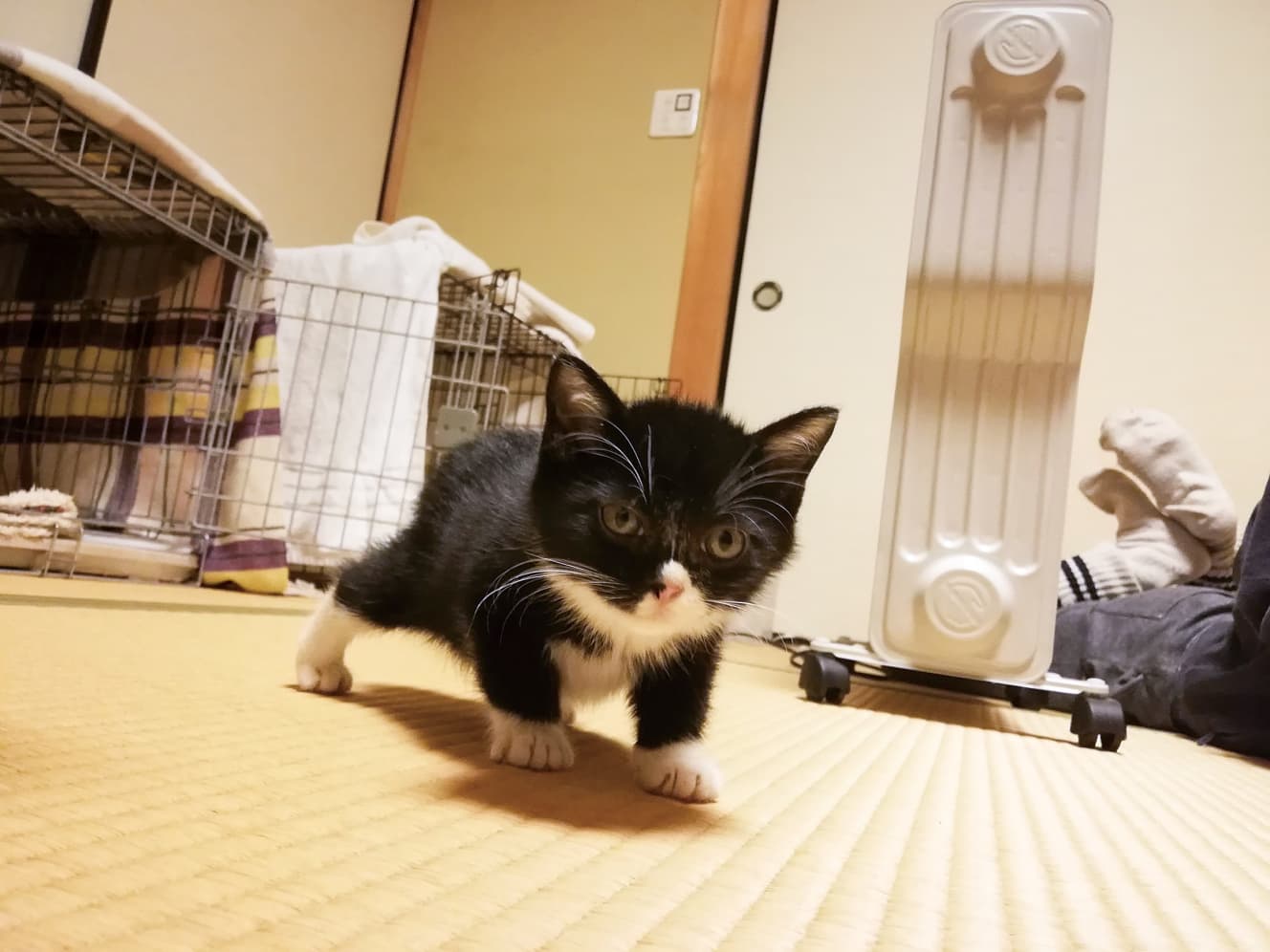
Montā went on to develop one illness after another
However, what followed was far more challenging than imagined.
“At first, we didn’t even know what illness Montā had. Naturally, I compared him to Kiichi, the other kitten I adopted at the same time. Kiichi was more energetic than average, and his appetite and eating habits were completely different.
Initially, I thought it was just a personality difference, but as they grew, the gap in strength became clear. It became difficult to keep them together, so with a heavy heart, I consulted the rescuer and decided to return Kiichi while he was still a kitten. Fortunately, a few days later, I was told he had found a new owner.”
Montā also suffered from various symptoms.
“He tended to be constipated. He had to be hospitalized twice for manual stool removal, and I also performed the procedure at home. It was complicated and stressful.
Feeding was another challenge—figuring out which foods helped him relieve himself and which didn’t required trial and error: mixing foods, soaking them, experimenting in various ways. Until I found the right approach, it was mentally exhausting. Luckily, the internet is full of helpful information nowadays, which was a real advantage.”
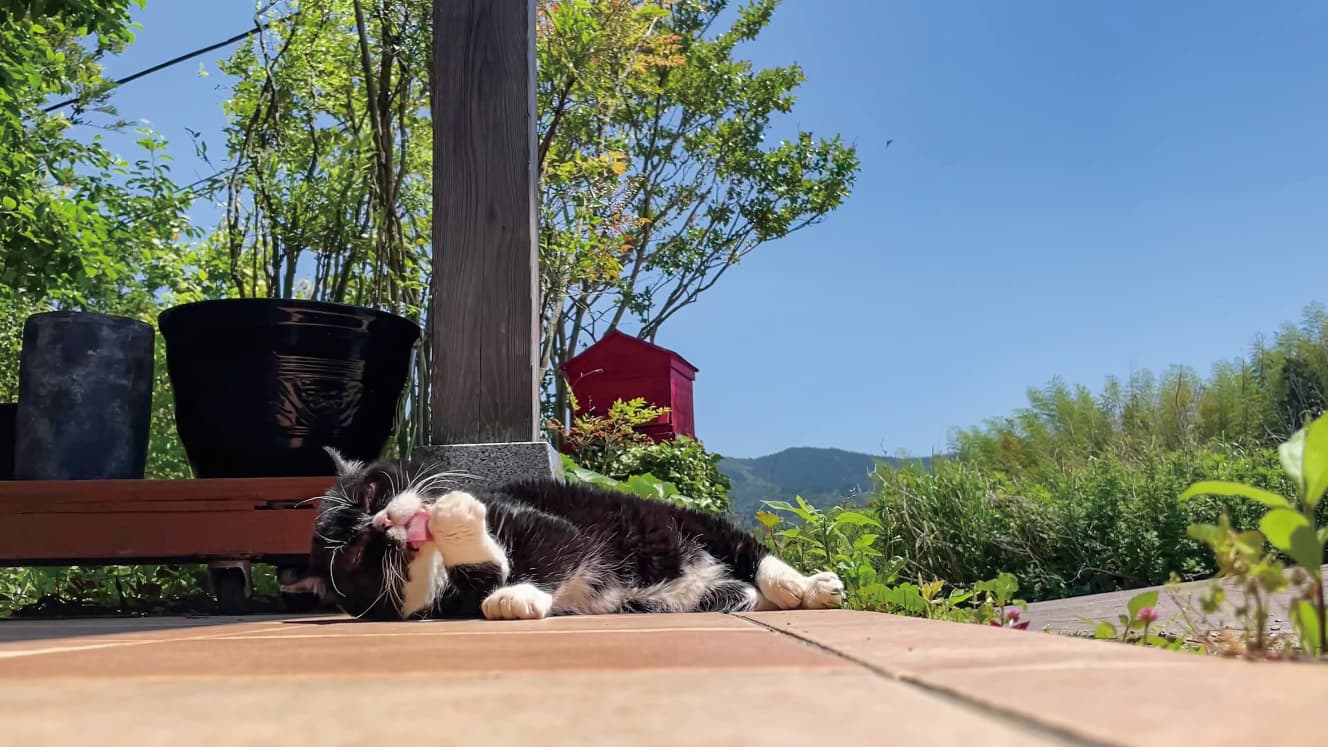
Even so, Montā enjoyed a relaxed life in the natural surroundings of Itoshima, strolling in the garden at his own pace. But after less than two years with his owner, he was diagnosed with a kidney disease.
“We had been told his kidneys might develop issues eventually, so we were prepared. When the time finally came, treatment started, and everything became extremely challenging.
At first, I was overwhelmed with uncertainty about his future. Once the treatment plan was explained, I focused on following it exactly. Kidney flushes were particularly difficult, but I stayed positive and dedicated myself to his care.”

Montā eventually rose to become the tourism ambassador of Itoshima
During that time, Montā’s fans became a source of support. By then, he had already become a hugely popular cat with over 200,000 YouTube subscribers.
“A friend suggested uploading Montā’s videos to YouTube. At first, hardly anyone watched them, but one day I posted a video on Twitter (now X), it went viral, and Montā’s subscriber count skyrocketed. I was amazed at his popularity—it felt surreal (laughs).
As Montā’s health fluctuated, the encouraging comments we received on social media were a real source of strength. I could only have experienced that because I was caring for Montā. Through him, I felt the kindness and love of people, and I’m truly grateful for that.”
Since appearing on social media, Montā became a regular winner in the “Oshi Neko Grand Prix.” He placed 4th in 2021, was the runner-up in 2022, and in the same year was appointed tourism ambassador of Itoshima City. Finally, in 2023, he won the grand prize, the pinnacle for a favorite cat.
“Most comments said things like cute or so soothing, and sometimes even precious. People appreciated not only Montā’s cuteness but also the bond between him and me. That relationship has always been my most cherished, so I was happy to see that conveyed to everyone.
Montā’s most popular video shows him jumping onto and clinging to a cedar tree. Normally, he moved very slowly and didn’t run much, so people loved that contrast (laughs).”
 He is probably now relaxing peacefully in heaven.
“I want to make this little one’s entire life the best it could possibly be.”
On June 11 of this year, it had been exactly one year since Monta passed away. On the anniversary of his death, flowers and various gifts sent by fans were offered at his altar, and his owner quietly spoke to him with hands pressed together in prayer.
“At that time, what came to mind were the moments when he would energetically walk around the garden every day, lie down purring, or nibble on the grass (I described him as closing his eyes in bliss while chewing the grass in the garden)—all the times when he was feeling well.
That same June, we also went to see the hydrangeas together. I uploaded that video to YouTube, and I remembered thinking, ‘He didn’t show any interest in the hydrangeas at all back then (laughs).’ I wasn’t the type to take photos or videos diligently, but since I had to post on social media, I started taking them every day. Looking back now, thanks to that, there are so many records of Monta, so I really feel glad that I used social media.”
Finally, I asked him for advice for people who are thinking of adopting a sick animal like Monta. The answer was surprising…
“You absolutely should get pet insurance! I didn’t have it, and the medical costs ended up being quite substantial. Especially surgery fees—without the money, you can’t even get the treatment done. Money is definitely necessary.
I’ve written about the medical costs in detail in the book, but for me, it was about 120,000 yen per month on average. Some months went over 400,000 yen. But I have absolutely no regrets! From the moment I took him in, my only thought was, ‘I want to make this little one’s life the best it can be.’”
“I wonder if Monta is now purring and relaxing in heaven, just like he did when he was alive,” the owner mused.
“Honestly, I myself am a little less afraid of dying than before. There’s also this hope that maybe I’ll get to meet Monta after I die.
The title of the book, Monta’s Everyday Life, might give a negative impression because it relates to the reality that Monta is no longer here. But that was never my intention. I can’t reveal too much because it would be a spoiler, but if readers go through my final thoughts in the book, I think they will understand the meaning of the title. And if it makes them feel something, that will make me very happy.”
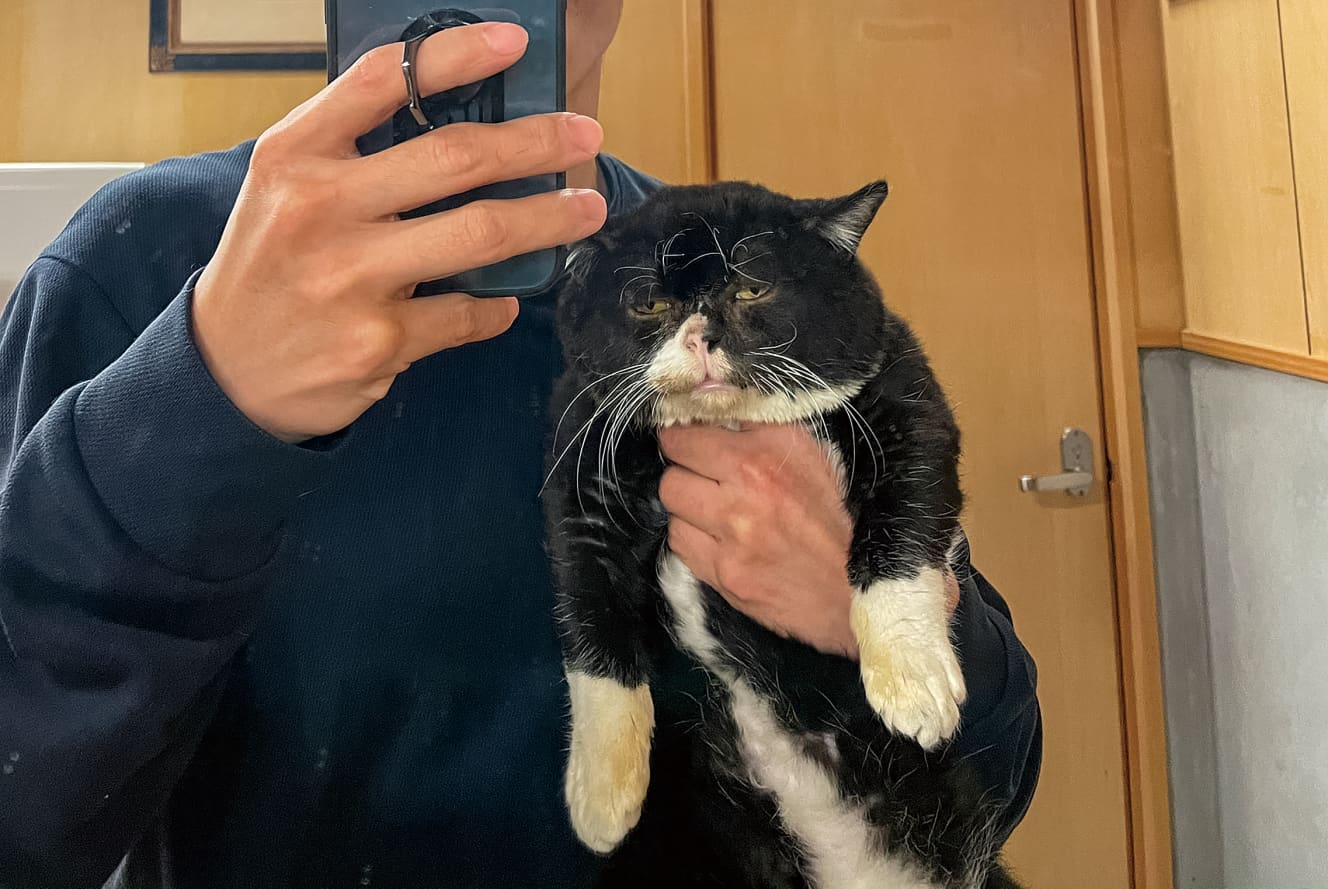


Monta no Ita Nichijō (by Monta’s owner / Tatsumi Publishing)