Deaf Athletes at a Disadvantage? The Unexpected Challenges of the Deaflympics


The reason the Deaflympics does not include gymnastics or high diving is
The “Tokyo 2025 Deaflympics,” starting November 15, is an international sports event organized by the International Committee of Sports for the Deaf (ICSD) for athletes with hearing impairments. The competition features 21 events, including athletics, badminton, beach volleyball, judo, and karate. However, to be honest, many people don’t really understand how competitions for deaf athletes differ from those for hearing athletes.

The Deaflympics is being held in Japan for the first time. With 160 male and 113 female athletes—a total of 273 participants—it’s the largest number ever, and Japan will compete in all 21 events.
Naoki Kurano, Secretary-General of the Deaflympics Organizing Committee, explains that there are three major ways in which deaf athletes are at a disadvantage:
1. Balance issues. Some people with hearing impairments have problems in the inner ear, which affects the semicircular canals responsible for balance, leading to impaired equilibrium. According to the Ministry of Health, Labor and Welfare, about 30% of deaf people have balance impairments. For this reason, events requiring high balance, like gymnastics and high diving, are not included in the Deaflympics.
Kurano, who is also hearing impaired, explains:
“In swimming, turns are affected; a slight imbalance in equilibrium can slow a swimmer by fractions of a second.”
For competitive swimmers, even milliseconds matter. In events like long jump or high jump, one might think hearing is irrelevant, but:
“In the four stages—approach, takeoff, mid-air motion, and landing—balance is critical. Any instability makes it difficult to improve performance. This is also why winter Deaflympics don’t include ski jumping or figure skating.”
2. Communication issues. Sports often rely on sound. In martial arts like judo or wrestling, coaches may give timing cues verbally, which deaf athletes cannot hear. During matches, athletes must rely entirely on visual cues.
“In martial arts, referees signal athletes by tapping their shoulders. Hearing athletes receive advice from coaches during matches, but we have to compete independently.”
In ball sports, deaf athletes face similar challenges.
“In table tennis or badminton, hearing players can judge the spin of the ball or shuttle by sound; we must rely on sight alone. In baseball, without the sound of the bat, batters cannot tell if it’s a line drive or a fly until the ball comes toward them.”
Other examples include track relays, where baton exchanges rely on hearing teammates’ footsteps or voices, and middle- to long-distance running or cycling, where athletes respond to competitors’ breathing or movement cues—all of which deaf athletes cannot perceive.
In soccer, goalkeepers give verbal instructions, which deaf players cannot hear, meaning their tactics differ entirely from those of hearing players.
There are sports in which deaf athletes can compete on equal footing with hearing athletes
“The third issue is the barriers present in the competition environment,” explains Kurano.
In track and field or swimming, the starting sound cannot be heard, so a device called a start lamp, which signals the start with a flash of light, is used.
“About five to six years ago, the competition rules were revised so that even in events for hearing athletes, a start lamp can be used if requested by a deaf competitor. This incorporation of barrier-free measures into sports is a very significant change.”
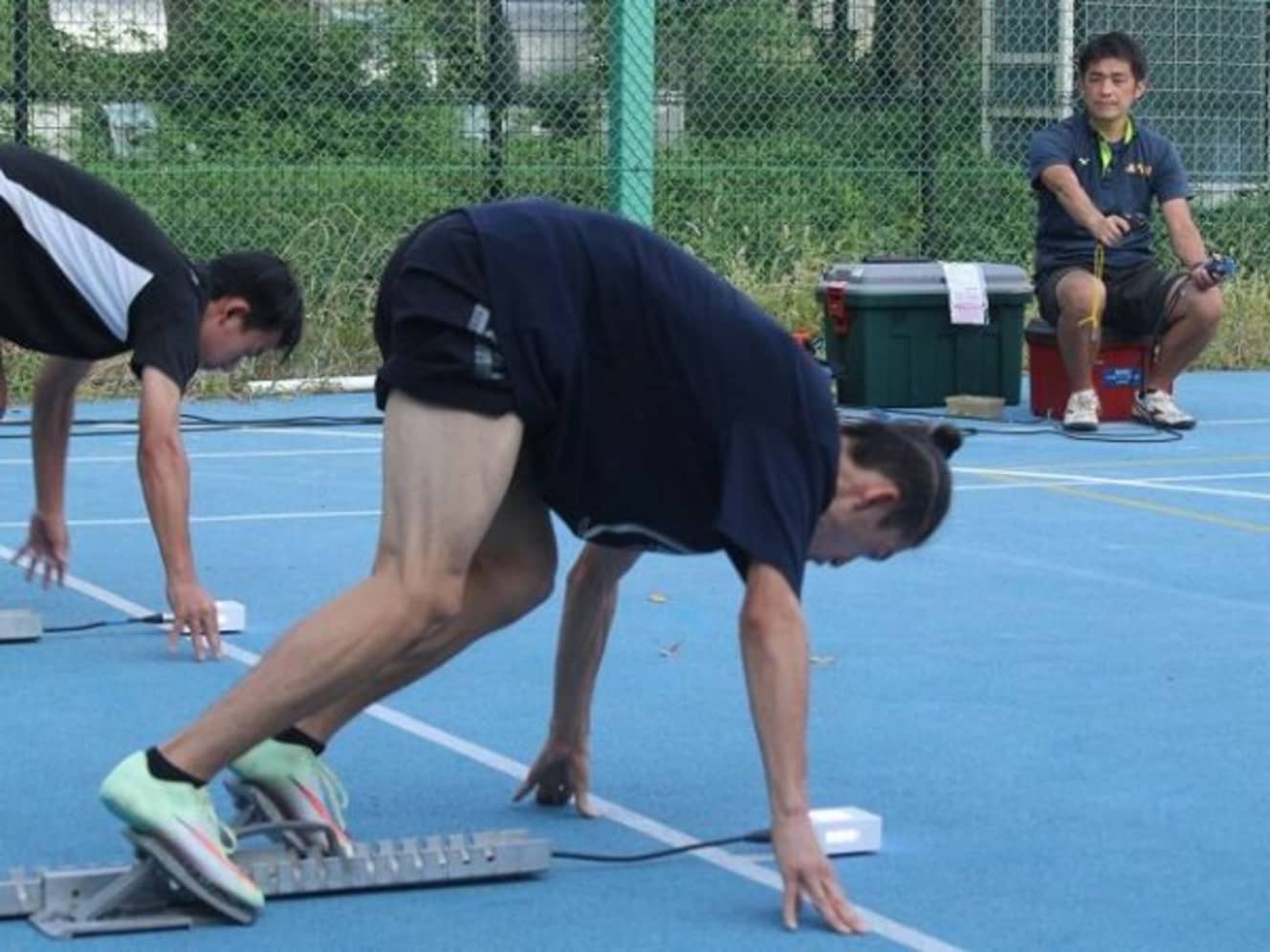
There have already been cases where deaf athletes competed alongside hearing athletes.
For example, Nanami Miyasaka. In high school, she won the Tokyo Metropolitan High School Spring Kendo Tournament. Later, she took up clay shooting, was named a promising Olympic athlete in 2019, and won the trap event at the JOC Junior Olympics.
The Deaflympics follows the same rules as competitions for hearing athletes. Like Miyasaka, some athletes achieve excellent results even when competing directly with hearing athletes. Does this mean the purpose of the Deaflympics is simply barrier-free competition?
“Whether or not someone wants to compete in the same events as hearing athletes depends on the individual athlete’s perspective, and it also varies by sport.”
Many deaf children enjoy playing sports together with hearing peers when they are young. However, in team sports, as they move up in grade levels and strategies become more complex, communication barriers arise, making it difficult to continue competing together.
Kurano himself played volleyball with hearing teammates from middle school:
“At that time, neither I nor my teachers knew that deaf volleyball even existed. If I had known, I might have switched to deaf volleyball and aimed to compete in the Deaflympics.”
 According to Kurano, sports like golf and bowling allow deaf athletes to compete without feeling disadvantaged. Whether to participate in competitions with hearing athletes or in the Deaflympics ultimately depends on the individual’s choice.
The Deaflympics began 100 years ago to improve the social standing of deaf people
Its history is long: the event was first held in 1924 at the initiative of Eugène Rubens-Alcais, president of the French Deaf Sports Federation.
At the time, deaf people were considered inferior both intellectually and physically. Sign language was even banned under the belief that they should communicate the same way as hearing people.
The Deaflympics was created to change that society. Its goals were to elevate the social status of deaf individuals and promote understanding of sign language. Fittingly, the event is organized and managed by deaf people themselves.
“Through the Deaflympics, we want people to understand that sign language is indeed our language. And we want to spread Deaf sports.”
In connection with the Tokyo 2025 Deaflympics, Tokyo Metro will introduce a multilingual announcement service called Visible Announcements, which converts station broadcast audio into text on smartphones to assist deaf passengers. From August 1, JR East is also beginning trial implementation of similar services at major stations, signaling steady progress in accessibility measures.
The athletes representing Japan at the Tokyo 2025 Deaflympics have already been selected, with many medal hopefuls.
“Masaki Yamada, who won silver in the men’s 400m at the 2024 World Championships, and table tennis player Riho Kamezawa are ones to watch.
Also aiming for the podium are past gold medalists, such as Hiroto Kitaya in men’s pole vault and Masatoshi Morimoto in men’s hammer throw. Please cheer them on.”
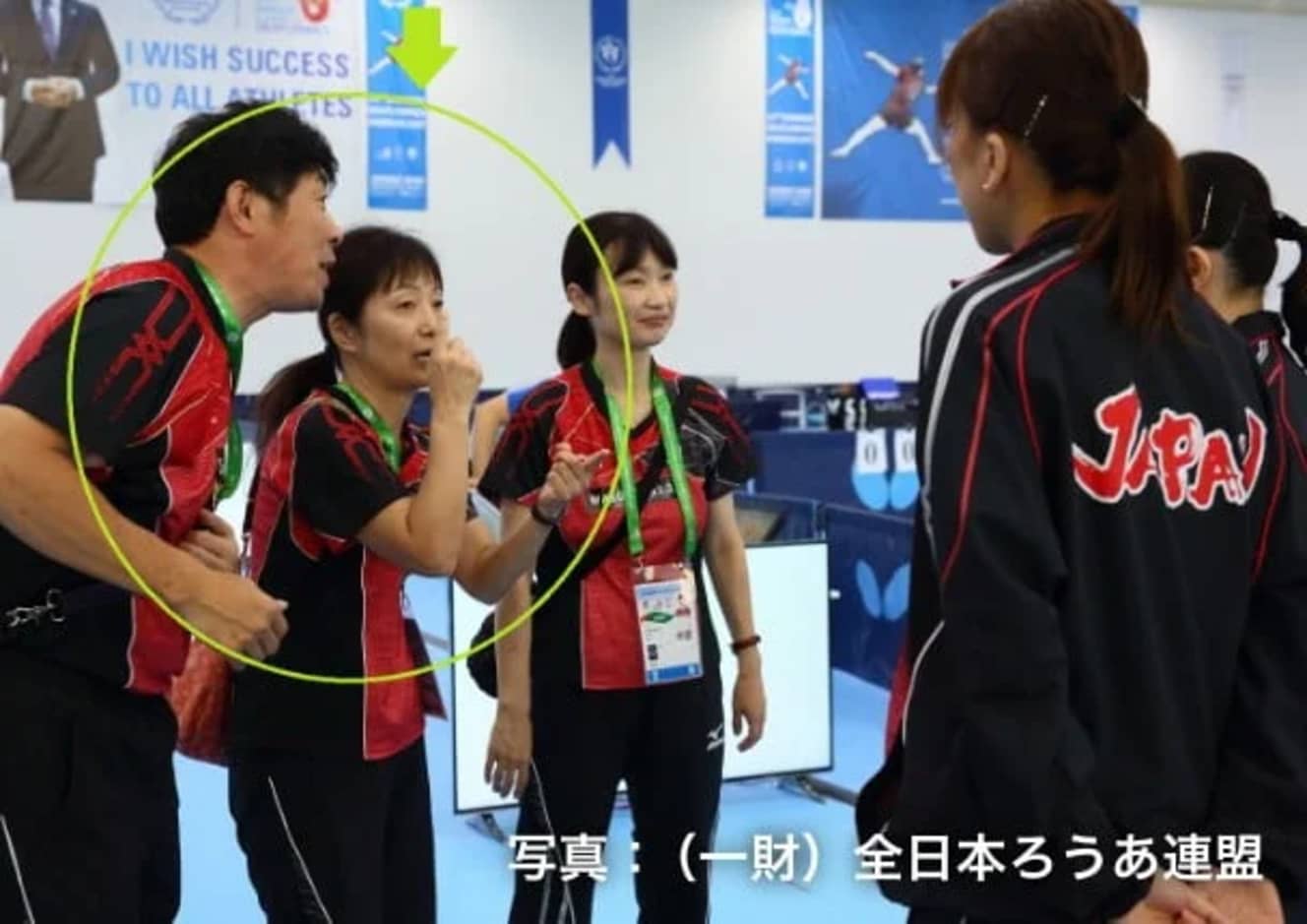 Athletes conversing in sign language. “For us deaf people, sign language is the same as spoken language. Through the Deaflympics, I want to spread understanding of sign language,” says Kurano.
■ Official information site for Tokyo 2025 Deaflympics is here.
Interview and text by: Izumi Nakagawa PHOTO: Courtesy of the Deaflympics Steering Committee