Refreshing Mist or Hidden Threat? Legionella Risk Exposed


Legionella bacteria detected in a water facility at the Osaka-Kansai Expo site
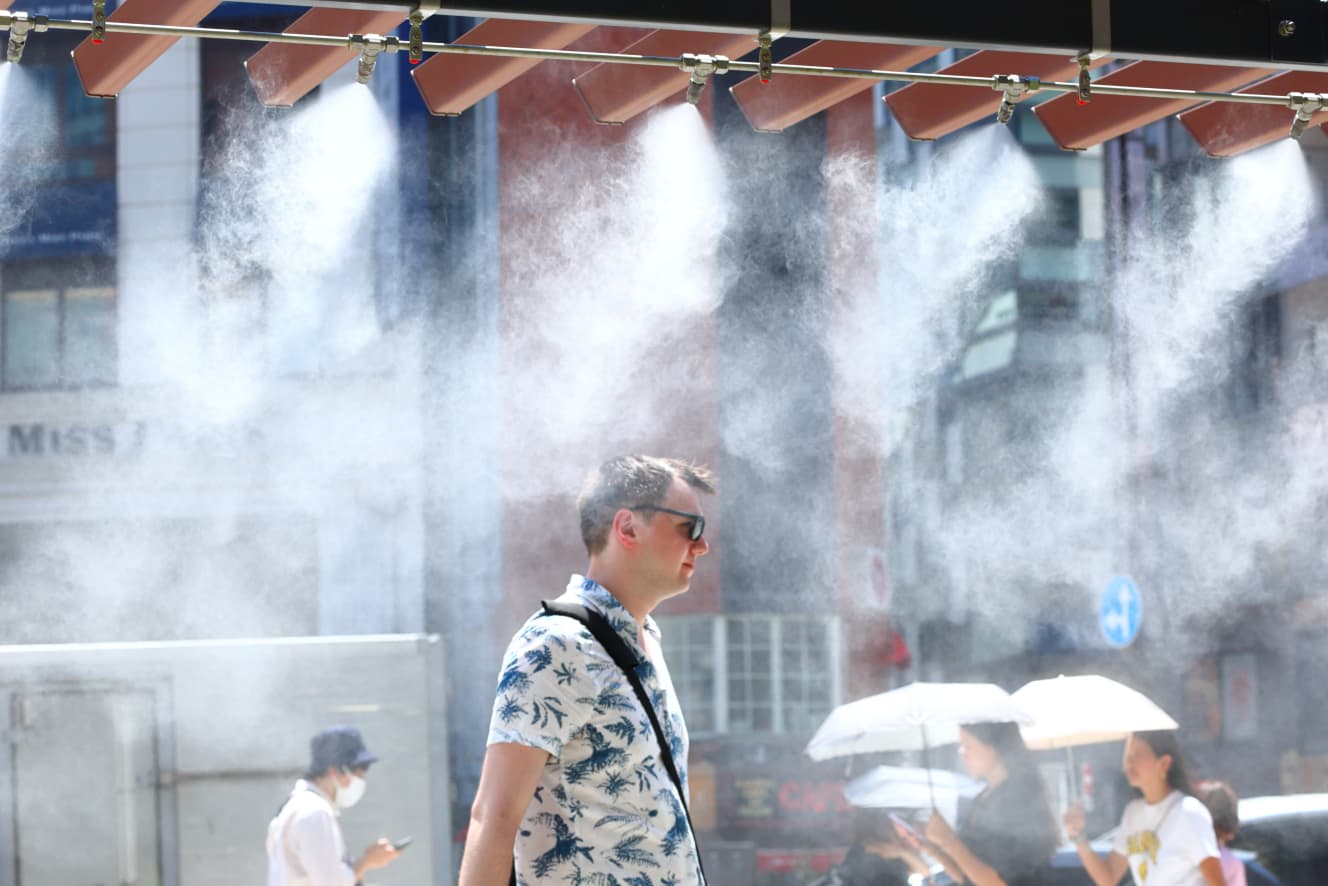
At train stations, commercial complexes, and event venues, mist systems are becoming increasingly common. The ultrafine water spray lowers the temperature across the area and creates a visually refreshing atmosphere, making it one of the essential measures for coping with extreme heat.
Just the other day, a man in a business suit was seen lying on the lawn at a shopping complex, enjoying the mist.
However—this isn’t something that can be enjoyed without concern.
Artificial water environments such as mist systems carry the risk of Legionella bacteria growth.
It is still fresh in memory that Legionella bacteria—20 times higher than the guideline value—were detected in the water facilities at the Osaka-Kansai Expo site, forcing the cancellation of a water show. Later, after strengthening measures such as more precise testing methods, disinfection, and cleaning, Legionella levels fell below the guideline value, and about a month later the water show resumed. There have been no reports of health damage.
In the past, outbreaks have also occurred in bathhouses, cooling towers, and humidifiers, with cases of mass infection and even fatalities caused by Legionella-related illness known as “Legionellosis.”
What makes Legionella particularly alarming is its unusual route of infection. Water treatment engineer Atsushi Harada explains:
“Unlike most bacteria, Legionella rarely spreads through food or drinking water. It is a special type of bacteria that infects people by inhaling fine sprayed droplets called aerosols. What makes it especially dangerous is that infection occurs not in the digestive tract, but when the bacteria enter the lungs.”
In the case of mist systems or fountains, the sprayed water droplets disperse widely. If the water were contaminated with Legionella, the bacteria would spread with the mist across the surrounding area, and people could inhale them simply by breathing. If many people are present, mass infection with Legionellosis cannot be ruled out.

During the COVID-19 pandemic, the author repeatedly saw media footage of droplets from sneezes and coughs spreading through the air, and that imagery overlapped with the aerosols lingering around misters and fountains, deepening their unease about using mist systems.
So, what exactly is “Legionellosis,” the illness caused by Legionella bacteria?
“There are two forms of Legionellosis: the relatively mild Pontiac fever, which tends to resolve on its own, and Legionella pneumonia, which causes serious lung infection.
The dangerous one is Legionella pneumonia, which presents with symptoms such as high fever, cough, and difficulty breathing. If treatment is delayed, it can worsen and even become fatal. Those most at risk are people with weakened immune systems, the elderly, and individuals with underlying health conditions. Outbreaks of group infections have occurred in hospitals and nursing facilities. According to the Ministry of Health, Labour and Welfare, the fatality rate of Legionella pneumonia in Japan reaches 6–7%.
On the other hand, Pontiac fever tends to affect younger people, often resulting only in a mild fever. Some cases are so mild that patients don’t even realize they were infected. Importantly, Legionellosis is not transmitted from person to person.” (Mr. Atsushi Harada)
The temperature most suitable for the growth of Legionella bacteria is 36°C
Legionella bacteria naturally exist in the environment — in rivers, lakes, and soil. However, the risk of contracting Legionnaires’ disease from something like a natural waterfall mist is said to be almost nonexistent.
Why? The reason lies in the temperature that Legionella prefers.
“Legionella bacteria do exist in nature, but they don’t inherently have strong toxicity. The danger comes when they multiply in water. The temperature range for growth is about 20°C to 50°C, with 36°C being the most optimal.
In nature, even with waterfall mist, the surrounding aerosol is usually around 10°C or so. Water at 36°C is almost unthinkable in natural environments.
By contrast, artificial mist, fountains, spas, and bathing facilities recirculate and humidify water. With water constantly circulating and temperatures being maintained, these become ideal breeding grounds for Legionella. Particularly, slimy biofilm areas act as their habitat.
In that sense, humans have inadvertently created environments where Legionella thrives. Legionnaires’ disease can be seen as a new type of infection that arose because of human civilization.”
Since biofilm provides the perfect home for the bacteria, preventing biofilm formation is the most effective measure against their growth.
Mist generators actually come in two types: the tank-storage type, which sprays stored tap water, and the direct-connection type, which sprays tap water directly from the nozzle.

The former (tank-storage type) can become a breeding ground for bacteria in the tank or surrounding areas, but with the latter (tankless, direct-tap type), such concerns are minimal.
“In the tank-storage type, simply topping up water or leaving it sitting is very dangerous. The water must be replaced at least once a day, and the tank itself cleaned and inspected.
Most important is the physical removal of biofilm, which serves as a bacterial breeding ground. Adding chemicals alone may not penetrate the biofilm barrier, leaving bacteria alive inside. At least once a year, high-pressure washing or scrubbing to scrape off the biofilm is effective. Of course, this takes time and money.
My guess is that newer commercial facilities often install the direct-tap type mist systems, because in permanent installations the total cost is actually cheaper.”
In large public or commercial facilities, the maintenance to prevent Legionella growth is mandated by local ordinances. However, users have no way of knowing which type of system is in place or how hygiene is being managed—they simply have to trust the operators.
That is why the detection of Legionella at the Osaka–Kansai Expo venue’s water area heightened public distrust.
Refreshing mist is like an oasis in summer, but thorough hygiene control and transparency are essential for safe use. It seems important that users also remain attentive to how facilities are managed.
▼ Atsushi Harada – Managing Partner, Water Digital LLC.
With experience at a water-treatment manufacturer and professional engineer certification, he launched his own company at age 50, advising manufacturing industries on water treatment. He also serves as Executive Officer at Amane Career (organization development), guest lecturer (organizational change) at the DX Management School led by Masanori Wada (winner of the Minister of Internal Affairs and Communications Award at the National SME Cloud Contest), and as a Pro Picker on NewsPicks, sharing insights on water-related issues.
Interview and text by: Keiko Tsuji PHOTO: Afro (1st and 2nd pictures)