Eviction Battle Against Shibuya Unification Church Sparks Potential Domino Effect


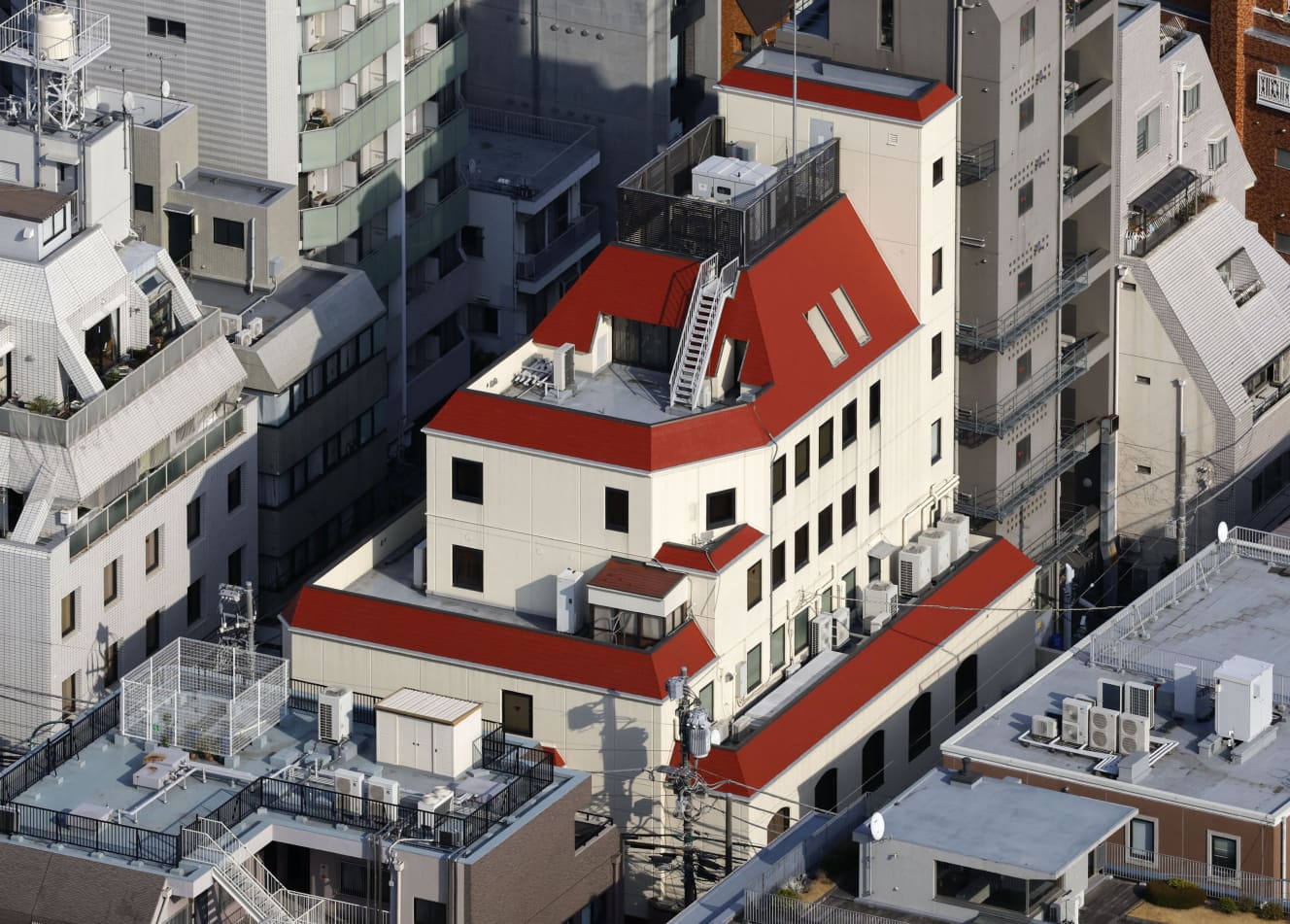
Why did the real estate company demand the building be vacated?
The former Unification Church (Family Federation for World Peace and Unification) has come under social criticism for the way it has conducted its activities.
On March 25 of this year, the Tokyo District Court issued a dissolution order, putting the continuation of the organization in jeopardy. Amid this, it has come to light that a church facility located in a prime area of central Tokyo has been sued for eviction. The reason for the lawsuit is that the organization allegedly falls under the clause in the lease agreement designating tenants equivalent to antisocial groups. This lawsuit could become a significant turning point affecting the fate of church facilities scattered across the country.
The building in question is located in a prime area of Shibuya, Udagawachō. This building, housing the “Shibuya Family Church,” is a four-story structure with a basement. According to the church’s website, it includes a worship hall, meeting rooms, a childcare room, and reception rooms. Positioned opposite the church headquarters, it has long functioned as an important hub in central Tokyo.
The building’s owner, a real estate company, has filed a lawsuit demanding that the church vacate the premises. According to court documents, the company issued a notice to the church on March 27, 2025, requesting the building be surrendered.
The legal basis for the eviction stems from a clause in the lease agreement. The contract includes the following condition for termination:
“If the tenant engages in conduct that causes trouble to the public or local residents or is found to be a member of an antisocial group (such as organized crime groups or delinquent gangs) or equivalent thereto.”
The real estate company argues that the dissolution order issued by the Tokyo District Court on March 25, 2025, falls under this clause. The complaint states that the court order destroyed the trust between the parties, as follows:
“Since the defendant religious corporation (former Unification Church) was found to have violated laws and clearly engaged in conduct that seriously harms public welfare, and a dissolution order was issued, the activities and conduct of the defendant religious corporation constitute a breach of trust that severely damages the relationship between the plaintiff and the defendant, creating a significant reason making the continuation of the lease difficult.” (From the complaint)
Because the court recognized the church’s actions as violating laws and seriously harming public welfare, the logic follows that the organization has caused trouble to the public and local residents, qualifies as equivalent to an antisocial group, and that the trust relationship has been irreparably broken.
The Triggering Dissolution Order
There is no doubt that the direct trigger for this eviction lawsuit was the dissolution order issued by the Tokyo District Court. This ruling, which fully accepted the Ministry of Education, Culture, Sports, Science and Technology’s request, severely condemned the organizational, malicious, and continuous nature of the church’s illegal activities.
According to the summary of the decision released by the Tokyo District Court, the church’s solicitation of donations had been carried out nationwide at least since the late 1970s, and the court judged the methods to be generally malicious. By analyzing lawsuits filed by former members and out-of-court settlements, the court estimated that the number of victims exceeded 1,500 and total damages amounted to approximately 19 billion yen. The court concluded that an unprecedentedly vast scale of damage occurred.
This judicial decision has sent shockwaves to the real estate company that rents the building to the church. Why did the building owner resort to the drastic measure of eviction? Housing journalist Junji Sakaki explains:
“As long as the rent is paid, there should be no economic difficulty. But that is not the issue. The problem is that when an organization like the former Unification Church occupies a property, the collateral value of that real estate is severely at risk. Banks may restrict loans for properties associated with antisocial groups due to compliance concerns. In other words, the owner may no longer be able to use the building as collateral to secure new funding. Furthermore, as long as the former Unification Church remains a tenant, finding the next buyer—or selling through an owner change—becomes much more difficult.”
For the owner, maintaining asset value is a fundamental aspect of management. Moreover, this lawsuit in Shibuya is not merely about vacating a single facility. It could become a touchstone that threatens the continuation of other church facilities scattered nationwide.
Among the 290 domestic churches publicly listed by the former Unification Church, nearly 70% are leased properties. If the Shibuya case sets a precedent by allowing eviction based on the dissolution order, it could serve as a model for property owners across the country to file similar lawsuits.
“Winning the first case is challenging, but once it is confirmed, the threshold for lawsuits drops sharply, and property owners nationwide are likely to follow suit. Owners across the country are surely watching the outcome of this trial with bated breath,” Sakaki added.
For believers, the church serves as a place of faith where worship and various events are held. If such facilities become unavailable nationwide, the activities of the church would face severe restrictions.
Mounting Headwinds Make Church Activities Increasingly Difficult
The environment surrounding the church is becoming increasingly severe day by day. On July 30, it was widely reported that, following petitions from people claiming damages from donations and other acts, the land of the church headquarters in Shōtō, Shibuya, was provisionally seized on July 18 for asset protection. Additionally, plans to build a training facility in Tama City, Tokyo, have effectively stalled due to strong opposition from local residents.
This eviction lawsuit can also be seen as part of a broader church containment strategy. Exposed to intense scrutiny from the judiciary, government, and civil society, the church’s activities are bound to become increasingly difficult.
How does the former Unification Church view this eviction lawsuit? In response to inquiries from FRIDAY Digital, the church’s public relations department commented:
“Regarding the lawsuit, we have submitted a response stating that the eviction request is unjustified and without grounds, and we intend to contest it. Situations like this, where church facilities—places that serve as spiritual anchors for believers—are at risk of being lost without legitimate reason, constitute a significant infringement on religious freedom. There are no other cases in which we have been sued over eviction demands.”
The church insists the lawsuit is unjust and plans to contest it thoroughly in court. Already facing a loss of social credibility due to the dissolution order, the former Unification Church now confronts the additional threat of being forced out of its operational bases. With successive lawsuits and waves of societal criticism, the future of the church has become increasingly uncertain.
PHOTO: Kyodo News