[Playback ’95] The Super Nanpei Case: Three Women Executed in Minutes by a Cold-Blooded Killer


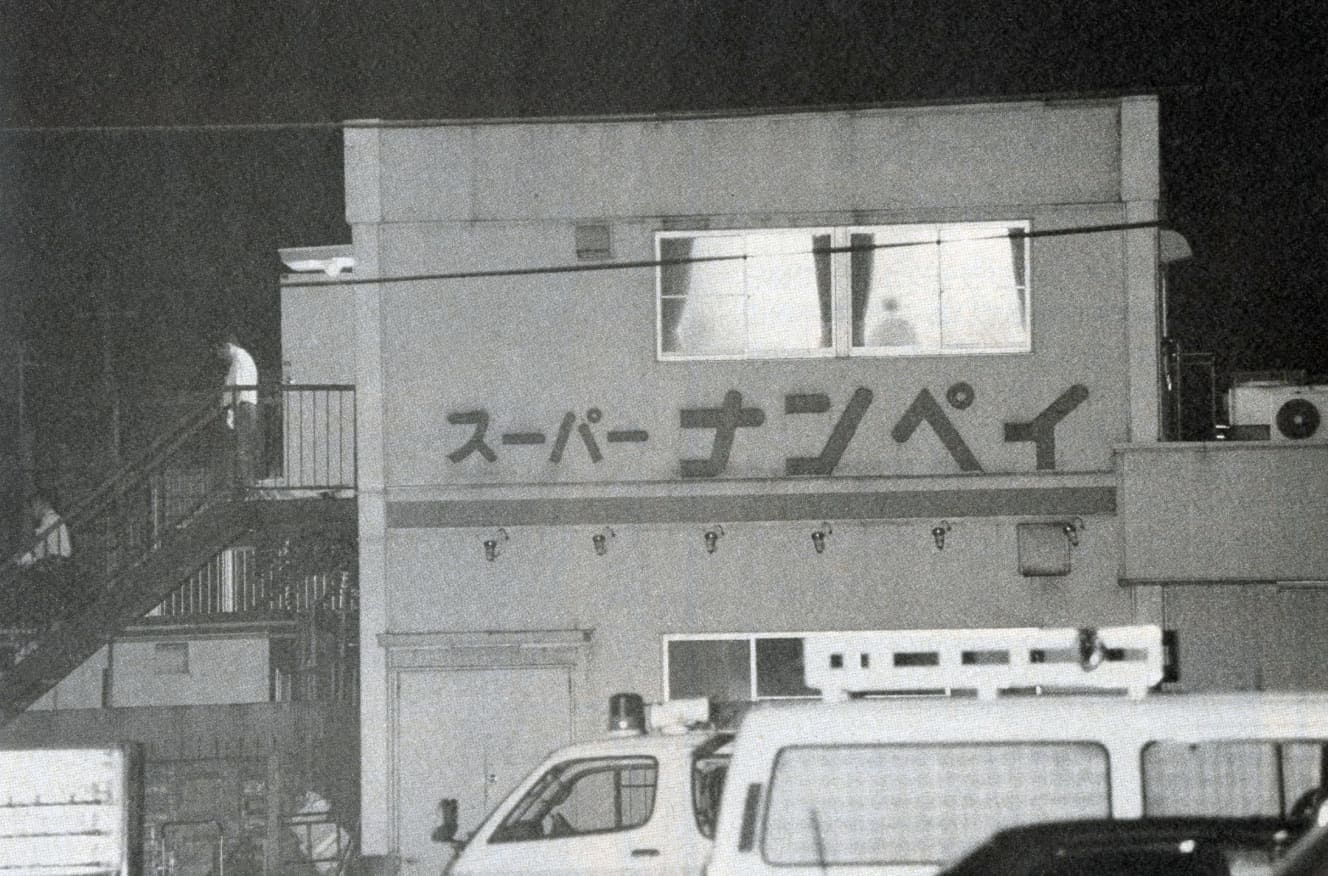
What was reported on FRIDAY 10, 20, and 30 years ago? Revisiting the topics that made headlines back then in Playback Friday. This time, we look back at the August 15 & 23, 1995 issues, which featured the article “Once Again, Citizens Fall Victim: The Terrifying Gun Violence Behind the Hachioji ‘Supermarket Triple Shooting Incident’.”
Recently, the “Super Nanpei Incident” marked its 30th anniversary. On the night of July 30, 1995, three women—a part-time worker and two high school girls working part-time—were shot and killed inside the office on the second floor of a supermarket in Hachioji, Tokyo. The case remains unsolved. FRIDAY covered the scene shortly after the incident occurred. (Ages and titles are as of that time. Text in 《》are quotes from past articles.)
“I totally thought it was just a stuffed animal or something.”
“The first person to discover the bodies, Mr. A, a man in his 60s, couldn’t believe at first that the bodies lying on the floor were dead.
“I thought they were stuffed animals or something. But when I looked closely, I saw that the person leaning against the wall was Mr. Inagaki. His face was covered in blood, and I couldn’t bear to look at it. When I looked away, I saw two girls lying on the floor…”
Even the investigators who rushed to the scene upon hearing the news were left speechless by the horrific state of the crime scene.
In the second-floor office, part-time employee Inagaki Noriko (47) was found seated and deceased, while the blood-soaked floor held two high school girls working part-time, Megumi Yabuki (17) and Hiromi Maeda (16), lying face down.
The two were bound with adhesive tape, their mouths covered with tape and shot in the back of the head with a single bullet. Inagaki also had two gunshot wounds to the head, and since there were no other injuries, it is presumed that the perpetrator ruthlessly shot the three defenseless victims one after another at close range.
In an era when ordinary people get caught up in gun crimes
The first person to discover the crime scene, Mr. A, was a drinking companion of Ms. Inagaki and had received a call at 9:15 PM saying, “I’ve finished work, please come pick me up.” Within the less than ten minutes before Mr. A arrived at the scene, the perpetrator killed the three victims and fled. Writer Ryuzo Saki commented on the case as follows:
“I have seen many murder cases, but it is extremely rare—practically unprecedented—for someone to kill three people so easily in such a short time. This is clearly different from a crime committed by a methamphetamine addict. The fact that the gun was used not just to threaten but with the clear intent to kill from the start makes this a unique case in the history of Japanese crime.”
That ordinary civilians—not gangsters or police—were murdered by gunfire is shocking. This brutal crime, resembling something from overseas, reflects the emergence of a gun society in Japan. Saki also noted in the article that “since the enforcement of the Anti-Boryokudan Act, gangs have been handing over guns one after another over the past few years, making it possible for amateurs to obtain firearms if they have the money.”
In the first half of 1995, 931 firearms were seized, a 16% increase over the same period the previous year, with one-quarter of those confiscated from civilians. In the fall of 1994, a female part-time worker at a family restaurant in Chiba Prefecture was shot and killed during a robbery. This incident symbolized how Japan had become a society where ordinary people could get caught up in gun violence.
Gun-related crimes have decreased
The surge in gun-related crimes that was feared back in 1995 peaked in the early 2000s, but since the 2010s, the annual number has remained at a low level of about 10 to 20 cases.
Meanwhile, the investigation into the incident stalled. Around the time of the crime, multiple suspicious men and vehicles were reportedly seen in and around the supermarket, but the perpetrator was never identified. The supermarket’s security had been a concern for some time. There had been previous break-ins at the office, and during that period, there were many handgun robberies targeting supermarkets in the Tama region, so initially, the incident was thought to be a robbery.
However, Noriko Inagaki was able to open the safe, and the 5 million yen in cash inside the safe was untouched. Additionally, all bullets struck the victims’ brainstems, leading to speculation that the murders may have been motivated by personal grudges rather than robbery.
The gun used was a Philippine-made revolver called the “Skyares Bingham.” In 2009, a yakuza member was arrested for possessing a handgun believed to be the one used in the crime, but he claimed, “I received it from an acquaintance around 2008. I cannot say who,” and denied any involvement in the case. Investigators were dispatched to the Philippines to trace the weapon’s origin but failed to identify the source.
In 2009, suspicion arose regarding a Chinese man with Canadian citizenship, based on testimony from a man who had been the leader of a robbery gang consisting of Japanese and Chinese members. The investigation headquarters obtained an arrest warrant for the man on charges of violating the Passport Act for leaving the country using a forged passport under someone else’s name. He was extradited to Japan and interrogated but reportedly said, “I don’t know” about the incident.
The statute of limitations was abolished just before it was about to expire in 2010, allowing the investigation to continue to this day. Over 226,000 investigators have been involved so far, but no strong leads on the perpetrator have been found. The investigation team continues to seek information widely, including about a young couple who visited near closing time and a woman who smoked 11 cigarettes found in an ashtray in the supermarket’s second-floor office who may have seen the perpetrator on the day of the incident.
We fervently hope that the day will come soon when the unresolved grief of the victims, whose futures were abruptly cut short, can finally be cleared.


PHOTO: Takero Yui (1st and 2nd pictures)